
Barbell Buying Guide: Knurling & Hip Thrusts with Dumbbell on Floor
Master your Olympic barbell buying guide: compare weight, knurling, and the shift from hip thrusts with dumbbell on floor to heavy barbell loads.

The Biomechanical Ceiling: Why Lifters Upgrade from Dumbbells
For beginners and intermediate lifters, performing hip thrusts with dumbbell on floor is an excellent entry point into posterior chain development. It requires minimal equipment, allows for a natural pelvic tilt, and avoids the intimidation of the squat rack. However, as glute hypertrophy demands progressive overload, the dumbbell variation inevitably hits a biomechanical ceiling.
When you max out your gym's heaviest dumbbell—typically around 100 to 120 lbs—you face severe stabilization issues. The anterior center of mass requires you to use your grip and forearms to pin the dumbbell into your hip crease, diverting neural drive away from the gluteus maximus. According to a comprehensive biomechanical analysis published by the National Center for Biotechnology Information (NCBI), maximizing glute activation requires removing stabilization bottlenecks so the prime movers can handle the absolute load. This is the exact moment you must transition to an Olympic barbell.
This 2026 Olympic barbell buying guide breaks down the critical specifications—weight, tensile strength, and knurling profiles—needed to make the transition from floor dumbbell work to heavy barbell hip thrusts safely and effectively.
Olympic Barbell Weight and Shaft Dynamics
Before loading plates, you must understand the barbell's base weight and shaft diameter. These factors dictate how the bar rests on your pelvis during a hip thrust and how it behaves under heavy loads.
Standard 20kg vs. 15kg Bars
- Men's Olympic Bar (20kg / 44 lbs): Features a 28mm to 29mm shaft diameter and a standard 2200mm overall length. The thicker shaft provides a wider surface area, which distributes pressure more evenly across the hip bones during heavy thrusts.
- Women's Olympic Bar (15kg / 33 lbs): Features a 25mm shaft diameter and a shorter 2010mm length. While the thinner shaft is excellent for lifters with smaller hands during deadlifts, it can dig aggressively into the pelvis during hip thrusts unless heavily padded.
Tensile Strength and Yield Rating
When loading a barbell for hip thrusts, the bar rests on your body while you bridge upward. This creates a fulcrum effect that bends the bar. You need a bar with a tensile strength of at least 190,000 PSI to prevent permanent deformation. Premium bars, like the Rogue Ohio Bar, boast a 190k PSI rating, while elite powerlifting bars push 215k PSI. Avoid any bargain-bin bars under $150 that advertise less than 165k PSI; they will permanently bend when loaded with four 45lb plates on each side.
Knurling Deep Dive: The Secret to Barbell Hip Thrusts
Knurling is the cross-hatched pattern machined into the steel shaft to provide grip. For squats and deadlifts, knurling is about hand traction. For hip thrusts, knurling is about barbell retention. Without the right knurl, the bar will roll up your thighs during the eccentric (lowering) phase of the movement.
The Importance of Center Knurl
A center knurl is a 1.5 to 2-inch strip of knurling located in the exact middle of the bar. When performing hip thrusts, this center patch grips your clothing and prevents the bar from sliding laterally or rolling forward. However, if you also front squat, an overly aggressive "mountain" center knurl will tear the skin on your neck. Therefore, a "volcano" or mild "hill" center knurl is the ultimate hybrid for glute-focused lifters.
Knurling Profiles Comparison Matrix
| Knurl Profile | Depth & Sharpness | Best Use Case | Hip Thrust Suitability |
|---|---|---|---|
| Hill | Shallow, smooth peaks | High-rep Olympic lifting, beginners | Poor (bar rolls easily) |
| Volcano | Deep rim with hollow center | Powerbuilding, squats, hip thrusts | Excellent (grips without tearing) |
| Mountain | Sharp, aggressive peaks | Heavy 1RM deadlifts | Fair (can snag clothing/skin) |
Direct Comparison: Barbell vs. Hip Thrusts with Dumbbell on Floor
Understanding the exact trade-offs between these two variations will help you program your 2026 training splits more effectively. While the dumbbell variation remains a valid finisher, the barbell is the undisputed king of mechanical tension.
| Feature | Hip Thrusts with Dumbbell on Floor | Olympic Barbell Hip Thrust |
|---|---|---|
| Max Load Potential | ~120 lbs (limited by gym inventory) | 500+ lbs (limited only by plates) |
| Setup Time | 5 seconds (grab and go) | 2-4 minutes (loading plates, bench setup) |
| Pelvic Comfort | High (small surface area, easily padded) | Low-Medium (requires thick barbell pad) |
| Stabilization Demand | High (grip and core fight rotational forces) | Low (load is fixed and balanced) |
| Eccentric Control | Awkward (dumbbell tends to slip down thighs) | Superior (center knurl tracks the movement) |
Top 2026 Olympic Barbell Recommendations for Glute Hypertrophy
If you are retiring the dumbbell floor variation and investing in a home gym barbell, or advising your commercial gym manager on new equipment, these are the top-tier options that balance price, knurl quality, and pelvic comfort.
1. The Gold Standard: Rogue Fitness Ohio Bar
Priced around $295, the Ohio Bar remains the benchmark for multi-purpose lifting. It features a 28.5mm shaft, a 190,000 PSI tensile strength rating, and Rogue's proprietary composite volcano knurl. The center knurl is present but mild enough that it won't destroy your neck during front squats, yet it provides just enough bite to keep the bar anchored in your hip crease during heavy thrusts. The bronze bushings offer a smooth, reliable spin without the maintenance headaches of needle bearings.
2. The Budget-Conscious Workhorse: Rep Fitness OB-85
Coming in at approximately $249, the OB-85 is a phenomenal entry point. It features dual knurl marks (both IWF and IPF), making it highly versatile. The knurl is slightly more aggressive than the Ohio Bar, leaning closer to a mountain profile, which is excellent for deadlifts but requires a thick foam pad for hip thrusts. At 28.5mm and 190k PSI, it handles 400lb hip thrusts without excessive whip or permanent bending.
3. The Premium Upgrade: American Barbell California Bar
At $285, this bar features a hard chrome finish that resists rust far better than standard zinc. The knurling is famously refined—a shallow volcano that grips through chalk but feels like butter on the skin. If you perform high-volume, hypertrophy-focused hip thrusts (e.g., 4 sets of 15-20 reps) where skin abrasion is a concern, this is the optimal choice.
Expert Troubleshooting Tip: When transitioning from hip thrusts with dumbbell on floor to the barbell, lifters often experience bruising on the ASIS (anterior superior iliac spine). Do not rely on cheap yoga mats folded over the bar. Invest in a high-density EVA foam barbell pad (like the Dark Iron Fitness pad, approx. $25) that is at least 1.5 inches thick. Furthermore, ensure your bench height is exactly 14 to 16 inches; a standard 18-inch gym bench will force you into excessive lumbar extension at the bottom of the movement.Final Thoughts on Progressive Overload
The hip thrusts with dumbbell on floor variation will always have a place in warm-ups, travel workouts, and high-rep metabolic conditioning finishers. However, true gluteal hypertrophy and strength adaptation require the systemic loading that only an Olympic barbell can provide. By selecting a bar with the correct 28.5mm shaft diameter, a reliable 190k+ PSI tensile strength, and a strategic volcano center knurl, you eliminate the mechanical bottlenecks holding back your posterior chain development. Equip yourself correctly, pad the bar, and push past the 120-pound dumbbell plateau.
More gear to consider
All reviews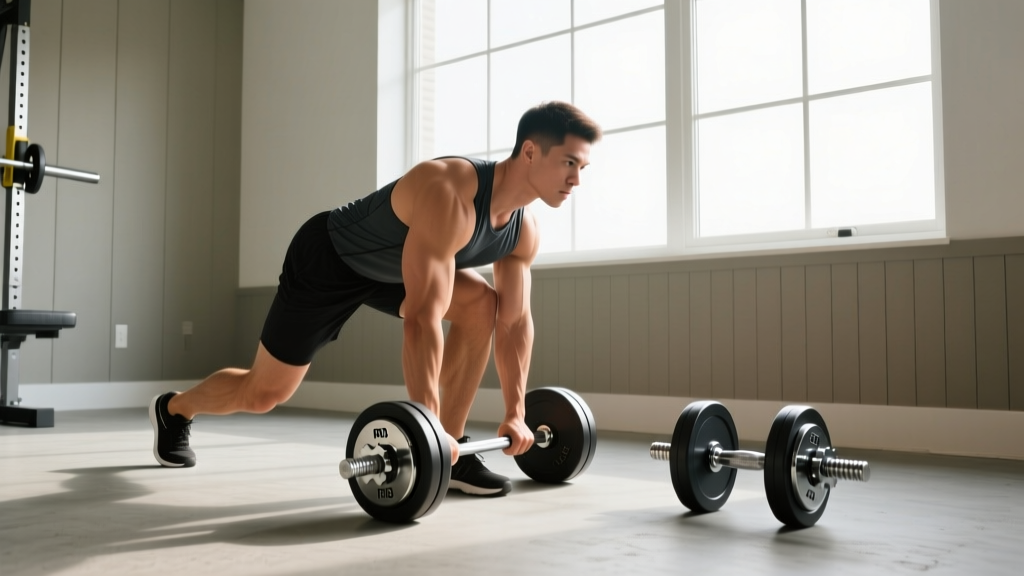
RDL with Dumbbells: Form Mistakes & Adjustable Gear Guide

Urethane vs Rubber: Space & Straight Leg Deadlifts with Dumbbells

Ivanko Dumbbell Setup & Adjustable Systems Compared
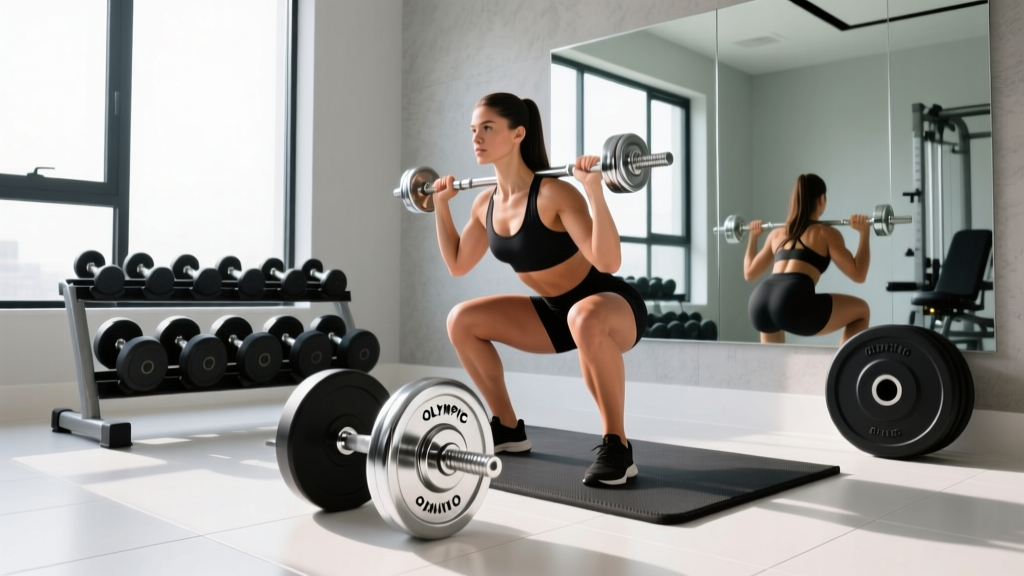
Leg Exercises with Dumbbells for Women: Setup & Plate Types

Neoprene vs Rubber: Finding a Good Dumbbell Weight for Beginners
