Barbell Collar Types & Safe Dumbbell Rows Without Bench
Discover the best barbell collar types for 2026 and learn how to safely perform dumbbell rows without a bench using a secured barbell support.

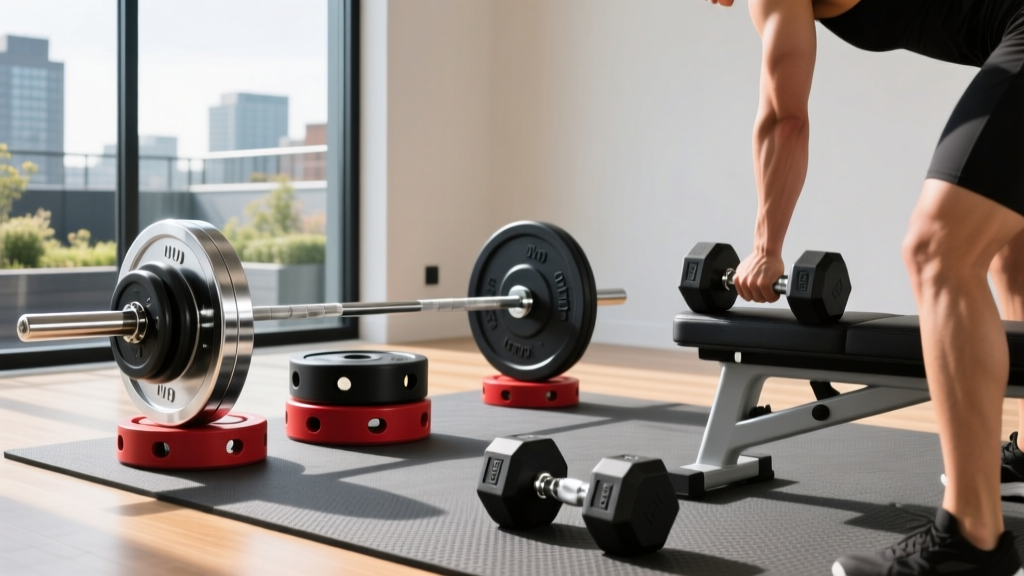
Home gym owners and garage lifters frequently face spatial constraints that make a dedicated adjustable bench a luxury. When it comes to back day, executing dumbbell rows without bench support is a common necessity. While many resort to using a sturdy plyo box or a kitchen chair, a superior, highly stable hack involves using a barbell secured in a power rack or squat stand as a makeshift waist-high support. However, this technique introduces a severe safety variable: lateral shear force. If your barbell collars fail to secure the sleeve, the bar can slide through the J-cups under your body weight, resulting in a catastrophic drop.
This comprehensive guide bridges the gap between equipment hardware and practical application. We will conduct an in-depth barbell collar and clamp types comparison, ensuring your gear is rated for heavy drops, and then provide a biomechanically sound execution guide for performing dumbbell rows without a bench using your secured barbell.
The Physics of the Barbell-Supported Row
When you lean onto a barbell resting in J-cups to stabilize your torso for a unilateral row, you are applying downward and lateral shear force. According to biomechanical analyses of unilateral pulling movements, the stabilizing arm must bear up to 40% of your body weight plus the dynamic load of the pulling arm. Standard spring clips rely on radial tension and offer virtually zero resistance to lateral sliding. To safely use a barbell as a bench substitute, you need collars that generate massive axial clamping force, effectively locking the bar against the J-cup or creating enough friction on the 50mm Olympic sleeve to prevent slippage.
Barbell Collar and Clamp Types Comparison Matrix
Not all collars are created equal. The market in 2026 is dominated by four primary mechanisms. Below is a comparison matrix detailing their specifications, pricing, and suitability for lateral-load exercises like the makeshift-bench dumbbell row.
| Collar Type | Avg. Clamping Force | Price Range (2026) | Lateral Slip Resistance | Primary Failure Mode |
|---|---|---|---|---|
| Spring Clips | 50 - 80 lbs | $8 - $15 | Very Low | Coil fatigue; slipping under shear |
| Spinlock (Threaded) | 150 - 200 lbs | $25 - $50 | Moderate | Thread stripping; slow to adjust |
| Clamp / Lock-Jaw | 300 - 450 lbs | $30 - $55 | High | Nylon deformation over years |
| Competition Lever | 500 - 800+ lbs | $80 - $140 | Maximum | Cam lever loosening if not maintained |
Deep Dive: Top 2026 Collar Models and Edge Cases
1. Rogue HG 2.0 Collars (The Clamp Standard)
Priced around $45, the Rogue HG 2.0 collars utilize a glass-filled nylon resin body with a patented snap-in design. They deliver an estimated 400 lbs of clamping force. Edge Case: Because they lack a metal core in the inner ring, repeated drops from overhead heights can eventually cause the nylon to micro-fracture. However, for static support work like dumbbell rows, they are virtually indestructible and will not slip.
2. Lock-Jaw Pro 2 (The Aluminum Core Workhorse)
Retailing for $35, the Lock-Jaw Pro 2 features an internal aluminum core wrapped in a TPU (thermoplastic polyurethane) overmold. The dual-prong locking mechanism bites into the 50mm sleeve with incredible aggression. Failure Mode: If chalk and metal shavings build up in the prong track, the latch may not seat fully, reducing clamping force by up to 50%. Clean the tracks monthly with a wire brush.
3. Eleiko Competition Lever Collars (The Gold Standard)
At $125+, these machined aluminum collars use a cam-lever action to apply over 800 lbs of lateral pressure. They are designed for Olympic weightlifting, where the barbell experiences violent whip and rotation. If you are using a barbell as a support bench for heavy 100+ lb dumbbell rows, these collars guarantee zero axial movement. The only downside is their weight (1.1 lbs each) and the clearance required to flip the lever.
⚠ SAFETY WARNING: Never use standard wire spring clips when using a barbell as a support surface for your body weight. The lateral force of leaning and pulling will easily overcome the radial tension of the spring, causing the bar to slide out of the J-cup and potentially causing severe shoulder or spinal injuries.Execution Guide: Dumbbell Rows Without a Bench
Now that your barbell is properly secured with high-tension clamp or lever collars, you can safely perform dumbbell rows without a bench. This setup mimics the biomechanics of a traditional flat bench row, allowing for a deep stretch in the latissimus dorsi and rhomboids while minimizing lower back shear, as detailed by the National Strength and Conditioning Association (NSCA) guidelines on unilateral back training.
Step 1: Rack and Collar Setup
- Set your J-cups to a height roughly level with your hip crease (usually 36 to 42 inches off the floor).
- Place an empty Olympic barbell or a lightly loaded barbell across the J-cups.
- Slide your high-tension collars (Clamp or Lever) directly against the inner J-cup or tightly against the plates to eliminate any horizontal play. Pro Tip: Placing the collars on the outside of the J-cups prevents the bar from sliding inward, while placing them inside prevents outward sliding. For maximum security, use two collars per side if your sleeve length permits.
Step 2: The Hinge and Grip
- Stand perpendicular to the barbell. Hinge at the hips, keeping your spine neutral.
- Grasp the barbell with your non-working hand using an overhand grip, spacing your hand directly over the J-cup for optimal load transfer.
- Stagger your stance: place the leg on the side of the working arm forward, and the opposite leg back for a stable tripod base.
Step 3: The Pull and Eccentric
According to ExRx.net's biomechanical database, the dumbbell row requires scapular retraction followed by elbow flexion. Pull the dumbbell toward your hip pocket, not your armpit, to maximize lower lat engagement. Lower the weight under strict control, allowing a deep stretch at the bottom without rotating your thoracic spine.
Alternative Supports for Dumbbell Rows Without Bench
If you do not own a power rack or high-quality collars, you must pivot to alternative supports. A heavy-duty plyometric box (wooden, 3-sides) is the safest alternative. Avoid using folding weight benches that are not locked into a flat position, as the hinge mechanism can collapse under lateral torque. Some lifters use a heavy kettlebell as a hand-support, but this limits the range of motion and compromises wrist alignment under heavy loads.
Frequently Asked Questions
Can I use a 25 lb bumper plate as a collar?
No. While a 25 lb bumper plate placed on the outside of a J-cup might seem like a physical barrier, the barbell can still slide inward away from the plate, especially if the rack is slightly unlevel. Always use mechanical clamping collars.
Do thicker barbell sleeves affect collar grip?
Yes. Standard Olympic sleeves are 50mm. Some specialty deadlift bars or cheap imported bars feature sleeves that measure 49.5mm or 50.8mm. Nylon clamp collars may struggle to lock onto a 50.8mm sleeve without excessive force, and will rattle loosely on a 49.5mm sleeve. Always measure your sleeve diameter with digital calipers before buying bulk collars.
Expert Insight: 'The dumbbell row is a staple for thoracic extension and lat development. When a bench isn't available, the barbell-in-rack method is unmatched for stability—provided you treat the collars as critical safety hardware, not just plate-management tools.' — FitGearPulse Editorial Team
More gear to consider
All reviews
EZ Curl Bar vs Straight Bar: Trends & Barbell Row Dumbbell Shifts

Barbell Collar & Clamp Types for Seated Dumbbell Power Cleans
Budget Breakdown: Loadable Dumbbells for Dumbbell Stationary Lunges

Cast Iron vs Competition Care & Stomach Exercises Using Dumbbells

Olympic vs Standard Plates Setup & 30 lb Dumbbell Exercises