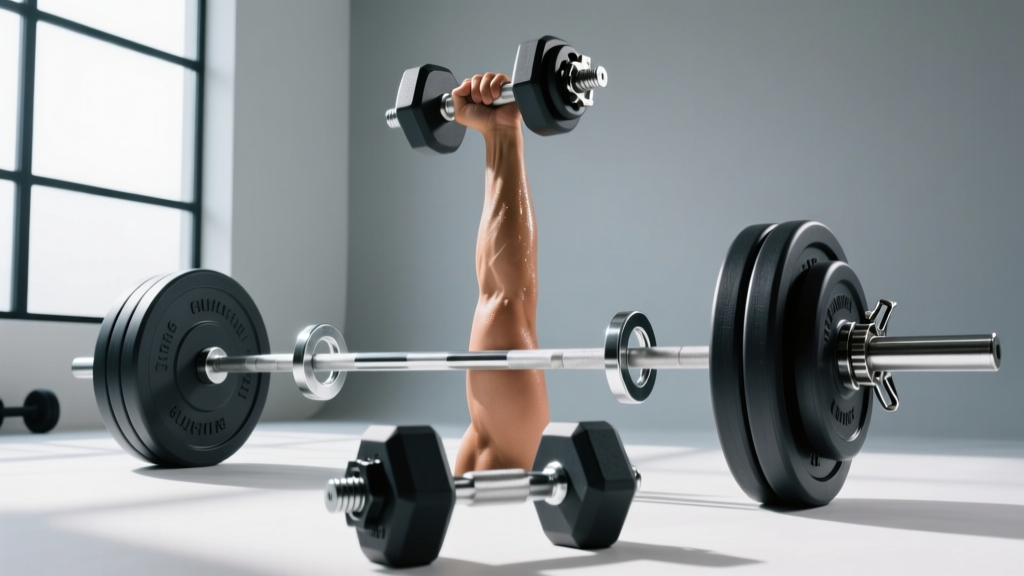
Barbell Collar Types & Single Arm Dumbbell Overhead Carry Mistakes
Compare barbell collar types, troubleshoot plate slippage, and learn how the single arm dumbbell overhead carry exposes weak clamps and grip failures.

The Hidden Danger of Plate Slippage in Modern Home Gyms
As home gym setups in 2026 feature increasingly specialized equipment—from Olympic dumbbell handles to multi-grip landmine attachments—the humble barbell collar is often treated as an afterthought. Yet, failing to match your collar type to the specific biomechanical demands of your lift is a leading cause of equipment damage and joint injury. Whether you are dropping 300 lbs on a deadlift platform or stabilizing a heavy, plate-loaded dumbbell during a unilateral carry, the clamping mechanism is the only thing standing between a successful rep and a catastrophic weight shift.
This troubleshooting guide breaks down the primary barbell collar and clamp types on the market, compares their mechanical limits, and uses the extreme rotational demands of the single arm dumbbell overhead carry to illustrate why choosing the wrong collar can compromise your training and safety.
Barbell Collar Types: Comparison Matrix
Not all collars are created equal. The market is dominated by four primary mechanisms, each with distinct axial (push/pull) and rotational (twisting) grip strengths. Below is a 2026 market comparison of the most prevalent types.
| Collar Type | Mechanism | Est. Price (Pair) | Axial Grip Strength | Rotational Grip | Best Application |
|---|---|---|---|---|---|
| Spring Clip | Coiled steel tension | $12 - $18 | Low (Fails >250 lbs shear) | Very Low | Light technique work, empty bar warmups |
| Lock-Jaw (Proloc) | High-density polymer snap-lock | $28 - $35 | High (Up to 800 lbs drop tested) | Medium | Heavy Olympic lifts, CrossFit WODs |
| Lever Clamp (e.g., Rogue ALR 2.0) | Aluminum cam-lever with TPU pad | $45 - $60 | Extreme (1000+ lbs clamping force) | High | Powerlifting, heavy eccentric drops |
| Spinlock / Screw | Threaded metal or star-lock nut | $15 - $25 | Medium | High (If threaded sleeve) | Standard 1-inch bars, adjustable dumbbells |
Troubleshooting Common Collar Mistakes
Even the most expensive lever clamps will fail if misused. Here are the most frequent mistakes lifters make when securing plates, along with actionable troubleshooting steps.
Mistake 1: Using Spring Clips for Dynamic or Unilateral Movements
Spring clips rely on simple wire tension. Over time, the steel fatigues, and the clip stretches beyond the standard 50mm (1.96-inch) Olympic sleeve diameter. Troubleshooting: If you can slide a spring clip onto the sleeve without using the plier-like handles to compress it, the spring is permanently deformed. Discard it immediately and upgrade to a polymer Lock-Jaw or aluminum lever clamp.
Mistake 2: Misaligning Lever Cams on Tapered Sleeves
Lever clamps like the Rogue ALR 2.0 generate immense inward pressure. However, if placed on a barbell sleeve with deep grooves or extreme knurling, the TPU (thermoplastic polyurethane) pad can catch on the groove edge rather than sitting flush against the steel. Troubleshooting: Always slide the clamp completely flush against the outer face of the weight plate, not the barbell sleeve. The clamp's job is to push the plates together, eliminating the gap between the plates themselves.
Mistake 3: Ignoring Sleeve Tolerance Variance
According to the International Weightlifting Federation (IWF), Olympic barbell sleeves must be precisely 50mm in diameter. However, many budget barbells manufactured for home gyms measure closer to 49.2mm. This 0.8mm gap allows heavy polymer collars to spin freely under torque. Troubleshooting: Measure your barbell sleeves with digital calipers. If your bar is undersized, wrap a single layer of athletic tape around the sleeve end where the collar sits to create a custom 50mm friction seal.
The Biomechanical Stress Test: Single Arm Dumbbell Overhead Carry
To truly understand the limitations of barbell collars, we must look at movements that introduce multi-planar torque. The single arm dumbbell overhead carry is one of the most demanding stability exercises in functional fitness. When athletes use plate-loaded Olympic dumbbell handles (such as the Titan Fitness 20-inch Olympic Dumbbell Handle or the Thomas Barbell Dumbbell Bar) to perform this movement, standard barbell collars often become a critical point of failure.
Expert Insight: The Torque Multiplier Effect
When you lock out 100 lbs overhead with one arm and walk, your body naturally sways medially and laterally to maintain balance. If the collar securing the plates on your dumbbell handle allows even 3mm of lateral plate shift, the center of mass changes instantly. This creates a torque multiplier on your wrist and rotator cuff, forcing your stabilizing muscles to overcompensate, which frequently leads to ulnar deviation injuries or dropped weights.
Why Standard Barbell Collars Fail on Dumbbell Handles
- Width Interference: Olympic dumbbell handles have notoriously short loading sleeves (often only 6 to 8 inches long). A standard lever clamp is 1.5 inches thick. Using two standard barbell clamps eats up 3 inches of sleeve space, leaving insufficient room for the actual weight plates and altering the balance of the dumbbell.
- Rotational Shear: During the single arm dumbbell overhead carry, the wrist naturally rotates to keep the load balanced. If you are using smooth-faced spring clips, the rotational shear of the plates spinning against the collar will slowly walk the clip off the sleeve mid-carry.
Troubleshooting the Overhead Carry Setup
To safely execute heavy unilateral carries with plate-loaded handles, you must abandon standard barbell clamps. Instead, utilize micro-collars (such as the Proloc Micro Lock-Jaw or specialized low-profile aluminum screw clamps). These add only 0.4 inches of width per side and feature internal O-rings that grip the steel sleeve, neutralizing rotational shear without compromising the dumbbell's center of gravity.
Maintenance Protocols for Longevity
Collars degrade based on environmental factors and impact forces. Implement this 3-step maintenance routine to ensure your equipment remains safe through years of heavy use.
- Clean the Sleeves: Chalk and sweat create a slippery paste on barbell sleeves. Wipe down the last 4 inches of your barbell sleeves with a nylon brush and isopropyl alcohol weekly. A clean steel surface increases the coefficient of friction for polymer collars by up to 40%.
- Inspect for Polymer Creep: Lock-Jaw style collars suffer from 'plastic creep'—a permanent deformation of the polymer after years of being stretched over 50mm sleeves. If the collar feels loose when snapped onto the bar, the internal tension band has stretched. Replace them every 18-24 months if used in a commercial or heavy-drop environment.
- Lubricate Cam Hinges: For lever clamps like the Rogue ALR 2.0, the steel cam hinge can accumulate rust or chalk dust, preventing the lever from reaching full lock-out tension. Apply a single drop of 3-in-One oil to the hinge pin monthly to ensure the cam achieves maximum clamping pressure.
'The integrity of your lift is only as strong as the weakest connection point. A $500 barbell and $1,000 in bumper plates are rendered dangerous by a $12 fatigued spring clip during dynamic movements.' — FitGearPulse Equipment Testing Lab, 2025 Annual Report
Final Verdict: Match the Tool to the Torque
Selecting the right barbell collar is not about buying the most expensive option; it is about matching the clamping mechanism to the force vectors of your specific training. For static, heavy bilateral lifts like squats and deadlifts, aluminum lever clamps provide unmatched axial security. For high-rep Olympic lifts, polymer snap-collars offer the best balance of speed and drop-resistance.
However, when you transition to specialized unilateral movements—especially the intense stabilizing demands of the single arm dumbbell overhead carry using plate-loaded handles—you must prioritize low-profile, high-friction micro-collars. By understanding the mechanical limits of your equipment and troubleshooting sleeve tolerances, you ensure that your focus remains on the lift, not on the terrifying sound of plates sliding off the sleeve mid-rep.
More gear to consider
All reviews
Rubber Hex vs Urethane: 2026 Trends for Deltoids Dumbbell Exercises

Best 12 lb Dumbbell Set: Rubber Hex vs Urethane (2026)

Shoulder Press Machine vs Dumbbell: Neoprene Home Setup

Olympic Barbell Guide: Knurling & Single-Leg Dumbbell Deadlift
Rubber Hex vs Urethane: Best Dumbbells for a Dumbbell Quad Workout
