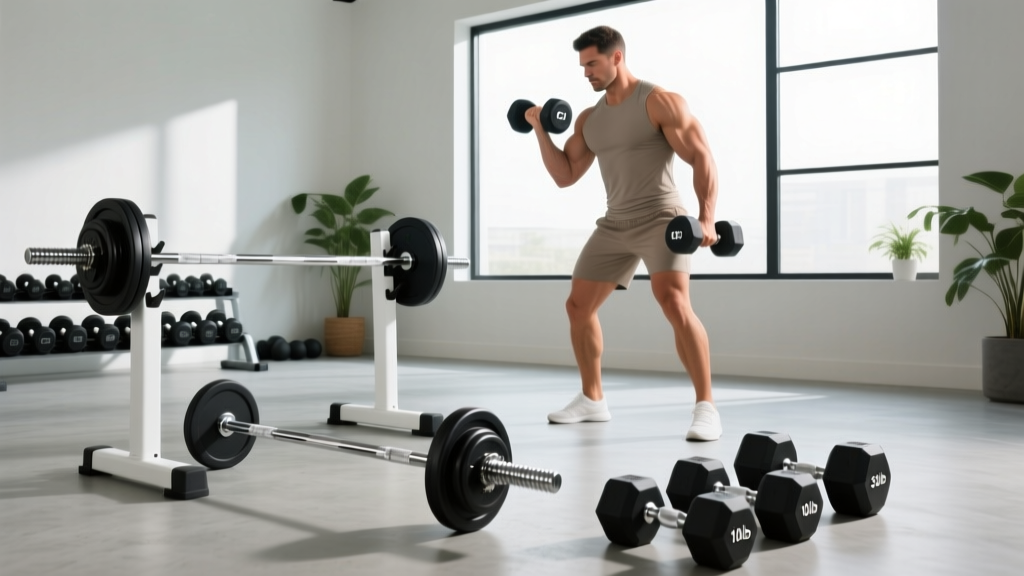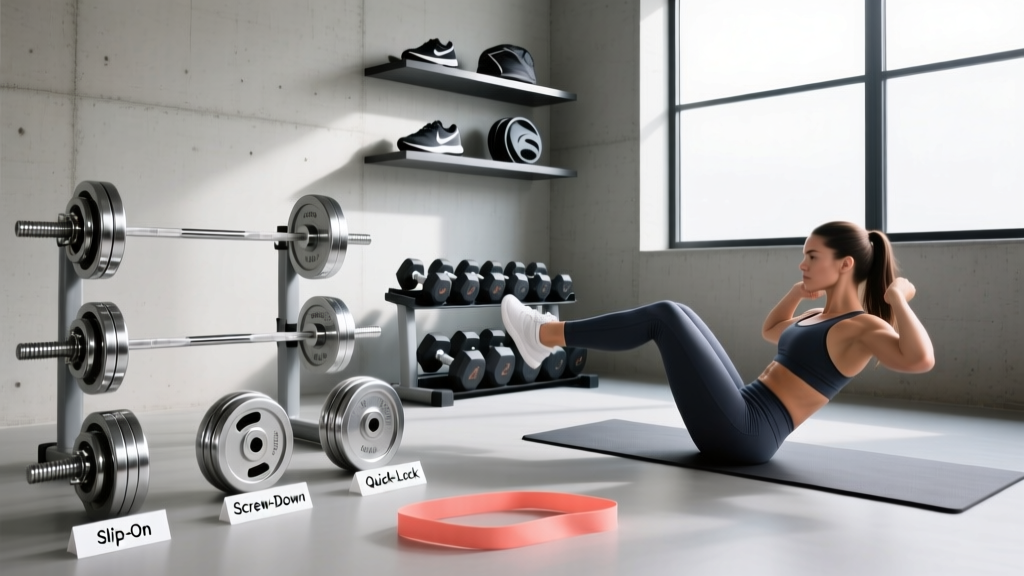
Barbell Collar Types Comparison & Lower Ab Workout with Dumbbells
Compare barbell collar and clamp types for safe lifting, then master your core with our targeted lower ab workout with dumbbells for home gym success.

Home Gym Architecture: Securing the Barbell and Targeting the Core
Building a comprehensive home gym in 2026 requires more than just accumulating iron; it demands an understanding of equipment safety and intelligent programming. Two seemingly disparate elements of a successful training session are the hardware that keeps your heavy compound lifts safe and the accessory tools used for targeted isolation. In this guide, we execute a detailed barbell collar and clamp types comparison to ensure your heavy squats and deadlifts are secure, before transitioning into a highly effective lower ab workout with dumbbells to maximize your core development during accessory blocks.
The Physics of Barbell Security: Why Collars Matter
When you load a barbell, the plates do not sit perfectly flush against one another. During dynamic movements like the barbell hip thrust or heavy back squats, lateral forces cause plates to shift outward. According to equipment testing by BarBend, an uncollared barbell can experience plate shift of up to 2 inches per side during a heavy set of 10, drastically altering the center of gravity and increasing the risk of a catastrophic dump. Choosing the right clamp is not just about convenience; it is about mitigating sheer force and protecting your barbell's sleeve finish.
Head-to-Head: Barbell Collar and Clamp Types Comparison
The market is saturated with securing mechanisms, but they generally fall into three distinct categories. Here is how they stack up against each other in real-world gym environments.
1. Traditional Spring Clips
The ubiquitous spring clip is the default in most commercial gyms. Constructed from heavy-gauge steel wire, they rely on coil tension to grip the sleeve.
- Pros: Extremely affordable ($8–$12 per pair); lightweight; universally available.
- Cons: Require significant grip strength to apply; coil tension degrades over time (metal fatigue); prone to slipping on worn or chalky barbell sleeves.
- Failure Mode: During high-impact drops (e.g., power cleans), the kinetic energy easily overcomes the spring tension, causing the clip to launch off the sleeve.
2. Clamp-Style Collars (Cam-Lock & Push-Button)
Clamp-style collars use mechanical leverage to create a vice-like grip on the sleeve. Models like the Rogue AB-2 Aluminum Barbell Collar (~$25/pair) utilize a cam-lock mechanism, while the Lock-Jaw LITE 2 (~$30/pair) uses a glass-reinforced nylon body with a push-button release and internal TPU (Thermoplastic Polyurethane) lining.
- Pros: Exceptional grip strength; internal linings protect cerakote and zinc finishes; rapid application and removal.
- Cons: Bulkier than spring clips; cheaper plastic variants can crack if dropped directly on concrete from overhead.
- Edge Case: The Lock-Jaw LITE 2 weighs exactly 0.25 lbs each, allowing for precise micro-loading, whereas heavier aluminum clamps can add nearly a full pound to your total bar weight.
3. Competition Calibrated Spinlock Collars
Governed by strict international standards, competition collars are heavy, threaded, and designed for absolute immobility. The Eleiko Olympic Competition Collar (~$95/pair) is CNC-machined from solid aluminum and weighs exactly 2.5 kg per collar.
- Pros: Zero lateral shift under maximum load; acts as calibrated weight; mandatory for sanctioned meets.
- Cons: Expensive; slow to apply and remove; overkill for general home gym hypertrophy work.
Collar Comparison Matrix
| Collar Type | Model Example | Approx. Cost (Pair) | Weight (Each) | Grip Mechanism | Best Use Case |
|---|---|---|---|---|---|
| Spring Clip | Generic Steel Spring | $10 | ~0.15 lbs | Coil Tension | Light accessories, casual lifting |
| Cam-Lock Clamp | Rogue AB-2 | $25 | ~0.30 lbs | Mechanical Leverage | Heavy squats, deadlifts, bench |
| Push-Button Clamp | Lock-Jaw LITE 2 | $30 | 0.25 lbs | Internal TPU Wedge | Olympic lifts, precise micro-loading |
| Competition Spinlock | Eleiko IWF Collar | $95 | 2.50 kg (5.5 lbs) | Threaded Screw | Sanctioned meets, max effort PRs |
Expert Insight: If your home gym features a dropping zone (e.g., bumper plates on horse stall mats), avoid rigid aluminum clamps that lack internal shock-absorbing linings. The repeated impact of dropping a barbell from overhead can shatter the housing of inferior metal clamps. Opt for TPU-lined nylon clamps for Olympic movements.
Active Recovery: The Ultimate Lower Ab Workout with Dumbbells
While your barbell setup is secured with the appropriate clamps, a complete training architecture requires targeted accessory work. The lower abdominal region (specifically the lower fibers of the rectus abdominis and the hip flexors) is notoriously difficult to isolate. Biomechanical principles of core stabilization, as outlined by ACE Fitness, emphasize that to target the lower abs, you must initiate movement from the pelvis rather than the thoracic spine. Incorporating dumbbells adds progressive overload to these movements, forcing adaptation beyond standard bodyweight routines.
Perform this lower ab workout with dumbbells at the end of your heavy compound session or on active recovery days. Rest 60 seconds between sets.
1. Dumbbell Reverse Crunches (Pelvic Tilt Focus)
Standard reverse crunches often lack the resistance required for advanced lifters. Adding a dumbbell increases the moment arm and forces deeper lower-ab engagement.
- Setup: Lie flat on a bench or mat. Place a light hex dumbbell (5–10 lbs) securely between your feet, squeezing your ankles together.
- Execution: Keep your legs at a 90-degree angle. Instead of just lifting your knees to your chest, focus on curling your pelvis off the floor, driving your tailbone toward the ceiling.
- Tempo: 1-second concentric (pelvic curl), 3-second eccentric (slowly lowering the pelvis without letting it rest on the floor).
- Prescription: 3 sets of 12–15 reps.
- Safety Note: Use hex dumbbells to prevent rolling. If you feel strain in your lower back, reduce the weight and focus strictly on the posterior pelvic tilt.
2. Weighted Seated Knee Tucks (Counterbalance Method)
This movement challenges the lower abs while demanding intense stabilization from the transverse abdominis.
- Setup: Sit on the edge of a flat bench. Hold a single 20–35 lb dumbbell vertically against your chest with both hands (goblet position).
- Execution: Lean back slightly to find your center of gravity. Extend your legs straight out, then forcefully contract your lower abs to draw your knees into your chest while simultaneously crunching your torso forward.
- Prescription: 3 sets to technical failure (usually 15–20 reps).
3. Dumbbell Dead Bugs with Overhead Reach
The dead bug is a staple for anti-extension core stability. Adding dumbbells increases the lever length and the demand on the deep core.
- Setup: Lie on your back holding a 10 lb neoprene or rubber dumbbell in each hand. Press them directly over your chest. Raise your legs so your hips and knees are at 90 degrees.
- Execution: Press your lower back aggressively into the floor. Slowly extend your right leg straight out while simultaneously lowering your left dumbbell overhead toward the floor. Return to the start and alternate.
- Prescription: 3 sets of 10 reps per side, utilizing a slow 4-second eccentric phase on the extending limbs.
Integrating Gear and Programming for Long-Term Gains
A successful home gym routine in 2026 is defined by the intersection of reliable equipment and intelligent exercise selection. Investing $30 in a high-quality pair of TPU-lined clamp collars ensures that your heavy barbell work is safe, your sleeves remain unscratched, and your plates do not shift during maximal efforts. Pairing this hardware reliability with a structured, progressive lower ab workout with dumbbells ensures that your core is strong enough to support those heavy loads while maintaining aesthetic and functional balance. Do not neglect the small hardware, and do not skip the targeted accessory work; both are non-negotiable pillars of elite-level training.
More gear to consider
All reviews
Upper Body Dumbbell Workout Men: Hex vs Urethane Gym Layout Guide
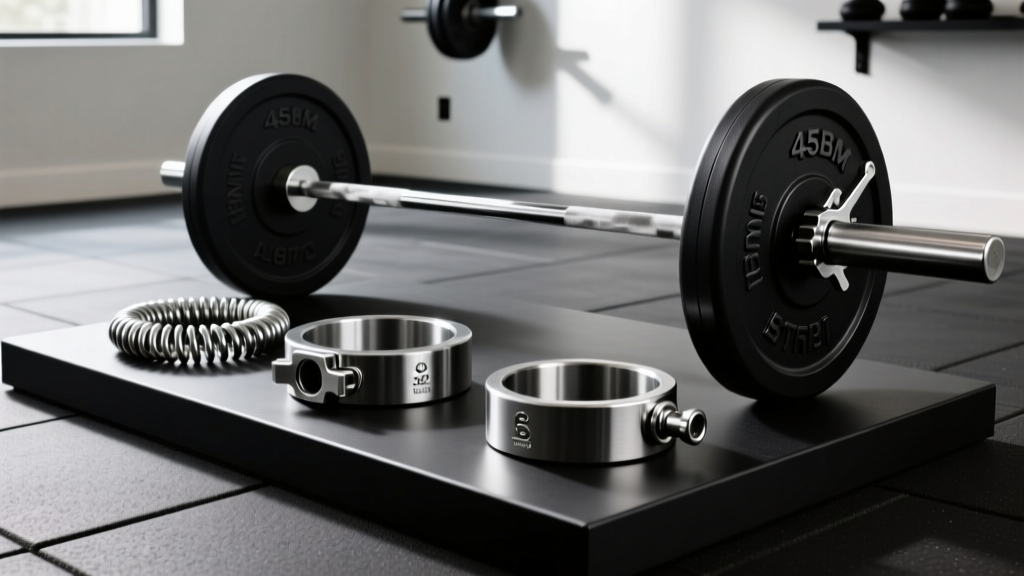
Which Barbell Collar to Use Before Your Reverse Dumbbell Curl?
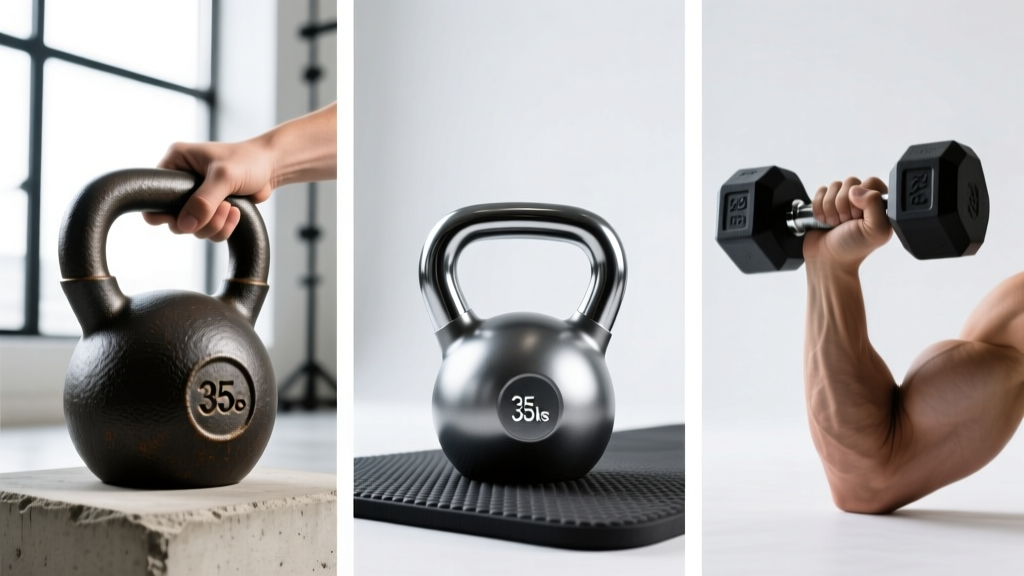
2026 Kettlebell Guide: Cast Iron vs Competition & Dumbbell Side Curl

Lying Triceps Dumbbell Extension & Barbell Collar Setup Walkthrough

Best Dumbbell Racks to Store Weights for Dumbbell Sit-Ups (2026)