
Barbell Collar Types Comparison: Flat Dumbbell Bench & Rack Safety
Troubleshoot weight slippage and gym safety with our barbell collar and clamp types comparison, essential for rack and flat dumbbell bench setups.

The Hidden Physics of Weight Slippage in Modern Home Gyms
In 2026, the home gym ecosystem is more integrated and space-efficient than ever. Lifters are frequently transitioning between a power rack, a barbell floor press, and a heavy flat dumbbell bench routine within a single 4x8-foot rubber mat footprint. While most lifters obsess over barbell whip or bench pad density, the humble barbell collar remains the most overlooked safety critical component in the gym.
When you are performing rotational movements, uneven presses, or rapid drop-sets near your flat dumbbell bench, the rotational torque applied to the barbell sleeve or plate-loaded dumbbell handle is immense. A failing collar doesn't just ruin a set; it alters the center of gravity mid-rep, leading to severe wrist, shoulder, and pectoral tears. Below, we break down the exact failure modes of modern clamps and provide a troubleshooting guide to secure your setup.
⚠️ Common Mistake Alert: Never use standard spring clips for plate-loaded adjustable dumbbells. The wrist supination and pronation required during a flat dumbbell bench press generate rotational torque that will easily overcome the 15 lbs of lateral clamping force a spring clip provides, causing the plate to slide and the handle to spin violently in your grip.Barbell Collar and Clamp Types: A Technical Comparison
To troubleshoot effectively, you must understand the mechanical limits of the tools at your disposal. According to comprehensive testing by Barbend's equipment analysts, collar performance varies wildly based on material composition and clamping mechanism.
| Collar Type | Model Example (2026) | Avg. Price | Clamping Force | Primary Failure Mode |
|---|---|---|---|---|
| Spring Clip | Generic Chrome | $8 - $12 | Low (10-15 lbs) | Tension fatigue; slips under rotation. |
| Lever / Jaw | Lock-Jaw Pro 2 | $35 - $45 | High (100+ lbs) | Nylon resin shatters if dropped on concrete. |
| CNC Aluminum Clamp | Rogue AH-1 | $55 - $65 | Extreme (300+ lbs) | Scratches barbell sleeves; hex bolt stripping. |
| Spinlock (Threaded) | Titan Fitness 1" | $15 - $25 | Variable | Cross-threading; slow to remove during drop-sets. |
Troubleshooting Slippage During Bench and Floor Routines
When weight slippage occurs, it is rarely random. It is usually a symptom of a mismatch between the collar's mechanical design and the biomechanics of the lift. Here is how to troubleshoot the most common scenarios encountered around the rack and flat dumbbell bench.
Scenario A: The Wobbling Adjustable Dumbbell Handle
The Symptom: You are using 1-inch standard plate-loaded dumbbell handles for heavy flat dumbbell bench presses. Mid-way through the concentric phase, the outer plate shifts outward, and the handle spins in your palm.
The Root Cause: Standard 1-inch spring clips lack the surface area to grip a smooth steel handle under rotational torque. Furthermore, the wrist rotation inherent to a neutral-to-pronated grip on a flat dumbbell bench creates a centrifugal twisting force.
The Fix: Abandon spring clips for dumbbell handles. Upgrade to 1-inch aluminum screw-down collars or use hex-shaped rubber plates that interlock and resist sliding. If you must use standard collars, wrap a layer of athletic tape around the dumbbell sleeve where the collar sits to increase the friction coefficient and outer diameter slightly.
Scenario B: Barbell Floor Press Rotational Forces
The Symptom: During a barbell floor press (often used as a hypertrophy accessory to the flat dumbbell bench), one side's collar slides inward, pinching your fingers against the plate.
The Root Cause: Floor presses involve aggressive elbow flaring and uneven lockouts. If you are using plastic lever collars, the repeated micro-bouncing of the barbell against the floor can cause the lever's internal teeth to skip over the barbell sleeve's knurling or grooves.
The Fix: Switch to a CNC aluminum clamp, such as the Rogue Aluminum Collars. The machined aluminum body and high-tension hex bolts bite directly into the steel sleeve, completely eliminating lateral movement regardless of floor impact.
"Rotational inertia is the enemy of the home gym lifter. A 45-pound plate sitting just two inches off-center on a barbell sleeve generates enough torque to snap a cheap plastic collar's hinge pin during a dynamic movement." — Biomechanics & Strength Equipment Safety Guidelines
Real-World Failure Modes and Edge Cases
Even premium collars fail if subjected to environmental or mechanical edge cases. Be aware of these specific vulnerabilities in your equipment:
- The Cold Garage Gym Snap: Glass-filled nylon lever collars (like the popular Lock-Jaw series) become highly brittle in temperatures below 40°F (4°C). If you train in an unheated garage in January and drop a loaded barbell from shoulder height, the collar's hinge pin can snap cleanly in half.
- Sleeve Tolerance Mismatches: Not all Olympic barbells are exactly 50.0mm. Some budget import bars measure 49.5mm. If you use a rigid aluminum clamp calibrated for exactly 50mm, it will spin freely on a 49.5mm sleeve, offering zero lateral resistance. Always measure your barbell sleeve with digital calipers before buying precision collars.
- The Drop-Set Bottleneck: When supersetting barbell rows with flat dumbbell bench presses, time is a factor. Screw-down aluminum collars take 10-15 seconds to remove. If you are doing rapid drop-sets, lever collars are mandatory, provided you accept the long-term wear on the plastic latch.
Maintenance and Replacement Timelines
Collars are not lifetime purchases. To maintain a safe training environment, adhere to the following 2026 maintenance schedule:
- Spring Clips: Retire every 6 months. The steel loses its temper and memory, reducing clamping force by up to 40% over time.
- Nylon Lever Collars: Inspect the hinge pin and internal teeth every 3 months. If the teeth show visible rounding or the lever requires excessive force to close, the internal cam is worn. Replace immediately.
- Aluminum Clamps: Wipe down the internal threads and apply a drop of machine oil every 2 months to prevent sweat-induced corrosion on the hex bolts.
FAQ: Securing Your Home Gym Setup
Can I use barbell collars on my adjustable dumbbell set?
No. Commercial adjustable dumbbells (like PowerBlock or Bowflex) use proprietary internal retention mechanisms. Adding external collars can interfere with the weight-selection pin or cradle, potentially causing the weight stack to disengage mid-air over your chest.
Why do my plates still rattle even with tight aluminum collars?
Rattling is often caused by a mismatch between the plate's center hole diameter and the barbell sleeve, not the collar. Cast iron plates often have center holes measuring 51mm or 52mm to allow for easy loading. The collar prevents lateral sliding, but it cannot eliminate the 1-2mm of vertical play between the plate and the sleeve. To fix this, use calibrated steel plates or competition bumper plates with precise 50.0mm inserts.
Is it safe to leave collars clamped on the barbell overnight?
Leaving nylon lever collars clamped for extended periods can cause the plastic to 'creep' or permanently deform to the shape of the sleeve, reducing future clamping tension. Aluminum clamps can be left on, but it is best practice to loosen the tension slightly to preserve the rubber inner lining's elasticity.
More gear to consider
All reviews
EZ Curl Bar vs Straight Bar: Beyond the Dumbbell Bench Press Workout
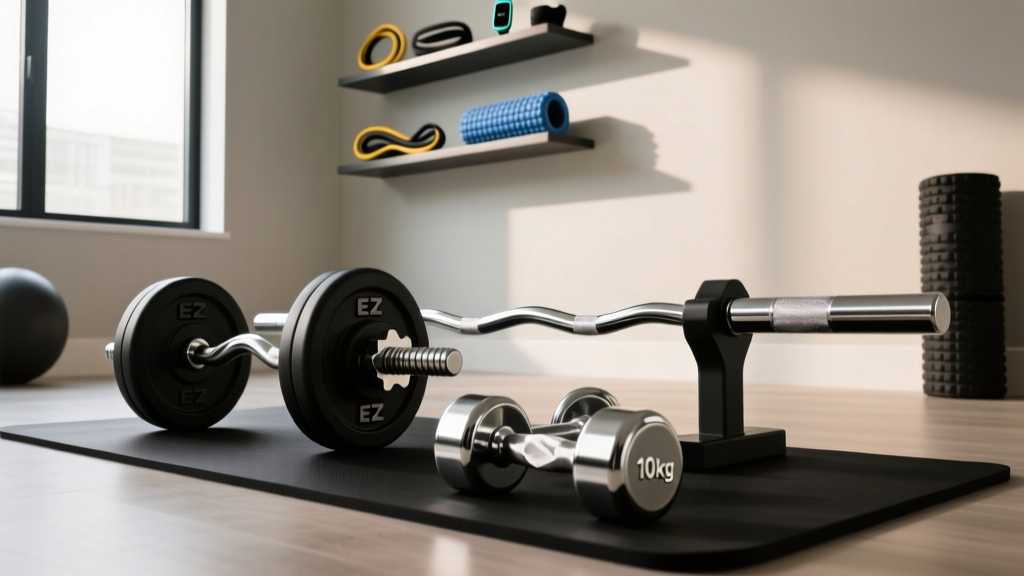
EZ Curl Bar vs Straight Bar: 2026 Data & Svend Press with Dumbbells

Rubber Hex vs Urethane: Space Layouts for Dumbbell Curls on Bench

Neoprene Dumbbell Setup & What Muscle Does Incline Dumbbell Press Work

2026 Market Trends: Racks for the Back Squat Dumbbell Alternative
