Beyond the Dumbbell Exercises Poster: Barbell Collar Types Compared
Compare spring clips, snap-locks, and competition collars. Discover the best barbell clamps for safety, holding force, and home gym use in 2026.

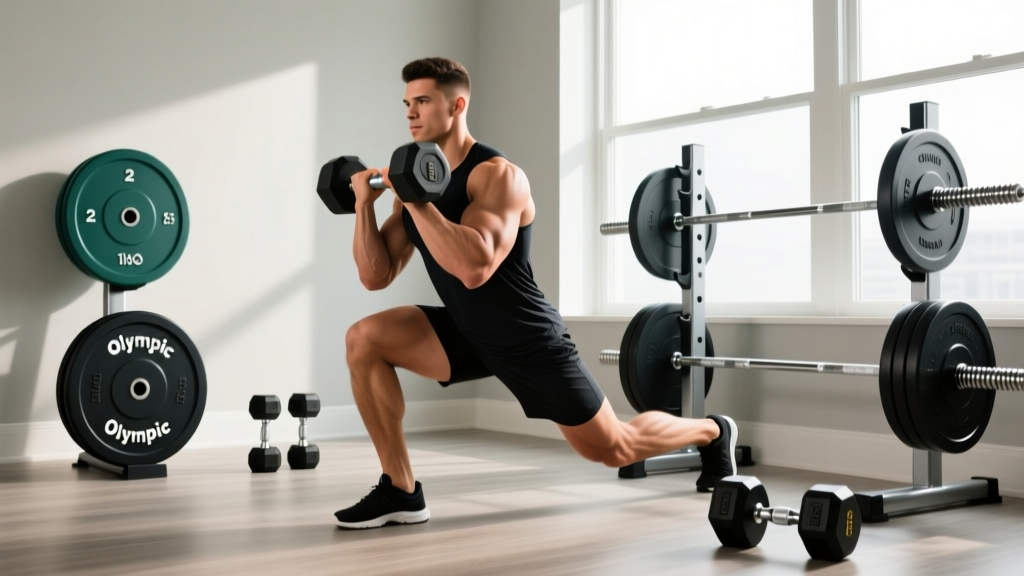
When outfitting a home gym, lifters often prioritize the visually appealing and the immediately functional. You might spend hours selecting the perfect power rack, dialing in your adjustable dumbbells, and even hanging a vintage or highly detailed dumbbell exercises poster on the wall for quick anatomical reference and workout inspiration. But while a well-designed poster elevates the aesthetic and utility of your training space, it won’t save your toes—or your lower back—if a 45-pound iron plate slides off your barbell sleeve during a heavy deadlift.
Barbell collars and clamps are the most overlooked safety accessories in strength training. As of 2026, commercial gym liability standards have increasingly banned cheap spring clips in favor of high-retention clamps, yet many home gym owners are still using outdated or inadequate securing methods. In this head-to-head comparison, we break down the physics, failure modes, and real-world applications of the four primary barbell collar types to help you protect your equipment and your body.
⚠️ The Biomechanical Danger of Plate Shift
According to safety guidelines emphasized by organizations like the National Strength and Conditioning Association (NSCA), an unsecured barbell isn't just a dropping hazard; it's a rotational torque hazard. If plates shift outward on one side of the bar during the concentric phase of a squat or deadlift, the center of mass shifts asymmetrically. This forces the lumbar spine and stabilizing musculature to compensate for sudden lateral loads, drastically increasing the risk of herniation and shear injuries.
Head-to-Head: The 4 Main Barbell Collar Types
1. Spring Clips (The Outdated Standard)
Spring clips are the ubiquitous, pinched-metal clips found in the bottom of most commercial gym bins. They rely on the tension of bent spring steel to grip the barbell sleeve.
- Holding Force: Very Low (Typically 10–25 lbs of lateral resistance on a slick zinc bar).
- Weight: Negligible (~0.1 lbs per pair).
- Price Range: $8 – $12 per pair.
- Best For: Light accessory work, bicep curls, and floor presses where the bar is never subjected to high-impact drops.
The Expert Verdict: Spring clips are a liability. The metal fatigues over time, losing its tension. During high-impact movements like touch-and-go deadlifts or Olympic lifts, the vibration causes the clip to 'walk' down the sleeve, leading to catastrophic plate dumps. We do not recommend these for any serious home gym setup in 2026.
2. Snap-Lock / Polymer Clamps (The Modern Workhorse)
Brands like Lock-Jaw and Rogue Fitness have popularized the glass-reinforced nylon snap-lock clamp. These utilize a lever-action cam mechanism that bites down onto the barbell sleeve with immense friction.
- Holding Force: Extremely High (300+ lbs of lateral resistance).
- Weight: ~0.25 lbs per clamp.
- Price Range: $25 – $45 per pair.
- Best For: Powerlifting, CrossFit, general strength training, and high-volume plate changes.
The Expert Verdict: This is the gold standard for 95% of lifters. The Rogue Monster Clamps and Lock-Jaw Pro models offer near-instant application and removal. However, there is a specific edge case: polymer clamps can become brittle if left in an unheated garage gym where temperatures drop below 30°F (-1°C). If you train in a cold environment, bring them inside between sessions to prevent the cam mechanism from snapping under pressure.
3. Competition Spin-Lock Collars (The Olympic Standard)
These are heavy, precision-machined metal collars that secure via a threaded screw-down mechanism or a heavy-duty friction lock. The International Weightlifting Federation (IWF) strictly mandates that competition collars must weigh exactly 2.5 kilograms (5.5 lbs) each.
- Holding Force: Absolute (Mechanically locked, zero slip).
- Weight: 2.5 kg (5.5 lbs) per collar.
- Price Range: $120 – $180+ per pair (e.g., Eleiko, Uesaka).
- Best For: Olympic weightlifting (Snatch, Clean & Jerk) and calibrated competition lifting.
The Expert Verdict: If you are an Olympic weightlifter, these are non-negotiable. The massive weight of the collar acts as a secondary retaining wall, and the mechanical lock ensures that the bumper plates do not shift during the violent deceleration of a dropped snatch. For general powerlifting or bodybuilding, however, the 5-lb added weight per side and the slow screw-on time make them impractical for daily use.
4. Traditional Clamp / Screw-Down Collars
Often made of aluminum or heavy plastic with a threaded T-handle or hex-bolt, these clamp around the sleeve and tighten via a screw mechanism (e.g., Harbinger ProLock).
- Holding Force: High (150–250 lbs of resistance, dependent on user tightening).
- Weight: ~0.5 lbs per clamp.
- Price Range: $15 – $30 per pair.
- Best For: Budget-conscious lifters who need more security than spring clips but cannot afford premium snap-locks.
The Expert Verdict: While secure, the failure mode here is user error and sleeve damage. If you don't tighten them enough, they slip. If you over-tighten them, the metal screws can gouge and scratch the chrome or zinc finish of your expensive barbell sleeves, leading to rust and degraded sleeve rotation over time.
Comparison Matrix: Holding Force, Weight, and Price
| Collar Type | Avg. Holding Force | Weight (Per Pair) | 2026 Avg. Cost | Application Speed |
|---|---|---|---|---|
| Spring Clips | < 25 lbs | 0.2 lbs | $10 | Fast (but unreliable) |
| Snap-Lock Clamps | 300+ lbs | 0.5 lbs | $35 | Instant |
| Competition Spin-Lock | Absolute Lock | 11.0 lbs (5kg) | $150 | Slow |
| Screw-Down Clamps | 150 - 250 lbs | 1.0 lbs | $22 | Moderate |
Failure Modes & Edge Cases to Watch in 2026
Buying the right clamp is only half the battle; understanding how they fail in the real world separates the novices from the veterans.
1. The 'Barbell Whip' Effect
When performing heavy deadlifts or Olympic lifts, the barbell bends and oscillates (known as 'whip'). If your collars do not have a flush profile, the vibration can cause the clamp to bounce against the inner hub of the bumper plate. Over hundreds of reps, this micro-impact degrades the internal cam teeth of polymer snap-locks. Pro Tip: Always push the clamp completely flush against the plate before locking the lever.
2. Sleeve Tolerance Variances
Not all barbell sleeves are created equal. A standard Olympic sleeve is 50mm in diameter, but manufacturing tolerances mean some budget barbells measure 49.2mm, while premium calibrated bars measure exactly 50.1mm. Spring clips and cheap screw-downs will fail to grip a 49.2mm sleeve securely. Premium snap-locks feature flexible internal polyurethane linings that adapt to these micro-variances, ensuring a tight grip regardless of the barbell brand.
3. Chalk Buildup
In 2026, home gym ventilation remains a common issue. Ambient humidity mixed with airborne lifting chalk creates a cement-like paste that gets trapped in the hinges of snap-lock clamps and the threads of screw-down collars. If you don't wipe your collars down with a damp microfiber cloth monthly, the lever mechanism will seize, rendering a $40 clamp useless.
Final Verdict: Which Clamp Belongs in Your Gym?
Your gym environment dictates your gear. If you are building a dedicated Olympic lifting platform, invest the $150+ in a pair of calibrated competition collars to ensure the bar's balance is perfectly maintained during overhead catches. For the powerlifter, CrossFit athlete, or general fitness enthusiast doing heavy squats and deadlifts, a high-quality pair of glass-reinforced nylon snap-lock clamps (like the Lock-Jaw Pro or Rogue Monster) is the undisputed champion. They offer elite holding force, lightning-fast plate changes, and won't scratch your barbell's zinc coating.
Ultimately, a safe and effective training space requires attention to every detail. Whether you are meticulously planning your weekly periodization, hanging up your favorite dumbbell exercises poster to keep your accessory work on track, or loading up the bar for a new 1RM, never compromise on the hardware that keeps the iron exactly where it belongs.
Frequently Asked Questions (FAQ)
Do I need to factor barbell collar weight into my total lifted weight?
For casual home gym tracking, no. The 0.25 lbs to 1 lb added by standard clamps is negligible. However, if you are using IWF-calibrated competition collars, you must add 5 kg (11 lbs) to your total barbell weight, as they are officially counted as part of the bar assembly in sanctioned meets.
Can I use spring clips for bench press?
While the risk of plates sliding off a horizontal bar is lower than on a vertical deadlift bar, the NSCA still strongly recommends using secure collars for bench pressing. If you fail a rep and the bar tilts unevenly, unsecured plates will slide off the lower side instantly, causing the bar to violently flip and potentially cause severe injury.
Will snap-lock clamps damage my barbell sleeves?
No. High-quality snap-lock clamps use a hardened nylon exterior with a softer, high-friction polyurethane inner lining. This grips the sleeve tightly without biting into or scratching the chrome, zinc, or cerakote finishes found on modern barbells.
More gear to consider
All reviews
Best Adjustable Dumbbells for Barbell and Dumbbell Curls (2026)

Incline Dumbbell Angle & Olympic vs Standard Plates

What Are Dumbbell Shoulder Presses? Loadable Dumbbell Budget Guide

Beyond Good Dumbbell Exercises: Barbell Weight & Knurling Compared

Cost Analysis: Loadable Dumbbells for Arm Dumbbell Rows