Barbell Collar Types: Securing the Dumbbell Crunch Press
Compare barbell collar and clamp types for Olympic and loadable dumbbells. Learn which locks secure your weights for the dumbbell crunch press.

The Hidden Danger of Over-Body Lifts
When outfitting a serious training space in 2026, lifters often obsess over barbell whip, bumper plate calibration, and power rack stability. Yet, the most critical safety component in your gym is frequently an afterthought: the collar. This oversight becomes dangerously apparent during complex, asymmetrical movements like the dumbbell crunch press. While traditionally a core exercise performed with a single fixed-weight dumbbell, advanced athletes and strongman competitors frequently use loadable Olympic dumbbell handles to scale the resistance well beyond commercial dumbbell limits. When you are holding 80 to 120 pounds of shifting iron directly over your face, neck, and torso, a failed collar does not just ruin a set—it risks catastrophic injury.
The physics of the dumbbell crunch press involve a constantly shifting center of mass. As you lower the weight and engage the core, the lateral tilt and rotational torque placed on the dumbbell sleeve are immense. Standard spring clips, which might suffice for a barbell bench press where the sleeves remain relatively horizontal, will slide off a tilted loadable dumbbell sleeve under this specific rotational stress. Understanding the engineering, failure modes, and proper application of different collar types is non-negotiable for safe training.
⚠️ CRITICAL SAFETY WARNING: Never perform the dumbbell crunch press, pullovers, or any over-face movement with loadable handles using standard wire spring clips. The rotational torque will overcome the spring tension, causing the plates to dump directly onto your face or throat.Barbell and Dumbbell Collar Types: 2026 Comparison Matrix
Below is a comprehensive breakdown of the primary collar mechanisms available on the market, evaluated for their holding power, durability, and suitability for dynamic movements.
| Collar Type | Mechanism | Avg. Price (Pair) | Best Application | Crunch Press Safety |
|---|---|---|---|---|
| HG-Style Aluminum | Cam-lever with nylon insert | $40 - $55 | Heavy barbell lifting, drops | ⭐⭐⭐⭐ |
| Polymer Clamp | Glass-filled nylon ratchet | $30 - $40 | Olympic weightlifting, quick changes | ⭐⭐⭐ |
| Spin-Lock / Threaded | Threaded sleeve with star nut | $15 - $25 | Loadable dumbbells, home gyms | ⭐⭐⭐⭐⭐ |
| Competition Clamp | Steel wedge and hex bolt | $80 - $120 | Powerlifting meets, IPF standard | ⭐⭐⭐⭐⭐ |
| Heavy-Duty Spring | High-carbon steel tension | $10 - $15 | Light accessories, sled pulls | ⭐ |
Deep Dive: Collar Mechanisms and Real-World Failure Modes
To make an informed purchasing decision, you must look past the marketing copy and understand the materials science and mechanical limitations of each collar type.
1. HG-Style Aluminum Clamp Collars
Pioneered by brands like Rogue Fitness (e.g., the HG-2.6 Collars priced around $45), these are the gold standard for commercial gyms and garage powerlifters. They utilize an extruded aluminum body with a high-density nylon insert that grips the barbell sleeve via a cam-lever action. The Advantage: They distribute pressure evenly across a wide surface area, preventing sleeve scratching while offering immense holding power against linear sliding. The Failure Mode: The aluminum hinge pin is a known vulnerability. If a loaded barbell is dropped from overhead and lands directly on the collar's hinge mechanism, the aluminum can deform or shear. Once the hinge is bent, the cam-lever loses its geometric tension, rendering the collar useless. Furthermore, these collars are often too bulky for the short sleeves of loadable dumbbells, making them a poor choice for the dumbbell crunch press.
2. Polymer Ratchet Clamps (e.g., Lock-Jaw Pro)
Constructed from glass-filled nylon, polymer clamps use a ratcheting gear system to bite into the steel sleeve. Priced competitively at around $35 per pair, they are incredibly lightweight and allow for lightning-fast plate changes during drop sets. The Advantage: Immune to the hinge-deformation issue that plagues aluminum collars; they will bounce off a dropped bar rather than break. The Failure Mode: Polymer teeth degrade over time, especially in environments with heavy chalk dust or extreme temperature fluctuations. As the teeth wear down, the collar develops 'micro-slip.' During the eccentric, tilted phase of a dumbbell crunch press, this micro-slip can compound into a full plate shift, altering the balance of the implement mid-rep.
3. Spin-Lock and Threaded Collars
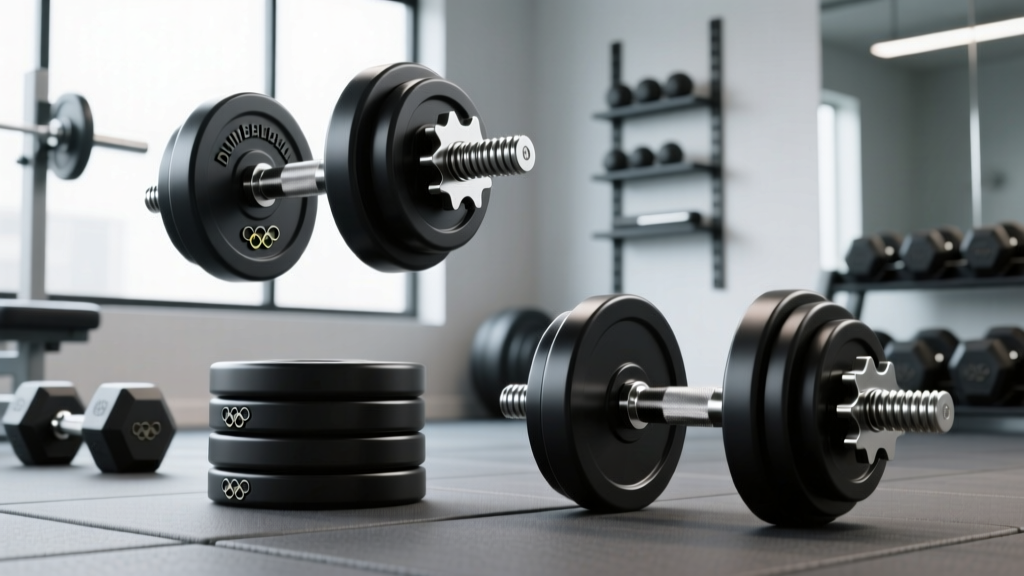
For loadable dumbbell handles, threaded sleeves with heavy-duty star-lock nuts remain the undisputed king of safety. Unlike smooth Olympic sleeves that rely on friction, threaded sleeves use mechanical threading to secure the plates. The Advantage: Zero slip. It is physically impossible for the plates to slide off unless the nut is completely unthreaded. This makes them the only 100% safe option for high-torque, over-body movements. The Failure Mode: Thread stripping. If a user cross-threaded the star nut or fails to clean the chalk and iron dust from the grooves, the nut can strip under heavy loads. Additionally, threading and unthreading takes significantly more time than flipping a cam-lever.
4. Competition Steel Clamps
According to the International Powerlifting Federation (IPF) Technical Rules, competition collars must weigh exactly 2.5 kg (5.5 lbs) each and are typically secured via a steel wedge and hex bolt or heavy-duty lever. These are overkill for general fitness but represent the absolute pinnacle of securing massive loads. They are rarely used on dumbbells due to their sheer size and weight, which would drastically alter the prescribed weight of the implement.
Sleeve Tolerance and the Micro-Slip Phenomenon
One of the most misunderstood aspects of collar security is sleeve tolerance. Not all 50mm Olympic sleeves are exactly 50.0mm. According to Rogue Fitness equipment specifications and international manufacturing standards, barbell sleeves can range from 50.0mm to 50.4mm.
Why does this matter? A friction-based collar (like an HG clamp or polymer lock) calibrated for a tight 50.0mm fit may fail to achieve adequate compression on a 50.4mm Eleiko or Uesaka barbell sleeve. When you introduce the lateral tilt of the dumbbell crunch press, gravity acts on the unevenly compressed plates, exploiting that 0.4mm gap. The collar shifts, the plates rattle, and the kinetic chain of your core exercise is instantly compromised. Always test your collars on your specific implements; if you can twist the collar by hand after locking it, it is unsafe for dynamic movements.
Biomechanics of the Dumbbell Crunch Press: Why Collars Matter
The dumbbell crunch press is a hybrid movement combining a spinal flexion (crunch) with a sagittal plane press. The National Strength and Conditioning Association (NSCA) emphasizes that any exercise involving a load suspended over the head or torso requires redundant safety measures.
When using a loadable dumbbell handle for this exercise, the sleeve is subjected to three distinct forces:
- Linear Shear: The weight of the plates pulling outward due to gravity and the angle of the arm.
- Rotational Torque: The natural pronation and supination of the wrist and forearm during the pressing phase.
- Vibrational Shock: The abrupt deceleration at the top of the press, which sends a shockwave through the sleeve.
Spring clips can only resist linear shear. They offer zero resistance to rotational torque. Therefore, for the dumbbell crunch press, you must use either a tightly calibrated cam-lever collar (if the dumbbell sleeve is long enough to accommodate it without interfering with the plates) or a threaded spin-lock handle.
Maintenance Protocols for Collar Longevity
Even the most expensive competition collars will fail if not maintained. Implement this 3-step maintenance protocol to ensure your equipment remains safe in 2026 and beyond:
- Chalk Purging: Gym chalk (magnesium carbonate) is highly abrasive. Once a month, use a stiff nylon brush and compressed air to clean the hinge pins of aluminum collars and the teeth of polymer clamps. Chalk buildup acts like lapping compound, grinding away the metal and nylon.
- Nylon Insert Inspection: The nylon pad inside an HG-style collar experiences 'compression set' over time—it stays flattened and loses its rebound elasticity. If the nylon is visibly indented and no longer grips the sleeve tightly, replace the collar immediately.
- Thread Lubrication: For spin-lock dumbbells, apply a dry PTFE (Teflon) lubricant to the threads every six months. Avoid wet oils like WD-40, which will attract iron dust and create a grinding paste that destroys the threads.
Expert Buying Framework: Matching the Collar to the Lift
Do not rely on a single type of collar for your entire gym. Build a modular security system based on the movement profile:
The 2026 Collar Arsenal
- For Heavy Barbell Squats & Drops: Invest in HG-Style Aluminum Clamps ($45). They handle the shock of dropped bumper plates and provide wide-surface friction.
- For Olympic Weightlifting (Snatch/Clean): Use Polymer Ratchet Clamps ($35). Their lightweight profile won't throw off your barbell balance, and they survive impacts if the bar rolls.
- For Loadable Dumbbells & Over-Body Lifts: Exclusively use Threaded Spin-Lock Handles ($20-$30 for the collar/nut set). The mechanical thread is the only failsafe against the rotational torque of the dumbbell crunch press.
- For Sled Pulls and Cable Attachments: Heavy-Duty Spring Clips ($12) are perfectly adequate for low-risk, ground-level accessory work.
Frequently Asked Questions
Can I use standard barbell collars on loadable dumbbell handles?
Usually, no. Most standard Olympic barbell collars require at least 1.5 to 2 inches of empty sleeve space to clamp onto. Loadable dumbbell handles typically have shorter sleeves (6.5 to 8.5 inches total). Once you load the plates, there is rarely enough real estate left to secure a bulky HG-style clamp. Always measure your implement's sleeve length before purchasing.
Why do my plates rattle even when the collar is tight?
Rattling is caused by the variance in the center hole diameter of your weight plates, not necessarily collar failure. Cast iron plates often have 51mm or 52mm holes, while Olympic bars are 50mm. To eliminate rattle and improve safety during the dumbbell crunch press, use calibrated steel plates or high-quality urethane bumpers with precise 50.2mm steel insert rings.
Are quick-release collars safe for the dumbbell crunch press?
Only if they utilize a mechanical locking pin that passes through a hole in the sleeve, or if they are heavily tensioned cam-levers on a perfectly sized sleeve. However, for maximum peace of mind when a weight is hovering over your teeth and trachea, threaded spin-locks remain the gold standard.
Final Verdict
Securing your weights is not merely a matter of gym etiquette; it is a critical biomechanical safety requirement. While flashy aluminum clamps and quick-release polymer collars dominate the barbell market, the unique rotational forces of the dumbbell crunch press demand respect for mechanical threading and precise sleeve tolerances. Audit your equipment today, measure your sleeves, and ensure your collars are rated for the specific torque profiles of your training regimen. Your safety is only as strong as your weakest clamp.
More gear to consider
All reviews
Olympic Barbell Buying Guide & Trapezius Workout with Dumbbells

Barbell Collar & Clamp Comparison: Past Different Dumbbell Workouts

Rubberized Dumbbells vs Olympic & Standard Weight Plates
2026 Trend Report: Urethane vs Rubber Hex for the Dumbbell Superman
Beyond Vinyl Dumbbells: 2026 Loadable Plate Market Trends
