Barbell Collar vs Clamp Types for the Lat Focused Dumbbell Row
Compare barbell collar and clamp types for heavy lifting. Learn how to secure loadable dumbbells for the lat focused dumbbell row and prevent plate shift.

The Biomechanics of Pulling: Why Collar Choice Matters
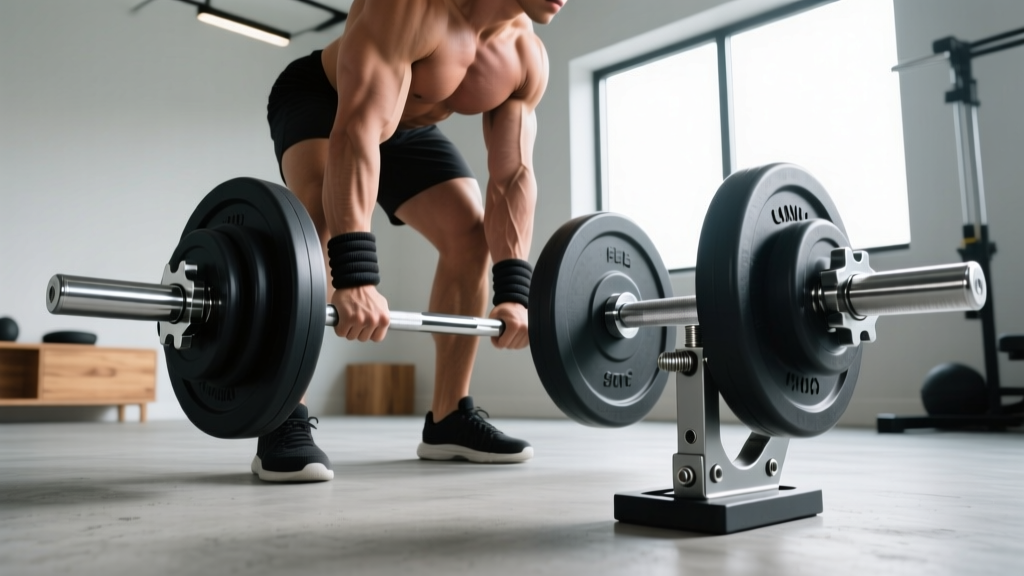
When building a massive back, the lat focused dumbbell row is a staple movement. While many lifters use selectorized adjustable dumbbells, serious strength athletes and bodybuilders frequently rely on plate-loaded Olympic dumbbell handles—such as the Titan T3 Fat Boy or the Rogue Loadable Dumbbells—to accommodate loads exceeding 150 pounds per hand. These loadable handles feature standard 50mm Olympic sleeves, meaning they require high-quality barbell collars or clamps to secure the plates.
The physics of a heavy unilateral row are unforgiving. At the bottom of the movement, the weight is subjected to high eccentric tension. As you drive the elbow past the torso to achieve peak lat contraction, the sudden deceleration at the top of the rep generates immense lateral shear force. If your collar lacks adequate clamping pressure, the plates will shift outward, altering the center of gravity mid-rep and potentially causing the collars to slide off the sleeve entirely. In this comprehensive 2026 guide, we compare the top barbell collar and clamp types to ensure your heavy pulling sessions remain safe and effective.
Head-to-Head: Barbell Collar and Clamp Types Compared
According to extensive equipment testing by Garage Gym Labs, the market is dominated by three primary collar mechanisms: locking aluminum collars, heavy-duty plastic clamp collars, and traditional steel spring collars. Here is how they stack up when subjected to the rigorous demands of heavy dumbbell rowing.
1. Locking Aluminum Collars (e.g., Rogue USA Aluminum Collars)
Machined from 6061 aircraft-grade aluminum, locking collars represent the gold standard for barbell and loadable dumbbell security. The Rogue USA Aluminum Collars utilize a patented cam-and-lever mechanism that physically expands an inner polymer ring against the steel sleeve.
- Clamping Force: Exceptional. The mechanical advantage of the lever eliminates plate rattle entirely.
- Durability: Virtually indestructible under normal gym conditions.
- Drawback: At roughly $75.00 per pair, they are a premium investment. They also take slightly longer to lock and unlock compared to quick-release clamps.
2. Clamp-Style Collars (e.g., Lock-Jaw Collars)
Clamp collars use a reinforced nylon or composite plastic body with a quick-release latch. The Lock-Jaw Collar is a ubiquitous sight in commercial gyms due to its speed and ease of use.
- Clamping Force: Moderate to High. They grip the sleeve tightly via internal friction pads, but extreme torque (like dropping a loadable dumbbell from the top of a row) can cause micro-shifts.
- Durability: The plastic hinges and latches are the primary failure points. Over time, the internal friction pads compress and lose their grip.
- Drawback: Priced around $34.95, they are affordable, but they must be replaced every 12 to 18 months in a heavy-use environment.
3. Traditional Spring Collars
The classic zinc-plated steel spring collar is the budget option, usually priced between $8.00 and $12.00 per pair. They rely entirely on the tensile strength of the steel spring to provide inward pressure.
- Clamping Force: Low. As noted in equipment reviews by BarBend, spring collars are notorious for allowing plate rattle and shifting during dynamic movements.
- Durability: High material durability, but the tension degrades over years of use.
- Drawback: They are difficult to compress with one hand, making rapid weight changes during drop sets on the lat focused dumbbell row frustrating and potentially unsafe.
Feature Comparison Matrix
| Collar Type | Reference Model | Material | Est. Clamping Pressure | Price (2026) | Best Use Case |
|---|---|---|---|---|---|
| Locking Lever | Rogue USA Aluminum | 6061 Aluminum / Polymer | Very High | $75.00 / pair | Heavy 1RM pulls, Olympic lifts |
| Quick Clamp | Lock-Jaw Standard | Glass-Reinforced Nylon | Moderate-High | $34.95 / pair | High-volume hypertrophy, drop sets |
| Spring Clip | Standard Chrome Spring | Zinc-Plated Steel | Low | $10.00 / pair | Light accessories, static holds |
| Padded Clamp | Harbinger BioFit | ABS Plastic / EVA Foam | Moderate | $24.99 / pair | Standard barbell rows, light DB work |
Application Guide: Securing Loadable Dumbbells for Rows
Executing a true lat focused dumbbell row requires a specific setup to maximize the stretch and contraction of the latissimus dorsi while keeping the shoulder joint safe. When using plate-loaded handles, your collar protocol is just as important as your lifting straps.
Expert Tip: The 'Bump and Lock' MethodBefore locking your aluminum or clamp collars, physically bump the plates together on the floor to ensure zero air gaps. Slide the collar flush against the outermost plate, then engage the locking mechanism. This prevents the 'clack' effect that occurs when plates shift outward during the eccentric lowering phase of the row.
- Load the Inner Plates First: Place your heaviest bumper or cast-iron plates closest to the dumbbell head. This lowers the center of mass closer to your grip, improving wrist stability during the row.
- Use Fractional Plates for Micro-Loading: If you are progressing your lat focused dumbbell row by 2.5 lbs, use thin fractional plates on the outside. Ensure your clamp collar is rated to grip thin plates securely; some wide-body clamps struggle to secure plates thinner than 5mm.
- Double-Collar for Extreme Loads: If you are rowing 140+ lbs per hand using a 20-inch loadable sleeve, consider using a primary locking collar and a secondary spring collar as a physical backstop. While redundant, it provides peace of mind during maximal effort sets.
Edge Cases and Failure Modes
Understanding how and why collars fail is critical for injury prevention. Based on biomechanical analyses of unilateral pulling, here are the most common failure modes:
The Eccentric Slip (Spring Collars)
During the eccentric (lowering) phase of the lat focused dumbbell row, gravity pulls the dumbbell toward the floor. If the handle is slightly angled downward, spring collars often lack the inward PSI to counteract the weight of the plates sliding down the 50mm sleeve. This results in the plates crashing against the endcap, potentially bending the sleeve or tearing the calluses on your gripping hand.
The Latch Fatigue (Plastic Clamps)
Plastic clamp collars rely on a hinge and a tension latch. Over time, the nylon develops micro-fractures at the hinge point. If a lifter drops a loadable dumbbell from the top of a rowing movement (a common occurrence during forced reps or muscle failure), the sudden shockwave can snap a fatigued plastic latch, sending plates flying across the gym floor.
Sleeve Tolerance Variances
Not all 50mm sleeves are created equal. A Rogue dumbbell handle sleeve might measure exactly 49.8mm, while a budget Amazon-brand handle might measure 49.2mm. Locking aluminum collars are generally forgiving due to their internal polymer expansion rings, but rigid plastic clamps may fail to close completely on thicker sleeves, or fail to grip thinner sleeves entirely.
'The security of your equipment should never be the limiting factor in your mind-muscle connection. If you are worrying about your collars slipping during a heavy back day, you are not fully stimulating the target musculature.' — FitGearPulse Editorial Team
Frequently Asked Questions
Can I use standard barbell collars on adjustable dumbbells?
No. Standard adjustable dumbbells (like PowerBlock or Nuobell) use proprietary internal locking mechanisms or selector pins. Barbell collars are specifically designed for 50mm Olympic sleeves found on plate-loaded barbells and Olympic loadable dumbbell handles.
Which collar is best for drop sets on the lat focused dumbbell row?
For rapid weight changes during drop sets, quick-release clamp collars (like the Lock-Jaw) are superior. While locking aluminum collars offer better security, the time required to unscrew or un-lever them disrupts the metabolic stress and time-under-tension required for an effective drop set.
Do I need collars if I'm using magnetic weight plates?
Yes. While magnetic plates stick to each other, they do not grip the smooth steel of the dumbbell sleeve. The lateral torque generated during a heavy lat focused dumbbell row will easily break the magnetic bond, causing the entire stack of plates to slide off the sleeve. Always use a physical collar as your primary retention method.
Final Verdict
When it comes to securing heavy loads for demanding unilateral movements like the lat focused dumbbell row, cutting corners on collars is a false economy. For athletes routinely rowing over 100 lbs per hand on Olympic loadable handles, the Rogue USA Aluminum Locking Collars are the undisputed champion, offering unmatched safety and longevity. For high-volume hypertrophy lifters who prioritize speed and convenience during drop sets, high-quality Clamp-Style Collars remain the most practical choice. Ditch the spring clips, secure your sleeves, and focus entirely on driving your elbow to the ceiling.
More gear to consider
All reviews
Olympic vs Standard Plates Setup & Dumbbell Leg Workout at Home
Cast Iron vs Competition Kettlebells & Incline Dumbbell Row Angle

Best Adjustable Dumbbells for a Heavy Leg Workout With Dumbbells

Power Rack vs Squat Stand: Upgrading From Squatting With A Dumbbell

EZ Curl Bar vs Straight Bar for Your Dumbbell and Bench Workout
