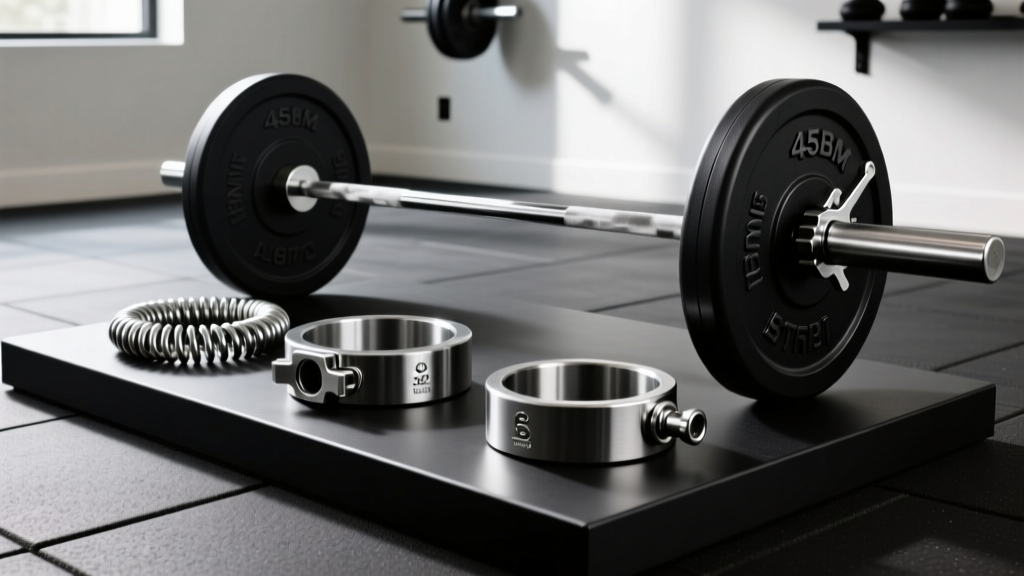
Which Barbell Collar to Use Before Your Reverse Dumbbell Curl?
Compare spring, clamp, and lever barbell collars for heavy lifts, then transition safely to targeted isolation with the reverse dumbbell curl.

The Architecture of a Safe Free-Weight Session
A meticulously programmed strength session often follows a specific biomechanical arc: you begin with heavy, bilateral barbell compounds and conclude with targeted, unilateral dumbbell isolation. Whether you are loading up a 405-pound deadlift or preparing for high-volume forearm work, equipment security is non-negotiable. In 2026, the market for barbell collars and clamps has evolved far beyond the flimsy spring clips of the early 2000s. Yet, many lifters still risk catastrophic plate shifts because they misunderstand sleeve tolerances and clamping mechanics.
Before you strip the bar and move to the rack to execute a strict reverse dumbbell curl for brachioradialis hypertrophy, your barbell plates must be locked down with absolute certainty. This in-depth buying guide compares the primary collar types on the market, analyzing failure modes, pricing, and real-world garage gym performance.
Collar Type Breakdown & Real-World Performance
Not all 50mm Olympic sleeves are created equal. While the standard dictates a 50mm diameter, manufacturing tolerances and knurling wear can drop sleeve diameters to 49.2mm. This 0.8mm variance is the primary culprit behind collar slippage during dynamic movements like power cleans. Here is how the top collar designs handle real-world abuse.
1. Spring Clips (The Economy Trap)
Often sold in bulk for $10 to $15 per pair, spring clips (like the ubiquitous Bullz Fitness models) rely on metal tension. Failure Mode: Metal fatigue. After roughly 4 to 6 months of regular drops, the steel loses its tensile memory. Furthermore, spring clips offer zero lateral clamping force against the plates; they merely act as a physical barrier. If your barbell sleeve lacks a pronounced lip, a heavy drop will easily eject the clip, sending 45-pound plates flying.
2. Lock-Jaw Style Clamps (The Modern Standard)
Clamp-style collars, popularized by the Lock-Jaw Pro 2 (retailing around $29.95), use a nylon-resin body with a thermoplastic rubber (TPR) inner lining. The TPR grips the sleeve knurling, while the dual-latch mechanism applies immense lateral pressure, compressing the plates together. Expert Insight: These excel on bars with aggressive sleeve knurling (like the Rogue Ohio Bar) but can micro-slip on perfectly smooth, polished stainless steel sleeves if not snapped shut with sufficient force.
3. Lever-Action Competition Collars
For those who demand International Weightlifting Federation (IWF) compliance, lever-action collars are the gold standard. The IWF Technical Rules mandate collars that weigh exactly 2.5kg and secure plates immovably. Models like the Rogue Ah-6 ($45.00) or Eleiko Olympic Training Collars ($85.00) feature machined aluminum bodies and stainless steel levers. Edge Case: The lever requires a specific clearance radius to snap shut. If you are using thick-hub urethane plates and load them to the absolute edge of the sleeve, you may not have the 1.5 inches of bare steel required to mount the lever collar.
4. Spinlock Collars (The Traditionalist's Anchor)
Threaded spinlock collars are virtually slip-proof but notoriously slow to use. In a modern commercial or garage gym environment where plate-changing speed dictates workout density, spending 45 seconds threading a collar on each side is a massive bottleneck. They are best reserved for dedicated home setups where the bar is rarely stripped.
2026 Barbell Collar Comparison Matrix
| Collar Type / Model | Avg. Price (Pair) | Clamping Mechanism | Lateral Plate Compression | Best Use Case |
|---|---|---|---|---|
| Generic Spring Clips | $12.99 | Steel Tension | None | Light isolation, commercial gym floors |
| Lock-Jaw Pro 2 | $29.95 | TPR Lined Clamp | High | Heavy compounds, drops, garage gyms |
| Rogue Ah-6 Lever | $45.00 | Aluminum Lever | Extreme | Olympic lifting, competition prep |
| Eleiko Training Collar | $85.00 | Precision Lever | Extreme | High-end facilities, IWF compliance |
| Threaded Spinlock | $25.00 | Screw Thread | Moderate | Static home gym setups |
When using premium urethane plates (like Rogue Urethanes), the steel insert hub often protrudes slightly past the rubber rim. If you do not push the plates tightly together before applying a clamp-style collar, the collar will grip the rubber rim instead of the steel sleeve, resulting in a dangerous outward slide during incline bench presses or overhead work.
Transitioning to Isolation: Mastering the Reverse Dumbbell Curl
Once your heavy barbell work is complete and your collars are safely stowed, a well-rounded arm day transitions to dumbbell isolation. This is where the reverse dumbbell curl becomes a staple for developing the forearms and the often-neglected brachioradialis. According to kinesiology data tracked by ExRx.net, the pronated (overhand) grip shifts the mechanical load away from the biceps brachii and heavily onto the brachioradialis and extensor carpi radialis longus.
Execution and Equipment Selection
Because the pronated grip places the biceps in a mechanically disadvantaged position, you will typically need to drop your working weight by 15% to 20% compared to a standard supinated curl. For a lifter who curls 50-pound dumbbells for 10 reps, the reverse dumbbell curl will likely require 35 to 40-pound dumbbells to maintain strict form without compensating with shoulder flexion.
- Dumbbell Profile: Use Hex-head dumbbells (e.g., Rogue Urethane Hex). The flat edges prevent the dumbbells from rolling away when placed on the floor between drop sets, a crucial safety feature in crowded gyms.
- Handle Knurling: A medium-aggressive knurl is preferred. The overhand grip is highly susceptible to grip fatigue; a smooth handle will force your finger flexors to fail before the brachioradialis is fully stimulated.
- Wrist Alignment: Maintain a neutral wrist. Allowing the wrist to flex forward (curling the wrist inward) shifts the tension entirely to the forearm extensors, defeating the purpose of targeting the upper arm/brachioradialis tie-in.
Expert Verdict: Building Your 2026 Free-Weight Arsenal
As detailed in comprehensive equipment roundups by authorities like Garage Gym Reviews, the clamp-style collar (specifically the Lock-Jaw Pro 2 or equivalent high-tension nylon clamps) offers the best intersection of speed, security, and price for 90% of lifters. They survive drop tests from 400+ pound deadlifts and apply enough lateral compression to stop plate rattle during heavy barbell rows.
However, the true mark of an experienced lifter is understanding how equipment dictates the flow of a workout. Securing your barbell with a high-quality lever or clamp collar ensures your heavy compounds are safe, allowing you to transition with complete mental focus to your isolation movements. When you step up to the rack to perform your reverse dumbbell curl, your only concern should be the burn in your brachioradialis—not the lingering anxiety of an unsecured 45-pound plate sliding off a barbell in the corner of the gym. Invest in proper clamps, respect the sleeve tolerances, and build a complete, safe, and highly effective free-weight arsenal.
More gear to consider
All reviews
Dumbbell Squat to Overhead Press: Cast Iron vs Competition

Power Rack vs Squat Rack vs Squat Stand for Dumbbell Pronation

Power Rack vs Squat Rack vs Stand: Rigs & What Do Dumbbell Rows Work

Cast Iron vs Competition Kettlebells: Little Dumbbell Nebula Care

Optimizing Space for Trap Workouts with Dumbbells: Urethane vs Hex
