Bar Care for Your At Home Workout Plan With Dumbbells: EZ vs Straight
Learn essential EZ curl bar vs straight bar maintenance to maximize longevity and complement your at home workout plan with dumbbells.

Bridging the Gap: Barbell Maintenance in a Dumbbell-Centric Home Gym
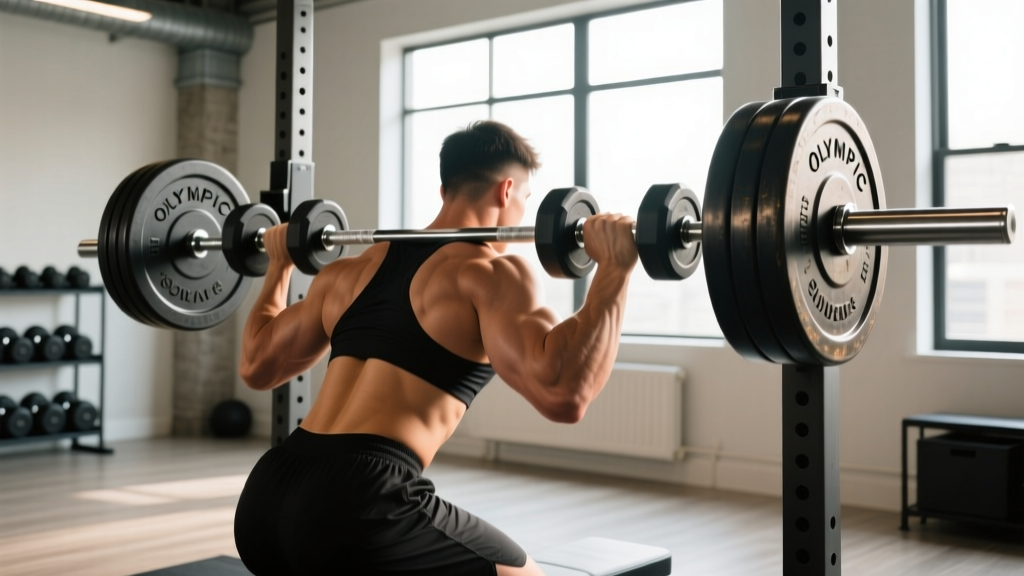
While a well-structured at home workout plan with dumbbells forms the foundation of many garage gyms, integrating an Olympic barbell can unlock new hypertrophy pathways and break through stubborn plateaus. Adjustable dumbbells like the PowerBlock Elite or Bowflex SelectTech are phenomenal for unilateral work and space-saving, but they cannot replicate the raw axial loading and central nervous system adaptation of a barbell. When home gym owners decide to add a barbell to their arsenal, the debate almost always narrows down to an EZ curl bar vs straight bar comparison.
However, purchasing the iron is only half the battle. The longevity of your equipment dictates the safety and effectiveness of your training. A neglected straight bar can develop seized sleeves and rusted knurling, while a poorly maintained EZ curl bar can suffer from asymmetric bushing wear and stress fractures at its signature bends. According to equipment longevity data from Garage Gym Reviews, proper maintenance can extend the functional lifespan of a mid-tier barbell from a mere three years to well over a decade. This guide provides a deep-dive, expert-level maintenance protocol tailored to the unique structural realities of both bar types.
The Anatomy of Rust and Stress: EZ Curl vs. Straight Bar Vulnerabilities
To properly maintain your equipment, you must first understand the mechanical and environmental vulnerabilities inherent to each design. A standard 7-foot Olympic straight bar distributes force linearly along a uniform shaft. In contrast, an EZ curl bar features multiple angled bends designed to reduce wrist and elbow supination stress during movements like bicep curls and tricep extensions, as documented in biomechanical analyses by ExRx.net.
⚠️ Expert Warning: The Cerakote Misconception
Many lifters assume that premium ceramic coatings like Cerakote (found on the $295 Rogue Fitness Cerakote Curl Bar) are entirely impervious to damage. While highly resistant to oxidation, Cerakote is a polymer-ceramic matrix. Using harsh chemical solvents, WD-40, or wire brushes will degrade the coating and void the manufacturer's warranty. Always use mild dish soap, warm water, and a microfiber cloth for coated shafts.
Structural Failure Modes
- Straight Bar Deflection: Cheaper straight bars (under 150,000 PSI tensile strength, like the $140 Titan Fitness Olympic Bar) are prone to permanent plastic deformation if left loaded with heavy plates in a rack for weeks.
- EZ Bar Torsion Stress: The angled bends of an EZ bar act as stress concentrators. If repeatedly dropped on the bends rather than the sleeves, micro-fractures can develop in lower-quality steel alloys.
- Knurling Oxidation: The deep valleys of volcano-style knurling trap dead skin, chalk, and ambient moisture, creating a perfect incubator for rust, regardless of the bar's primary finish.
The Finish Matrix: Tailoring Your Cleaning Protocol
The maintenance schedule for your barbell is entirely dictated by its finish. Below is a comprehensive matrix to help you identify your bar's coating and apply the correct longevity protocol.
| Finish Type | Oxidation Resistance | Required Maintenance | Oiling Frequency |
|---|---|---|---|
| Bare Steel | Very Low | Weekly brushing, immediate oiling | Weekly |
| Black Oxide | Low to Moderate | Bi-weekly brushing, light oiling | Bi-weekly |
| Hard Chrome | High | Monthly brushing, wipe down | Monthly (shaft only) |
| Cerakote / Zinc | Very High | Mild soap/water, no harsh chemicals | Rarely (sleeves only) |
Step-by-Step Longevity Protocol for Your Straight Bar
When supplementing your at home workout plan with dumbbells, the straight bar is typically reserved for heavy compound movements like deadlifts, squats, and bench presses. This means it accumulates heavy chalk, sweat, and occasional floor drops. Follow this exact protocol to maintain a straight bar like the popular CAP Barbell OB-86B (approx. $60):
- Dry Brush the Knurling: Use a stiff nylon-bristle brush (never brass or steel, which can damage softer finishes or leave corrosive metallic residue). Brush diagonally across the knurl pattern to dislodge chalk and dead skin.
- Apply Solvent (If Necessary): For stubborn grime on hard chrome or bare steel, apply a few drops of 3-in-One Multi-Purpose Oil or a specialized barbell cleaner. Let it sit for 60 seconds to break down sebum.
- Wipe and Buff: Use a clean microfiber towel to wipe the shaft down to bare metal. Ensure no oil residue remains, as a slick barbell is a safety hazard during heavy deadlifts.
- Sleeve Wipe-Down: Wipe the smooth sleeves with a dry cloth to remove plate dust, which can act as an abrasive and accelerate bushing wear.
The Unique Maintenance Challenges of the EZ Curl Bar
The EZ curl bar requires a more meticulous approach due to its geometry. The inner angles of the bends are notorious traps for moisture and magnesium carbonate (gym chalk). If left unattended, this mixture forms a hardened, cement-like paste that accelerates localized corrosion.
Targeted Bend Cleaning
To clean the bends effectively, use a soft-bristled toothbrush dipped in a 50/50 mixture of white vinegar and water (strictly for bare steel or chrome; avoid vinegar on Cerakote). Scrub the inner vertices of the angles, then immediately neutralize the acid with a damp water cloth and dry thoroughly. Failure to dry the inner bends is the number one cause of pitting rust on EZ bars stored in humid garages or basements.
Bushing Stress and Asymmetric Wear
Because EZ bars are shorter and lighter (typically 15 to 25 lbs compared to a 45 lb straight bar), the ratio of plate weight to bar weight is much higher. Loading four 45-lb plates on a 15-lb EZ curl bar places immense lateral torque on the bronze bushings inside the sleeves. To prevent the dreaded 'sleeve squeak' and premature bushing degradation, never drop an EZ curl bar from the top of a curl or tricep extension. The shockwave travels directly through the bends and compromises the bushing seating.
Sleeve Overhaul: Bushing and Bearing Care
Whether you are using a straight bar or an EZ curl bar, the rotating sleeves require periodic maintenance to ensure smooth Olympic lifts and reduce joint torque. Most budget and mid-tier bars utilize bronze bushings, while premium straight bars (like those from Rogue Fitness) may use needle bearings.
🛠️ Pro-Tip: The Snap-Ring Re-Grease
Every 12 to 18 months, use a pair of internal snap-ring pliers to remove the retaining ring at the end of the sleeve. Slide the sleeve off the shaft, clean the old, blackened grease with a degreaser, and apply a generous layer of Super Lube Multi-Purpose Synthetic Grease (PTFE). This single $8 tube of grease can add five years of silent, frictionless spinning to your barbell sleeves.
Storage Solutions to Protect Your Investment
How you store your bars between your dumbbell-focused workouts dictates their lifespan. Never store a barbell on the floor, where ambient moisture and concrete condensation will rapidly rust the sleeves and shaft.
- Vertical Storage: Vertical barbell racks are excellent for saving space, but ensure the base is lined with rubber or UHMW plastic. Dropping a barbell into a bare metal vertical rack will dent the shaft and damage the knurling.
- Horizontal Rack Storage: If storing horizontally on a squat rack, always remove the weight plates. Leaving plates loaded creates a constant downward force that, over months, will exceed the steel's yield strength and result in a permanently bent bar.
- Humidity Control: If your home gym is in an unclimate-controlled garage, invest in a dehumidifier or use silica gel desiccant packs near your barbell storage area to keep ambient humidity below 50%.
Summary: Integrating Longevity into Your Routine
Transitioning from a purely dumbbell-based regimen to a hybrid routine utilizing both an EZ curl bar and a straight bar offers incredible versatility for your at home workout plan with dumbbells. However, this versatility demands respect for the metallurgy and mechanics of your equipment. By matching your cleaning solvents to your bar's specific finish, aggressively targeting the moisture traps on EZ bar bends, and routinely re-greasing your sleeve bushings, you ensure that your iron investment remains safe, precise, and rust-free for decades of training.
More gear to consider
All reviews
Power Rack vs Squat Stand: Space for Dumbbell Squat Cleans

Maintaining Gear for Heavy Dumbbell Exercises: Rubber Hex vs Urethane

How Heavy Are Dumbbells You Lift Characters vs Real Barbell Weights

Optimizing Gym Layouts: Watson Dumbbell Rack & Storage Solutions
Cast Iron vs Competition Kettlebells: Care & Back and Bi Workout with Dumbbells