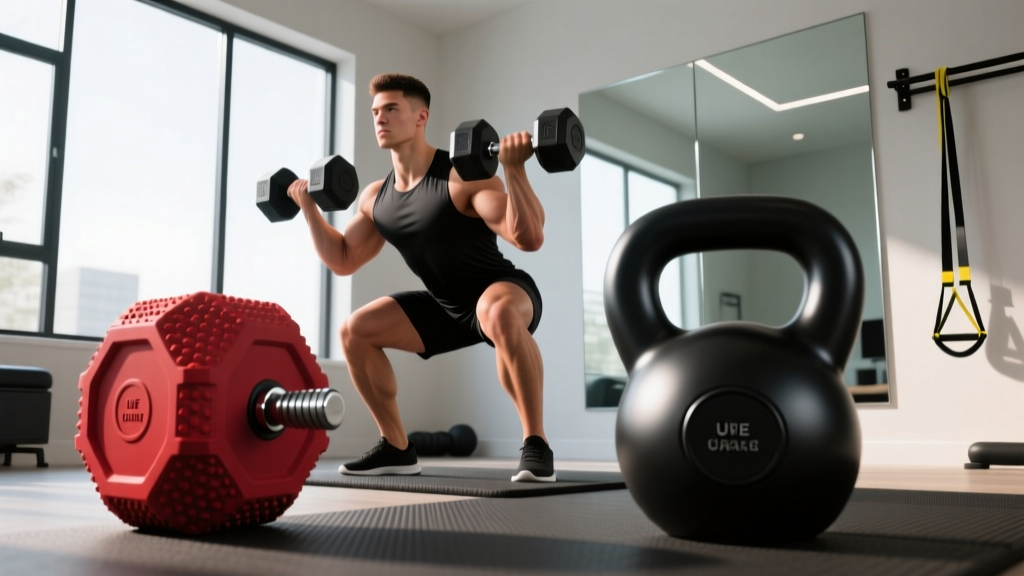
What Does Dumbbell Squat Work? Rubber Hex vs Urethane Care
Discover what does dumbbell squat work on your body and gear. Compare rubber hex vs urethane dumbbells with expert maintenance and longevity tips.

The Biomechanics: What Does Dumbbell Squat Work?
When athletes and coaches ask what does dumbbell squat work, the immediate answer focuses on human anatomy. According to the American Council on Exercise (ACE), the dumbbell goblet squat and dual-dumbbell front squat primarily target the quadriceps, gluteus maximus, and adductor complex, while demanding intense isometric contraction from the core, upper back, and forearms.
However, from an equipment engineering perspective, we must ask a secondary question: What does the dumbbell squat work on your gear? The answer is brutal. Heavy dumbbell squats subject your equipment to high-impact drops, aggressive friction against the thighs, and prolonged exposure to highly acidic human sweat. If you are building a home or commercial gym in 2026, understanding how these biomechanical forces degrade different materials is critical. This guide breaks down the longevity, failure modes, and maintenance protocols for the two most common squatting dumbbells: rubber hex and urethane.
Material Showdown: Rubber Hex vs. Urethane
Not all dumbbell coatings are created equal. The molecular structure of the elastomer dictates how well the dumbbell survives the rigors of heavy leg days. Below is a comparative matrix of the current 2026 market standards for both materials.
| Feature | Rubber Hex (e.g., CAP Barbell) | Urethane (e.g., Rogue / Rep Fitness) |
|---|---|---|
| Cost per lb (2026 Avg) | $1.20 - $1.80 | $3.50 - $5.50 |
| Durometer (Shore A) | 85-90 (Softer, prone to tearing) | 90-95 (Dense, impact resistant) |
| Odor Off-gassing | High (recycled rubber compounds) | None (Virgin polyurethane) |
| UV & Sweat Resistance | Low (Degrades, becomes sticky) | High (Impervious to acidic sweat) |
| Drop Tolerance | Moderate (Edges chip on concrete) | Exceptional (Absorbs kinetic energy) |
Equipment Failure Modes During Heavy Squats
When executing heavy dual-dumbbell front squats, the weights rest against your thighs and are frequently dropped to the floor upon failure. This specific movement pattern accelerates distinct failure modes depending on your chosen material.
The Sweat-Acid Degradation Cycle
Human sweat has a pH ranging from 4.5 to 7.0, making it mildly to moderately acidic. When you perform high-rep goblet squats, your chest and hands sweat profusely onto the dumbbell handle and the inner collar of the dumbbell head.
- Rubber Hex Failure: The acidic sweat breaks down the vulcanized bonds in recycled rubber. Over 12 to 18 months of heavy use, the rubber near the handle junction becomes spongy, sticky, and eventually cracks. This leads to the dreaded 'spinning head' phenomenon, where the metal core detaches from the rubber overmold.
- Urethane Resilience: Polyurethane is chemically inert to mild acids. As noted in Garage Gym Reviews' extensive dumbbell testing, urethane coatings do not break down when exposed to sweat, chalk, or standard gym cleaners, ensuring the steel core remains hermetically sealed.
Handle Tear-Out and Knurling Wear
Dumbbell squats require immense grip strength. To compensate, lifters use aggressive knurling and lifting chalk. Chalk (magnesium carbonate) packs into the knurling valleys, trapping moisture against the steel handle. If the handle is not properly coated (e.g., bare steel or low-grade chrome), rust forms at the handle-to-head junction. Urethane dumbbells from premium brands like Rogue Fitness typically feature hardened chrome or Cerakote handles that resist chalk-induced corrosion far better than the standard chrome found on budget rubber hex sets.
The 2026 Longevity & Maintenance Protocol
To maximize the lifespan of your free weights, implement this strict maintenance routine. Proper care can extend the life of rubber hex dumbbells by 3 years, and urethane dumbbells by a decade or more.
- The Post-Squat Wipe Down: Never leave sweat on the handles. Use a microfiber cloth dampened with a 50/50 mix of water and white vinegar. This kills bacteria and neutralizes sweat acids without degrading polyurethane chains or drying out rubber.
- Knurling De-Chalking (Weekly): Use a stiff nylon brush (never steel wire, which strips chrome) to scrub chalk out of the knurling. Packed chalk holds ambient moisture, leading to micro-rust that eventually compromises the structural integrity of the handle.
- Rubber Hex Reconditioning (Bi-Annually): If you own rubber hex dumbbells, they will eventually dry out and oxidize, turning gray and chalky. Wipe them down with a very light application of 303 Aerospace Protectant or a silicone-based rubber conditioner. Warning: Never use petroleum-based products like WD-40 or Armor All, as they dissolve the vulcanized rubber.
- Proper Rack Storage: Never store dumbbells directly on a concrete garage floor. Concrete wicks moisture from the earth, which transfers to the steel dumbbell cores, causing them to rust from the inside out. Always use a 3-tier A-frame or horizontal saddle rack.
While urethane is highly durable, dropping 80+ lb dumbbells from shoulder height onto bare concrete will eventually cause micro-fractures in the steel handle, regardless of the coating. Always use 3/4-inch horse stall mats or dedicated drop pads in your squatting zone to absorb kinetic shock and protect both your joints and your equipment investment.
Investment Analysis: Cost Per Year of Use
When deciding between rubber hex and urethane for a squat-heavy routine, look beyond the initial price tag and calculate the Cost Per Year of Use (CPYU).
Assume a 100 lb pair of dumbbells used for squats 3 times a week:
- Rubber Hex ($160 initial): In a humid garage gym with heavy sweat exposure, the rubber will degrade and the handles may rust within 4 years. CPYU = $40.00
- Urethane ($450 initial): With basic wipe-down maintenance, a premium urethane set will easily last 15+ years without cosmetic or structural failure. CPYU = $30.00
Ultimately, while rubber hex dumbbells are an accessible entry point for general fitness, the biomechanical demands of the dumbbell squat—combined with sweat, friction, and dropping—make urethane the undisputed champion of longevity. By understanding what this movement works on your gear, you can make a smarter, more cost-effective purchasing decision for your training space.
More gear to consider
All reviews
Close Grip Dumbbell Bench Mistakes & Adjustable Weight Fixes

Rubber Hex vs Urethane Dumbbells: Best for Dumbbell Rows?

Overhead Dumbbell Press Mistakes: Adjustable Dumbbell Comparison
Gear Care: Cast Iron vs Competition & Beginner Dumbbell Arm Workout

Rubber Hex vs Urethane: Maintenance for Dumbbell Flyes for Man Boobs
