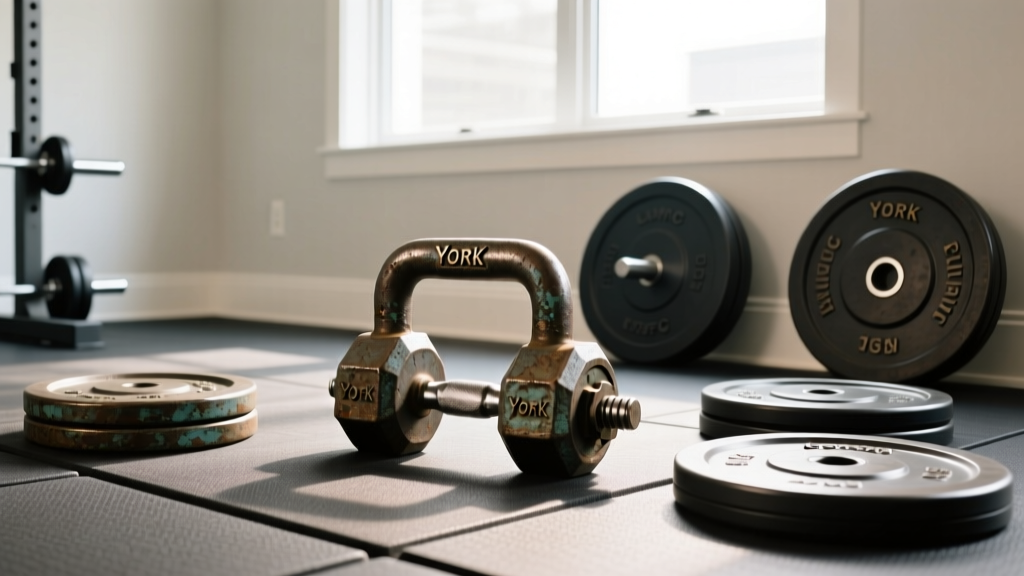
Antique York Dumbbells & Standard vs Olympic Plate Mistakes
Avoid common mistakes when pairing antique York dumbbells with standard or Olympic plates. Our troubleshooting guide covers sizing, adapters, and vintage rust.

The Vintage Iron Dilemma: Standard vs. Olympic Sizing
The resurgence of vintage cast iron has turned mid-century gym equipment into highly sought-after collector items in 2026. Among the most prized artifacts are antique York dumbbells and barbells, originally forged by the York Barbell Company during its golden era in the 1940s and 1950s. However, integrating these historical pieces into a modern home gym exposes a massive knowledge gap regarding weight plate types—specifically the critical differences between standard and Olympic plates.
Collectors and fitness enthusiasts frequently make costly, and sometimes dangerous, mistakes when attempting to pair vintage York handles with modern weight plates. The core issue stems from a historical shift in manufacturing tolerances and the fundamental engineering divide between 1-inch standard and 2-inch Olympic systems. According to the archives housed at the H.J. Lutcher Stark Center for Physical Culture and Sports, which holds the world's most extensive collection of York Barbell Company history, early 'standard' sizing was far less standardized than modern lifters assume.
This troubleshooting guide dissects the most common mistakes lifters make when mixing antique York gear with standard and Olympic plates, providing actionable solutions to preserve both your vintage iron and your physical safety.
The Core Conflict: 1-Inch Standard vs. 2-Inch Olympic
Before addressing specific failure modes, we must establish the baseline specifications. The fitness industry operates on two primary plate-and-sleeve ecosystems. Understanding the exact millimeter variances is crucial when dealing with antique equipment.
| Specification | Modern Standard | Vintage York Standard (Pre-1960) | Modern Olympic |
|---|---|---|---|
| Sleeve Diameter | 1.00 inch (25.4mm) | 1 1/16 inch (27.0mm) | 1.97 inches (50.0mm) |
| Plate Hole Diameter | ~1.05 inches | ~1.10 inches (Cast variance) | 2.00 - 2.04 inches |
| Weight Capacity (Typical) | 200 - 300 lbs | 300 - 500 lbs (Solid Steel/Iron) | 800 - 1,500+ lbs |
| 2026 Market Price (Per Lb) | $1.00 - $1.50 | $2.00 - $4.00 (Collector Grade) | $1.50 - $3.00 |
Mistake #1: Assuming All 'Standard' Plates Fit Vintage York Sleeves
The most pervasive error among vintage iron collectors is the assumption that all 'standard' equipment shares a universal 1-inch diameter. This is demonstrably false. Modern standard bars and dumbbell handles (often imported and mass-produced) are machined to exactly 1.00 inch (25.4mm).
However, antique York dumbbell handles and barbells from the 1940s and 50s were frequently turned to 1 1/16 inches (approx. 27mm). Bob Hoffman, the legendary founder of York Barbell, favored slightly thicker sleeves to prevent bending under the massive loads lifted by his Olympic weightlifting teams.
The Troubleshooting Fix:
- The Wobble Effect: If you slide modern 1-inch standard plates onto a 1 1/16-inch vintage York handle, they won't fit. If you use vintage York plates on a modern 1-inch bar, the 1/16-inch gap creates a severe 'wobble' during dynamic movements like lunges or curls, degrading your grip and stressing the wrist joints.
- The Solution: Always measure your antique York dumbbell sleeves with digital calipers before purchasing replacement plates. If your vintage handles measure 1.0625 inches (1 1/16"), you must source era-correct vintage York plates or have a local machinist turn down the sleeves to a strict 1.00 inch, though the latter will decrease the collector value of the antique handles.
Mistake #2: The 2-Inch Olympic Adapter Trap on Dumbbells
Because Olympic plates are vastly easier to find in 2026 than pristine 1-inch standard plates, many lifters attempt to use 1-inch to 2-inch sleeve adapters. While machined steel adapters work adequately on 7-foot barbells, applying them to antique York dumbbell handles is a biomechanical disaster.
'Adding a steel sleeve adapter to a 14-inch vintage dumbbell handle extends the center of gravity outward by at least 3 inches per side. This completely alters the rotational inertia of the dumbbell, placing extreme, unintended shear stress on the vintage threaded collars and the lifter's rotator cuffs.' — Biomechanics Analysis of Free Weight Implements
Failure Modes of Adapters on Vintage Iron:
- Threaded Collar Stripping: Antique York dumbbells rely on vintage threaded star-nuts or smooth sleeve collars to secure plates. The added lever arm of an adapter increases the torque on these threads by up to 40%, leading to stripped threads and plates sliding off mid-rep.
- Clearance Issues: Standard antique York dumbbell sleeves are typically only 4 to 5 inches long. An adapter takes up 1.5 inches of that space, leaving barely enough room for a single 45lb Olympic plate, rendering the dumbbell useless for heavy loading.
- The Solution: Keep antique York dumbbells strictly within their native standard ecosystem. If you require Olympic loading for heavy dumbbell work, invest in modern 2-inch Olympic dumbbell handles and reserve the antique York pieces for lighter accessory work, historical display, or moderate standard-plate loading.
Mistake #3: Ignoring Cast Iron Porosity and Weight Drift
When sourcing vintage standard plates to match your antique York dumbbells, buyers often ignore the physical degradation of cast iron. Unlike modern International Weightlifting Federation (IWF) certified Olympic plates, which are machined to strict weight tolerances (often within 1% of their stated weight), mid-century cast iron plates are highly susceptible to environmental damage.
The Rust and Calibration Problem
A vintage York 25lb standard plate from 1955 might weigh only 23.8lbs today due to decades of oxidation, pitting, and flaking. Conversely, poorly stored plates can accumulate dense, hardened rust and grime, pushing a 10lb plate over 11lbs. When paired in a set of antique York dumbbells, this weight drift creates dangerous bilateral asymmetry.
💡 Expert Restoration Tip: Avoid using wire wheels or angle grinders to clean vintage York standard plates. Abrasive removal strips away base metal, permanently altering the weight. Instead, use an electrolysis bath (using washing soda and a battery charger). Electrolysis converts iron oxide back into a stable state or gently lifts it away without eating the healthy base iron, preserving the original factory calibration as closely as possible.Mistake #4: Plate Tree and Storage Incompatibility
The final logistical mistake occurs in the gear storage phase. Modern weight trees and rack storage systems are almost exclusively designed for 2-inch Olympic plates. Collectors who invest thousands of dollars into antique York dumbbells and matching 1-inch standard plate sets frequently purchase modern storage racks, only to find the 1-inch holes of the vintage plates cannot slide over the 2-inch pegs of the tree.
Storage Troubleshooting Matrix:
| Storage Type | Compatibility with Vintage 1" Plates | Required Modification |
|---|---|---|
| Standard A-Frame Tree | Perfect Fit | None (Source vintage or specific 1" peg trees) |
| Olympic Plate Tree (2" pegs) | Incompatible | Must use 2" to 1" sleeve reducers on the pegs |
| Wall-Mounted Plate Rack | Variable | Verify peg diameter; many imported racks use 1.5" pegs |
Attempting to wedge a 1.10-inch vintage plate hole over a 1.5-inch or 2-inch storage peg will chip the cast iron rim and potentially crack the plate's inner webbing. Always measure your storage pegs and utilize machined steel peg reducers if you must integrate vintage standard plates into an Olympic-dominant gym space.
Step-by-Step Integration Framework for Vintage York Gear
To safely and effectively integrate antique York dumbbells into your 2026 training regimen without compromising safety or historical integrity, follow this exact troubleshooting and setup framework:
- Caliper Measurement: Use digital calipers to measure the exact sleeve diameter of the antique York handles to the hundredth of an inch. Record whether they are 1.00" or 1.0625".
- Plate Sourcing: Source era-correct standard plates that match the sleeve measurement. Do not mix modern 1" plates with vintage 1 1/16" sleeves.
- Electrolysis Cleaning: Clean the vintage plates and dumbbell handles using an electrolysis bath to remove rust without sacrificing base metal and altering the weight.
- Digital Weighing: Weigh every individual plate on a calibrated digital postal scale. Group them into pairs with less than a 0.2lb variance to ensure symmetrical loading on the dumbbells.
- Collar Verification: Inspect the vintage threaded collars or smooth clamp mechanisms. Replace degraded leather or cracked rubber washers with modern polyurethane O-rings to secure the standard plates tightly against the sleeve flange.
- Storage Allocation: Assign a dedicated 1-inch peg storage tree for the vintage standard plates to prevent accidental mixing with modern Olympic gear.
Conclusion
Owning and training with antique York dumbbells is a rewarding homage to the golden age of physical culture. However, the romanticism of vintage iron must be tempered with strict adherence to mechanical realities. By understanding the nuanced differences between historical standard sizing, modern standard sizing, and Olympic specifications, you can avoid the costly and dangerous mistakes that plague novice collectors. Respect the engineering of the past, measure your implements with precision, and your vintage York gear will safely serve your training for decades to come.
More gear to consider
All reviews
Setup: Dumbbell Bench Press for Beginners & Olympic vs Standard Plates

Bumper vs Iron Plates: Protecting Your Core Home Fitness Dumbbell

EZ vs Straight Bar for a Beginners Dumbbell Workout Program

Dumbbell Rack Care & Setup for the Leg Raise Over Dumbbell
Beyond Dumbbell Squats on Shoulders: Rack Setup & Comparison
