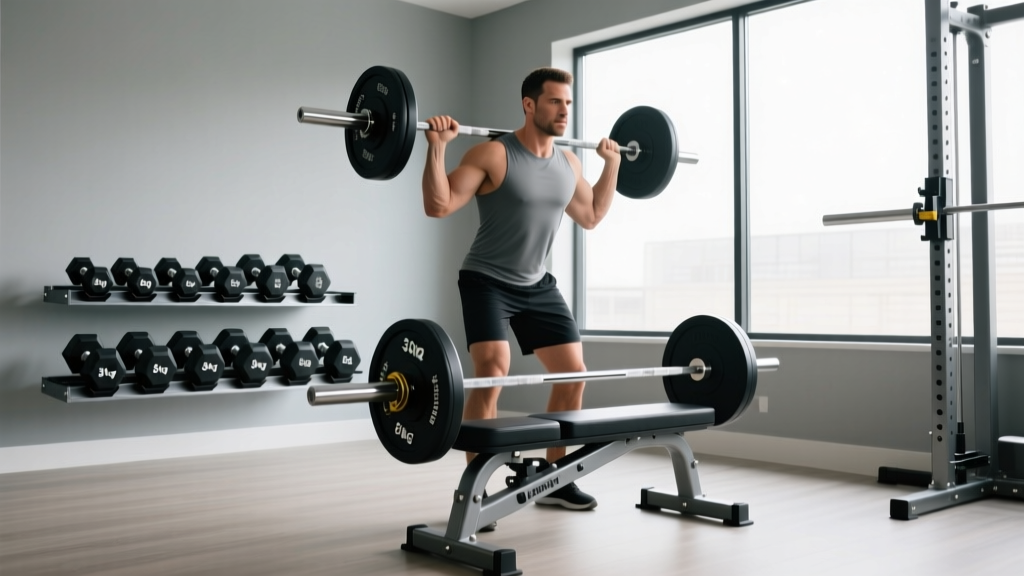
Beyond Amazon Basic Dumbbells: Olympic Barbell Buying Guide
Outgrown your Amazon basic dumbbells? Follow our step-by-step Olympic barbell buying guide covering weight, knurling, and steel quality.

Most home gym owners begin their fitness journey with a modest pair of neoprene or cast-iron hex weights. In fact, a set of Amazon basic dumbbells is often the very first piece of free weight equipment a beginner purchases. While these dumbbells are fantastic for learning foundational movement patterns, isolating muscle groups, and building initial baseline strength, they inevitably become a bottleneck. Once you can easily press or row the heaviest dumbbell in your set, progressive overload stalls, and it is time to transition to barbell training.
Moving from dumbbells to a barbell unlocks compound movements like the back squat, deadlift, and Olympic lifts. However, the barbell market is saturated with confusing terminology. This step-by-step guide will walk you through exactly how to choose the right Olympic barbell, focusing on weight standards, knurling profiles, and steel quality to ensure your new centerpiece lasts a lifetime.
Step 1: Decoding Olympic Barbell Weights and Dimensions
Unlike the fixed-weight increments of your Amazon basic dumbbells, an Olympic barbell serves as a modular loading system. Understanding the baseline weight and shaft dimensions is your first critical step.
The 20kg Men's Standard vs. 15kg Women's Standard
The standard men's Olympic bar weighs exactly 20 kilograms (roughly 44 pounds, though often colloquially rounded to 45 lbs in commercial gyms). It features a 28mm shaft diameter and a total length of 2,200mm (about 86.6 inches). Conversely, the women's Olympic standard weighs 15 kilograms (33 pounds) with a thinner 25mm shaft and a slightly shorter overall length of 2,010mm.
According to the Stronger By Science barbell buying guide, the 25mm shaft on a women's bar is generally preferred by lifters with smaller hands, as it allows for a more secure hook grip during deadlifts and cleans. However, if you plan to compete in standard powerlifting federations, you will eventually need to train on a 28mm or 29mm shaft to adapt to competition specifications.
Pro Tip for Beginners: Do not buy a "standard" 1-inch diameter barbell. They are cheap, bend under heavy loads, and use low-quality plates. Always invest in a true 2-inch (50mm) Olympic sleeve barbell to ensure compatibility with high-quality bumper and iron plates.Step 2: Navigating Knurling Profiles and Aggressiveness
Knurling is the cross-hatched pattern machined into the steel shaft that provides grip. When transitioning from the smooth, sometimes slippery handles of rubber-coated dumbbells, the knurl on a barbell will feel drastically different. Choosing the right knurl profile is arguably the most subjective—and most important—part of buying a barbell.
The Three Main Knurl Shapes
- Hill: The peaks of the knurl are rounded off. This is common on cheap, entry-level bars. It feels smooth but lacks the bite needed for heavy deadlifts.
- Volcano: The machine cuts a rim around the peak, creating a crater-like shape with four sharp edges. This provides an aggressive, grippy feel without tearing the calluses on your hands. The Rogue Ohio Bar is famous for its refined volcano knurl.
- Mountain: The peaks are left sharp and pointed like a mountain range. This is highly aggressive and can tear your hands if you do high-rep work, but it is preferred by elite powerlifters for max-effort deadlifts.
Center Knurl: To Have or Not to Have?
Powerlifting bars feature a center knurl to grip the back of your shirt during low-bar back squats. Olympic weightlifting bars omit the center knurl to prevent chest abrasion during the clean and jerk. For a beginner building a versatile home gym, a mild or passive center knurl is the ultimate sweet spot, offering enough grip for squats without destroying your chest during cleans.
| Knurl Profile | Aggressiveness | Best Use Case | Example Model |
|---|---|---|---|
| Volcano | Medium | Multipurpose, CrossFit, General Strength | Rogue Ohio Bar |
| Mountain | High / Aggressive | Powerlifting, Heavy Deadlifts | Rep Fitness Colorado Bar |
| Hill | Low / Passive | High-Rep Olympic Lifts, Beginners | Eleiko Sport Training Bar |
For a deeper visual breakdown of how these patterns are machined, BarBend's comprehensive knurling guide provides excellent macro-photography that highlights the difference between a torn-up hand and a secure grip.
Step 3: Tensile Strength, Yield Strength, and Whip
When you load 300 pounds onto your barbell, the steel bends. This is called "whip." The quality of the steel determines whether the bar bends elastically (returning to perfect straightness) or plastically (permanently bending out of shape).
The PSI Metrics That Matter
Manufacturers use two metrics to describe steel quality:
- Tensile Strength: The absolute maximum stress the steel can withstand before snapping. You want a minimum of 190,000 PSI. Anything below 165,000 PSI is a severe safety hazard for heavy lifting.
- Yield Strength: The point at which the steel bends and does not return to its original shape. This is actually the more important metric, though rarely advertised. High-end bars use chrome-vanadium or specialized alloy steels to ensure the yield strength is incredibly high, preventing the dreaded "permanently bent barbell."
If you are upgrading from dumbbells, a 190k PSI multipurpose bar will offer a pleasant, slightly whippy feel during deadlifts and cleans, whereas a stiff 215k PSI power bar will feel like a rigid crowbar, ideal for heavy squats.
Step 4: Bushings vs. Bearings (Sleeve Construction)
The sleeves (the thick ends where you load the plates) need to spin independently of the shaft. If they do not, the rotational force of the bumper plates will tear the bar out of your hands during a clean or snatch.
- Bronze/Composite Bushings: These are solid rings that provide a slow, controlled spin. They are incredibly durable, require almost zero maintenance, and are perfect for powerlifting and general strength training.
- Needle Bearings: These feature tiny metal needles rolling inside the sleeve, providing a fast, frictionless spin. They are mandatory for Olympic weightlifting but are more expensive and require periodic lubrication.
For 90% of beginners transitioning from basic free weights to a barbell, a high-quality bushing bar is the most cost-effective and durable choice.
Step 5: 2026 Market Pricing and Specific Model Recommendations
As of early 2026, the home gym market has stabilized, but shipping costs for heavy steel still impact pricing. Here is a practical decision framework based on current market rates:
The Entry-Level Tier ($150 - $200)
At this price, you are looking at basic black oxide or bare steel bars with 165k to 180k PSI steel. Recommendation: The Rep Fitness Fitness Bar or Titan Fitness Olympic Bar. These are solid starter bars, though the knurl is usually a shallow "hill" profile, and the finish may require frequent oiling to prevent rust.
The Mid-Tier Sweet Spot ($250 - $325)
This is where you find the best value for a lifetime home gym bar. You get 190k+ PSI steel, refined volcano knurling, and durable Cerakote or hard chrome finishes. Recommendation: The Rogue Ohio Bar (Cerakote) at roughly $295, or the Rep Fitness CB-6800 around $289. Both feature dual knurl marks (IPF and IWF) and composite bushings that will easily outlast your lifting career.
The Elite Tier ($600 - $900+)
Reserved for competitive athletes or those who appreciate luxury engineering. Recommendation: Eleiko Olympic Weightlifting Bar or Kabuki Strength Transformer Bar. These feature proprietary steel treatments, needle bearings, and meticulously aggressive knurling.
Barbell Maintenance Routine: Unlike rubber-coated Amazon basic dumbbells that you can simply wipe down, bare steel and black oxide barbells require maintenance. Once a month, use a stiff nylon brush to clear chalk out of the knurling. Then, apply a few drops of 3-in-One oil to the shaft and sleeve bushings, wiping away the excess with a microfiber cloth. This prevents oxidation and keeps the sleeves spinning smoothly.Final Thoughts on Your Home Gym Evolution
Upgrading from a set of Amazon basic dumbbells to a high-quality Olympic barbell is a milestone in any lifter's journey. It signals a shift from casual exercise to dedicated strength training. By prioritizing a 190k PSI tensile strength, a versatile volcano knurl, and reliable bronze bushings, you will secure a piece of equipment that not only accelerates your strength gains but safely supports your lifting ambitions for decades to come. Review the specifications on the Rogue Fitness barbell lineup to see how these metrics apply to real-world manufacturing, and choose the bar that best aligns with your specific training goals.
More gear to consider
All reviews
Adjustable Dumbbell Mistakes & Dumbbell Side Bend Benefits Guide

Space Layouts for Different Exercises with Dumbbells: Hex vs Urethane

Cast Iron vs Competition: Good Full Body Dumbbell Workout Swap

EZ Bar vs Straight Bar: Gold's Gym Dumbbell Value Comparison

Dumbbell Rack Storage Solutions & Dumbbell Back Exercises No Bench