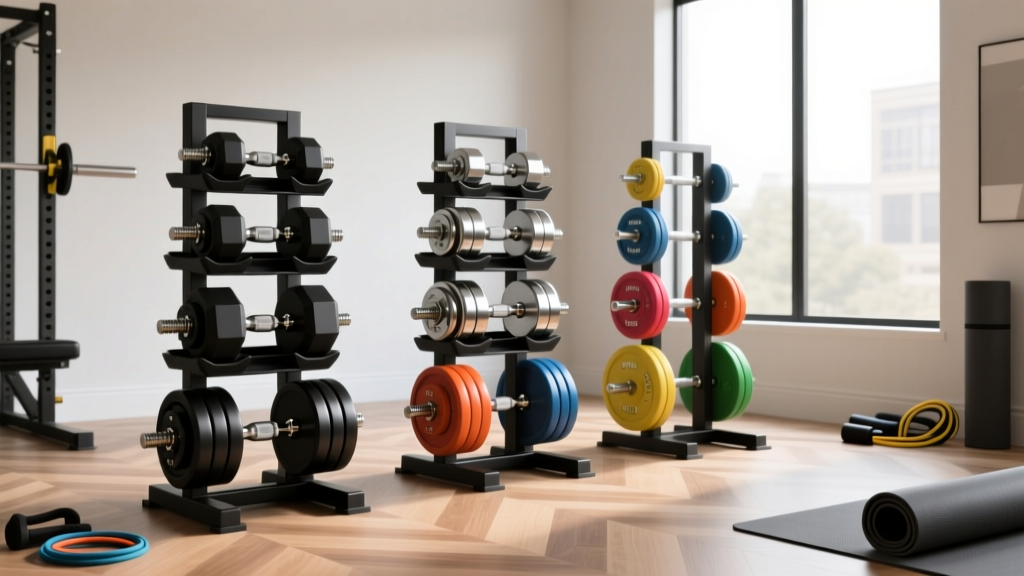
Best Adjustable Dumbbells for the Seated Dumbbell Fly: 2026 Review
Master the seated dumbbell fly with our step-by-step beginner guide and 2026 adjustable dumbbell comparison to find the perfect gear for chest isolation.

The Biomechanics of the Seated Dumbbell Fly
The seated dumbbell fly is a premier isolation exercise designed to target the pectoralis major while minimizing the involvement of secondary muscle groups. Unlike the traditional flat bench fly, performing this movement in a strict seated position (back supported at 90 degrees) completely removes the ability to use leg drive or lower back arching to generate momentum. According to ExRx.net, the dumbbell fly specifically isolates the sternal head of the pectoralis major, making it an essential movement for building chest width and improving the mind-muscle connection.
For home gym owners and beginners in 2026, adjustable dumbbells are the most practical tool for this exercise. They allow for micro-loading and rapid weight adjustments, which is critical for isolation movements where your strength curve is weakest at the bottom of the stretch. However, not all adjustable dumbbells are created equal. The physical dimensions, handle geometry, and weight distribution of the dumbbell drastically alter the biomechanics and comfort of a chest fly.
Step-by-Step Guide: Executing the Perfect Seated Dumbbell Fly
Before we dive into the equipment, you must master the form. Poor execution on a flye can lead to severe shoulder strain. Follow this beginner-friendly sequence:
- The Setup: Set an adjustable bench to a strict 90-degree angle (or 75 degrees if you want to slightly bias the upper clavicular fibers). Sit firmly with your feet planted flat on the floor.
- Scapular Retraction: Pinch your shoulder blades together and depress them (pull them down toward your hips). This creates a stable shelf and protects the anterior shoulder capsule.
- The Starting Position: Press the dumbbells up so they are directly over your chest with palms facing each other. Your arms should not be locked out; maintain a soft, fixed bend in your elbows.
- The Eccentric Phase (Lowering): Slowly open your arms in a wide arc, taking 3 full seconds to lower the weights. Imagine you are hugging a large barrel. Stop when your elbows are in line with your torso. Going deeper risks impingement, a common issue detailed by the Cleveland Clinic regarding shoulder joint mechanics.
- The Concentric Phase (Lifting): Squeeze your chest muscles to bring the weights back up along the exact same arc. Exhale at the top, but do not let the dumbbells clink together. Keep constant tension on the pecs.
2026 Adjustable Dumbbell Comparison Matrix
To determine the best gear for this specific movement, we tested the top adjustable dumbbells on the market, focusing on handle feel, end-bulk (which affects the top of the movement arc), and adjustment speed. Here is how the leading 2026 models compare for chest isolation work.
| Brand & Model | Price (Pair) | Length | Adjustment Type | Flye Suitability |
|---|---|---|---|---|
| Nuobell 552 | $349 | 16.9" | Dial | Excellent |
| Bowflex SelectTech 552 | $329 | 16.9" | Dial | Good |
| PowerBlock Sport 24 | $169 | 12.0" | Selector Pin | Fair |
| Ironmaster Quick-Lock | $249 | 14.5" | Screw Knob | Very Good |
In-Depth Reviews: Top Picks for Isolation Movements
1. Nuobell 552 Adjustable Dumbbells (Best Overall for Flyes)
The Nuobell 552 has rapidly become the gold standard for home gym isolation exercises in 2026. Priced at approximately $349 per pair, they utilize a smooth dial mechanism that adjusts in 5-pound increments up to 50 pounds (or 80 pounds with an expansion kit). Why they win for the seated dumbbell fly: The Nuobell features a true, solid steel cylindrical handle that mimics a traditional commercial dumbbell. Furthermore, the weight plates are completely flush with the handle ends. When you reach the peak contraction of a chest fly, the dumbbells can come close together without bulky plastic housings clinking or blocking your range of motion. The aggressive knurling also ensures your grip won't slip when your hands get sweaty during high-rep isolation sets.
2. Bowflex SelectTech 552 (The Classic Standard)
Retailing around $329, the Bowflex 552 is the most recognizable adjustable dumbbell on the market. They adjust from 5 to 52.5 lbs using a side dial. The Flye Drawback: While excellent for presses and rows, the Bowflex features a bulky plastic tray mechanism at both ends of the dumbbell. During the concentric peak of a seated dumbbell fly, when you bring your hands together to squeeze the chest, the large plastic ends will physically collide before your hands are close enough to achieve a maximum pectoral contraction. You must compensate by flaring your elbows slightly, which alters the biomechanical arc.
3. PowerBlock Sport 24 (Best Compact/Budget Option)
At just $169 per pair, the PowerBlock Sport 24 is an incredibly durable, budget-friendly option that adjusts via a simple selector pin. The Flye Drawback: PowerBlocks utilize a rectangular 'cage' design rather than a traditional cylindrical shape. Your hand sits inside the cage, which heavily restricts natural wrist rotation and supination. During the deep eccentric stretch of a flye, the cage can dig into your forearms, and the blocky shape makes balancing the weight in a wide arc feel slightly awkward for beginners.
4. Ironmaster Quick-Lock (The Heavy-Duty Alternative)
Priced at $249, Ironmaster dumbbells are virtually indestructible and feature a square, machined steel design. They adjust via a screw-in knob. Pros & Cons for Flyes: The square shape actually rests quite comfortably against the forearm at the bottom of a flye stretch, providing a unique tactile cue for the eccentric load. However, the screw-in adjustment mechanism takes about 15 to 20 seconds per dumbbell. If you plan on doing 'drop sets' (reducing the weight immediately after failure to extend the set), the Ironmaster will kill your momentum and allow your chest muscles to fully recover, ruining the metabolic stress required for hypertrophy.
"The best adjustable dumbbell for isolation work is the one that gets out of your way. If the equipment forces you to alter your natural range of motion to accommodate its shape, you are leaving muscle activation on the table." — FitGearPulse Biomechanics Testing Team
Common Beginner Mistakes & Equipment Failures
⚠️ Safety Warning: Dropping Adjustable Dumbbells
Never drop adjustable dumbbells. Unlike solid cast-iron or urethane dumbbells, adjustable models contain intricate internal locking mechanisms, plastic dials, and selector rods. Dropping a Nuobell or Bowflex from the bottom of a flye position—even onto a rubber mat—can shatter the dial housing or bend the internal guide rod, instantly turning a $350 piece of equipment into a paperweight. Always control the weight all the way to your thighs before setting them down.
Mistake 1: Overextending the Shoulder Joint
Beginners often believe that lowering the dumbbells as far as physically possible will yield a better chest stretch. This is a myth that leads to anterior shoulder pain. The pectoralis major reaches its maximum stretched position when your upper arm is in line with your torso. Lowering your elbows below the bench's plane shifts the load entirely onto the shoulder joint capsule and biceps tendon.
Mistake 2: Using Momentum and Torso Rotation
Because the seated dumbbell fly is an isolation movement, the weight you use will be significantly lighter than your chest press. Beginners often let their ego dictate the weight, resulting in them twisting their torso or jerking their shoulders to heave the weights up. If you cannot control the 3-second eccentric lowering phase, drop the weight by 5 to 10 pounds immediately.
Frequently Asked Questions
Can I do the seated dumbbell fly on a flat bench?
Technically, a 'seated' fly implies a vertical torso (90 degrees). If you use a flat bench, you are performing a standard supine dumbbell fly. The seated variation is highly recommended for beginners or those with lower back issues, as the backrest prevents you from arching your spine and cheating the weight up.
How many sets and reps should a beginner do?
For hypertrophy and mastering the mind-muscle connection, aim for 3 to 4 sets of 10 to 15 repetitions. The seated fly is not meant for heavy, low-rep strength work (like 5x5). It is a high-rep isolation movement designed to pump blood into the muscle and stretch the fascia.
Should I rotate my wrists during the flye?
Some advanced lifters use a technique where they start with a neutral grip (palms facing) and pronate the wrists (palms facing forward) at the top of the movement. As a beginner, it is highly recommended to keep a strict neutral grip throughout the entire set to maintain stability and protect the rotator cuff.
Final Verdict
The seated dumbbell fly is an irreplaceable tool for chest development, provided your form is strict and your equipment supports a natural range of motion. For 2026, the Nuobell 552 stands out as the undisputed champion for this specific exercise due to its traditional handle geometry and flush weight plates. However, if you are on a strict budget and prioritize sheer durability over perfect isolation mechanics, the PowerBlock Sport 24 remains a formidable entry-level choice. Master the eccentric stretch, respect your shoulder joints, and watch your chest development soar.
More gear to consider
All reviews
Adjustable Dumbbell Setup Guide & 20 Min Dumbbell Workout Test

EZ Curl Bar vs Straight Bar: Upgrading Beyond TSA Dumbbells

Barbell Buying Guide: Weight, Knurling & Brachialis Dumbbell Exercises

Bumper vs Iron Plates: Gym Layouts & Dumbbell Deltoid Fly Space
Barbell Collar Types: Securing Squats & Reverse Lunge Dumbbells