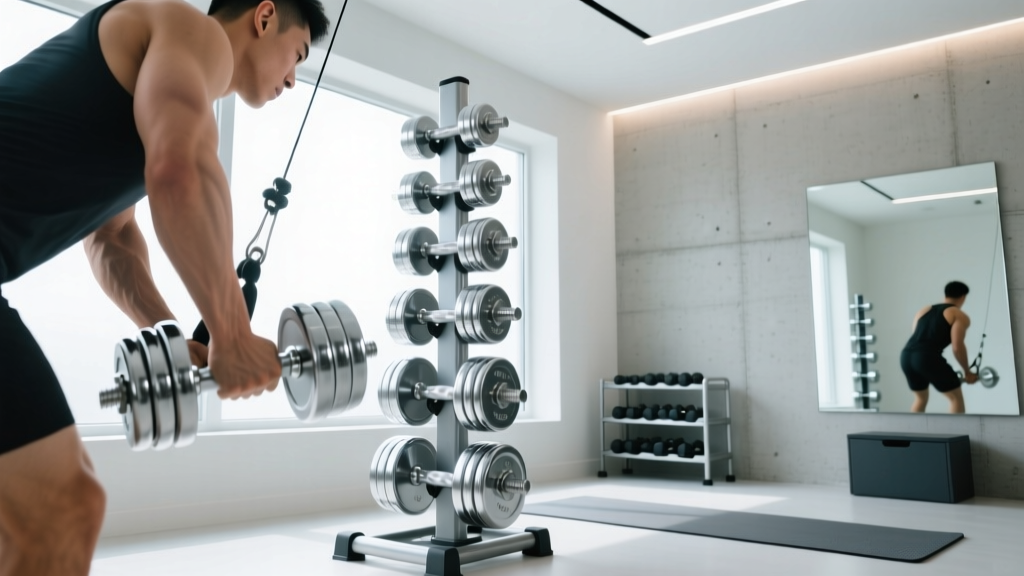
Best Adjustable Dumbbells for Dumbbell Rear Delts Setup 2026
Compare top adjustable dumbbells for dumbbell rear delts exercises. Includes a complete 2026 setup and installation walkthrough for your isolation station.

The Unique Demands of Rear Delt Isolation
The posterior deltoid is notoriously stubborn. Unlike the chest or quads, the rear delts respond best to strict isolation, moderate loads, and high time-under-tension. When building a home gym, selecting the right equipment for dumbbell rear delts work is far more nuanced than simply buying the heaviest set available. You need precise weight increments, specific handle clearances, and a physical setup that prevents momentum from hijacking the movement.
In this 2026 guide, we evaluate the top adjustable dumbbells specifically through the lens of rear deltoid isolation, followed by a complete, step-by-step installation walkthrough to build the ultimate chest-supported rear delt station in your home gym.
2026 Adjustable Dumbbell Comparison Matrix
Not all adjustable dumbbells are created equal. The bulky dials or cage designs that work fine for heavy goblet squats can actively interfere with the biomechanics of a bent-over or chest-supported rear delt fly. Below is our testing data for the top models.
| Model | Weight Range | Increment | Handle Clearance | Rear Delt Suitability | 2026 Price |
|---|---|---|---|---|---|
| Nuobell 80 lb | 5 - 80 lbs | 5 lbs | Excellent (Straight) | High | $429 |
| Bowflex 552 | 5 - 52.5 lbs | 2.5 lbs | Poor (Bulky Dials) | Medium | $399 |
| PowerBlock Elite | 5 - 50 lbs | 2.5 lbs | Restricted (Cage) | Low-Medium | $399 |
| SveaTech Pro | 5 - 90 lbs | 2.5 lbs | Very Good | High | $549 |
Deep Dive: Top Models for Rear Delt Work
1. Nuobell 80 lb: The Biomechanical Winner
The Nuobell 80 lb remains the gold standard for isolation movements. Because it utilizes a twisting handle mechanism rather than an external dial, the ends of the dumbbell are completely flush. When performing chest-supported dumbbell rear delts flies on a 30-degree incline bench, there is zero risk of the weight mechanism scraping against the bench pad at the bottom of the eccentric phase. The knurling is mild but sufficient for high-rep burnouts without tearing calluses.
2. Bowflex SelectTech 552: The Micro-Increment Advantage
The rear delts are a small muscle group that fatigues rapidly. The Bowflex 552 offers 2.5 lb increments up to 25 lbs, which is a massive advantage for progressive overload on rear delt rows and lateral raises. However, the physical footprint of the dial housing is 15.75 inches long even at the lowest weight setting. During prone incline rear delt flies, the dials will frequently collide with the bench frame, limiting your range of motion.
3. PowerBlock Elite USA: Durability Over Ergonomics
PowerBlocks are virtually indestructible, making them great for commercial abuse. But for rear delts, the closed cage design restricts natural wrist supination and pronation. According to ExRx.net's biomechanical breakdown of posterior deltoid activation, a slight internal rotation of the humerus (pouring the pitcher cue) maximizes rear delt fiber recruitment. The PowerBlock cage makes this wrist articulation awkward and uncomfortable.
Complete Setup & Installation Walkthrough
Selecting the right dumbbell is only half the battle. To properly execute dumbbell rear delts exercises without relying on momentum, you must install a dedicated isolation station. Follow this walkthrough to configure your space.
Phase 1: Subfloor and Impact Protection
Adjustable dumbbells contain fragile internal mechanisms. Dropping a Nuobell or Bowflex from shoulder height will shatter the internal locking pins. Because rear delt exercises often involve high-rep sets to failure, grip fatigue is a real risk.
- Material: Install 3/4-inch thick vulcanized rubber horse stall mats. Do not use thin foam puzzle mats; they will bottom out and fail to absorb the shock of a dropped 40 lb dumbbell.
- Layout: Cut the mats to create a 6x8 foot landing zone directly beneath and immediately adjacent to your bench.
Phase 2: FID Bench Calibration and Placement
A Flat/Incline/Decline (FID) bench is mandatory for a proper rear delt setup. Chest-supported variations eliminate lower back cheating and isolate the posterior chain of the shoulder.
- Angle Selection: Set the bench incline to exactly 30 degrees. A 45-degree angle shifts the biomechanical load toward the lateral deltoid and upper trapezius, defeating the purpose of the isolation.
- Chest Pad Modification: If your FID bench has a gap between the seat and the backrest, wedge a high-density foam roller into the gap to provide continuous chest support, preventing you from sliding forward during heavy rear delt rows.
- Clearance Check: Ensure there is at least 24 inches of lateral clearance on both sides of the bench to allow for full arc lateral raises without striking nearby racks.
Phase 3: Dumbbell Tray Positioning
Where you place your adjustable dumbbell trays dictates the safety and flow of your workout.
Pro Installation Tip: Never place adjustable dumbbell trays directly behind the head of the incline bench. If you lose your grip during a heavy bent-over row, the dumbbell will fall backward and smash into the tray's plastic housing. Position the trays 18 inches to the side of the bench, aligned with the user's hip when seated.Real-World Edge Cases and Troubleshooting
Even with the perfect setup, home gym owners frequently encounter specific failure modes when training rear delts with adjustable equipment. Based on Garage Gym Reviews' extensive 2026 testing data, here is how to troubleshoot the most common issues:
The 'Clicking' Failure Mode: When performing single-arm rear delt rows, users often rotate their wrists at the top of the concentric phase. With dial-based adjustable dumbbells, this rotational torque can cause the weight plates to slightly unseat, resulting in a loud clicking noise. Solution: Keep your wrist strictly neutral during rows, or switch to a twist-lock handle system like Nuobell which handles rotational torque far better.
Grip Fatigue and Strap Integration
Because adjustable dumbbell handles are often thicker (1.35 to 1.5 inches) than standard Olympic dumbbell handles, forearm fatigue will outpace rear delt fatigue. Install a heavy-duty wall hook 3 feet from your bench specifically for hanging lifting straps. Using figure-8 straps for your heaviest working sets on rear delt rows ensures the target muscle reaches true mechanical failure before your grip gives out.
Frequently Asked Questions
Can I use adjustable dumbbells for heavy rear delt swings?
No. Adjustable dumbbells are strictly for controlled, strict isolation movements. The internal locking mechanisms of brands like Bowflex and PowerBlock are not rated for the dynamic G-force generated by swinging or kipping movements. Stick to slow eccentrics (3-second negatives) for rear delt flies.
What is the ideal rep range for dumbbell rear delts?
The posterior deltoid has a high proportion of slow-twitch muscle fibers. It responds exceptionally well to higher rep ranges (15-25 reps) with shorter rest periods (45-60 seconds). This is where the 2.5 lb micro-increments of the Bowflex 552 truly shine, allowing you to meticulously scale the weight as your muscular endurance improves.
Do I need a specialized rack for my adjustable dumbbells?
While not strictly necessary, a dedicated tiered rack is highly recommended for adjustable sets. Unlike fixed hex dumbbells, adjustable sets cannot be stacked. A floor-level tray or a low-profile rack ensures you don't have to bend over and risk lower back strain when picking up 50+ lb dumbbells to begin your bent-over rear delt sets.
More gear to consider
All reviews
Storing Thomas Inch Dumbbells: Rack & Storage Value Analysis

Power Rack vs Squat Rack vs Stand for Core Dumbbell Workouts
Olympic vs Standard: How to Get a Bigger Chest Using Dumbbells

Dumbbell Rack Maintenance & Storage for Tricep Workouts with Dumbbells

Bumper vs Iron Plate Care & the Alternating Dumbbell Hammer Curl