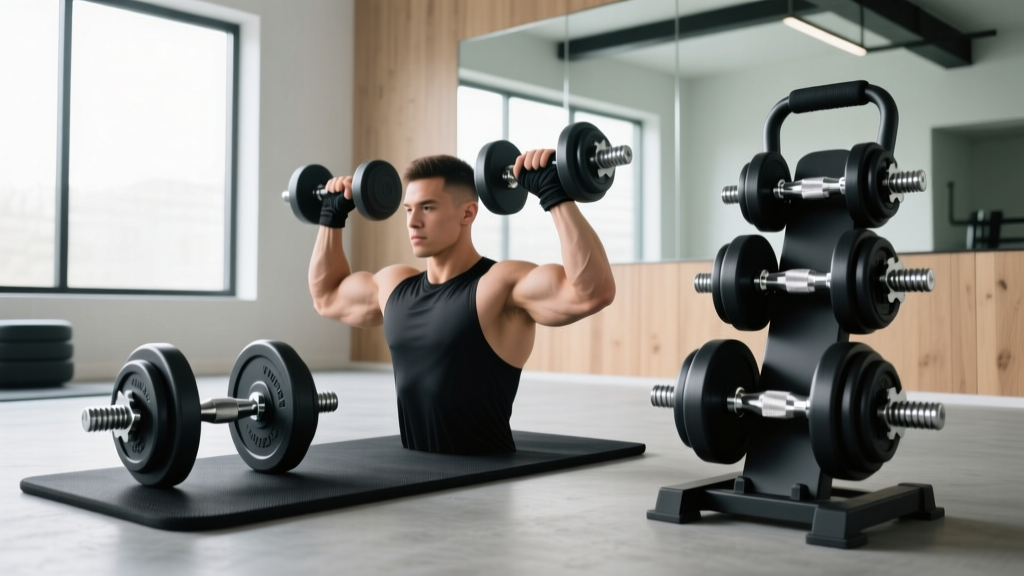
Best Adjustable Dumbbells for the Dumbbell Shoulder Raise (2026)
Master the dumbbell shoulder raise with our step-by-step guide. Compare the best 2026 adjustable dumbbells for optimal shoulder isolation and micro-loading.

The Ultimate Test: Why the Dumbbell Shoulder Raise Exposes Bad Equipment
When building a home gym, most beginners test their new adjustable dumbbells with heavy compound movements like goblet squats or floor presses. But as a fitness equipment reviewer, I always use a different benchmark: the dumbbell shoulder raise (specifically the lateral raise). Why? Because the lateral deltoid is a small, easily fatigued muscle group that demands surgical precision in weight increments, ergonomic grips, and a compact physical footprint.
If an adjustable dumbbell is too long, it will scrape your thighs during the descent. If the weight jumps in 5-pound increments, you will hit a plateau in weeks. If the handle is poorly balanced, your wrists will take the brunt of the load. This guide will walk you through the exact biomechanics of performing a perfect dumbbell shoulder raise, followed by a deep-dive 2026 comparison of the top adjustable dumbbells to see which models actually survive the shoulder isolation test.
Beginner Insight: The shoulder joint (glenohumeral joint) is the most mobile and unstable joint in the human body. Using improperly balanced equipment during isolation exercises drastically increases the risk of rotator cuff impingement. Always prioritize equipment ergonomics over maximum weight capacity for shoulder work.Step-by-Step Guide: Perfecting the Dumbbell Shoulder Raise
Before we evaluate the gear, we must master the movement. According to biomechanics data cataloged by ExRx.net, the lateral raise primarily targets the middle deltoid, but poor form shifts the load to the upper traps and anterior deltoid. Here is your beginner-friendly, step-by-step execution guide.
Step 1: The Stance and Scapular Setup
Stand with your feet shoulder-width apart, holding a light pair of adjustable dumbbells (beginners should start with 5 to 10 lbs per hand). Hinge slightly at the hips—about 10 to 15 degrees—and lock your torso in place. Retract your shoulder blades slightly and depress them (pull them down toward your back pockets). This stabilizes the scapula and prevents your upper traps from hijacking the movement.
Step 2: Finding the Scapular Plane
The biggest mistake beginners make is raising the dumbbells directly out to their sides (the frontal plane). This closes the subacromial space, leading to impingement. Instead, bring the dumbbells about 30 degrees forward into the scapular plane. Imagine you are forming a wide 'V' shape with your arms rather than a straight 'T'. This aligns with the natural orientation of your shoulder blades and allows for a much safer, smoother range of motion.
Step 3: The Concentric Phase (The Lift)
Initiate the movement by pushing the dumbbells out toward the walls, not just up toward the ceiling. Think about leading with your elbows. Your elbows should stay slightly bent (about 10-15 degrees) and remain higher than your wrists throughout the lift. Stop when your upper arms are parallel to the floor. Going higher than parallel shifts the tension away from the side delt and onto the traps.
Step 4: The Eccentric Phase (The Descent)
Lower the weight slowly over 2 to 3 seconds. The eccentric (lowering) phase causes the most micro-tears in the muscle fibers, which is essential for hypertrophy. Stop just short of letting the dumbbells rest against your thighs to maintain constant tension on the deltoids.
What Makes an Adjustable Dumbbell 'Shoulder-Friendly'?
Not all adjustable dumbbells are created equal. When testing models for the 2026 home gym market, I evaluate them against three strict criteria specifically for shoulder isolation work:
- Micro-Loading Capability: The lateral deltoid is weak compared to the chest or legs. A 5-pound jump (e.g., from 10 lbs to 15 lbs) represents a massive 50% increase in load. Dumbbells that offer 2.5-pound increments are vastly superior for beginners.
- Physical Footprint (Length): Standard fixed dumbbells are about 11 to 12 inches long. Many dial-adjustable dumbbells are over 15 inches long. During a lateral raise, a 15-inch dumbbell will violently collide with your thighs at the bottom of the movement, ruining your tempo and risking bruised legs.
- Handle Ergonomics and Balance: Blocky or overly thick handles force your forearms to work overtime, causing grip failure before your shoulder muscles are fully fatigued.
2026 Adjustable Dumbbell Comparison Matrix
Below is a side-by-side comparison of the three most popular adjustable dumbbells on the market, graded specifically on their performance during the dumbbell shoulder raise.
| Model | 2026 Price Range | Overall Length | Weight Increments | Shoulder Raise Rating |
|---|---|---|---|---|
| Nuobell 552 | $329 - $349 | 12.5 inches | 5 lbs (w/ 2.5lb hack) | ⭐⭐⭐⭐⭐ (Excellent) |
| PowerBlock Elite USA | $289 - $319 | 12.0 inches | 2.5 lbs (via adder) | ⭐⭐⭐⭐ (Very Good) |
| Bowflex SelectTech 552 | $349 - $399 | 15.75 inches | 5 lbs (2.5lb on one side) | ⭐⭐ (Poor) |
Deep Dive: Top Adjustable Dumbbells for Shoulder Isolation
1. Nuobell 552: The Ergonomic Champion
The Nuobell 552 has taken the 2026 market by storm, and for shoulder work, it is unmatched. Unlike dial-based systems, the Nuobell uses a twist-handle mechanism that mimics the exact feel and balance of a traditional fixed hex dumbbell. At just 12.5 inches in length, it completely eliminates the 'thigh-smash' problem at the bottom of a lateral raise. Furthermore, while the official increments are 5 pounds, you can easily achieve 2.5-pound micro-loading by twisting the handle to the next notch and manually sliding on a specialized 2.5lb adder plate (sold separately by third-party manufacturers on Etsy and Amazon). The knurled steel handle provides excellent grip without tearing calluses, allowing you to focus entirely on the deltoid contraction.
2. PowerBlock Elite USA: The Micro-Loading King
PowerBlock's cage design is polarizing, but its functionality for rehabilitation and beginner shoulder work is stellar. The USA-made Elite series features a compact 12-inch footprint. Its superpower lies in the included 'adder weights'—small 2.5-pound cylinders that drop into the core of the dumbbell. This allows for true 2.5-pound jumps right out of the box, which is critical when progressing from 10 lbs to 12.5 lbs on a strict lateral raise. The caged handle restricts some wrist rotation, which actually serves as a built-in safety mechanism for beginners prone to excessive wrist flexion during raises. As noted in comprehensive testing by Wirecutter, PowerBlock's durability remains the gold standard for drop-resistant adjustable gear.
3. Bowflex SelectTech 552: The Bulky Budget Option
The Bowflex 552 is arguably the most famous adjustable dumbbell in the world, but it is a poor choice for strict shoulder isolation. At 15.75 inches long, the plastic housing extends far beyond your hands. When you lower the dumbbells during a lateral raise, the ends will strike your outer thighs long before your arms reach your sides, artificially shortening your range of motion and disrupting your eccentric tempo. Additionally, the handle is smooth and lacks aggressive knurling, meaning your grip will likely fail on high-rep shoulder sets (15-20 reps) before your deltoids reach true muscular failure. It is excellent for floor presses, but keep it away from strict shoulder days.
Troubleshooting Common Failure Modes
Even with the perfect equipment, beginners frequently encounter mechanical breakdowns during the dumbbell shoulder raise. Here is how to troubleshoot the most common issues:
Warning: Wrist Extension StrainIf you feel pain in the back of your wrist, you are likely letting the dumbbell head droop backward at the top of the movement. Maintain a neutral wrist—imagine your knuckles are pointing straight at the ceiling, not behind you. The Nuobell's traditional handle shape naturally encourages this neutral alignment better than block-style dumbbells.
- Using Momentum (The 'Swing'): If you have to use your hips or knees to initiate the lift, the weight is too heavy. Drop the weight by 50%. The lateral raise is an isolation movement; cheating defeats the purpose and transfers dangerous shear forces to the lumbar spine.
- Shrugging at the Top: If your neck muscles burn more than your shoulders, you are elevating your scapula at the top of the rep. Focus on keeping your shoulders 'packed' down throughout the entire set.
- Pouring the Pitcher: An outdated bodybuilding myth suggests internally rotating the shoulder (pouring out a pitcher of water) at the top of the raise. Modern physical therapy strongly advises against this, as it grates the humerus against the acromion process. Keep a neutral or slightly external grip.
Final Verdict: Equipping Your 2026 Home Gym
Mastering the dumbbell shoulder raise requires patience, strict form, and equipment that respects the biomechanics of the human body. For beginners dedicating serious time to shoulder hypertrophy and joint health, the Nuobell 552 offers the most seamless transition from fixed dumbbells, providing the compact footprint necessary for full-range lateral raises. If micro-loading is your absolute highest priority for rehabilitation or ultra-slow progression, the PowerBlock Elite USA remains a legendary, indestructible choice. Avoid using overly long, dial-based systems for this specific movement, and your shoulders will thank you for years to come.
More gear to consider
All reviews
Best Adjustable Dumbbells for the Dumbbell Snatch Exercise (2026)

Space-Saving Racks for Dumbbell Workouts to Tone Arms
Olympic Barbell Knurling: Rogue vs Eleiko & Dumbbell Fly Exercises

Bumper vs Iron Plates: 2026 Guide for the One-Arm Dumbbell Snatch
Dumbbell Donkey Kick Trends: Cast Iron vs Competition Kettlebells 2026
