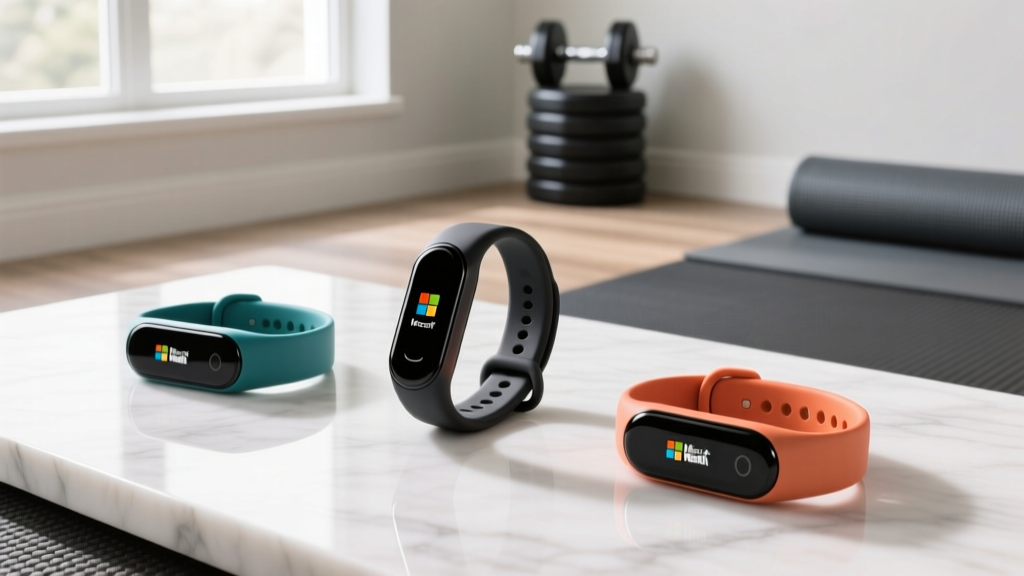
Microsoft Band 2 Fitness Tracker Lessons: 2026 Budget Picks Under $100
How the failed Microsoft Band 2 fitness tracker shaped today's market. Discover the best budget fitness trackers under $100 in 2026 with expert analysis.

The Ghost in the Machine: What the Microsoft Band 2 Fitness Tracker Taught the Industry
In the fast-paced evolution of wearable technology, few devices offer as many critical lessons as the Microsoft Band 2 fitness tracker. Released in late 2015 and abruptly discontinued by mid-2016, the Band 2 was an ambitious, sensor-packed marvel that ultimately collapsed under the weight of its own engineering hubris. It featured a curved AMOLED display and an unprecedented array of 11 sensors, including UV detection, galvanic skin response (GSR), skin temperature, and an ambient temperature sensor. Priced at $249, it attempted to bridge the gap between medical-grade diagnostics and consumer fitness tracking.
However, the device suffered from catastrophic battery drain, fragile hardware that cracked under daily stress, and an eventual abandonment of the Microsoft Health ecosystem. According to historical archives on the Microsoft Band, the platform's servers were fully sunset by 2019, rendering the hardware completely useless. Yet, from a market analysis perspective, the failure of the Microsoft Band 2 fitness tracker served as a vital cautionary tale for the industry. It proved that consumers do not want a 'kitchen-sink' approach to sensors if it compromises battery life, durability, and core reliability.
Fast forward to 2026. The sub-$100 budget wearable market has internalized these lessons. Today's budget trackers prioritize hyper-efficient photoplethysmography (PPG) sensors, multi-week battery life, and streamlined software ecosystems over gimmicky, power-hungry additions. Let us break down the current landscape of budget fitness trackers under $100 and see how the ghosts of past engineering failures have shaped today's best value propositions.
2026 Market Analysis: The Sub-$100 Wearable Landscape
The global wearables market has undergone massive consolidation. According to Statista's Wearable Devices Market Report, the budget tier (defined as devices retailing under $100) accounts for over 55% of total global shipment volumes. This segment is no longer dominated by tech giants trying to experiment with hardware; it is controlled by specialized supply-chain masters like Xiaomi, Amazfit (Huami), and Huawei, alongside legacy fitness brands like Fitbit that use budget hardware as a Trojan horse for premium software subscriptions.
Analyst Insight: The Margin ShiftIn 2026, hardware margins on sub-$100 trackers are virtually zero. Brands like Fitbit and Amazfit operate on a 'razor and blades' model. The physical tracker is sold at cost (or a slight loss) to onboard users into ecosystems where premium sleep analytics, advanced recovery metrics, and guided workouts are gated behind $8 to $12 monthly subscriptions. When buying a budget tracker today, you are not just buying hardware; you are evaluating the long-term cost of its software ecosystem.
Top Budget Fitness Trackers Under $100 in 2026
Below is our comparative matrix of the top-performing budget wearables available in 2026. These models represent the pinnacle of what the post-Microsoft Band 2 philosophy has achieved: maximum core utility with minimal battery compromise.
| Model | 2026 MSRP | Battery Life | GPS Type | Standout Sensor Tech |
|---|---|---|---|---|
| Xiaomi Smart Band 9 | $45 | 14-21 Days | Connected (BLE) | Multi-channel PPG, Linear Haptic Motor |
| Amazfit Band 7 | $59 | 18 Days | Connected (BLE) | Zepp OS 4.0, SpO2, Stress (HRV) |
| Huawei Band 10 | $65 | 10-14 Days | Connected (BLE) | TruSeen 5.5+, TruSleep 4.0 Architecture |
| Fitbit Inspire 3 | $99 | 10 Days | Connected (BLE) | EDA-derived Stress, Seamless App Sync |
Sensor Evolution: Which Legacy Features Survived the Budget Cut?
When we analyze the legacy of the Microsoft Band 2 fitness tracker, it is fascinating to see which of its pioneering sensors have trickled down to the sub-$100 tier, and which have been abandoned entirely.
The Triumph of Optical Heart Rate (PPG)
The Band 2 relied on early-generation optical heart rate sensors that struggled with motion artifacts during high-intensity interval training (HIIT). In 2026, budget trackers like the Huawei Band 10 utilize advanced TruSeen 5.5+ modules featuring six photodiodes and multi-path light isolation. These budget sensors now achieve near-chest-strap accuracy (within 2-4 BPM) during steady-state cardio, a massive leap in hardware fidelity that costs a fraction of the Band 2's original MSRP.
The Evolution of GSR to HRV-Based Stress
Microsoft attempted to measure stress via Galvanic Skin Response (GSR), which tracks micro-sweat variations on the skin. This required constant electrical contact and drained the battery rapidly. Today's budget trackers have abandoned GSR in favor of Heart Rate Variability (HRV) algorithms. By analyzing the time variance between heartbeats via the PPG sensor, devices like the Amazfit Band 7 can calculate a daily 'Stress Score' without the severe battery penalty associated with GSR hardware.
Abandoned Tech: UV and Ambient Temperature
Features like UV exposure tracking and ambient temperature sensing have been entirely exiled from the budget tier. The FDA's Digital Health Center on Wearables notes that consumer environmental sensors often fail to meet the threshold for actionable health insights without rigorous calibration. Consequently, brands have stripped these sensors from sub-$100 devices to save on BOM (Bill of Materials) costs and battery drain, reserving advanced thermal sensors for premium $300+ smartwatches or specialized smart rings like the Oura Ring 4.
The Hidden Costs of Budget Trackers: Edge Cases & Failure Modes
While the hardware in the under $100 category is exceptional, domain experts know that compromises exist. Before purchasing a budget tracker in 2026, consumers must understand the following technical failure modes:
- Connected GPS 'Spaghetti' Tracks: Sub-$100 trackers lack native GPS chips to save space and battery. They rely on Bluetooth Low Energy (BLE) handshakes with your smartphone. If you run with your phone in a pocket or a waist belt, your body mass can occlude the BLE signal, causing the tracker to drop GPS pings. This results in 'spaghetti' maps where your route appears to zigzag across buildings. Solution: Use an armband for your phone during runs, or upgrade to a $150+ native GPS watch.
- TPU Strap Contact Dermatitis: To hit the sub-$100 price point, manufacturers use basic Thermoplastic Polyurethane (TPU) bands. These lack the micro-ventilation channels found on premium silicone bands. During summer months, sweat and soap buildup under the TPU strap frequently causes contact dermatitis and sensor occlusion, leading to erroneous HR readings. Solution: Buy third-party woven nylon loop bands for $10 on Amazon and swap them immediately.
- Data Portability Limitations: Unlike Garmin or Apple, budget ecosystems (particularly Xiaomi and Amazfit) make it notoriously difficult to export raw FIT or CSV files for third-party analysis in platforms like Strava or TrainingPeaks. You are often locked into their proprietary app ecosystems.
Actionable Buying Framework: Who Should Buy Sub-$100 in 2026?
Do not waste money on premium features you will not use. Use this decision matrix to select the right budget tracker for your specific lifestyle.
Profile A: The Casual Step Counter & Notification Checker
Recommendation: Xiaomi Smart Band 9 ($45)
Why: If your primary goal is passive step tracking, basic sleep logging, and reading smartphone notifications on your wrist, the Xiaomi Band 9 offers an unmatched 21-day battery life and a vibrant 1.62-inch AMOLED screen. It is the ultimate 'set it and forget it' device.
Profile B: The Sleep Hacker & Recovery Optimizer
Recommendation: Huawei Band 10 ($65)
Why: Huawei's TruSleep algorithm remains the most accurate sleep-stage detection software in the budget tier, rivaling much more expensive devices. If you are tracking REM cycles, sleep apnea indicators via SpO2 drops, and overnight HRV, this is the superior hardware choice.
Profile C: The Ecosystem Loyalist & Guided Fitness Fan
Recommendation: Fitbit Inspire 3 ($99)
Why: While the hardware specs look dated compared to Chinese competitors, Fitbit's software ecosystem is unmatched for guided programs, mindfulness routines, and community challenges. If you are willing to eventually pay for Fitbit Premium, the Inspire 3 is your gateway.
Final Verdict: The Market Has Matured
The ambitious but flawed Microsoft Band 2 fitness tracker proved that throwing every available sensor into a wristband does not guarantee a successful product. The 2026 sub-$100 market is a testament to the power of restraint. By focusing on highly accurate core metrics, multi-week battery life, and streamlined software, today's budget wearables deliver 90% of the utility of a $400 smartwatch for a fraction of the cost. Choose your hardware based on your specific data needs, and remember that in the budget tier, software reliability is just as important as the silicon on your wrist.
More gear to consider
All reviews
Xiaomi Mi Band 6 Fitness Tracker vs Cycling Computers: Sensor Guide

Sleep UI Design: Fitbit Charge 5 Advanced Fitness Health Tracker

Fitbit Charge 6 Fitness Tracker Reviews & Sleep Device Layout Guide

Body Composition Scale Accuracy: Whoop Peak Fitness Tracker Guide

Top Fitness Tracker Long Battery Life Picks: 2026 Buyer Guide
