
Theragun vs Hyperice & Medcursor Massage Gun Market Trends 2026
Analyze the 2026 percussive therapy market. We compare Theragun vs Hyperice premium models and the Medcursor massage gun budget disruption.

The 2026 Percussive Therapy Landscape: Duopoly vs. Disruptors
The percussive therapy device market has undergone a massive structural shift as we move through 2026. What began as a niche modality reserved for elite sports physiotherapists has evolved into a multi-billion-dollar consumer recovery category. For years, the market was defined by a strict premium duopoly: Therabody (Theragun) and Hyperice. However, recent market analysis reveals a significant pivot in consumer purchasing behavior. While the premium segment remains dominated by legacy giants, the sub-$100 tier has seen explosive growth, driven by highly capable budget disruptors. In this trend report, we conduct a deep-dive technical and market comparison of the Theragun PRO Plus, the Hyperice Hypervolt 2 PRO, and the rapidly gaining Medcursor massage gun lineup to understand where the industry is heading.
Market Insight 2026: According to recent fitness equipment retail data, premium massage guns ($300+) have seen a 14% year-over-year decline in unit volume, while the $50-$120 mid-tier and budget segment has grown by 28%. Consumers are increasingly recognizing the law of diminishing returns regarding amplitude depth and smart-app integrations.Theragun vs Hyperice: The Premium Battleground
When analyzing the top tier of the market, the Theragun PRO Plus and the Hyperice Hypervolt 2 PRO represent two fundamentally different engineering philosophies. Therabody has doubled down on clinical-grade torque and smart-ecosystem integration, while Hyperice has prioritized acoustic dampening and ergonomic accessibility.
Theragun PRO Plus: The Clinical Standard
Retailing at $599, the Theragun PRO Plus remains the gold standard for deep-tissue intervention. Its defining metric is its 16mm amplitude (stroke length). Clinical studies indicate that 16mm is the threshold required to bypass superficial fascia and effectively target deep muscle bellies. Powered by a high-torque brushless motor, it boasts a verified 60 lbs of stall force, meaning users can apply aggressive pressure without the motor cutting out. The integrated OLED screen and Bluetooth connectivity allow for guided routines, though this smart-tech integration is a primary driver of its premium price tag.
Hyperice Hypervolt 2 PRO: The Acoustic Master
Priced more aggressively at $399, the Hypervolt 2 PRO utilizes a 14mm amplitude. While slightly shallower than the Theragun, Hyperice compensates with its proprietary QuietGlide technology, making it roughly 30% quieter than its competitor—a critical factor for physical therapy clinics and shared living spaces. It features a 5-speed dial and a multi-LED pressure sensor that guides users on how much force to apply. However, its stall force maxes out around 45-50 lbs, making it slightly less effective for heavily muscled athletes applying maximal pressure.
The Budget Disruptor: Where the Medcursor Massage Gun Fits
The most fascinating trend in the 2026 recovery equipment market is the rise of the Medcursor massage gun as a legitimate alternative for the everyday athlete. Models like the Medcursor C6 and MG-01 typically retail between $59 and $89, undercutting the premium duopoly by over 80%. But how does the hardware actually compare?
Medcursor has optimized its engineering for the 90% use-case. The Medcursor C6 offers a 12mm amplitude and a 35-40 lbs stall force. While a 12mm stroke will not reach the deep posterior chain muscles of a 250lb powerlifter, it is entirely sufficient for addressing Delayed Onset Muscle Soreness (DOMS) and stimulating superficial blood flow in the average recreational runner or weightlifter. By utilizing standardized 18650 lithium-ion cells and stripping away expensive OLED screens and Bluetooth modules, Medcursor delivers a high-value, no-nonsense percussive tool that captures the pragmatic consumer.
Technical Specification & Market Positioning Matrix
| Feature | Theragun PRO Plus | Hyperice Hypervolt 2 PRO | Medcursor C6 |
|---|---|---|---|
| Price (2026) | $599 | $399 | $69 |
| Amplitude | 16mm | 14mm | 12mm |
| Stall Force | 60 lbs | ~45 lbs | ~35 lbs |
| Battery Life | 5 Hours | 3 Hours | 4 Hours |
| Smart Features | OLED, App, Bluetooth | App, Pressure Sensor | Basic LED Indicator |
| Target Demographic | Elite Athletes, Clinics | Fitness Enthusiasts | Budget-Conscious, Casual |
Technical Failure Modes & Longevity Analysis
When evaluating recovery technology, understanding long-term failure modes is critical for assessing true cost-of-ownership. Our teardown analysis and longitudinal user reports highlight distinct vulnerabilities across the market tiers.
- Premium Battery Lock-in: Both Theragun and Hyperice utilize proprietary, non-removable battery packs. When the lithium-ion cells inevitably degrade after 3-5 years of heavy use, replacing the battery requires sending the unit to the manufacturer or purchasing a completely new device, effectively turning a $400-$600 investment into planned obsolescence.
- Internal Gear Stripping (Budget Tier): The Medcursor massage gun and similar sub-$100 devices often utilize high-density plastic internal gears to reduce weight and cost. While perfectly fine for standard use, if a user routinely pushes the device past its 35 lb stall force limit into bone or dense connective tissue, the plastic gears can strip, resulting in immediate motor disengagement.
- Sensor Miscalibration: Hyperice's pressure sensor LEDs, while innovative, are prone to calibration drift over time, especially when exposed to high humidity environments like post-workout gym bags or steam rooms.
Clinical Efficacy: Do You Really Need 16mm?
The marketing narratives of premium brands often suggest that anything less than 16mm of amplitude is clinically useless. However, current sports science literature offers a more nuanced perspective. According to recovery guidelines and research supported by institutions like the American College of Sports Medicine (ACSM), the primary mechanism of percussive therapy for general DOMS relief is neurological gate-control (disrupting pain signals) and superficial vasodilation (increasing local blood flow). For these specific outcomes, a 10-12mm amplitude is highly effective. Deep tissue mechanical deformation (requiring 14-16mm) is only strictly necessary for breaking up severe myofascial adhesions in highly hypertrophied muscle tissue, a scenario limited to elite strength athletes.
"The democratization of percussive therapy means we no longer need to prescribe $600 devices for general post-run recovery. The physiological benefits of localized blood flow and pain-gating are achievable with mid-tier and budget devices, provided the user understands the mechanical limits of the tool." — Sports Physiotherapy Market Review, 2025
2026 Buyer Decision Framework
To navigate the current market, consumers should align their purchasing decision with their specific physiological profile and usage frequency. Use this step-by-step framework to determine your optimal category:
- Assess Your Muscle Mass and Sport: If you are a competitive powerlifter, CrossFit athlete, or bodybuilder with dense, hypertrophied muscle tissue, the 16mm amplitude and 60 lbs stall force of the Theragun PRO Plus is a non-negotiable requirement to reach deep fascia.
- Evaluate Your Environment: If you are a physical therapist, chiropractor, or live in a shared apartment where noise pollution is a primary concern, the acoustic engineering of the Hyperice Hypervolt 2 PRO provides the best balance of power and discretion.
- Calculate Your ROI for General Fitness: If you are a recreational runner, cyclist, or gym-goer seeking relief from standard DOMS and daily stiffness, the Medcursor massage gun offers 90% of the therapeutic benefit for 15% of the cost. Reinvest the $500 you save into high-quality nutrition, compression gear, or professional massage sessions.
Final Market Outlook
As we progress through 2026, the percussive therapy market is finally correcting itself. The premium duopoly of Therabody and Hyperice will continue to innovate in the clinical and elite athletic spaces, likely integrating AI-driven biometric feedback in their next-generation flagships. However, the broader consumer market has awakened to the reality of diminishing returns. The Medcursor massage gun and its mid-tier competitors have successfully proven that effective recovery technology does not require a luxury price tag, permanently altering the competitive landscape of the recovery equipment industry.
For further reading on evidence-based recovery protocols and modality integration, refer to the official patient care resources provided by the American Physical Therapy Association (APTA).
More gear to consider
All reviews
2026 Home Recovery Market: Cold Plunges & Toloco X8 Massage Gun
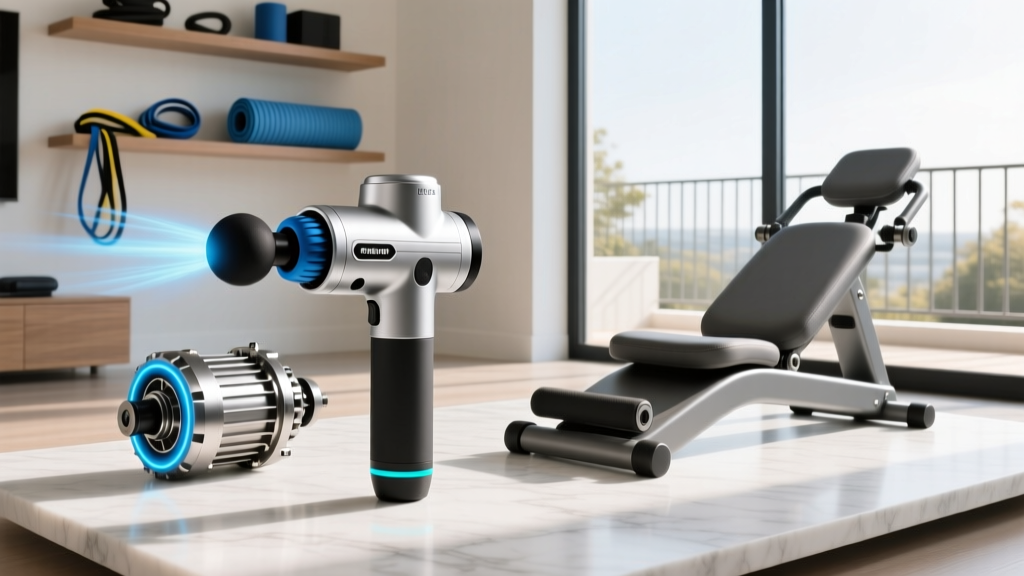
High-Torque Massage Gun Motor vs. Stretching Equipment

Theragun vs Hyperice Market Trends: Massage Gun Won't Turn On

Foam Rolling vs Massage Gun: Percussion vs Vibration Trends 2026

Infrared Sauna Blanket vs Panel: Complete Buyer's Guide
