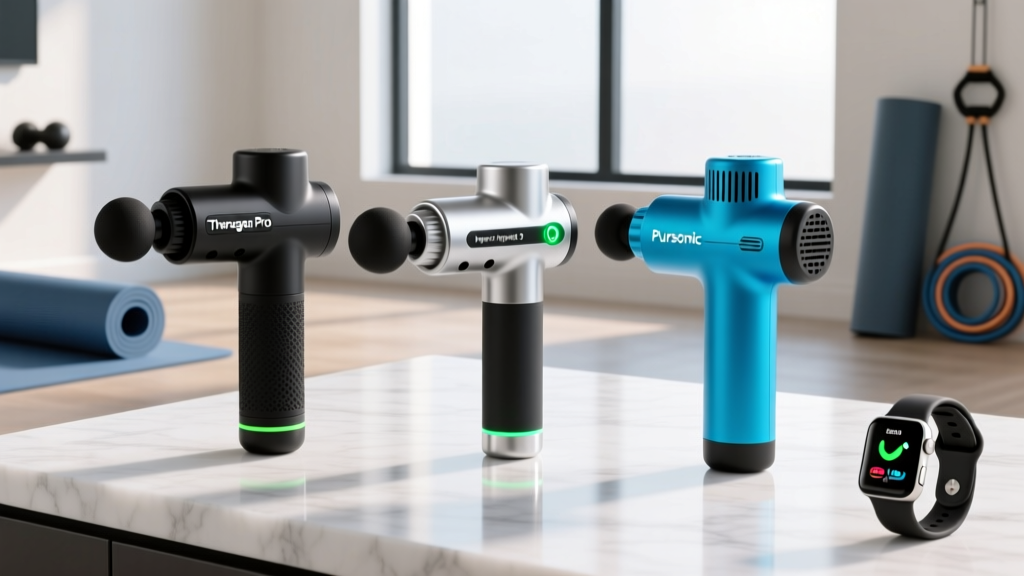
Theragun vs Hyperice vs Pursonic Massage Gun: 2026 Market Trends
We analyze the 2026 percussion therapy market, comparing Theragun and Hyperice premium models against the budget-friendly Pursonic massage gun.

The 2026 Percussion Therapy Landscape: Premium Duopoly vs. Value Disruptors
The percussive therapy market has undergone a radical transformation since the initial boom of the early 2020s. As we navigate 2026, the sector is no longer defined solely by the aggressive marketing of luxury wellness brands. Instead, a distinct bifurcation has emerged: the premium duopoly of Therabody and Hyperice, and the surging value-tier sector led by accessible, white-label OEM brands like Pursonic. For consumers and sports medicine professionals alike, understanding the mechanical and economic differences between a $600 flagship device and a $45 budget alternative is critical. This market analysis breaks down the biomechanical efficacy, failure modes, and consumer trends defining the Theragun vs Hyperice vs Pursonic massage gun debate in 2026.
The Premium Tier: Theragun PRO Plus vs. Hypervolt 2 Pro
At the apex of the market, Therabody and Hyperice continue to dictate the technological ceiling of percussive therapy. However, their approaches to hardware and software integration have diverged significantly over the last three years.
Theragun PRO Plus: The Biometric Powerhouse
Retailing at $599, the Theragun PRO Plus remains the undisputed heavyweight in terms of raw mechanical output. It delivers a verified 16mm amplitude and an industry-leading 60 pounds of stall force. In 2026, its primary differentiator is the integrated smart-chip architecture that syncs biometric data from wearables (like the Oura Ring and Apple Watch) to auto-adjust RPMs based on real-time heart rate variability (HRV) and muscle tension metrics. The ergonomic multi-grip handle and OLED screen provide clinical-grade usability, but the sheer weight (2.8 lbs) and aggressive percussive impact make it fatiguing for self-administered upper-body treatments.
Hyperice Hypervolt 2 Pro: The Ergonomic Standard
Hyperice has positioned the Hypervolt 2 Pro (currently street-priced around $279) as the premium choice for daily, high-frequency use. While it sacrifices 2mm of amplitude (maxing out at 14mm) and features a lower estimated stall force of roughly 40 pounds, its proprietary QuietGlide brushless motor technology keeps acoustic output below 55 decibels. The Hypervolt 2 Pro is heavily favored by physical therapists for its balanced weight distribution and smoother, less jarring impact profile, which is ideal for neurological down-regulation and parasympathetic nervous system recovery.
Spec Matrix: 2026 Flagship Comparison
| Feature | Theragun PRO Plus | Hypervolt 2 Pro | Pursonic Value Model |
|---|---|---|---|
| Retail Price | $599 | $279 | $39 - $49 |
| Amplitude (Depth) | 16 mm | 14 mm | 10 - 11 mm |
| Stall Force | 60 lbs | ~40 lbs | ~22 lbs |
| Max RPM | 2,400 | 2,700 | 3,200 |
| Battery Tech | Smart BMS, Swappable | Integrated Li-Ion | Generic Li-Ion |
The Value Disruptor: Analyzing the Pursonic Massage Gun
While Therabody and Hyperice battle for the elite athlete and clinical demographics, the Pursonic massage gun has quietly captured significant market share among casual fitness enthusiasts and weekend warriors. Sold primarily through big-box retailers and Amazon, Pursonic devices typically retail between $39 and $49. From a manufacturing perspective, these are white-labeled OEM (Original Equipment Manufacturer) chassis, sharing internal components with dozens of other budget brands.
However, dismissing the Pursonic massage gun as mere e-waste ignores the economic realities of the 2026 consumer. Pursonic models generally offer a 10mm to 11mm amplitude and a stall force hovering around 22 to 25 pounds. While this is insufficient for deep-tissue fascial release on large muscle groups like the glutes or quads, it is remarkably effective for superficial blood flow stimulation, lymphatic drainage, and upper-body trap tension relief. The inclusion of basic LCD screens and USB-C charging in recent Pursonic iterations has closed the aesthetic gap with premium models, even if the internal torque remains limited.
"The modern consumer has realized that they do not need Bluetooth telemetry and a $600 price tag to relieve a tense trapezius muscle after a desk-bound workday. The value tier has matured from novelty to utility."
Biomechanical Efficacy: What the Science Demands
To understand why a consumer might choose a premium model over a budget alternative, we must look at the biomechanical requirements of percussive therapy. According to sports medicine research indexed by the National Center for Biotechnology Information (NCBI), the therapeutic benefits of percussive massage—specifically regarding acute improvements in range of motion (ROM) and delayed onset muscle soreness (DOMS) mitigation—are highly dependent on amplitude and force application.
- Deep Fascial Release (14mm - 16mm): Required to physically deform the deep fascial layers and stimulate mechanoreceptors in dense muscle bellies (e.g., hamstrings, erector spinae). This is where the Theragun PRO Plus and Hypervolt 2 Pro operate.
- Superficial Stimulation (10mm - 12mm): Effective for increasing localized cutaneous blood flow, reducing neurological pain gating, and treating smaller, more delicate muscle groups (e.g., forearms, calves, neck). This is the operational ceiling of the Pursonic massage gun.
If a user applies heavy manual pressure to a Pursonic device expecting deep-tissue results, the 22-lb stall force will be quickly overwhelmed. The motor will audibly strain, the RPMs will plummet, and the internal plastic gearing will suffer micro-fractures. Conversely, using a 60-lb stall force Theragun on a delicate cervical muscle can cause micro-trauma and defensive muscle guarding.
Failure Modes & Edge Cases: Real-World Durability
Market analysis is incomplete without examining the lifecycle and failure points of these devices. Based on repair telemetry and long-term user data, here is how the hardware degrades over a 36-month lifespan.
Premium Brand Vulnerabilities
Theragun devices are notorious for their high out-of-warranty repair costs. The complex OLED screen assemblies and proprietary battery management systems (BMS) mean that a simple lithium-ion cell degradation often requires a $200+ factory refurbishment rather than a simple battery swap. Hyperice devices, while more modular, frequently suffer from plastic gear stripping in the drive train when users apply excessive lateral (side-to-side) pressure, a motion the internal pistons are not engineered to withstand.
Budget Brand Vulnerabilities (Pursonic)
The primary failure mode for the Pursonic massage gun is thermal throttling and motor burnout. Budget brushless motors lack advanced heat-dissipation housings. When pushed to the 3,200 RPM maximum for extended 15-minute sessions, the internal stator overheats, melting the solder joints on the primary PCB. Additionally, the ABS plastic used in the neck joint of budget guns is prone to stress fractures if dropped or stored improperly in a gym bag.
The FitGearPulse 2026 Decision Framework
Navigating the Theragun vs Hyperice vs Pursonic massage gun market requires matching the hardware to the user's specific physiological and financial profile. We recommend the following decision matrix for consumers:
1. The Elite Competitor & Clinical Professional
Recommendation: Theragun PRO Plus ($599)
Why: You require the 16mm amplitude to penetrate dense hypertrophied muscle tissue, and the swappable battery system ensures the device survives multi-day tournaments or back-to-back clinical shifts without needing a wall outlet.
2. The Daily Fitness Enthusiast & Tech Adopter
Recommendation: Hyperice Hypervolt 2 Pro ($279)
Why: You want premium build quality, quiet operation for shared living spaces, and a balanced ergonomic grip that prevents wrist fatigue during 20-minute full-body routines. It offers 90% of the Theragun's utility at half the cost.
3. The Casual User & Desk Worker
Recommendation: Pursonic Massage Gun ($39 - $49)
Why: Your primary use case is relieving upper-cross syndrome (neck and shoulder tension) and stimulating blood flow post-walk. The 10mm amplitude is perfectly safe and effective for these superficial tissues, and the low entry price eliminates buyer's remorse if the device is only used twice a week.
Final Market Verdict
The 2026 percussion therapy market has successfully stratified. Therabody and Hyperice continue to push the boundaries of biomechanical engineering and software integration, justifying their premium price tags for users who demand clinical-grade depth and durability. Meanwhile, the Pursonic massage gun and its OEM contemporaries have proven that basic percussive stimulation does not require a luxury markup. By understanding the exact amplitude and stall force requirements of your specific recovery needs, you can bypass marketing hype and invest in the tool that actually aligns with your physiological demands.
For more in-depth reviews on recovery technology, including compression boots and infrared sauna blankets, explore our comprehensive massage equipment buying guides and sports science breakdowns.
More gear to consider
All reviews
Flexibility Tools & Sharper Image Massage Gun Costco: Beginner Guide

Massage Gun for Lower Back Pain: 2026 Guide & Top Mistakes

Pads Equip Body Chest Essentials: Evidence-Based Selection, Fit Science, and Clinical Performance

2026 Massage Gun Buying Guide: Cryotex Massage Gun Charger & More

Building a Home Flexibility Station: B37 Massage Gun Setup
