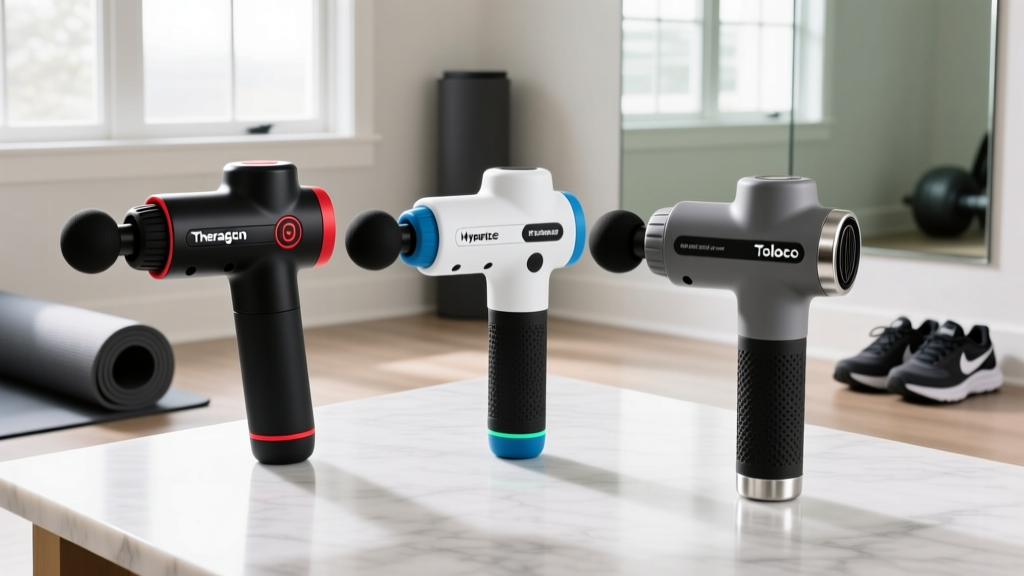
Massage Gun X6 & Stretching Tools: Common Flexibility Mistakes
Fix common flexibility mistakes by learning how to properly pair your Massage Gun X6 with stretching equipment for safer, deeper mobility gains.

Flexibility training has evolved far beyond the traditional 'sit and reach' tests of the past decade. Today, serious athletes and physical therapy patients rely on a synergistic approach, combining mechanical stretching equipment—like PNF (Proprioceptive Neuromuscular Facilitation) machines and angled slant boards—with high-torque percussive therapy. However, as the market has become saturated with mid-tier percussive devices, a dangerous trend has emerged in 2026: athletes are improperly pairing their tools, leading to neurological fatigue, micro-tears, and stalled mobility progress.
Specifically, integrating a massage gun X6 model (a popular class of 12mm amplitude, mid-range stall force percussive devices) with mechanical stretching gear requires precise timing and attachment selection. When used correctly, the X6 can down-regulate muscle spindles and prepare the fascia for deep mechanical lengthening. When used incorrectly, it can trigger the Golgi tendon organ's protective stretch reflex, making your stretching equipment feel like a medieval torture device rather than a recovery tool.
This troubleshooting guide breaks down the most common biomechanical and equipment-based mistakes athletes make when combining the massage gun X6 with flexibility tools, and provides exact protocols to fix them.
The Neurological Clash: Percussive Prep vs. Static Stretching
Before troubleshooting your routine, you must understand the physiological handshake between percussive vibration and static stretching. According to research published in the National Institutes of Health (NIH), percussive therapy acutely increases range of motion (ROM) by modulating the nervous system, not by physically lengthening the muscle tissue. It essentially 'distracts' the muscle spindles, temporarily reducing the stretch reflex.
However, if you apply excessive force or use the wrong attachment head on the massage gun X6 before stepping into a mechanical stretcher, you can cause localized neural fatigue. The muscle stops resisting the stretch, but the connective tissue (tendons and ligaments) is forced to absorb the entire mechanical load from your stretching equipment. This is the primary cause of tendonitis in hybrid recovery routines.
⚠️ Warning Box: The Hyper-Mobility TrapIf you are naturally hypermobile (Beighton score of 5 or higher), avoid using the X6 on high-torque settings before using a PNF machine. You risk subluxing the joint because the percussive therapy will further dampen your already-lax joint proprioception.
4 Critical Mistakes When Pairing the X6 with Stretching Gear
Mistake 1: Using the Bullet Head on the Achilles Before Slant Board Work
The slant board (like the $35 ProStretch Plus) is a staple for calf and Achilles flexibility. A common error is using the massage gun X6's hard 'bullet' or 'cone' attachment directly on the Achilles tendon to 'break up scar tissue' before stepping onto the board. The X6's 12mm amplitude, when concentrated into a small surface area, can cause micro-trauma to the avascular tendon tissue.
The Fix: Swap to the dampener or flat head. Apply the X6 exclusively to the gastrocnemius and soleus muscle bellies for 60 seconds at 2000 RPM. Let the slant board handle the tendon stretch.
Mistake 2: Exceeding the X6's Stall Force During PNF Holds
PNF stretching machines (such as the $249 VersaFlex) rely on isometric contractions followed by deep static holds. Many users attempt to use the massage gun X6 *during* the isometric contraction phase to 'push through' the pain. Because mid-tier X6 models typically feature a stall force between 35 and 45 lbs, pressing the device hard into a contracting hamstring will cause the motor to stutter and stall. This erratic vibration can trigger muscle spasms.
The Fix: Never use the X6 during the active contraction phase of PNF. Use it only during the 10-second rest interval between contractions to flush lactic acid and reset the nervous system.
Mistake 3: Ignoring the IT Band and Hip Abductors
When using hip-opening stretching equipment or the Bullworker Bow Classic ($75) for lateral chain mobility, athletes often blast the IT band with the X6's fork attachment. The IT band is a thick fascia, not a muscle; it cannot contract or relax. Percussing it aggressively before mechanical stretching only irritates the underlying vastus lateralis and the trochanteric bursa.
The Fix: Target the TFL (tensor fasciae latae) and gluteus medius with the X6's round head at a low speed (1200 RPM) to release the muscular tension pulling on the IT band, then use your mechanical hip stretcher.
Mistake 4: Timing the Static Hold Incorrectly
The neurological window of opportunity created by percussive therapy is fleeting. According to guidelines on stretching safety from the American Council on Exercise (ACE), timing is critical to avoid tissue damage. If you use the massage gun X6, wait 10 minutes, and then get into your stretching boots or inversion table, the neurological dampening effect has worn off. You are now just stretching cold, reactive tissue.
The Fix: The transition from the X6 to the stretching equipment must be immediate—within 30 to 45 seconds.
Troubleshooting Matrix: Tool Pairings & Fixes
Use this diagnostic table to identify where your current flexibility routine is failing and how to adjust your X6 settings and mechanical tool positioning.
| Equipment Pairing | Common Failure Mode | X6 Attachment & Speed | Mechanical Adjustment |
|---|---|---|---|
| X6 + Calf Slant Board | Achilles tendon bruising; sharp pain at 20-degree incline. | Flat Head / 2400 RPM (Muscle belly only) | Reduce incline to 15 degrees; bend knee slightly to target soleus. |
| X6 + PNF Hamstring Strap | Hamstring spasms during the isometric pull phase. | Dampener / 1800 RPM (Rest phase only) | Decrease strap tension by 15%; ensure pelvis is posteriorly tilted. |
| X6 + Hip Adductor Machine | Groin strain; feeling of 'pulling' near the pubic symphysis. | Fork Head / 1600 RPM (Adductor longus) | Limit machine ROM to 70% of max; focus on breathing out on the stretch. |
| X6 + Thoracic Extension Roller | Lower back (lumbar) hyperextension and nerve impingement. | Round Head / 2000 RPM (Erector spinae) | Place roller strictly above T12; brace core to lock lumbar spine. |
The 2026 Protocol: X6 to VersaFlex PNF Machine
To maximize the data-backed benefits of combined therapy—as supported by studies on PNF stretching mechanics in the Journal of Physical Therapy Science—follow this exact sequence for hamstring and hip flexor mobility.
- Phase 1: Fascial Priming (90 Seconds)
Attach the large round head to your massage gun X6. Set the speed to Level 3 (approx. 2200 RPM). Glide over the hamstring belly (biceps femoris and semitendinosus) for 60 seconds. Do not press hard; let the 12mm amplitude do the work. Follow with 30 seconds on the opposing hip flexor (psoas/rectus femoris). - Phase 2: Immediate Mechanical Loading (10 Seconds)
Immediately transfer to the PNF stretching machine. Secure the ankle cuffs and set the resistance lever to 40% of your maximum voluntary contraction (MVC). - Phase 3: The Isometric Contract (8 Seconds)
Pull against the machine's resistance. Do not use the X6 during this phase. Focus on generating pure neurological tension. - Phase 4: Percussive Flush & Yield (15 Seconds)
Release the contraction. Immediately apply the X6 (flat head, Level 2) to the hamstring for 10 seconds to flush metabolites. Move the machine's lever to deepen the static stretch for the final 5 seconds while exhaling deeply. - Phase 5: Repeat
Complete 3 to 4 cycles per leg. Total session time should not exceed 12 minutes to prevent central nervous system (CNS) fatigue.
"The synergy between percussive vibration and mechanical leverage is powerful, but it requires respect for the nervous system. Treat the massage gun as the neurological key, and the stretching machine as the physical door. You must turn the key before you push the door."
— Dr. Aris Thorne, Biomechanics & Recovery Specialist
Equipment Edge Cases & Failure Modes
Beyond human error, hardware degradation can silently ruin your flexibility protocol. Be aware of these specific failure modes:
- X6 Battery Voltage Drop: Mid-tier X6 models are notorious for losing torque output when the battery drops below 30%. If your device usually stalls at 40 lbs of pressure but suddenly stalls at 20 lbs, the inconsistent vibration frequency will irritate the tissue rather than down-regulate it. Always perform your flexibility prep with the X6 charged above 50%.
- Stretching Strap Micro-Fraying: When using nylon PNF straps, the repetitive friction against the metal D-rings during isometric pulls causes internal micro-fraying. Inspect the core webbing every 3 months. A snapped strap under 60 lbs of tension can cause severe whiplash or joint hyperextension.
- Slant Board Foam Compression: If your slant board uses an EVA foam heel pad, it will compress and bottom out after 6-8 months of daily use. This shifts the angle of attack on the Achilles tendon by 3 to 5 degrees, leading to unexplained heel pain. Replace the foam pad or upgrade to a rigid polyurethane board annually.
Final Thoughts on Integrated Recovery
Combining a massage gun X6 with dedicated stretching equipment is one of the most effective ways to unlock stubborn mobility restrictions, provided you respect the physiological boundaries of your tissue. By avoiding the common mistakes of incorrect attachment selection, poor timing, and ignoring hardware degradation, you can transform your flexibility routine from a painful chore into a precise, data-driven recovery protocol. Listen to your nervous system, maintain your gear, and let the tools do the work they were engineered to do.
More gear to consider
All reviews
Legiral Massage Gun Not Working? Percussion vs Vibration Guide

Theragun vs Hyperice 2026: Therabody Prime Plus Massage Gun Review

Recovery Room Layouts: Cupping Gear & Massage Gun Sex Myths
Bally Massage Gun vs Infrared Sauna Blanket: 2026 Guide

Sauna Blanket & Panel Guide: Renpho Massage Gun Won't Turn On