
Is a Massage Gun Worth It? Pairing with Infrared Sauna Blankets
Wondering if a massage gun is worth it? Discover how to pair percussive therapy with our beginner step-by-step infrared sauna blanket and panel guide.

The 2026 Recovery Stack: Beyond Single-Modality Healing
Building a comprehensive home recovery sanctuary has evolved significantly. In the past, fitness enthusiasts relied on a single tool to fix post-workout soreness. Today, the most effective recovery protocols combine localized mechanical therapy with systemic environmental stressors. If you are building your home gym's recovery corner, you have likely asked yourself: is a massage gun worth it? The short answer is yes, but only when integrated correctly with systemic heat therapy. This beginner-friendly, step-by-step guide will answer that question and walk you through the exact protocols for using infrared (IR) sauna blankets and wall panels to maximize your physical restoration.
So, Is a Massage Gun Worth It for Deep Tissue?
Before we introduce heat, let us address the percussive elephant in the room. In 2026, premium devices like the Theragun PRO Plus ($599) or the Hyperice Hypervolt 2 PRO ($549) offer up to 16mm of amplitude and 40 lbs of stall force. These specifications are not just marketing jargon; they represent the ability to achieve deep mechanical transduction, down-regulate the sympathetic nervous system, and temporarily increase localized blood flow.
However, a massage gun has a critical limitation: it cannot raise your core body temperature, induce systemic cardiovascular adaptations, or trigger a full-body sweat response. According to research highlighted by the Mayo Clinic, systemic heat exposure mimics moderate cardiovascular exercise, improving endothelial function and promoting whole-body vasodilation. Therefore, a massage gun is absolutely worth the investment, provided you pair it with a systemic heat modality like far-infrared (FIR) therapy.
The Heat Element: Infrared Sauna Blankets vs. Wall Panels
Far-infrared technology uses electromagnetic radiation to heat your body directly at the cellular level, rather than just heating the air around you. For beginners, the market is dominated by two primary formats: portable blankets and fixed wall panels. Below is a structural comparison to help you decide which fits your space and budget.
| Feature | Infrared Sauna Blanket (e.g., HigherDose V4) | Infrared Wall Panel (e.g., Clearlight Premier) |
|---|---|---|
| Average Cost | $549 - $699 | $3,500 - $5,500+ |
| Footprint | Folds into a carry bag (approx. 25 lbs) | Requires 10-20 sq ft of dedicated floor space |
| Max Temperature | 150°F (65°C) | 140°F (60°C) ambient cabin temp |
| Heating Zones | 1 to 3 zones (front/back/feet) | Full 360-degree surround heat |
| Best For | Apartments, travelers, budget-conscious buyers | Homeowners, full-body immersion, daily users |
Step-by-Step Guide: Mastering the Infrared Sauna Blanket
Sauna blankets are incredibly popular due to their accessibility, but beginners often make the mistake of cranking the heat to maximum on day one, leading to premature fatigue and poor recovery. Follow this exact protocol for your first month.
Step 1: The Base Layer and Hydration Prep
Never use an infrared blanket directly on your bare skin or over synthetic athletic wear, which can trap sweat and cause overheating. Wear a long-sleeved cotton shirt and cotton sweatpants, or use a dedicated cotton sleeping bag liner inside the blanket. Thirty minutes before your session, consume 16-20 oz of water mixed with a sodium-heavy electrolyte packet (like LMNT or Liquid I.V.) to prepare for the massive fluid shift.
Step 2: Temperature Ramping
- Week 1 (Acclimation): Set the blanket to 110°F - 115°F for 15 to 20 minutes. Focus on relaxing your breathing.
- Week 2-3 (Adaptation): Increase to 125°F - 130°F for 25 minutes. You should begin to experience a heavy, profuse sweat around the 12-minute mark.
- Week 4+ (Optimization): Push to 140°F - 150°F for 30 to 40 minutes. This is the therapeutic sweet spot for deep tissue penetration and cardiovascular mimicry.
Step 3: The Cool Down and Cleanse
When the timer ends, do not immediately jump into a cold shower. Allow your core temperature to normalize for 10 minutes. Once your sweating has stopped, wipe the interior of the blanket with a 50/50 mixture of distilled white vinegar and water to break down the acidic sweat residue and protect the internal carbon heating elements.
Step-by-Step Guide: Optimizing an Infrared Wall Panel
If you have the space and budget for a dedicated infrared sauna cabin or a large wall-mounted panel (like the Sunlighten Solo or Clearlight Premier 1), the experience is vastly different. You are heating a volume of air as well as your body.
Expert Tip: EMF MitigationWhen shopping for IR panels in 2026, always check the EMF (Electromagnetic Field) and ELF (Extremely Low Frequency) ratings. Top-tier brands use shielding to keep EMF levels below 3 milligauss. If you are building a DIY panel setup, ensure you are using shielded carbon heaters rather than unshielded ceramic tubes.
- Spatial Positioning: For targeted wall panels (often used in home gyms or offices), sit exactly 18 to 24 inches away from the carbon heaters. This distance allows the far-infrared waves to fully penetrate the epidermis and reach the muscle fascia without causing surface-level skin burns.
- The 'Core First' Protocol: Unlike a blanket that wraps you, a panel heats directionally. Spend the first 10 minutes facing the panel to heat your chest and core, triggering the cardiovascular response. Then, turn around for 10 minutes to target your posterior chain (glutes, hamstrings, and lower back), which are typically the most fatigued after heavy lifting sessions.
- Ventilation Management: Keep the cabin door or panel room slightly cracked (about 1 inch) during the last 5 minutes of your session. This prevents the ambient humidity from spiking, which can make the air feel suffocating and trigger claustrophobia in beginners.
The Ultimate 'Heat & Percuss' Recovery Stack
Now we bring it all together. How do you sequence a massage gun and an infrared sauna for maximum physiological benefit? According to sports physiology principles supported by data from the Cleveland Clinic regarding vasodilation and muscle pliability, the order of operations is critical.
Phase 1: Systemic Heat (Infrared Session)
Complete your 30-minute infrared blanket or panel session first. The far-infrared energy will dilate your blood vessels, increase tissue temperature, and make your fascia highly pliable. This systemic prep is something no mechanical device can achieve on its own.
Phase 2: Localized Percussive Therapy (Massage Gun)
Within 10 minutes of exiting the heat, while your tissues are still warm and highly vascularized, use your massage gun. Because the muscle bellies are relaxed and the fascia is pliable, the 16mm amplitude of a device like the Theragun PRO Plus will penetrate deeper with less perceived pain. Spend 60 seconds on each major muscle group, using slow, sweeping strokes to help flush the metabolic waste products that were mobilized during your heat session.
Phase 3: Parasympathetic Lock-In
Finish with 5 minutes of static stretching or foam rolling, followed by a cool shower. This sequence signals your autonomic nervous system to shift entirely into a parasympathetic (rest and digest) state, accelerating the actual repair process.
Safety, Contraindications, and Edge Cases
While infrared therapy and percussive massage are incredibly safe for the general population, there are specific edge cases where you must exercise caution. A comprehensive review of sauna bathing and cardiovascular health by Harvard Health Publishing notes that while heat therapy is generally cardioprotective, acute conditions require avoidance.
- Acute Inflammation: If you have a fresh muscle tear, sprain, or localized swelling (within the first 48 hours), avoid both heat and deep percussive therapy. Stick to cold therapy and gentle movement.
- Implants and Hardware: If you have titanium rods, joint replacements, or surgical mesh, consult your physician. Metal conducts heat differently than tissue, and localized FIR exposure can cause discomfort around the implant site.
- Hydration Failure: If you experience dizziness, nausea, or a sudden cessation of sweating during an IR session, your body has run out of fluid to cool itself. Exit immediately, elevate your legs, and consume oral rehydration salts.
The Final Verdict: Asking 'is a massage gun worth it' is only half the equation. A massage gun is a phenomenal localized tool, but when you pair it with the systemic, cellular benefits of an infrared sauna blanket or panel, you transition from simple soreness management to elite-level physiological recovery.
More gear to consider
All reviews
Theragun vs Hyperice: Space Layouts & Jet Ski Intake Recovery Tool
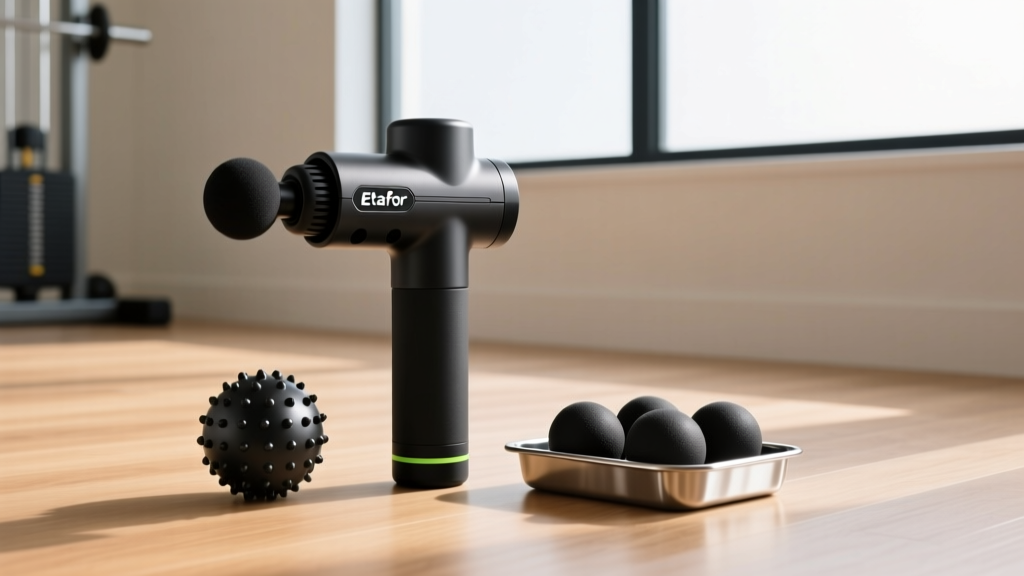
Space-Saving Recovery: Trigger Point Tools vs Etafor Plus Massage Gun

Troubleshooting FitRx Muscle Massage Gun & Stretching Equipment

Bob and Brad C2 Massage Gun: Percussion vs Vibration Therapy Tested

Best Stretching Equipment to Pair With a Massage Gun for DOMS
