
2026 Compression Boot Review & Massage Gun Attachment Guide
Compare top 2026 compression boots and percussive devices. Read our head-to-head recovery system review and complete massage gun attachment guide.

When building an elite recovery arsenal in 2026, athletes and physical therapists face a common dilemma: should you invest in systemic pneumatic compression or localized percussive therapy? The truth is, these modalities serve entirely different physiological functions. Pneumatic compression boots excel at lymphatic drainage and systemic venous return, while percussive devices target localized neuromuscular hypertonicity and fascial adhesions. In this comprehensive head-to-head recovery system review, we pit the industry-leading Hyperice Normatec 3 against the Theragun PRO Plus to determine how they stack up, and we conclude with an exclusive massage gun attachment guide to help you maximize your localized tissue work.
The Systemic Heavyweight: Normatec 3 Compression Boot Review
The Hyperice Normatec 3 remains the gold standard for pneumatic compression in 2026, retailing at $999 for the standard leg package. Unlike its predecessors, the Normatec 3 utilizes a streamlined 24-volt battery system and an upgraded 7-zone pulsing algorithm that mimics the natural muscle pump of the lower extremities. The sequential compression effectively pushes interstitial fluid and metabolic waste back toward the lymph nodes, accelerating the clearance of blood lactate post-exercise.
Clinical Insight: According to Hyperice Clinical Research, dynamic pneumatic compression significantly reduces delayed onset muscle soreness (DOMS) and perceived fatigue when utilized within two hours post-exertion.Real-World Failure Modes & Edge Cases
- The Tall Athlete Dilemma: Athletes over 6'4" often find that the standard leg attachments position the calf compression nodes too high, missing the soleus and gastrocnemius bellies. Hyperice offers 'Tall' attachments, but they must be purchased separately for an additional $150.
- Condensation Buildup: A common failure mode in humid environments is internal condensation within the air hoses. If the boots are zipped up immediately after a sweaty session without allowing the interior liner to air dry, mold can develop in the tubing. Always leave the zippers open and run a 'purge' cycle weekly.
The Localized Striker: Theragun PRO Plus Head-to-Head
Retailing at $599, the Theragun PRO Plus represents the pinnacle of percussive therapy. It delivers a class-leading 16mm amplitude and 28 pounds of stall force, allowing it to penetrate deep into the fascial layers without bottoming out. The ergonomic multi-grip handle reduces wrist strain during prolonged sessions, and the integrated OLED screen provides real-time feedback on force application and battery life.
While the Normatec 3 treats the entire leg systemically, the Theragun PRO Plus is a surgical tool. It is unparalleled for breaking up localized scar tissue, down-regulating the sympathetic nervous system before sleep, and addressing acute trigger points that compression boots simply cannot reach.
'Percussive therapy works via the gate control theory of pain, overwhelming the nervous system with mechanical vibration to block nociceptive signals, while simultaneously increasing localized blood flow.' — Therabody Science Hub
Hardware Quirks to Watch For
The primary edge case with the PRO Plus is its Bluetooth connectivity. In high-interference environments like crowded commercial gyms or physical therapy clinics with dozens of WiFi networks, the Therabody app frequently drops connection, disabling the guided routines. Furthermore, the OLED screen suffers from severe glare when used outdoors in direct sunlight, making it difficult to read your speed settings during sideline recovery.
Head-to-Head Comparison Matrix
Before diving into our localized protocol, let us look at the raw data comparing these two recovery titans.
| Feature | Normatec 3 (Legs) | Theragun PRO Plus |
|---|---|---|
| Primary Mechanism | Pneumatic Sequential Compression | Percussive Vibration (16mm Amplitude) |
| 2026 Retail Price | $999 | $599 |
| Battery Life | ~120 minutes | ~300 minutes |
| Best Use Case | Systemic flushing, travel days, heavy leg volume | Acute trigger points, pre-workout activation |
| Maintenance | Wipe down liners, purge hoses monthly | Sanitize attachments, lubricate stall motor annually |
The Ultimate Massage Gun Attachment Guide for Recovery
Owning a high-end percussive device is only half the battle; knowing how to deploy the correct head is where the real magic happens. To maximize your localized therapy, we have compiled this comprehensive massage gun attachment guide tailored for the 2026 Theragun and Hyperice ecosystems.
1. The Dampener (Large Muscle Groups & Bony Prominences)
The dampener is made of a specialized shock-absorbing foam that reduces the amplitude by roughly 17mm. Use Case: This is your go-to attachment for areas close to the bone, such as the spine erectors, the clavicle, the anterior tibialis (shins), and the IT band. Using a hard plastic or standard foam head on the shins will cause severe periosteal bruising. The dampener provides a gentle, broad flush perfect for highly sensitive or inflamed tissue.
2. Standard Ball (General Application)
Constructed from high-density, non-porous polyurethane, the standard ball is the workhorse of your kit, accounting for 60% of all use cases. Use Case: Quads, hamstrings, glutes, and pecs. Its slightly tacky surface grips the skin just enough to drag the fascia without slipping off when you apply lateral pressure.
3. The Wedge (Scraping & IT Bands)
The wedge features a flat, angled edge designed for 'scraping' motions. Use Case: The Iliotibial (IT) band and the latissimus dorsi. Instead of pushing directly into the IT band (which is a thick fascial tract, not a muscle, and does not respond well to direct compression), use the wedge to scrape longitudinally from the hip down to the knee. This mimics Graston technique or Gua Sha, promoting fibroblast activity and fascial hydration.
4. The Thumb (Trigger Points & Deep Tissue)
Shaped like a human thumb, this attachment concentrates the 28 lbs of stall force into a small surface area. Use Case: Pinpointing trigger points in the gluteus medius, the upper traps, and the plantar fascia. Warning: Never use the thumb attachment directly on the spine or the back of the neck. Limit application to 15-20 seconds per trigger point to avoid reactive muscle spasms.
5. The Cone (Pinpoint & Foot Work)
The most aggressive attachment, ending in a narrow point. Use Case: Deep plantar fascia release and working between the metatarsals. It is also highly effective for targeting the suboccipital muscles at the base of the skull, though this should only be done on the lowest speed setting (Speed 1 or 2) with minimal pressure.
Safety Warning: According to the Mayo Clinic, percussive therapy should be avoided over acute injuries, open wounds, varicose veins, or areas with known blood clots (DVT). Always consult a physician if you experience sharp, shooting nerve pain during use.Building a Hybrid Recovery Protocol
The most effective recovery systems do not choose between compression and percussion; they sequence them correctly. Here is a proven, step-by-step hybrid protocol for post-endurance events (like a marathon or heavy triathlon brick session).
- Phase 1: Localized Triage (10 Minutes)
Immediately post-event, use the Theragun PRO Plus with the Dampener attachment. Spend 60 seconds per major muscle group (calves, quads, hamstrings) on Speed 3. The goal here is not deep tissue work, but rather down-regulating the nervous system and initiating localized vasodilation. - Phase 2: Systemic Flushing (45 Minutes)
Transition into the Normatec 3 boots. Set the pressure to 80-100 mmHg (adjust based on leg swelling). Run a full 45-minute cycle. The sequential pulsing will now efficiently clear the metabolic waste that the percussive therapy mobilized into the interstitial fluid. - Phase 3: Fascial Hydration (Next Morning)
Upon waking, use the Wedge attachment on the IT bands and the Standard Ball on the glutes for 15 minutes to restore fascial glide before your active recovery walk.
Frequently Asked Questions
Can I use compression boots if I have neuropathy?
Pneumatic compression is generally safe and often recommended for peripheral neuropathy to encourage blood flow. However, because neuropathy reduces sensation, you must manually verify that the compression pressure (mmHg) is not set so high that it causes tissue ischemia. Start at the lowest setting (30 mmHg) and monitor skin color post-session.
How often should I replace my massage gun attachments?
High-density polyurethane attachments (like the Standard Ball and Wedge) typically last 18 to 24 months with daily use. If the foam begins to compress permanently, crack, or lose its tackiness, it will no longer transfer kinetic energy efficiently and should be replaced. The Dampener foam degrades faster and usually requires replacement every 12 months.
Which system offers a better return on investment?
If you are a strength athlete dealing with localized joint stiffness and trigger points, the Theragun PRO Plus ($599) offers superior ROI. If you are an endurance athlete, a CrossFit competitor, or someone who spends 8+ hours a day on your feet, the systemic flushing of the Normatec 3 ($999) will yield more noticeable day-to-day recovery benefits.
More gear to consider
All reviews
Beyond the Massage Gun User Manual: Trigger Point Tools Reviewed

Sauna Blanket & Panel Guide: Heat vs Massage Gun on Pulled Muscle
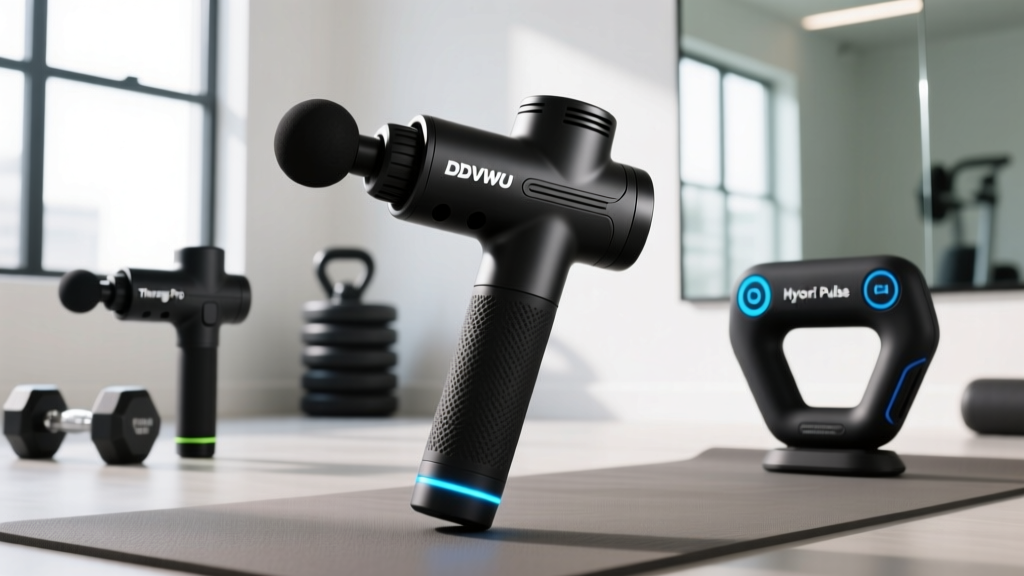
DDVWU Massage Gun vs Premium Brands: 2026 Buying Guide

Normatec vs Hyperice Boots 2026: Beyond the Massage Gun Body Map

Head Common Mistakes in Equipment Recovery: Field-Proven Errors That Cost Time, Money, and Safety
