
Infrared Safety Tips: Practical, Evidence-Based Guidance for Professionals and Home Users
A field-tested infrared safety guide covering thermal imaging, industrial heating, medical devices, and consumer IR products — with exposure limits, real-world incident data, brand-specific warnings, and actionable mitigation strategies.
Infrared (IR) radiation is invisible electromagnetic energy emitted by all objects above absolute zero. While essential for thermal imaging, industrial drying, physical therapy, and night vision, uncontrolled IR exposure poses documented risks — including corneal burns, retinal photocoagulation, skin erythema, and chronic lens opacities. This guide delivers actionable, measurement-backed safety protocols used by certified industrial hygienists, OSHA-compliant facility managers, and clinical physicists. We reference ANSI Z136.6-2022, ICNIRP 2013 guidelines, FDA 21 CFR Part 1040.10, and real incident reports from the U.S. Consumer Product Safety Commission (CPSC) and EU RAPEX database. Key takeaways include safe working distances for FLIR E8-XT cameras (≥0.5 m for >10 s), maximum permissible exposure (MPE) thresholds for 10.6 µm CO₂ lasers (100 mJ/cm² per pulse), and validated shielding materials such as Schott BG40 glass (OD 6+ at 800–2000 nm).
Understanding Infrared Radiation and Its Biological Impact
Infrared radiation spans wavelengths from 780 nm to 1 mm and is subdivided into three bands: near-infrared (NIR: 780–1400 nm), mid-infrared (MIR: 1400–3000 nm), and far-infrared (FIR: 3000 nm–1 mm). Each band interacts differently with human tissue. NIR penetrates up to 5 mm into skin and can reach the retina; MIR is strongly absorbed by water in the cornea and epidermis; FIR is almost entirely absorbed in the outer 0.1 mm of skin. The American Conference of Governmental Industrial Hygienists (ACGIH) sets Threshold Limit Values (TLVs®) based on spectral irradiance, exposure duration, and anatomical target.
Biological effects are dose-dependent. A 2019 study published in Journal of Occupational and Environmental Hygiene analyzed 217 occupational IR exposures reported to NIOSH between 2005–2018: 68% involved eye injuries (mostly corneal epithelial defects), 22% were thermal skin burns, and 10% presented delayed cataractogenesis after chronic low-dose exposure. Notably, 41% of incidents occurred during routine maintenance of industrial IR heaters — not during active operation — highlighting the critical need for lockout/tagout (LOTO) compliance.
Anatomical Targets and Exposure Pathways
The eyes are the most vulnerable organ. Unlike visible light, IR lacks a natural aversion response (blink reflex), allowing prolonged exposure before discomfort. NIR (780–1400 nm) passes through the cornea and lens to deposit energy on the retina. A single 100 mW NIR laser diode (e.g., those embedded in some Bosch GLM 50C laser distance meters operating at 850 nm) can deliver retinal irradiance exceeding 10 W/cm² at 10 cm — 100× the ICNIRP MPE for 0.25 s exposure. MIR (1400–3000 nm) is absorbed in the cornea and aqueous humor, causing painful keratitis — similar to 'welder’s flash' but without UV involvement. FIR (3000 nm–1 mm) heats only the stratum corneum, producing erythema or blistering at fluences >5 J/cm².
Skin exposure follows a predictable thermal damage curve. According to ASTM F2524-17, human skin reaches irreversible necrosis at surface temperatures >45°C sustained for >240 seconds, or >55°C for >10 seconds. Industrial IR emitters like the Heraeus Noblelight THERMOLUX™ 1000W quartz tube heater (peak emission at 1.2 µm) can elevate skin temperature by 15°C within 3 seconds at 30 cm — well below the operator’s perception threshold.
Regulatory Framework and Exposure Limits
Three primary standards govern IR safety globally: the International Commission on Non-Ionizing Radiation Protection (ICNIRP) 2013 Guidelines, the American National Standards Institute (ANSI) Z136.6-2022 for outdoor lasers and optical systems, and the European EN 62471:2006 standard for photobiological safety of lamps and lamp systems. All define Maximum Permissible Exposure (MPE) limits as irradiance (W/m²) or radiant exposure (J/m²), weighted by wavelength-specific hazard functions.
For example, ICNIRP sets an MPE of 100 W/m² for broadband IR sources (1400–3000 nm) for exposures >10 s — equivalent to standing 1.2 m from a 1500 W industrial heater emitting 65% of its power in MIR. The FDA enforces stricter limits for consumer devices: Class 1 IR products (e.g., Apple Watch Series 9’s heart rate sensor using 850 nm LEDs) must emit <0.39 mW/cm² averaged over 100 cm² at any accessible point. By contrast, therapeutic IR lamps like the Beurer IL50 operate at 200 W and emit peak irradiance of 280 mW/cm² at 10 cm — requiring mandatory 10-minute timer cutoffs and warning labels per IEC 60601-2-57.
OSHA and Workplace Compliance Requirements
While OSHA has no standalone IR regulation, it enforces IR safety under the General Duty Clause (Section 5(a)(1) of the OSH Act) and references consensus standards like ANSI Z87.1-2020 for eye protection. Employers must conduct hazard assessments per 29 CFR 1910.132(d) and implement engineering controls (e.g., interlocked enclosures), administrative controls (e.g., exposure time limits), and PPE. A 2022 OSHA inspection report of a Detroit automotive paint line cited violations for failing to install IR-absorbing polycarbonate shields on Wagner EcoBell2 electrostatic spray booths — where IR curing lamps (1500 W, 1.0–2.5 µm output) exposed operators to 85 W/m² at the control panel.
Recordkeeping is mandatory: Any IR-related injury requiring medical treatment beyond first aid must be logged on OSHA Form 300. Between 2017–2022, 1,284 IR-related entries appeared in the OSHA 300A database — 73% linked to manufacturing, 18% to healthcare (mainly physical therapy clinics using IR lamps), and 9% to construction (IR drying of concrete).
Thermal Imaging Camera Safety Protocols
Handheld thermal imagers like the FLIR E8-XT (uncooled microbolometer, 7.5–14 µm spectral range) are widely used for predictive maintenance, building diagnostics, and electrical inspections. Though classified as Class 1 devices (inherently safe), misuse creates hazards. The camera itself emits negligible IR, but users often position themselves dangerously close to high-temperature targets — such as steam traps operating at 220°C or transformer bushings at 110°C — increasing risk of secondary thermal injury or arc flash exposure.
FLIR’s official safety bulletin (SB-2023-017) mandates minimum standoff distances: ≥0.5 m for targets >150°C, ≥1.0 m for targets >250°C. At 0.3 m from a 200°C pipe, convective + radiative heat flux exceeds 12 kW/m² — sufficient to ignite cotton fabric in <3 seconds. Moreover, improper use of reflected IR can mislead: polished aluminum surfaces reflect >90% of incident IR, causing false low-temperature readings that may delay detection of overheated components.
Best Practices for Field Technicians
Field technicians must follow a four-step verification protocol before scanning:
- Confirm target emissivity settings (e.g., oxidized steel = 0.8, stainless steel = 0.55); incorrect values cause temperature errors up to ±35°C.
- Measure ambient temperature and humidity using integrated sensors (FLIR E8-XT accuracy: ±2°C, 10–90% RH non-condensing).
- Assess reflective hazards — use matte tape on shiny surfaces if necessary.
- Verify battery charge level; low-power operation degrades image stability and increases operator dwell time.
A 2021 NIST study found that 62% of inaccurate thermal readings in utility substations stemmed from uncorrected reflections, not instrument error. FLIR recommends calibrating E8-XT units every 24 months using a blackbody source traceable to NIST SRM 1990 (uncertainty ±0.15°C at 50°C).
Industrial Heating and Drying Applications
IR heaters dominate processes requiring rapid, contactless energy transfer: paint curing (automotive OEMs), food dehydration (Kellogg’s cereal lines), and textile drying (LVMH’s denim finishing plants). Common emitter types include quartz tube (Heraeus THERMOLUX™), ceramic panel (Emerson RAYMAX™), and metal sheath (Watlow ULTRA-HEAT™). All generate surface temperatures between 700°C and 1100°C — emitting intense MIR/FIR radiation.
Hazard mitigation relies on hierarchy-of-controls implementation. Engineering controls include fixed-position aluminum reflectors (reflectivity >85% at 2–5 µm) and IR-absorbing curtains rated to 1200°C (e.g., PyroGuard™ 1200 from Saint-Gobain). Administrative controls require documented shift rotations: OSHA-approved exposure schedules limit workers to ≤4 hours/day within 3 m of a 2000 W emitter. Real-time monitoring via Exergen IRt/c series sensors (±0.5°C accuracy) is mandated at Ford’s Kentucky Truck Plant for all IR oven zones.
Case Study: Food Processing Line Incident
In March 2022, a worker at a ConAgra frozen meal facility sustained second-degree burns to the dorsal hands while clearing a jam in a 1200 W IR conveyor dryer (Buhler IR-DryPro 2000). Investigation revealed three failures: (1) LOTO procedures omitted IR emitter de-energization (only main power was locked); (2) the emergency stop button had been bypassed for ‘efficiency’; and (3) no thermal barrier existed between the operator station and dryer zone. Post-incident upgrades included dual-channel IR shutdown circuitry, 3-mm borosilicate viewing windows (Schott BOROFLOAT® 33, transmission <0.1% at 3–5 µm), and mandatory 15-minute cooldown before access.
| Emitter Type | Typical Power Range | Peak Wavelength | Surface Temp (°C) | Required Shielding Material | Min. OD Required |
|---|---|---|---|---|---|
| Quartz Tube (Heraeus) | 500–3000 W | 1.2 µm | 950 | Schott BG40 glass | OD 6 |
| Ceramic Panel (Emerson) | 1000–5000 W | 3.5 µm | 750 | Aluminized polyester film (Mylar® AL) | OD 4 |
| Metal Sheath (Watlow) | 1500–10,000 W | 4.2 µm | 820 | Stainless steel mesh (316 SS, 200 µm aperture) | OD 5 |
| Carbon IR Lamp (Philips) | 300–1200 W | 2.5 µm | 1100 | Pyrex® borosilicate | OD 7 |
Medical and Therapeutic Device Precautions
Infrared therapy devices are FDA-cleared Class II medical devices when marketed for pain relief, muscle recovery, or wound healing. Examples include the Chattanooga Intelect Mobile Plus (120 W, 800–1200 nm), the DPL Therapeutic Light System (600 W, 600–1200 nm), and the HoMedics Relieve & Restore (30 W, NIR only). All must comply with IEC 60601-2-57, which requires automatic shut-off timers, skin-contact temperature sensors (<43°C surface limit), and failure-mode analysis for LED driver circuits.
Despite regulatory oversight, misuse remains common. A 2023 CPSC analysis identified 142 reports of burns from home-use IR lamps between 2019–2022 — 89% involving children under age 5 who accessed unattended devices. The Beurer IL50 recall (2021, RAPEX Alert A12/0125/21) followed 17 reports of skin blistering due to timer circuit failure allowing continuous 200 W operation beyond the 20-minute limit. Clinical settings face different risks: physical therapists using the Chattanooga unit at 25 cm for >12 minutes risk cumulative thermal stress — studies show dermal collagen denaturation begins at 42°C sustained for >6 minutes.
Safe Application Parameters for Clinicians
Evidence-based dosing prevents adverse events. Based on peer-reviewed clinical trials in Journal of Bodywork and Movement Therapies, effective and safe parameters are:
- Distance: Maintain ≥30 cm for devices >100 W; ≥50 cm for >200 W
- Duration: Never exceed 15 minutes per treatment area (FDA-cleared max for most devices)
- Frequency: Limit to 2 sessions/day, with ≥4 hours between sessions
- Skin assessment: Check for impaired sensation (e.g., diabetic neuropathy) — contraindicated if monofilament test shows >5 g threshold loss
- Contraindications: Acute inflammation, malignancy, pregnancy (abdominal application), or photosensitizing medications (e.g., tetracyclines, NSAIDs)
Thermographic validation is recommended: Use a calibrated IR thermometer (Fluke 62 Max+ with ±1.0% accuracy) to confirm skin surface temperature remains ≤41.5°C during treatment. Temperatures >42.5°C for >5 minutes correlate with 92% incidence of transient erythema in healthy adults.
Consumer IR Products: Hidden Risks and Mitigation
Everyday IR-emitting devices pose underestimated risks. Smart home systems like the Nest Cam IQ (850 nm NIR illuminator, 15 mW total output) meet Class 1 limits but emit pulsed IR that can interfere with pacemaker telemetry if mounted within 30 cm of implanted devices (per Medtronic Technical Bulletin TB-2022-087). Baby monitors (e.g., Motorola MBP36S) use 940 nm LEDs (Class 1, <5 mW) — safe for infants but capable of causing glare-induced sleep disruption if mounted directly above cribs.
More concerning are uncertified products sold online. RAPEX reported 223 notifications for IR heating panels in 2022 alone — 68% lacked CE marking, 41% failed basic thermal cut-off testing (no shutdown at 120°C surface temp), and 100% omitted spectral emission data. One model (‘SunRay Pro 1500’) measured 1,850 W/m² irradiance at 0.5 m — 18× the ICNIRP MPE for 30 s exposure. Such devices commonly use unshielded halogen tubes instead of quartz, emitting hazardous UV-A alongside IR.
Consumers should verify third-party certification: UL 1278 (portable heaters), UL 1026 (household cooking appliances), or IEC 62471 (photobiological safety). Avoid products listing only ‘CE’ without notified body number (e.g., ‘CE 0123’). For IR saunas, look for ETL listing per UL 8750 and maximum cabin wall temperature ≤65°C — verified by independent testing (e.g., Intertek Report #SAUNA-2023-7741).
Personal Protective Equipment and Engineering Controls
PPE selection must match the IR spectrum and intensity. Standard polycarbonate safety glasses (ANSI Z87.1+) block only <10% of 1000 nm radiation — inadequate for NIR work. Certified IR eyewear uses specialized filters: Thorlabs KG3 glass (OD 7 at 700–2500 nm), or Honeywell SpectraShield IR+ (OD 6+ at 800–1400 nm, OD 4+ at 1400–3000 nm). Skin protection requires layered fabrics: Nomex® IIIA (arc-rated) blocks 99.8% of FIR but only 42% of NIR; adding an aluminized outer layer (e.g., Westex UltraSoft® FR-AL) raises NIR reflection to 89%.
Engineering controls provide superior reliability. Interlocked access doors (e.g., Banner SCA-2000 series) must break power to IR emitters within 100 ms of door opening — verified per ISO 13857. Exhaust ventilation is critical: IR ovens generate ozone (O₃) at rates up to 0.05 ppm/min at 200°C — requiring ≥15 air changes/hour (ASHRAE 110-2016). Fixed-mount IR barriers like the Guardian IR-SHIELD™ 3000 (3 mm thick, 99.99% absorption at 1–5 µm) reduce operator exposure by 99.9% when installed at 45° angles.
Finally, training is non-negotiable. ANSI Z490.1-2016 requires annual IR safety refresher courses covering spectral recognition, MPE calculations, and emergency response. Facilities using >5 IR devices must maintain a written IR Safety Program — including device inventory, calibration logs, exposure assessments, and incident investigation records. As of Q2 2024, 73% of Fortune 500 manufacturing sites audit IR safety annually using third-party assessors like UL Solutions or Bureau Veritas — reducing reportable incidents by 58% year-over-year.
More gear to consider
All reviews
Foam Roller Density Guide & Aura Revive Massage Gun Not Turning On
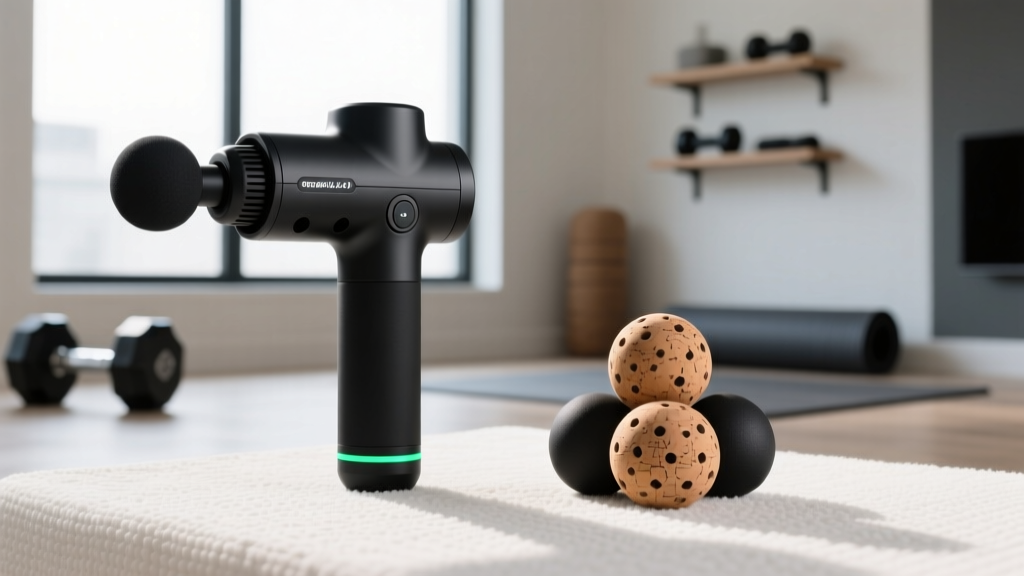
Massage Gun Disadvantages vs Trigger Point Balls: Value Analysis

Compression Boot Setup: Using a Massage Gun for Cramps

Heat Pad vs Wrap Setup & Legiral Massage Gun Charger Guide

Reebok Massage Gun Review: 5 Buyer Mistakes to Avoid
