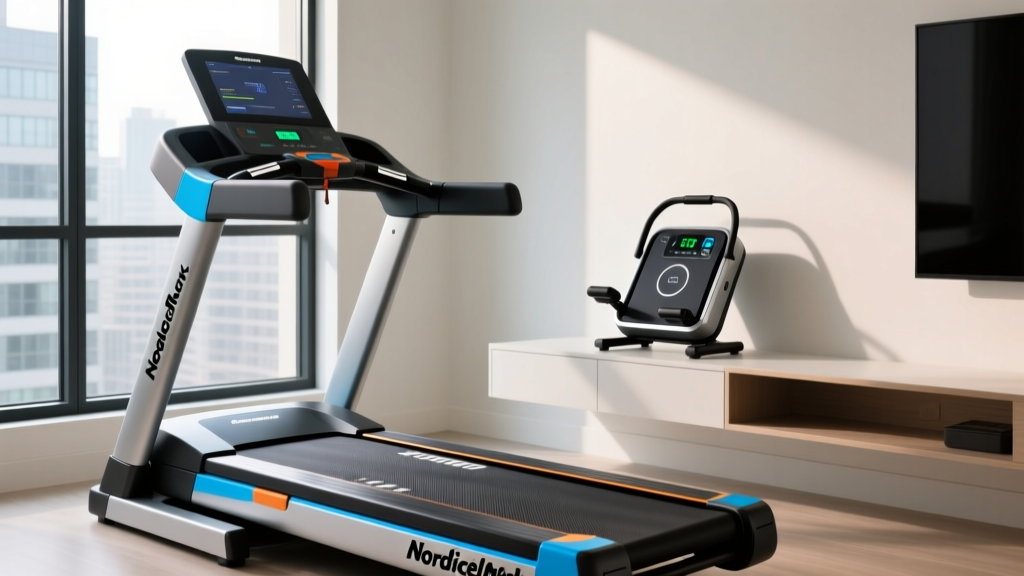
X11i Treadmill vs Compact Portable Cardio: 2026 Budget Breakdown
Is the NordicTrack X11i treadmill worth the space and cost? We break down the 2026 budget and value of top compact portable cardio equipment options.

The Spatial and Financial Reality of the X11i Treadmill
When outfitting a home gym, the NordicTrack X11i Incline Trainer frequently tops the wishlist for serious cardio enthusiasts. With its industry-leading 40% incline capability, 3.6 CHP motor, and immersive 22-inch HD touchscreen, it is a powerhouse. However, the x11i treadmill demands a massive physical and financial footprint. Measuring 70.2 inches long by 38.2 inches wide, it consumes 18.5 square feet of floor space and weighs nearly 290 pounds.
Financially, the barrier to entry is equally steep. In 2026, the X11i retails for approximately $2,599, and because its interactive features are locked behind a paywall, you must add a $396 annual IFIT membership fee. For urban dwellers, apartment renters, or those with multi-use living spaces, this behemoth simply isn't viable. This reality forces a critical pivot: how do you maintain cardiovascular health without sacrificing your living room? The answer lies in evaluating compact portable cardio equipment options that deliver high ROI on both budget and spatial efficiency.
2026 Value Matrix: X11i vs. Compact Alternatives
To understand the true value of downsizing, we must compare the baseline costs and spatial requirements of the X11i against the leading compact portable cardio equipment options available this year. The metric that matters most in small-space fitness is the Cost Per Square Foot (CPSF) of active floor space.
| Equipment Model | Type | Active Footprint (Sq Ft) | Upfront Cost (2026) | Annual Sub Cost | Cost Per Sq Ft |
|---|---|---|---|---|---|
| NordicTrack X11i | Incline Trainer | 18.5 sq ft | $2,599 | $396 | $140.48 |
| KingSmith WalkingPad R2 | Folding Walking Pad | 10.8 sq ft | $549 | $0 | $50.83 |
| Echelon Connect EX-3 | Compact Upright Bike | 7.0 sq ft | $699 | $240 (Optional) | $99.85 |
| Hydrow Wave | Compact Rower | 13.3 sq ft (4.1 stored) | $1,795 | $0 (Basic) | $134.96 |
Note: Active footprint measures the space required during use. Stored footprint is significantly smaller for folding models.
Deep Dive: Evaluating the Compact Contenders
Downsizing doesn't mean downgrading your cardiovascular output. According to the American Heart Association, adults need at least 150 minutes of moderate-intensity aerobic activity per week. You can easily hit these targets with compact gear if you choose the right modality for your biomechanics and budget.
1. The Ultra-Compact Choice: Folding Walking Pads
For pure spatial efficiency, folding walking pads like the KingSmith WalkingPad R2 are unmatched. When folded, the R2 measures just 28 x 22 inches, allowing it to slide under a standard sofa. Priced at $549, it represents a $2,050 upfront savings compared to the X11i treadmill.
- Motor & Output: The R2 utilizes a 1.25 HP motor (compared to the X11i's 3.6 CHP), capping top speeds at 7.5 mph. It is designed for brisk walking and light jogging, not sprint intervals.
- Weight Capacity: Capped at 256 lbs. Users near this limit will experience accelerated motor wear.
- Best For: Remote workers aiming to hit 8,000+ daily steps via under-desk walking while recovering from high-impact lifting sessions.
2. The High-Intensity Space Saver: Magnetic Upright Bikes
If your goal is high-intensity interval training (HIIT) or Zone 2 endurance cycling, a compact upright bike like the Echelon Connect EX-3 offers immense value. Occupying just 7 square feet, it provides 32 levels of magnetic resistance and a 28-pound flywheel.
- Biomechanics: Unlike treadmills, bikes eliminate the eccentric loading on your joints. The Mayo Clinic frequently recommends stationary cycling for individuals managing joint pain or recovering from lower-body injuries.
- Hidden Value: The EX-3 doesn't force a mandatory subscription to function. You can use the free Echelon app for basic metrics or ride to your own YouTube playlists, saving $396 annually over the X11i's mandatory IFIT fee.
3. The Full-Body Compromise: Compact Rowing Machines
Rowing engages 86% of the body's musculature, offering a cardiovascular and muscular endurance stimulus that neither the X11i nor a bike can match. The Hydrow Wave was engineered specifically for small spaces. While its active length is 80 inches, its width is a mere 24 inches. More importantly, it stores vertically, requiring only 4.1 square feet of floor space when not in use.
⚠️ Expert Warning: The Hidden Failure Modes of Portable CardioCompact equipment relies on hinges and smaller components that introduce specific failure modes. On folding walking pads, the central hinge creates a structural weak point in the running belt. After 600 to 800 miles, the belt seam often frays, requiring a $75 replacement and manual recalibration. On budget compact bikes (under $400), the pedal spindle bearings frequently seize after 18 months of high-cadence interval training due to inadequate factory grease sealing. Always factor a 10% annual maintenance buffer into your compact cardio budget.
Budget Breakdown: The 3-Year Total Cost of Ownership (TCO)
To truly evaluate value, we must look beyond the sticker price and calculate the 3-Year TCO, factoring in hardware, mandatory software, and estimated maintenance.
"The most expensive home gym equipment is the machine you don't use because it dominates your living space and causes visual clutter fatigue. Spatial harmony directly correlates with long-term adherence." — 2025 Home Fitness Ergonomics Report
- NordicTrack X11i Treadmill 3-Year TCO: $2,599 (Hardware) + $1,188 (3 Years IFIT) + $150 (Belt lubrication/parts) = $3,937
- KingSmith WalkingPad R2 3-Year TCO: $549 (Hardware) + $0 (Sub) + $150 (2 replacement belts) = $699
- Echelon EX-3 Bike 3-Year TCO: $699 (Hardware) + $0 (Riding free via third-party apps) + $50 (Pedal grease/service) = $749
By pivoting from the X11i to a high-quality compact portable cardio option, you retain over $3,000 in capital over a three-year period—money that can be reallocated to adjustable dumbbells, a smart recovery system, or simply kept in your investment portfolio.
Decision Framework: Which Compact Option Fits Your Profile?
Use this rapid diagnostic framework to select the right compact portable cardio equipment option for your specific needs in 2026:
- The NEAT Maximizer (Non-Exercise Activity Thermogenesis): If you work from home and struggle with sedentary habits, choose a Folding Walking Pad. The ability to walk at 2.5 mph while answering emails yields massive caloric burn over a 40-hour work week without inducing central nervous system fatigue.
- The Zone 2 Endurance Builder: If you want to build aerobic base capacity while watching TV or reading, choose a Compact Magnetic Bike. The quiet magnetic resistance and low spatial footprint make it the ultimate living-room companion.
- The Time-Crushed Executive: If you only have 20 minutes a day and need maximum systemic fatigue, choose a Compact Rower. The combination of leg drive and lat engagement spikes your heart rate faster than walking or cycling, delivering superior VO2 max adaptations in micro-doses.
Final Verdict
The x11i treadmill is an engineering marvel for those with dedicated, climate-controlled gym spaces and expansive budgets. However, for the vast majority of modern households, the spatial tax and mandatory subscription fees destroy its long-term value proposition. By strategically selecting from the best compact portable cardio equipment options available in 2026, you can achieve identical cardiovascular health markers, preserve your living space, and keep thousands of dollars in your bank account.
More gear to consider
All reviews
Cardio Noise Comparison & ProForm Treadmill Maintenance Manual

Sole F80 Treadmill Setup Walkthrough & Feature Guide

Folding Treadmill Small Space Review & Heavy Duty Surge Protector

Elliptical vs Treadmill: Why Your Treadmill Trips Circuit Breaker
Running on Treadmill Hurts Knees? Home Stair Climber Guide & Fixes
