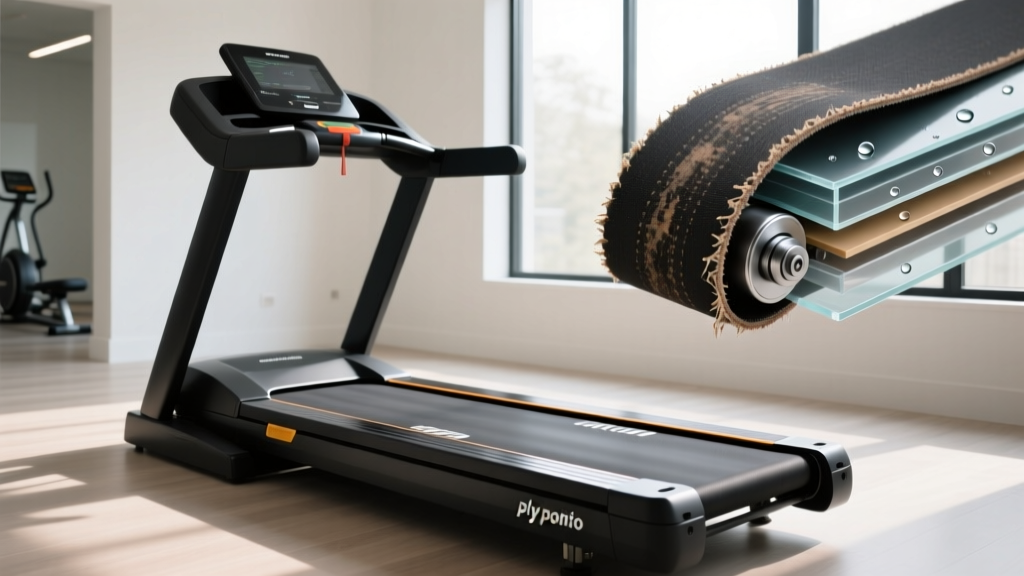
Worn Treadmill Belt Fixes & Buying Guide Feature Comparison
Discover how to troubleshoot a worn treadmill belt and compare key buying features like ply count and deck lubrication to prevent premature wear.

The Hidden Cost of a Worn Treadmill Belt: Troubleshooting and Buying Insights
A worn treadmill belt is rarely just a cosmetic issue; it is a mechanical red flag that compromises your workout biomechanics and strains your machine's motor. According to Consumer Reports, improper belt maintenance and poor initial material selection are the leading causes of premature deck degradation and motor burnout in home cardio equipment. Whether you are currently battling a slipping, fraying, or delaminating belt, or you are researching your next purchase to avoid these pitfalls entirely, understanding the intersection of treadmill belt features and troubleshooting is critical.
In this guide, we bridge the gap between immediate troubleshooting fixes and long-term buying strategies. We will dissect the exact failure modes of walking belts, compare the material features you must look for in a buying guide, and provide exact measurements for tensioning and alignment.
Diagnosing a Worn Treadmill Belt: 4 Critical Failure Modes
Before you order a replacement or adjust your rear roller, you must accurately diagnose how the belt is failing. Misdiagnosing the symptom often leads to stripping the tension bolts or destroying the deck.
1. Slipping Underfoot (Drive Belt vs. Walking Belt)
When the belt hesitates or slips as your foot strikes the deck, 90% of users mistakenly tighten the walking belt. However, this symptom is frequently caused by a loose motor drive belt (the ribbed belt connecting the motor pulley to the front roller). Test: Remove the motor hood. If the front roller stops spinning while the motor pulley continues to spin, your drive belt is worn or loose. If the front roller stops with the motor pulley, your walking belt tension is too low.
2. Edge Fraying and Seam Separation
Fraying on the left or right edge indicates chronic misalignment. The belt is physically rubbing against the plastic side rails, generating microscopic heat that melts the PVC edges. Seam separation (where the belt loops back on itself at the rear roller) indicates ply delamination, a fatal flaw usually found in cheap 1-ply belts after 12 to 18 months of use.
3. Excessive Heat and Friction Odor
If you smell burning rubber or ozone, the friction coefficient between the belt and the deck has exceeded safe limits. This is a lubrication failure. The motor is drawing excess amperage to overcome the drag, which can trip your home's 15-amp circuit breaker or fry the treadmill's lower control board.
4. Visible Grooving on the Underside
Flip the edge of the belt. If the underside shows deep, longitudinal grooves matching the deck texture, the belt's low-friction coating has worn through. No amount of silicone lubricant will fix this; the belt is mechanically compromised and must be replaced.
Treadmill Belt Features: A Buying Guide Comparison Matrix
When shopping for a new treadmill, the belt specification is often buried in the fine print. As ACE Fitness notes, the shock absorption and durability of your machine are directly tied to the belt's ply count and coating. Use this comparison matrix to evaluate models and avoid buying a machine destined for premature wear.
| Belt Feature / Type | Material Composition | Expected Lifespan | Shock Absorption | Replacement Cost (2026) | Best For |
|---|---|---|---|---|---|
| 1-Ply (Budget) | Single layer PVC/Rubber | 1 - 2 Years | Poor (High joint impact) | $50 - $80 | Walking pads, light use |
| 2-Ply (Standard) | PVC top, cotton/poly underside | 3 - 5 Years | Moderate | $90 - $150 | Daily home runners |
| 4-Ply (Commercial) | Multi-layer rubber & urethane | 7 - 10+ Years | Excellent | $180 - $250 | Heavy runners, home gyms |
| Urethane-Coated | Specialized polymer top coat | 5 - 8 Years | High | $150 - $220 | Sprint training, high friction |
Expert Buying Tip: Always look for a phenolic resin coated deck paired with a 2-ply or 4-ply belt. Budget treadmills often use medium-density fiberboard (MDF) decks with a wax coating. Once the wax wears off, the MDF absorbs moisture and swells, destroying both the deck and the belt simultaneously.
The Lubrication Trap: Silicone vs. Wax vs. Maintenance-Free
A major buying guide feature to compare is the manufacturer's lubrication requirement. This dictates your long-term maintenance burden and directly impacts how quickly a belt wears out.
- 100% Silicone Liquid (Manual): Requires application every 150 miles or 3 months. Provides the lowest friction coefficient but attracts dust if over-applied. Never use WD-40 or petroleum-based lubricants, as they will dissolve the PVC backing of the belt within 48 hours.
- Silicone Gel / Wax (Pre-lubricated): Found on mid-tier models like the Sole F80. The underside of the belt is infused with a dry silicone gel. Requires less frequent maintenance but eventually dries out after 3 to 4 years, requiring a belt replacement rather than a simple lube job.
- Maintenance-Free (Urethane/Textured): High-end commercial models use a specialized urethane compound that requires zero lubrication. While the upfront cost is higher, the total cost of ownership over a decade is significantly lower.
Warning: Over-lubricating a treadmill belt is just as dangerous as under-lubricating. Excess silicone squeezes out the sides, coats the drive belt, and causes the front roller to slip, mimicking the exact symptoms of a worn walking belt. Always use exactly 0.5 oz (15 ml) of 100% silicone per application.
Step-by-Step Troubleshooting: Tension and Alignment
If your belt is slipping or drifting, follow these precise mechanical adjustments. You will need a 3/16-inch or 1/4-inch Allen wrench (depending on the brand).
Step 1: The 3-Inch Lift Test (Tensioning)
Turn off and unplug the treadmill. Reach under the walking belt at the exact midpoint between the front and rear rollers. Lift the belt upward. The Target: The belt should rise exactly 2 to 3 inches off the deck. If it lifts 4+ inches, it is too loose (causing slippage). If it lifts less than 2 inches, it is over-tensioned, which will destroy the motor bearings and cause the belt to stretch and thin out prematurely. Adjust the rear roller bolts in 1/4 turn increments, testing the lift after each adjustment.
Step 2: Tracking Adjustment (Alignment)
If the belt drifts to the left, the left side of the rear roller is too far forward. The Fix: Turn the left rear adjustment bolt clockwise by exactly 1/4 turn, and the right bolt counter-clockwise by 1/4 turn. Plug the machine in, set the speed to 3.0 MPH, and observe for 60 seconds. Repeat only if necessary. Never adjust tracking while the machine is off, as you cannot observe the dynamic tracking path.
Cost Analysis: When to Repair vs. Replace
Troubleshooting a worn treadmill belt often leads to a financial crossroads. Use this 2026 pricing framework to decide whether to salvage your current machine or upgrade based on better buying features.
Repair vs. Replace Decision Matrix
- Belt Replacement Only: $75 - $150 (Parts). Worth it if the deck is smooth, phenolic-coated, and shows no burn marks.
- Belt + Deck Replacement: $200 - $350 (Parts). Only recommended if the treadmill motor is 3.0 CHP or higher and the frame is heavy-duty steel.
- Belt + Deck + Motor Control Board: $450+. Abort. If friction from a worn belt has shorted your lower control board, the cumulative repair cost exceeds the value of a budget/mid-tier machine. Reinvest this capital into a new treadmill with a 4-ply belt and a lifetime deck warranty.
Final Thoughts on Biomechanics and Wear
Research published in the National Library of Medicine highlights that altered surface friction and degraded shock absorption on treadmills significantly change lower-extremity kinematics, increasing the risk of Achilles and patellar tendon strain. A worn treadmill belt doesn't just damage your equipment; the resulting inconsistent drag and hardened deck surface actively alter your running gait.
By prioritizing 2-ply or 4-ply belts, phenolic decks, and strict 100% silicone maintenance schedules, you protect both your investment and your joints. When evaluating your next cardio purchase, look past the digital console and touchscreen features. The true longevity of your treadmill lies in the rubber, the resin, and the ply count of the belt beneath your feet.
More gear to consider
All reviews
Stationary Bike Types: Matching a 150 Calories Burn on Treadmill

Kotia Treadmill Review: Best Budget Folding Pick for Small Spaces?

Beat Shin Pain on Treadmill: Home Stair Climber Guide
2.5 HP Treadmill Belt Maintenance: Lubrication & Longevity Guide

XTERRA Fitness TR150 Treadmill vs Air & Assault Bikes: 2026 Trends
