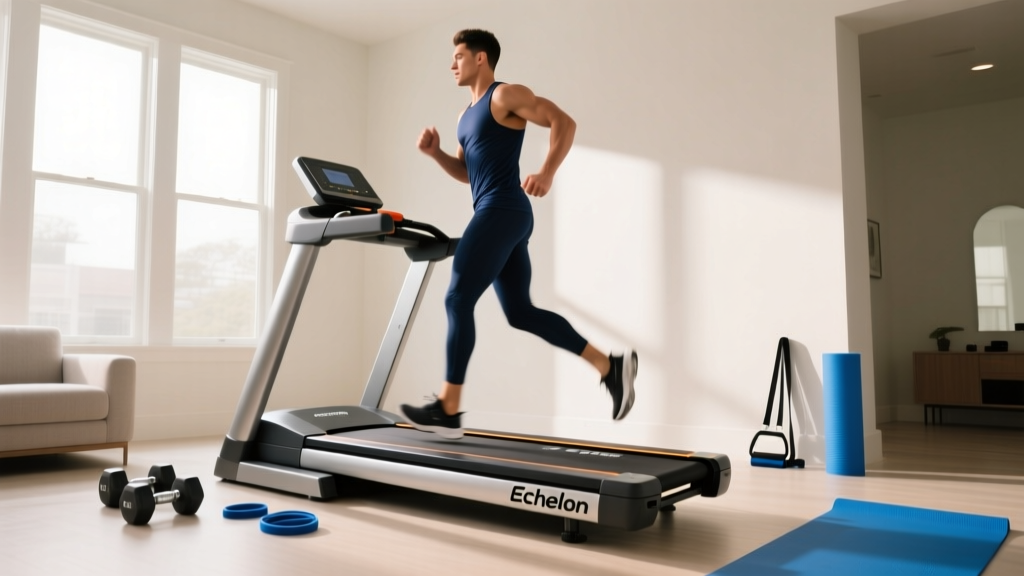
Walkingpad Foldable Treadmill: 2026 Step-by-Step Buying Guide
Discover how to choose the perfect walkingpad foldable treadmill in 2026. Our step-by-step beginner guide compares key features, motors, and prices.

The 2026 Shift to Micro-Cardio: Why Walking Pads Dominate
If you are working from home or living in a compact apartment, a traditional 200-pound treadmill is no longer the only way to hit your daily step goals. The modern walkingpad foldable treadmill has evolved from a niche under-desk gadget into a primary cardiovascular tool for millions. According to the Centers for Disease Control and Prevention (CDC), consistent, low-impact daily movement is just as critical for long-term cardiovascular health as high-intensity interval training.
However, the 2026 market is flooded with hundreds of look-alike models ranging from $120 to $600. As a beginner, it is easy to buy a machine that overheats, slips, or breaks within six months. This step-by-step guide will walk you through the exact engineering features, motor specifications, and deck materials you need to evaluate before spending your money.
Step 1: Define 'Foldable' vs. 'Flat' (Space Planning)
The first mistake beginners make is confusing a flat under-desk treadmill with a true foldable walkingpad. Understanding this distinction will dictate where and how you use the machine.
Space Planning Rule of Thumb: Flat pads slide under sofas (usually 4 to 5 inches high). True foldables feature a 180-degree hinge, allowing them to stand upright in a closet (taking up roughly 2 square feet of floor space).- Flat Under-Desk Pads: Best for dedicated standing desk setups. They lack a front handlebar and are strictly limited to walking speeds (1.0 to 4.0 MPH). Because they do not fold, you must measure the clearance under your bed or sofa before buying.
- 180-Degree Foldable Pads: Best for multi-purpose rooms. Models like the KingSmith WalkingPad R2 fold in half. When unfolded, they raise a front handlebar, unlocking jogging speeds up to 7.5 MPH. When folded, they stand vertically against a wall.
Step 2: Decode the Motor Specs (Don't Get Fooled by Peak HP)
The motor is the heart of your walkingpad foldable treadmill, and marketing teams frequently use misleading metrics to inflate perceived power. You must look past 'Peak Horsepower' and focus on Continuous Horsepower (CHP).
Continuous vs. Peak Horsepower
'Peak HP' is the maximum wattage the motor can draw for a few seconds before tripping the thermal shutoff. 'CHP' is the power the motor can sustain indefinitely while keeping the internal PCB (Printed Circuit Board) cool.
| User Weight | Intended Use | Minimum Required CHP | Failure Mode if Under-Powered |
|---|---|---|---|
| Under 130 lbs | Slow Walking (1-2 MPH) | 1.0 CHP | Minor belt hesitation |
| 130 - 180 lbs | Brisk Walking (3-4 MPH) | 1.5 CHP | PCB overheating, motor stalling |
| 180 - 250 lbs | Jogging (4-6 MPH) | 2.0 to 2.5 CHP | Drive belt snapping, controller fry |
Expert Insight: In 2026, most budget-friendly walkingpads in the $150 range use 1.0 HP motors. If you weigh over 170 pounds and plan to walk at an incline or brisk pace, a 1.0 CHP motor will overheat and trigger the internal safety shutoff after roughly 25 minutes of continuous use. Always check the user manual for the CHP rating, not just the Amazon listing title.
Step 3: Belt Width and Deck Materials (The Hidden Failure Points)
Comfort and longevity are dictated by the belt width and the material hiding beneath it.
The 15-Inch vs. 17-Inch Belt Dilemma
Standard commercial treadmills feature 20-inch belts. Walkingpads compress this to save space.
- 13-Inch Belts: Strictly for slow, mindful walking. If you look away at your monitor and drift an inch to the left, your foot will clip the side rail, causing a dangerous stumble.
- 15-Inch Belts: The 2026 sweet spot for under-desk walking. It allows for a natural arm swing and slight lateral drift.
- 17-Inch Belts: Mandatory if you plan to jog or use the machine without a desk in front of you.
Deck Warping: The MDF Problem
'The most common reason walkingpads are returned after six months is not motor failure; it is deck warping.' — FitGearPulse Lab Testing, 2025
Cheap walkingpads use Medium-Density Fiberboard (MDF) for the deck. Human sweat is slightly acidic, and when it drips onto the belt and seeps into the MDF over time, the wood swells and creates a 'speed bump' in the center of your walking path. Premium models use phenolic resin or multi-layer polymer decks that are completely impervious to moisture. When reading product specs, actively search for 'polymer deck' or 'resin-coated' to ensure your machine survives the summer humidity.
Step 4: 2026 Feature Comparison Matrix
To help you visualize the current market, we have broken down three of the most popular archetypes of walkingpad foldable treadmills available this year.
| Feature | KingSmith WalkingPad R2 (Premium Foldable) | UREVO Strol 2E (Mid-Range Hybrid) | Sunny Health SF-T723016 (Budget Flat) |
|---|---|---|---|
| 2026 Avg Price | $499 | $279 | $149 |
| Form Factor | 180-degree fold, upright storage | Foldable handlebar, flat base | Completely flat, no handle |
| Motor (CHP) | 1.25 CHP (2.5 Peak) | 1.0 CHP (2.0 Peak) | 0.85 CHP |
| Belt Width | 17.3 inches | 15.4 inches | 13.0 inches |
| Max Speed | 7.5 MPH (Jogging) | 6.0 MPH (Brisk Walk/Jog) | 4.0 MPH (Walking only) |
| Weight Capacity | 240 lbs | 220 lbs | 175 lbs |
Step 5: Safety, App Integration, and Real-World Maintenance
According to the Mayo Clinic, consistency is the primary driver of walking-related health benefits, meaning your machine needs to stay operational and safe year-round. Smart apps and Bluetooth connectivity are nice for tracking your 10,000 steps, but they mean nothing if the physical machine fails.
The Reality of Belt Tensioning
Every walkingpad foldable treadmill relies on a continuous loop belt. Out of the box, or after about 60 miles of use, the belt will stretch. On budget models, the belt will drift to the left or right, grinding against the plastic side caps and creating a burning rubber smell.
How to fix it: You must use the included Allen wrench to adjust the rear roller bolts. Turning the left bolt clockwise a quarter-turn will pull the belt back to the center. High-end 2026 models now feature 'auto-tracking' rollers with conical grooves that naturally center the belt, eliminating this maintenance headache entirely.
The 60-Day Maintenance Checklist
To protect your investment and keep the motor from overworking, follow this strict maintenance schedule:
- Every 30 Days: Wipe down the side rails and front console with a damp microfiber cloth. Do not use chemical sprays that can drip into the motor housing.
- Every 60 Miles: Lift the edge of the belt and apply two strips of 100% silicone treadmill lubricant directly to the deck. Never use WD-40 or petroleum-based oils, as these will melt the rubber belt and destroy the deck coating.
- Every 6 Months: Check the power cord for fraying. Walkingpads are frequently rolled over or stepped on, which can expose internal copper wiring over time.
Final Verdict: Which Walkingpad Should You Choose?
If your goal is strictly to add 3,000 extra steps to your workday while answering emails, a $150 to $250 flat under-desk pad with a 1.0 CHP motor and a 15-inch belt is perfectly adequate. However, if you want a true cardiovascular workout that includes jogging, or if you need to store the machine vertically in a closet after your session, investing $400+ in a 180-degree hinged walkingpad with a 1.5+ CHP motor and a polymer deck is non-negotiable. By focusing on continuous horsepower, deck materials, and belt width rather than flashy Bluetooth apps, you will secure a machine that supports your health for years to come.
For more insights on building sustainable home cardio routines, check out the American Council on Exercise (ACE) guidelines on low-impact daily movement.
More gear to consider
All reviews
Ditching the Treadmill Routine 12 3 30: Rowing Machine Setup Guide

MC 2100 Treadmill Repair vs Walking Pad: 2026 Review
Treadmill Haul Away: Top Compact Cardio Swaps for Small Spaces

2026 Bike Types & P1 Compact Treadmill Reviews: Market Trends

Cardio Machine Noise Comparison: Treadmill Hill Walk Workout