
Navigating the Walking Treadmill Bicycle Debate: 2026 Setup & Feature Guide
Compare walking treadmill bicycle setups for 2026. Expert feature breakdown, ergonomic installation walkthrough, and troubleshooting for home offices.

The "Walking Treadmill Bicycle" Home Office Dilemma
If you have spent any time researching active workstations this year, you have likely encountered the walking treadmill bicycle debate. Home office workers in 2026 are increasingly torn between two distinct modalities for boosting Non-Exercise Activity Thermogenesis (NEAT): the under-desk walking pad and the seated under-desk elliptical bicycle. Some manufacturers have even begun releasing awkward 2-in-1 hybrid machines attempting to bridge the gap.
But which modality actually fits your spatial, ergonomic, and physiological needs? More importantly, how do you safely install and integrate these heavy, motorized, or mechanically resistant machines into a modern home office without destroying your floors or your posture?
This comprehensive guide breaks down the critical buying features of 2026's top cardio desk setups and provides a meticulous, step-by-step installation walkthrough to ensure your active workspace is safe, ergonomic, and built to last.
Expert Insight: According to the American Heart Association, adults need at least 150 minutes of moderate-intensity aerobic activity per week. An active desk setup allows you to accumulate this volume passively while answering emails, but only if the machine's ergonomics align with your biomechanics.Treadmill Buying Guide: Feature Comparison Matrix
Before unboxing, you must select the right machine. The search for the perfect walking treadmill bicycle alternative usually narrows down to three categories: Premium Walking Pads, Magnetic Desk Bikes, and 2-in-1 Hybrids. Below is a feature comparison based on current 2026 market leaders.
| Feature | Premium Walking Pad (e.g., KingSmith X21) | Under-Desk Bike (e.g., Cubii JR2) | 2-in-1 Hybrid (e.g., UREVO Strol 2E) |
|---|---|---|---|
| Drive System | 2.5 HP Peak Electric Motor | Magnetic Flywheel (8 Levels) | 2.25 HP Electric Motor |
| Active Footprint | 47" x 20" (Belt Area) | 23" x 17" (Total Base) | 49" x 22" (Extended) |
| Acoustic Output | ~65 dB (Footstrike dependent) | ~45 dB (Near silent) | ~68 dB (Motor + footstrike) |
| Max User Weight | 265 lbs | 300 lbs (Seat dependent) | 220 lbs |
| 2026 Price Range | $549 - $699 | $249 - $349 | $299 - $399 |
Buying Verdict: Which Modality Wins?
If your primary goal is caloric expenditure and weight-bearing bone density maintenance, the walking treadmill is non-negotiable. Walking at a mere 2.0 mph burns roughly three times the calories of seated pedaling. However, if you share a home office, frequently take video calls, or suffer from lower back fatigue that prevents prolonged standing, the magnetic under-desk bicycle offers superior acoustic discretion and seated ergonomic support.
Complete Setup and Installation Walkthrough
Purchasing the machine is only 20% of the battle. Improper installation of a walking treadmill or desk bicycle leads to motor burnout, floor damage, and severe postural strain. Follow this exact 2026 installation protocol.
Phase 1: Spatial Planning and Safety Clearances
Never shove a walking pad flush against a wall. The Cornell University Ergonomics Web emphasizes that active workstations require dedicated egress zones to prevent trip-and-fall injuries.
- Rear Clearance (Treadmills): You must maintain a minimum 36-inch (3-foot) empty drop zone behind the rear roller of the treadmill. If you lose your balance, this space prevents you from hitting a wall or desk leg.
- Lateral Clearance (Desk Bikes): Ensure at least 24 inches of lateral width beneath your desk. Desk bikes require a wide pedal stance; if your desk has a center crossbar lower than 26 inches from the floor, your knees or the bike's flywheel will strike it.
- Overhead Clearance: For walking pads, add 4 inches to your total height to ensure you do not strike overhead lighting or low-hanging monitors when walking at an incline or with posture variations.
Phase 2: Subfloor Protection and Vibration Dampening
Do not place cardio machines directly on hardwood, LVP (Luxury Vinyl Plank), or carpet. The repetitive point-loading of a walking treadmill belt will permanently dent LVP and void your flooring warranty.
- Acquire the Right Mat: Purchase a 3/8-inch thick vulcanized rubber horse stall mat (typically 4x6 feet, costing around $50 at farm supply stores). Avoid cheap PVC "treadmill mats" sold online; they compress and tear within six months.
- Cut to Fit: Use a utility knife to cut the mat so it extends 6 inches beyond the treadmill's footprint on all sides to catch sweat and dust.
- Moisture Barrier: If placing on concrete (e.g., a basement office), lay a 6-mil polyethylene vapor barrier under the rubber mat to prevent trapped moisture from degrading the machine's lower control board.
Phase 3: Electrical and Power Delivery
Walking treadmills draw significant current, particularly during the startup surge when the motor overcomes static friction.
Warning: Never plug a walking treadmill into a standard power strip shared with a desktop PC and dual monitors. The startup surge (often pulling 8 to 12 amps momentarily) can cause voltage drops that corrupt PC data or trip standard 15-amp breakers.The Fix: Plug the treadmill directly into a dedicated 15-amp or 20-amp wall receptacle. If you must use an extension, use a 12-gauge, 3-prong heavy-duty appliance cord no longer than 6 feet. Under-desk bicycles, being human-powered with only Bluetooth monitors, require no dedicated electrical circuit.
Phase 4: Ergonomic Desk Integration
Integrating your machine with a sit-stand desk requires precise mathematical calibration to avoid shoulder impingement or cervical strain.
- For Walking Treadmills: Stand on the pad in your work shoes. Let your arms hang loosely, then bend your elbows to 90 degrees. The top of your keyboard tray must sit exactly 1 to 2 inches above your elbow height. For a 5'10" user, this typically translates to a desk height of 44 to 46 inches.
- For Desk Bicycles: Adjust your office chair height so that when the pedal is at its lowest point (6 o'clock position), your knee retains a 10 to 15-degree bend. Full leg extension while pedaling will cause severe hip flexor and lower back pain within 20 minutes.
Real-World Troubleshooting & Edge Cases
Even premium 2026 models experience mechanical quirks. Here is how to solve the most common installation and usage failures.
Treadmill Belt Drift
If your walking pad belt consistently pulls to the left or right, the rear roller is misaligned. Do not adjust the front roller. Locate the hex bolts at the rear left and right caps. If the belt pulls left, turn the left rear bolt one-quarter turn clockwise and the right bolt one-quarter turn counter-clockwise. Run the belt at 3.0 mph for 60 seconds to allow it to self-center. Repeat only if necessary.
Desk Bike Pedal Strike and Wobble
If your under-desk bike shifts forward while pedaling, the issue is rarely the machine's weight, but rather the floor friction. Attach high-density neoprene anti-slip pads to the front and rear stabilizer bars. Furthermore, ensure your desk chair's casters are locked or placed on a separate chair mat; the reciprocal force of pedaling will cause an unlocked chair to roll backward, altering your knee angles and causing pedal strikes against the desk's underside.
Final Thoughts on Active Workspaces
The "walking treadmill bicycle" decision ultimately hinges on your specific office environment and physiological goals. Walking treadmills demand rigorous spatial planning, dedicated electrical circuits, and precise desk-height calibration, but they offer unparalleled cardiovascular and metabolic benefits. Under-desk bicycles provide a low-barrier, whisper-quiet entry into active working, perfect for shared spaces and deep-focus tasks.
By following this exact installation walkthrough—prioritizing safety clearances, proper subfloor matting, and ergonomic alignment—you will transform your sedentary home office into a sustainable, joint-friendly longevity hub for years to come.
More gear to consider
All reviews
Compact Portable Cardio Equipment: Treadmill Deck Lube Value Analysis

Stair Climber vs Hill Sprints on Treadmill: 2026 Home Guide

NordicTrack C700 Treadmill Review: Small Space & Care Guide
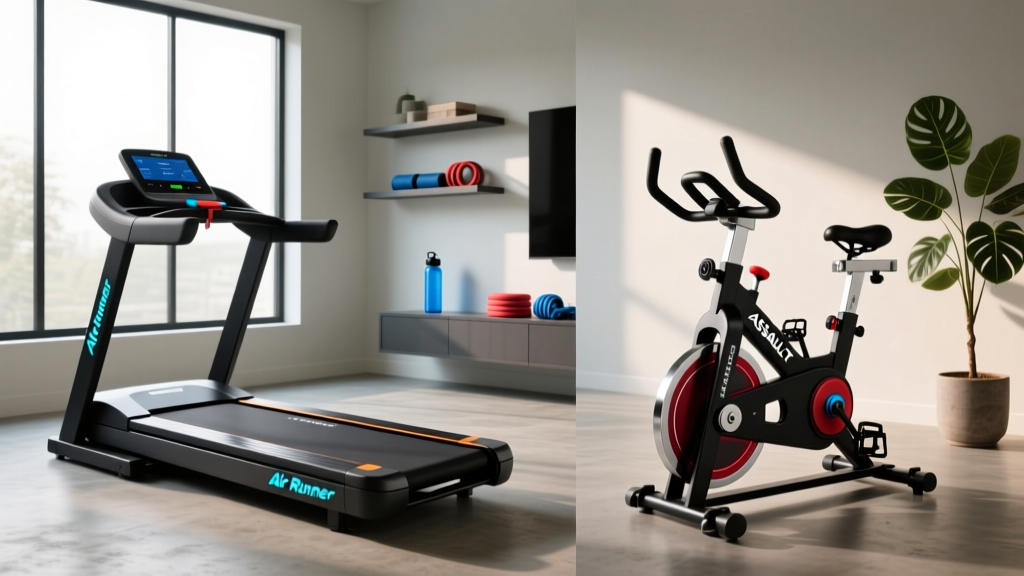
Air Runner Treadmills vs Assault Air Bikes: 2026 Showdown

Fix NordicTrack Treadmill Squeaking: Belt Lubrication Guide
