Is Your Treadmill Working for You? Walking Pad vs. Standard
Discover which treadmill working setup fits your home. Compare walking pads vs. standard treadmills with our step-by-step beginner's buying guide.

Introduction: Finding the Right Fit for Your Space
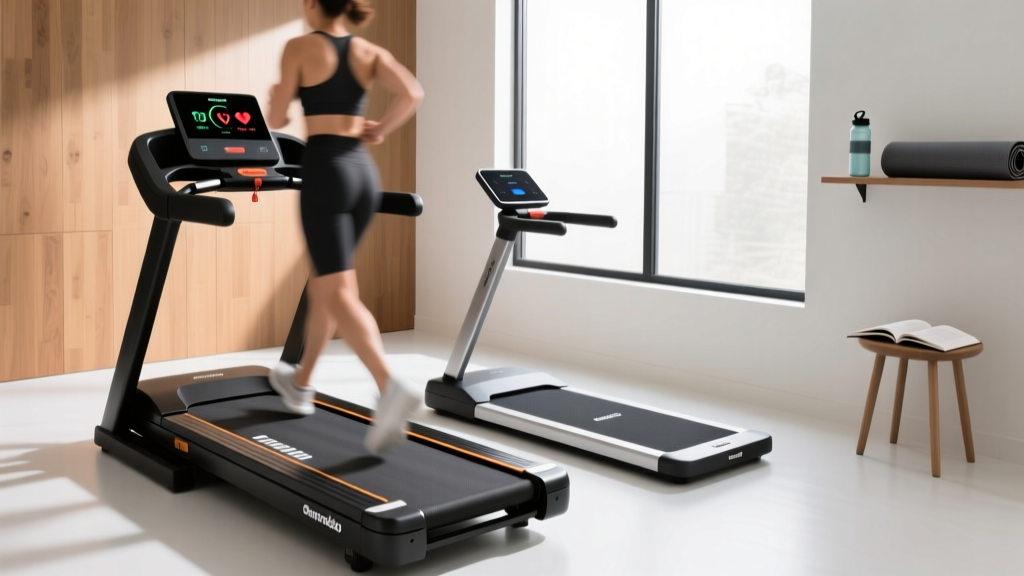
If you want a treadmill working for you rather than becoming an expensive clothes hanger, choosing the right form factor is critical. In 2026, the fitness market is heavily divided between ultra-compact walking pads and traditional, full-sized standard treadmills. For beginners, the sheer volume of options can be paralyzing. Do you need a 3.5 CHP motor, or will a 1.25 CHP walking pad suffice for your daily step goals? This step-by-step guide will walk you through evaluating your space, understanding the mechanical differences, and maintaining your equipment so you get the best return on your investment.
Step 1: Define Your Cardio Baseline
Before comparing belt widths and motor sizes, you must establish your physiological needs. According to the American Heart Association, adults should aim for at least 150 minutes of moderate-intensity aerobic activity or 75 minutes of vigorous activity per week.
Beginner Insight: If your primary goal is hitting 8,000 to 10,000 daily steps while working at a standing desk, a walking pad is sufficient. If you plan to incorporate high-intensity interval training (HIIT) or sustained jogging above 5.0 MPH, a standard treadmill is non-negotiable for safety and biomechanical health.
Step 2: Walking Pad vs. Standard Treadmill Matrix
Understanding the physical and mechanical boundaries of each category will help you decide which machine fits your lifestyle. Below is a direct comparison of the two primary categories.
| Feature | Walking Pad (Under-Desk) | Standard Treadmill (Folding/Commercial) |
|---|---|---|
| Motor Type | 1.0 to 2.0 HP (Peak) / 0.75 to 1.25 CHP | 2.5 to 4.0 CHP (Continuous Horsepower) |
| Max Speed | 3.0 to 6.0 MPH | 10.0 to 12.0+ MPH |
| Belt Dimensions | 15"-17" W x 40"-47" L | 20"-22" W x 55"-60" L |
| Weight Capacity | 220 to 265 lbs | 300 to 400 lbs |
| Footprint | 15 to 20 sq. ft. (Easily stored under beds) | 25 to 35 sq. ft. (Requires dedicated floor space) |
| Avg. Price (2026) | $199 - $599 | $699 - $2,500+ |
Step 3: Real-World Model Breakdown & Edge Cases
To give you actionable specifics, let us look at three benchmark models dominating the market this year. We will examine not just the specs, but the real-world failure modes you will not find on the product box.
1. The Premium Walking Pad: KingSmith WalkingPad R2 ($499)
- Specs: 1.25 CHP motor, 17.7" x 47.2" belt, 240 lb capacity.
- The Good: The 180-degree folding hinge makes it incredibly easy to store vertically in a closet. The integrated handlebar provides stability for beginners transitioning to standing desk workouts.
- The Edge Case (Failure Mode): The folding hinge is a mechanical weak point. If users consistently step heavily off-center, the hinge can develop a squeak or micro-warp over 12-18 months. Fix: Tighten the hinge bolts every 6 months and strictly walk in the center of the belt.
2. The Budget Walking Pad: UREVO Strol 2E ($259)
- Specs: 2.0 HP (Peak) motor, 16.5" x 41.3" belt, 220 lb capacity.
- The Good: Unbeatable price point for casual walkers. Features a built-in app connectivity and dual shock absorption pads.
- The Edge Case (Failure Mode): Beware of 'Peak HP' versus 'Continuous HP' (CHP). A 2.0 Peak HP motor actually delivers about 0.8 CHP. If a user over 200 lbs attempts to jog at 4.5 MPH, the motor will overheat and trigger the thermal shutoff switch within 20 minutes. Keep this machine strictly for walking under 3.5 MPH.
3. The Standard Workhorse: Sole F80 ($999)
- Specs: 3.5 CHP motor, 22" x 60" belt, 375 lb capacity.
- The Good: The 22-inch width accommodates broad-shouldered runners, and the 60-inch length prevents overstriding for users over 6'2". The Cushion Flex Whisper Deck reduces joint impact by up to 40% compared to asphalt, aligning with Mayo Clinic recommendations for joint-friendly cardiovascular exercise.
- The Edge Case (Failure Mode): The hydraulic folding assist is excellent, but the sheer weight of the machine (280 lbs) makes it difficult to move on thick carpets. Ensure you place it on a high-density PVC equipment mat to prevent carpet indentation and static electricity buildup.
Step 4: Keeping Your Treadmill Working (Maintenance Guide)
A common reason beginners abandon their fitness journey is equipment degradation. Keeping your treadmill working optimally requires a strict, yet simple, maintenance protocol. According to Consumer Reports, improper belt lubrication is the number one cause of premature motor burnout.
The 100% Silicone Rule
Never use WD-40, household oil, or petroleum-based lubricants. These will dissolve the belt's backing and destroy the deck. Only use 100% pure liquid silicone treadmill lubricant.
Step-by-Step Lubrication Process (Perform every 3 months or 130 miles):
- Loosen the Belt: Use the provided Allen wrench to turn the rear roller adjustment bolts counter-clockwise (exactly 3 full turns on each side) to lift the belt.
- Apply Lubricant: Slide the applicator nozzle under the center of the belt and squeeze exactly 1 ounce (half a standard bottle) of silicone directly onto the wooden/composite deck in a zig-zag pattern.
- Retighten: Turn the adjustment bolts clockwise exactly 3 turns to restore the original tension.
- Distribute: Turn the machine on to 3.0 MPH and let it run empty for 3 to 5 minutes. The friction will naturally spread the silicone across the entire deck surface.
Step 5: Final Decision Framework
Use this quick diagnostic checklist to finalize your purchase:
- Choose a Walking Pad IF: You live in an apartment under 600 sq. ft., your budget is under $500, you only plan to walk at speeds under 4.0 MPH, and you weigh under 240 lbs.
- Choose a Standard Treadmill IF: You have a dedicated room or garage space, you want to run or do HIIT, you are taller than 5'10" (requiring a 55"+ belt length), or multiple household members with varying weights will use the machine.
Frequently Asked Questions
Can I put a walking pad on carpet?
Yes, but thick carpet can block the motor's cooling intake vents located on the front or sides of the deck. Always use a thin, hard-surface equipment mat to ensure proper airflow and prevent the motor from overheating.
Is a treadmill working in a shared office space too loud?
Walking pads generally operate between 55 and 65 decibels at 3.0 MPH, which is equivalent to a normal conversation or a humming refrigerator. Standard treadmills at a running pace can exceed 75 decibels, making walking pads the definitive choice for shared office environments or Zoom calls.
Do walking pads have incline capabilities?
Most entry-level and mid-range walking pads (including the UREVO and KingSmith models) have a fixed 0% incline to maintain their ultra-slim profile. If incline walking is vital for your glute and calf development, you must look at specialized folding treadmills like the NordicTrack T Series 10, which offers up to a 10% manual or motorized incline.
More gear to consider
All reviews
Matrix Treadmill TF30 vs. Rowing Machines: 2026 Buying Guide

Rower or Treadmill? Curved vs Motorized Setup Guide
Folding Treadmill Review: Surviving a 30-Minute Treadmill HIIT Workout
Air Bike vs Assault Bike vs Sole F80 Treadmill Weight & Stability

Curved Manual vs Electronic Treadmill: 2026 Buyer's Guide