Walking Pad vs Treadmill: Mistakes During an Hour on the Treadmill
Compare walking pads and treadmills. Discover common mistakes and troubleshooting tips for spending a full hour on the treadmill or walking pad at home.

The 60-Minute Challenge: Walking Pad vs. Traditional Treadmill
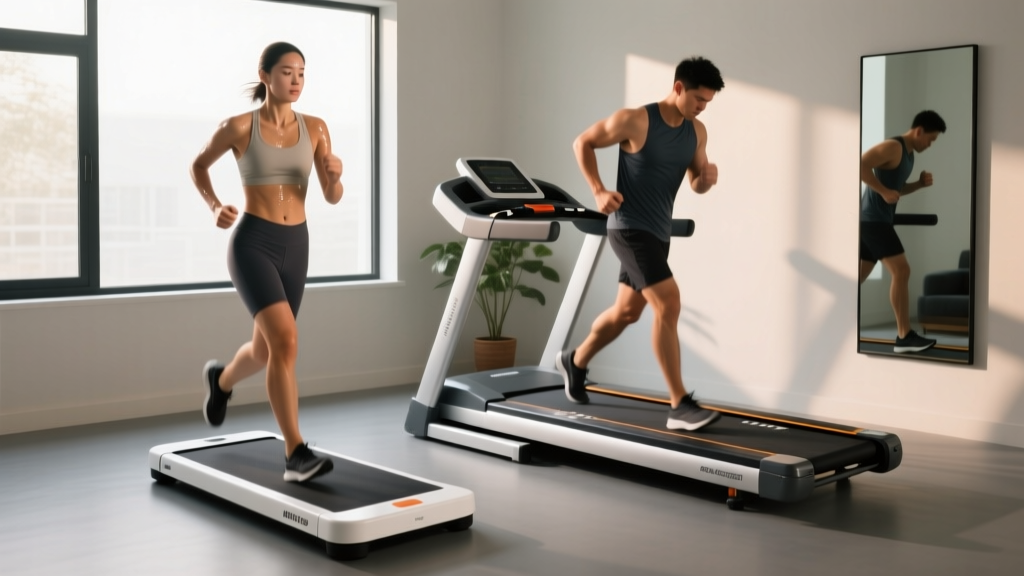
The home fitness landscape in 2026 is dominated by a clear divide: the heavy-duty traditional treadmill and the ultra-compact under-desk walking pad. While walking pads like the KingSmith WalkingPad X21 or the UREVO Strol 2E are phenomenal tools for accumulating daily steps, a growing number of remote workers are attempting to replace their gym sessions by spending a full hour on the treadmill pad. This ambitious goal frequently leads to biomechanical errors, mechanical failures, and voided warranties.
When you transition from a 20-minute casual stroll to a dedicated 60-minute cardio session, the physical and mechanical demands on your equipment change exponentially. This comprehensive troubleshooting guide and comparison review breaks down the exact mistakes users make when pushing walking pads to their limits, and how to troubleshoot the inevitable issues that arise when comparing them to standard treadmills like the Sole F80 or NordicTrack Commercial series.
Biomechanical Mistakes When Logging an Hour on the Treadmill
The most glaring difference between a walking pad and a traditional treadmill is the running surface. A standard treadmill features a belt length of 55 to 60 inches. In contrast, most 2026 walking pads max out at 43 to 47 inches. When you attempt to powerwalk at 3.5 MPH for 60 minutes on a 43-inch belt, you are taking approximately 5,200 steps with a margin of error of less than 12 inches.
The Short-Belt Shuffle and Gait Alteration
According to Runner's World, altering your natural gait to avoid stepping off the back of a short belt is a primary cause of treadmill-related shin splints and IT band syndrome. On a walking pad, users subconsciously shorten their stride and increase their cadence to stay centered. Over the course of an hour, this 'short-belt shuffle' places unnatural, repetitive stress on the anterior tibialis (shin muscle) and restricts full hip extension.
The Fix: If your goal is a continuous hour on the treadmill pad, you must cap your speed at 2.5 to 3.0 MPH. At speeds above 3.0 MPH, the natural stride length of an average adult exceeds the safe tracking zone of a 43-inch belt, forcing the gait alteration that leads to joint pain.
Handrail Dependency and Core Disengagement
Many walking pads come with a fold-up 'T-bar' or simple frontal handrail. Leaning on this rail during a 60-minute session shifts your center of gravity backward, reducing caloric expenditure by up to 20% and placing excessive lumbar strain on your lower back. The Mayo Clinic emphasizes that proper walking posture requires a straight back and engaged core to protect the spine. Traditional treadmills encourage an upright posture simply by virtue of their console height and open deck design, whereas walking pads often tempt users into a slouched, desk-leaning posture.
Mechanical Troubleshooting: Surviving the 60-Minute Mark
Pushing a compact walking pad motor for 60 continuous minutes is the ultimate stress test. Below is a structural comparison of how both machine types handle long-duration cardio, followed by specific troubleshooting steps for the most common failures.
| Feature | Premium Walking Pad (e.g., KingSmith X21) | Standard Treadmill (e.g., Sole F80) | Impact on 60-Minute Sessions |
|---|---|---|---|
| Motor Type | 2.5 HP Peak / ~1.25 Continuous HP | 3.5 Continuous HP (CHP) | Walking pads risk thermal shutoff; treadmills run cool. |
| Belt Dimensions | 43.3' L x 17.3' W | 60' L x 22' W | Short belts cause gait alteration; narrow belts limit arm swing. |
| Deck Cushioning | Minimal EVA foam padding | Multi-zone elastomer cushions | High joint impact on pads after 30+ minutes of continuous use. |
| Max User Weight | 240 lbs (Optimal under 200 lbs) | 375 lbs | Heavier users will overheat walking pad motors in under 45 mins. |
| Avg Price (2026) | $499 - $599 | $1,099 - $1,299 | Treadmills cost more but offer vastly superior longevity for long sessions. |
Motor Overheating and Thermal Shutoffs
The most common mechanical failure when spending an hour on the treadmill pad is a thermal shutoff. Walking pad motors are typically housed in ultra-slim decks with minimal ventilation. When a user weighing over 180 lbs walks at 3.0 MPH for 45+ minutes, the friction between the deck and the belt forces the motor to draw excess amperage, generating intense heat.
⚠️ Troubleshooting Thermal Shutoffs:If your walking pad abruptly stops and the display flashes an 'E02' or 'Overload' error, the internal thermal breaker has tripped. Do not unplug it immediately. Leave it powered on but idle for 20 minutes to allow the internal cooling fan to dissipate the heat. To prevent this, you must split your hour on the treadmill pad into two 30-minute sessions with a 15-minute cool-down interval.
Deck Friction and Belt Drift Diagnostics
After about 40 minutes of continuous friction, the PVC belt on a walking pad heats up and expands slightly. If the deck is not properly lubricated, this expansion increases the drag coefficient. You will notice the belt hesitating or 'stuttering' with every footstrike, or it may begin to drift aggressively to the left or right.
Step-by-Step Belt Drift Fix:
- Identify the direction of the drift. If the belt moves to the left, the left side is tighter than the right.
- Locate the rear roller adjustment bolts at the very back of the deck using the provided hex key.
- Turn the left rear bolt exactly 1/4 turn clockwise.
- Walk on the pad at 2.0 MPH for two minutes to allow the belt to self-center.
- Repeat if necessary, but never exceed a 1/2 turn total, or you will over-tension the motor.
Posture and Ergonomic Fixes for Desk-Bound Walkers
Many users attempt to spend an hour on the treadmill pad while working at a standing desk. The U.S. Consumer Product Safety Commission (CPSC) warns that improper setup around exercise equipment leads to severe ergonomic injuries and falls. When walking for 60 minutes while typing, users tend to crane their necks downward to look at laptops placed too low on the desk.
The Ergonomic Fix: Raise your monitor or laptop so the top third of the screen is at eye level. Use a wireless mouse and keyboard placed at elbow height (roughly 42 to 44 inches from the floor, depending on your height). Furthermore, ensure you have at least 24 inches of clearance behind the walking pad to prevent catastrophic falls if you step off the back edge during a long session.
Maintenance Schedule for High-Volume Users
If you are consistently logging an hour on the treadmill pad five days a week, you are accumulating 260 hours of belt friction annually. The standard manufacturer recommendation to lubricate the deck 'every 3 months' is woefully inadequate for high-volume users.
- Lubrication Interval: Apply 5ml to 10ml of 100% silicone treadmill lubricant under the belt every 40 hours of use (roughly every 3 to 4 weeks for daily 1-hour walkers).
- Tension Check:Inspect belt tension monthly. You should be able to lift the center of the belt about 2 to 3 inches off the deck. If it lifts higher, it is too loose and will slip; if lower, it is strangling the motor.
- Debris Clearance: Vacuum under and around the motor housing weekly. Pet hair and dust bunnies are the number one cause of walking pad motherboard shorts in 2026.
Frequently Asked Questions
Can I jog for an hour on a walking pad?
No. Most walking pads are engineered strictly for walking (up to 3.8 MPH). Jogging introduces a high-impact vertical force that compact EVA foam decks cannot absorb, leading to rapid deck delamination and immediate voiding of the manufacturer's warranty. For a 60-minute jogging session, a traditional treadmill with elastomer cushioning is mandatory.
Why does my walking pad smell like burning rubber after 45 minutes?
A burning rubber odor indicates severe deck-to-belt friction. The belt has likely dried out and is creating excessive heat. Stop the machine immediately, allow it to cool, and apply 100% silicone lubricant beneath the belt. If the smell persists after lubrication, the belt's underside texture may be permanently glazed and require replacement.
Is a walking pad worth it if I only have 30 minutes a day?
Absolutely. If your schedule only permits 20 to 30 minutes of low-intensity steady-state (LISS) walking while working, a $400-$500 walking pad is a highly effective, space-saving investment. The mechanical and biomechanical issues outlined in this guide primarily manifest when users push these compact machines past their intended 45-minute continuous duty cycle.
More gear to consider
All reviews
Lubricating NordicTrack Treadmills for Home: Belt Maintenance Guide

Stair Climber Setup: Training Post-Myoview Treadmill Stress Test
Curved vs Motorized: NordicTrack T Series 8 Review Guide

Taylor Swift Treadmill Video Trend: Walking Pad vs Treadmill Guide

Treadmill Motor HP Guide: Sunny Treadmill SF-T7718 Case Study