Walking Pad vs Treadmill: How Many Calories to Burn on Treadmill to Lose Weight
Discover how many calories to burn on treadmill to lose weight. We compare the Sole F63 and KingSmith WalkingPad R2 for real-world fat loss results.

The Thermodynamics of Weight Loss: Answering the Calorie Question
When fitness enthusiasts search for how many calories to burn on treadmill to lose weight, they are often met with oversimplified calculators and generic advice. The reality of human metabolism is far more nuanced. According to Mayo Clinic's weight loss guidelines, one pound of body fat is roughly equivalent to 3,500 calories. To lose one pound per week, you must achieve a daily caloric deficit of approximately 500 calories through a combination of dietary restriction and active energy expenditure.
If your diet remains static, burning 500 active calories on a cardio machine requires significant time and effort. A 180-pound individual walking at a brisk 3.5 mph on a flat surface burns roughly 350 calories per hour. However, by introducing a 10% to 15% incline, that same individual can push their caloric expenditure past 550 calories per hour without ever transitioning into a high-impact running gait. This is where the debate between a traditional full-size treadmill and a compact under-desk walking pad becomes critical for your 2026 fitness setup.
The NEAT Factor
Weight loss isn't solely about your 45-minute dedicated cardio session. Non-Exercise Activity Thermogenesis (NEAT) accounts for the calories burned through daily, low-intensity movements. As detailed by the Cleveland Clinic's breakdown of NEAT, increasing your baseline daily steps via a walking pad can cumulatively burn an extra 200-400 calories a day, fundamentally altering your weight loss trajectory without requiring dedicated 'gym time'.
Head-to-Head Specification Matrix: Sole F63 vs. KingSmith WalkingPad R2
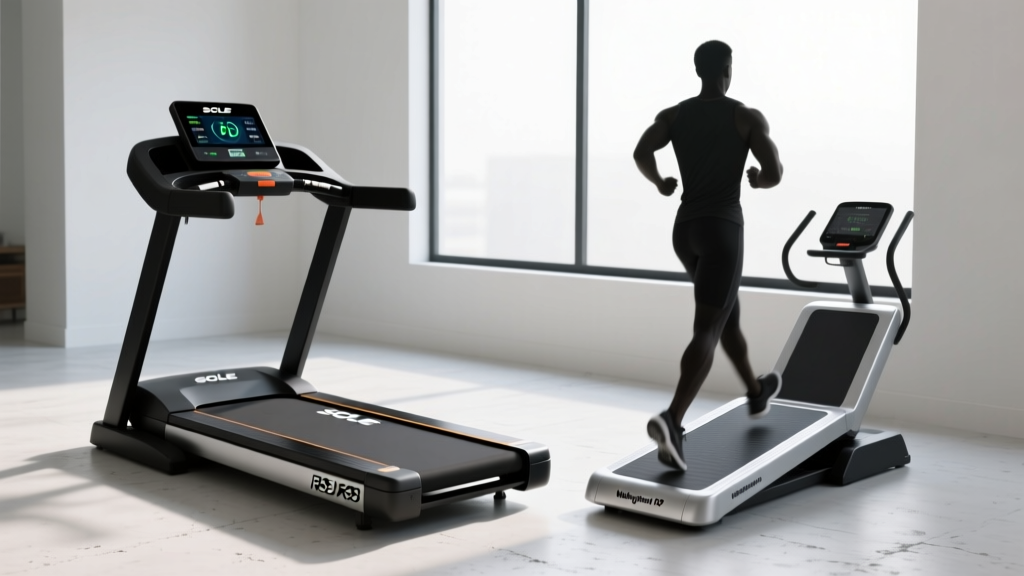
To understand how these machines facilitate caloric burn, we must look at their engineering. We have selected the Sole F63 (the gold standard for mid-tier home treadmills) and the KingSmith WalkingPad R2 (a premium dual-fold walking pad) for this head-to-head comparison.
| Feature | Sole F63 (Traditional Treadmill) | KingSmith WalkingPad R2 (Pad) |
|---|---|---|
| Motor | 3.0 CHP (Continuous Horsepower) | 2.5 HP (Peak Horsepower) |
| Belt Dimensions | 20' x 60' | 17.3' x 47.2' |
| Incline Capability | 0% - 15% Motorized | 0% - 10% (Manual/Prop assisted) |
| Max Speed | 12.0 MPH | 7.6 MPH (12 km/h) |
| Weight Capacity | 325 lbs | 240 lbs |
| 2026 Retail Price | ~$1,199 | ~$499 |
The Traditional Route: Sole F63 Treadmill Deep Dive
The Sole F63 remains a dominant force in the home cardio market because it directly addresses the primary mechanism of high-calorie expenditure: incline. Walking on a 15% grade recruits the posterior chain (glutes, hamstrings, and calves) and elevates the heart rate into Zone 2 or Zone 3 cardio territory without the destructive joint impact of running.
Calorie Burn Efficiency
Because the Sole F63 features a true 3.0 Continuous Horsepower (CHP) motor, it can sustain a 15% incline at 3.5 mph for a 250-pound user without the motor overheating or the belt stuttering. This consistency is vital. If you are trying to determine how many calories to burn on treadmill to lose weight, you need a machine that won't force you to stop and rest due to mechanical lag. A 45-minute incline walk on the F63 can easily yield a 500-600 calorie burn for an average-sized adult.
The Drawbacks
- Footprint: Even folded, the F63 requires a dedicated 30-inch by 80-inch footprint. It is not a piece of furniture you can easily hide.
- Power Draw: The motorized incline and 3.0 CHP motor require a dedicated 15-amp circuit. Plugging this into a shared living room outlet alongside a smart TV and space heater will trip your breaker mid-stride.
The NEAT Multiplier: KingSmith WalkingPad R2 Analysis
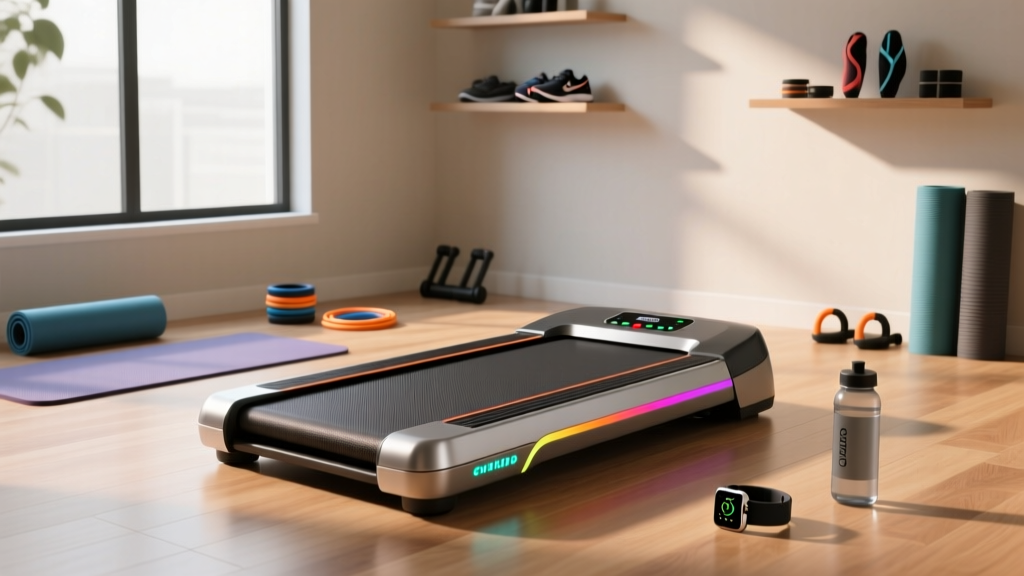
The KingSmith WalkingPad R2 approaches weight loss from a completely different physiological angle. Instead of condensing your calorie burn into a grueling 45-minute session, the R2 is designed to be used while working at a standing desk, effectively turning your 8-hour workday into an active calorie-burning window.
Engineering and Limitations
The R2 utilizes a 2.5 HP peak motor. In the fitness equipment industry, peak horsepower is a marketing metric; it represents the maximum output the motor can hit for a few seconds before failing. The continuous output is likely closer to 1.25 CHP. This means the R2 is strictly for walking and light jogging. If you attempt to run at 7.6 mph on a 10% incline, the motor will overheat and the thermal cutoff switch will shut the machine down.
However, for low-intensity steady-state (LISS) walking at 2.0 to 3.0 mph, the R2 is remarkably quiet. Burning 100 extra calories an hour while answering emails equates to 400 extra calories over a workday. Over a week, that is an additional 2,000 calories burned—more than half a pound of fat lost purely through NEAT accumulation, backed by principles recognized by the American Council on Exercise (ACE).
The Drawbacks
- Belt Width: At just 17.3 inches wide, the belt requires intense spatial awareness. Stepping slightly off-center at 4.0 mph will result in your foot catching the side rail, a major safety hazard for users with a wide gait.
- Lack of Handrails (in flat mode): When folded flat for under-desk use, there are no handrails. This limits your ability to safely push your heart rate into higher zones.
Real-World Failure Modes and Maintenance Edge Cases
As equipment reviewers, we test machines until they break. Understanding the failure modes of these two distinct categories is crucial for long-term weight loss consistency. You cannot burn calories if your machine is out of commission for six weeks awaiting warranty parts.
Walking Pad Belt Drift: The most common failure on the WalkingPad R2 and similar ultra-compact pads is belt drift. Because the deck is so short, the tracking tension is highly sensitive. Every 4 to 6 weeks, you will need to use the included Allen wrench to adjust the rear roller bolts. If you ignore the drift, the belt will fray against the plastic side housing, permanently ruining the deck.
Conversely, the Sole F63 suffers from incline motor strain. The incline mechanism uses a separate, smaller motor with a threaded drive shaft. If users frequently step onto the treadmill while it is already elevated at a 15% grade (rather than letting it lower to 0% first), the immense static weight load can strip the plastic gears inside the incline actuator. Always step on at a flat grade, then initiate the incline sequence.
Structuring Your 2026 Weight Loss Protocol
So, which machine should you buy to achieve your caloric deficit? The answer depends entirely on your behavioral psychology and living situation.
Choose the Sole F63 if:
- You prefer to 'get it over with' through dedicated, high-sweat 45-minute Zone 2 cardio sessions.
- You want to utilize the 12% to 15% incline '12-3-30' style workouts to maximize caloric burn per minute.
- You have a dedicated home gym space with proper electrical circuits.
Choose the KingSmith WalkingPad R2 if:
- You work from home and struggle to find 45 uninterrupted minutes for exercise.
- You want to hack your NEAT levels to burn an extra 1,500+ calories a week passively.
- You live in an apartment where storing a 200-pound traditional treadmill is physically impossible.
Ultimately, answering the question of how many calories to burn on treadmill to lose weight comes down to consistency. A 300-calorie burn on a walking pad done 5 days a week while working is vastly superior to a 600-calorie treadmill burn that you only manage to complete once a week because the machine is buried under laundry. Pick the machine that seamlessly integrates into your daily friction points, and the caloric deficit will follow.
More gear to consider
All reviews
Treadmill Motor Size Guide: NordicTrack Treadmill Summit 4500 HP

Treadmill Apple Watch Metrics: Belt Maintenance Market Report 2026

Echelon Folding Treadmill vs Elliptical: Home Cardio Maintenance
Air vs Assault Bike: Average Time on Treadmill for Stress Test by Age

Curve Treadmill and Stationary Bike Types: Space Layout Guide