
Walking Pad Review: Setup for the 12 3 30 Treadmill Exercise
Can a walking pad handle the 12 3 30 treadmill exercise? We compare hardware limits, review models, and provide a complete installation walkthrough.

The 12 3 30 Treadmill Exercise: Hardware Reality Check
The 12-3-30 method—walking at a 12% incline, at 3 miles per hour, for 30 minutes—has cemented itself as a staple low-impact cardiovascular routine. According to the American Heart Association, incline walking significantly improves cardiovascular endurance and lower-body muscular stamina without the high-impact joint loading of running. However, as home gym footprints shrink, many users attempt to replicate this treadmill exercise 12 3 30 routine on compact walking pads. This is where hardware limitations become a critical failure point.
A true 12% grade means the deck rises 12 inches for every 100 inches of horizontal length. This requires a high-torque incline motor, a reinforced deck pivot, and full-length handrails for safety. Walking pads, designed primarily for flat-surface NEAT (Non-Exercise Activity Thermogenesis) stepping, lack these structural components.
Walking Pad vs. Compact Treadmill: Comparison Matrix
To successfully execute the 12-3-30 protocol, you must choose the right machine class. Below is a 2026 specification comparison between a top-selling walking pad and a compact incline treadmill.
| Specification | UREVO Strol 2E (Walking Pad) | Sunny Health SF-T723016 (Compact Incline) |
|---|---|---|
| Max Incline | 0% (Flat only) | 12% Auto-Incline |
| Motor Output | 1.5 HP (Peak) | 2.5 HP (Peak) / 1.25 CHP |
| Handrails | None / Detachable T-Bar | Full-Length Ergonomic Rails |
| Deck Length | 43.3 inches | 48.0 inches |
| 12-3-30 Capable? | No | Yes |
| Avg. 2026 Price | $189.99 | $349.99 |
Model Review: The Walking Pad Failure Mode
Let's examine why the UREVO Strol 2E, an excellent $189 walking pad for flat-surface desk work, fails the 12-3-30 test. At a 12% incline, a 160 lb user exerts roughly 45 lbs of continuous backward shear force against the belt. Walking pad motors rely on airflow from the belt's movement for cooling. At 3 mph (a relatively slow speed), the motor's internal cooling fan spins slowly, while the torque demand spikes to maximum. The result? Thermal shutoff. Most walking pad control boards will trigger an overheat error code (usually E05 or E07) around minute 14 of a steep incline simulation, abruptly stopping the belt and creating a fall hazard.
The Compact Treadmill Solution
The Sunny Health & Fitness SF-T723016 Auto-Incline Treadmill bridges the gap between space-saving design and 12-3-30 capability. Priced around $349, it features a dedicated 400W incline motor separate from the 2.5 HP drive motor. This dual-motor architecture ensures the belt maintains a steady 3 mph even when the deck is pitched at the maximum 12% grade.
Complete Installation & Setup Walkthrough
Proper installation is non-negotiable for steep-incline cardio. The Consumer Product Safety Commission (CPSC) reports that improper clearance and electrical overloads are leading causes of home treadmill incidents. Follow this step-by-step walkthrough to configure your space for the 12-3-30 treadmill exercise.
Phase 1: Spatial Geometry and Clearance Calculation
When a 48-inch treadmill deck tilts to a 12% grade (a 6.84-degree angle), the rear of the machine elevates. You must calculate your vertical clearance to prevent head strikes.
- Base Deck Height: 6.5 inches
- Incline Lift: 48 inches × sin(6.84°) = 5.7 inches of additional rear lift.
- Total Rear Deck Height: 12.2 inches off the floor.
- User Head Clearance: Add your height + 4 inches (for walking bounce). If you are 68 inches tall, you need 72 inches of clear vertical space above the raised deck.
Phase 2: Electrical Load and Circuit Preparation
Driving a user up a 12% grade at 3 mph draws continuous, high-amperage current. The SF-T723016 will pull between 8 to 11 Amps continuously during the 30-minute workout. Do not plug this machine into a shared 15-Amp circuit that also powers a space heater, window AC unit, or microwave. The startup surge of the incline motor combined with the drive motor will trip a standard residential breaker. Ensure the treadmill is plugged directly into a wall receptacle on a dedicated 15-Amp or 20-Amp circuit. Avoid using extension cords; if absolutely necessary, use only a 12-gauge, heavy-duty appliance cord no longer than 6 feet.
Phase 3: Assembly and Belt Tensioning for Incline
- Upright Mast Lock: When unfolding the compact treadmill, ensure the locking pin clicks audibly. At a 12% incline, the user's center of gravity shifts backward, placing immense leverage on the upright mast hinges.
- Belt Lubrication: Incline walking generates 30% more friction heat than flat walking. Before your first 12-3-30 session, apply exactly 15ml of 100% silicone treadmill lubricant under each side of the belt. This prevents the deck from warping under high-heat friction.
- Foot Rail Calibration: Adjust the rear foot rail caps. At a 12% grade, your foot strikes the belt at a sharper dorsiflexion angle. Ensure the rear plastic end caps are flush with the belt to prevent toe-catching.
Console Configuration: Programming the 12-3-30 Routine
Manually adjusting the speed and incline every time you work out is tedious and disrupts your heart rate zone. Here is how to program the custom 12-3-30 profile into the Sunny SF-T723016 console:
- Press the PROG button until you reach a User Custom profile (usually P13 or U1).
- Use the SPEED +/- buttons to set the target speed to 3.0 MPH.
- Use the INCLINE +/- buttons to set the target grade to 12.
- Set the TIME to 30:00. (Optional: Add a 3-minute warm-up at 0% incline and 2.0 MPH, followed by a 3-minute cool-down, making the total program 36 minutes).
- Press and hold ENTER/PROG for 3 seconds to save the custom protocol to the EEPROM chip.
Biomechanical Insight: At a 12% incline, your Achilles tendon and calf muscles (gastrocnemius and soleus) undergo extreme eccentric and concentric loading. If you experience sharp heel pain during the 30-minute mark, reduce the incline to 8% for two weeks to allow the plantar fascia to adapt to the steep dorsiflexion angle before returning to the full 12-3-30 parameters.
Safety and Handrail Discipline
The most common error users make during the 12-3-30 treadmill exercise is gripping the handrails and leaning backward. This 'hanging' posture artificially reduces the effective incline your body experiences, dropping the metabolic demand from a 12% grade down to an effective 6% or 7% grade. Furthermore, leaning back shifts your center of mass behind your base of support, increasing the risk of slipping off the rear of the deck.
The Correct Setup Posture: Keep your hands resting lightly on the rails for balance only, or pump your arms naturally. Your torso should remain stacked directly over your hips. If you find yourself needing to white-knuckle the handrails to keep up with the 3 mph belt speed at 12%, your cardiovascular system is outpacing your muscular endurance. Drop the speed to 2.5 mph until your calf strength adapts, then gradually work back to the 3.0 mph target.
Final Verdict: Choose the Right Tool for the Grade
While walking pads are exceptional tools for accumulating low-intensity daily steps under a standing desk, they are fundamentally the wrong tool for the 12 3 30 treadmill exercise. The physics of steep-incline walking demand a dedicated incline motor, full-length stabilizing rails, and a longer deck footprint. By investing in a compact auto-incline treadmill like the Sunny SF-T723016 and rigorously following the spatial and electrical setup protocols outlined above, you can safely and effectively execute this high-yield cardiovascular routine in your home gym for years to come.
More gear to consider
All reviews
T Series 8 Treadmill Motor Guide: Sizing & Troubleshooting

Noise Comparison: Finding a Quiet Exercising Treadmill & Cardio Gear
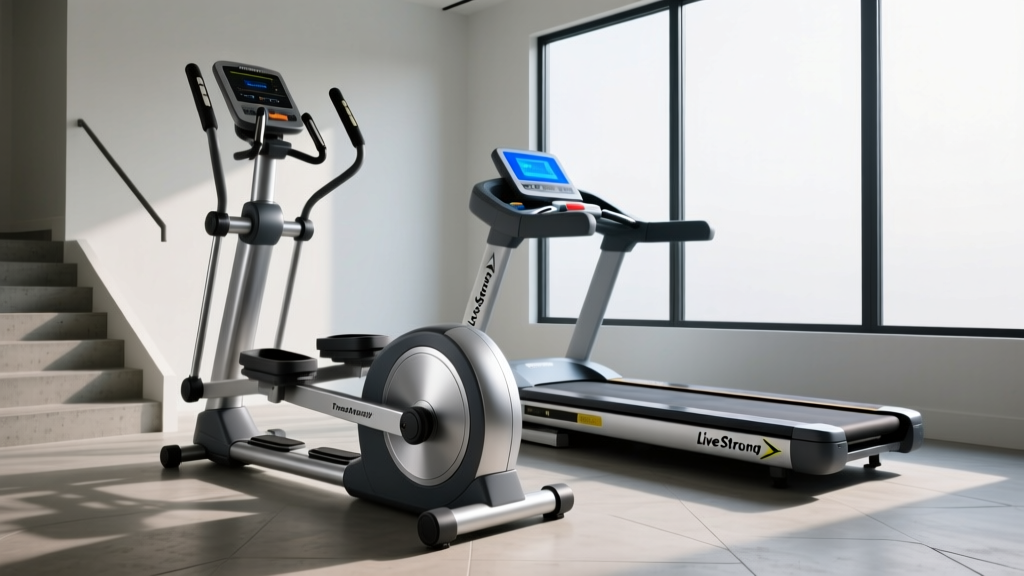
Stair Climber Machine Home Guide vs LiveStrong Treadmill LS 10.0 T

Home Stair Climber Setup: The Treadmill Impermeable Mat Guide

Treadmill Motor Guide: How to Calculate Duke Treadmill Score Safely
