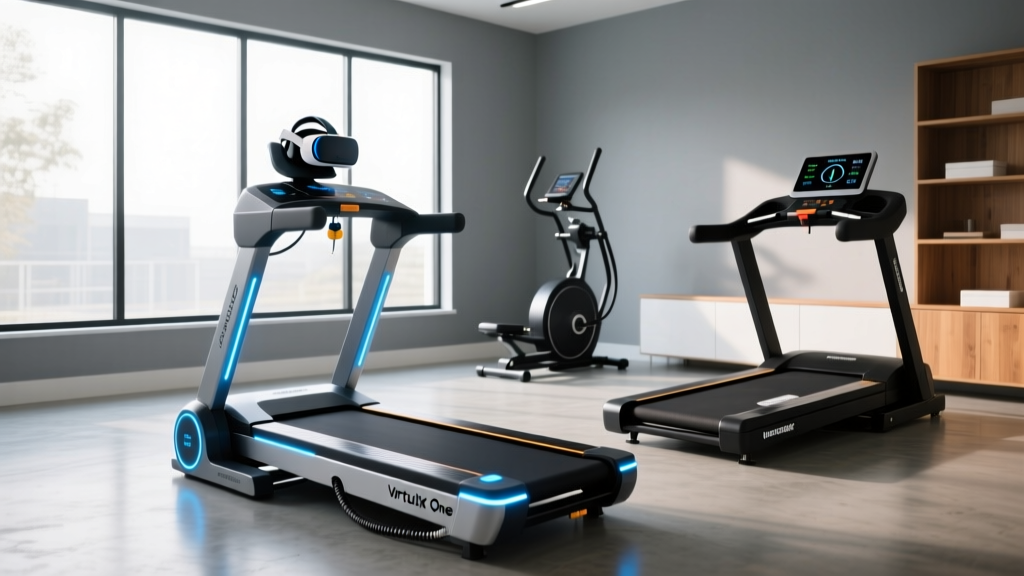
Virtuix Omni One VR Treadmill vs Traditional: Motor HP Guide
Compare the Virtuix Omni One VR treadmill with traditional motorized models. Learn how motor size, CHP, and manual slip-rings impact your home cardio.

When outfitting a home gym in 2026, the divide between immersive virtual reality cardio and traditional heavy-iron fitness equipment has never been more pronounced. For decades, the treadmill motor size and horsepower guide has been the gold standard for buyers. You look for Continuous Horsepower (CHP), motor cooling, and belt friction. But the introduction of omnidirectional VR locomotion has fundamentally disrupted this paradigm. Today, we are putting the Virtuix Omni One VR treadmill head-to-head against traditional high-end motorized treadmills (representative of the 4.0 CHP class, like the NordicTrack Commercial series) to explore how propulsion systems, motor sizes, and manual slip-rings dictate your home cardio experience.
The Horsepower Primer: Decoding CHP vs. Peak HP
Before comparing apples to omnidirectional slip-rings, we must establish the baseline of traditional treadmill engineering. According to Consumer Reports Treadmill Buying Guides, the most critical metric on any motorized cardio machine is Continuous Horsepower (CHP), not Peak Horsepower.
Why Peak HP is a Marketing Illusion
Peak HP measures the absolute maximum output a motor can achieve for a fraction of a second before thermal limits kick in. A budget treadmill might advertise a '3.5 HP Motor,' but if that is peak output, the continuous rating might be a mere 1.5 CHP. This is sufficient for light walking but will cause the Motor Control Board (MCB) to overheat and fail during a sustained 5K run.
The 2026 CHP Standards for Motorized Treadmills
- 2.5 CHP: Minimum requirement for dedicated walking or light jogging (users under 180 lbs).
- 3.0 to 3.5 CHP: Ideal for regular jogging and interval training for average-sized adults.
- 4.0+ CHP: Mandatory for heavy runners, sustained sprinting, and high-incline mountain simulations. These motors require massive heat sinks and often demand a dedicated 20-amp electrical circuit.
Head-to-Head: Virtuix Omni One vs. 4.0 CHP Motorized Treadmills
How does a machine with zero propulsion motor compete with a 4.0 CHP behemoth? The answer lies in biomechanical translation. The Virtuix Omni One VR treadmill abandons the motorized belt entirely. Instead, it utilizes a 54-inch diameter, low-friction omnidirectional slip-ring paired with a physical support harness and specialized VR shoes.
As detailed in UploadVR's comprehensive hardware review, the Omni One translates your physical leg movements into in-game locomotion without the need for a motor driving a belt beneath you. You are the motor. Conversely, a traditional 4.0 CHP treadmill uses a heavy-duty DC motor to pull a 22x60-inch woven belt over a wooden deck, requiring the user simply to keep up with the machine's pace.
Electrical Warning for Traditional Treadmills: A 4.0 CHP treadmill operating at 10 MPH with a 15% incline can draw up to 15-20 amps. Plugging this into a shared bedroom circuit alongside an air conditioner or space heater will trip the breaker and potentially fry the treadmill's MCB. The Omni One, requiring power only for its sensors and linked PC/Console, operates safely on any standard 15-amp household circuit.Technical Matrix: Propulsion Specs & Power Requirements
To truly understand the engineering divide, we must look at the raw data. Below is a direct specification comparison between the manual VR propulsion system and a premium motorized alternative.
| Feature | Virtuix Omni One (VR) | Premium Motorized (4.0 CHP Class) |
|---|---|---|
| Propulsion Type | Manual Omnidirectional Slip-Ring | Motorized Continuous Belt |
| Motor Size | 0 HP (User-Powered) | 4.0 Continuous Horsepower (CHP) |
| Surface Area | 54-inch Circular Slip-Ring | 22 x 60-inch Rectangular Belt |
| Electrical Draw | Minimal (Sensors/Tracking only) | High (Requires Dedicated 15A/20A Circuit) |
| Maintenance Focus | Harness tension, slip-ring cleaning | Belt lubrication, motor dust removal |
| Estimated 2026 Price | $3,000 - $4,000 (Bundle) | $2,500 - $3,800 |
Biomechanical Edge Cases: How Propulsion Alters Your Gait
The most profound difference between these two systems is not electrical; it is biomechanical. When you run on a 4.0 CHP motorized treadmill, the belt pulls your foot backward. This artificially engages the hip flexors and reduces the activation of the hamstrings and glutes compared to overground running.
The Omni One Hamstring Factor
Because the Virtuix Omni One VR treadmill has no motor, you must actively push against the slip-ring to move forward and physically pull your leg back for the next stride. According to Virtuix Official Omni One Specifications and subsequent fitness analyses, this manual propulsion closely mimics the ground reaction forces of outdoor running. Users frequently report delayed onset muscle soreness (DOMS) in the hamstrings and calves during their first two weeks of VR cardio, as these muscles are forced to work significantly harder than they do on a motorized belt.
"The absence of a motor in the Omni One means your posterior chain does 100% of the locomotive work. It is an incredibly efficient cardiovascular and muscular stimulus, but it requires a physiological adaptation period that motorized treadmill users do not experience."
Maintenance Realities: Motor Heat vs. Slip-Ring Friction
Every cardio machine requires maintenance, but the failure modes are entirely different when comparing motor size and manual hardware.
Traditional Motorized Maintenance
A 4.0 CHP motor generates significant heat. Over time, dust and pet hair are sucked into the motor hood, insulating the components and forcing the motor to work harder, which degrades the CHP output. Furthermore, the belt and deck require 100% silicone lubrication every 150 miles. Failure to lubricate increases friction, which spikes the amp draw and eventually destroys the motor control board.
Virtuix Omni One Maintenance
With zero motor to maintain, the Omni One shifts the maintenance burden to the physical harness and the slip-ring surface. The specialized VR shoes must be kept clean to maintain the exact coefficient of friction required for the slip-ring. If debris builds up on the 54-inch ring, it creates 'dead zones' that disrupt in-game tracking. Additionally, the physical support harness, which bears the user's weight during intense sprints, requires periodic inspection of the carabiners and tension straps for material fatigue.
Spatial and Environmental Considerations
Motor size also dictates the physical footprint and environmental requirements of the machine. A traditional 4.0 CHP treadmill is massive, often measuring 80 inches long and 35 inches wide, with a heavy steel frame that requires two people to move. While some fold, the sheer weight of the 4.0 CHP motor makes them cumbersome.
The Omni One, while boasting a 54-inch circular base, requires significant vertical clearance. The overhead harness tracking system demands a ceiling height of at least 8.5 feet to accommodate the user's full range of motion and jumping mechanics in VR. Furthermore, because the Omni One relies on optical or infrared tracking for the VR headset, the room must have controlled lighting to prevent sensor washout—a non-issue for a motorized treadmill where you simply stare at an LED screen or a wall.
The 2026 Buyer's Decision Framework
Choosing between the Virtuix Omni One VR treadmill and a traditional 4.0 CHP motorized model comes down to your primary fitness objectives, spatial constraints, and technological appetite.
Choose the Traditional 4.0 CHP Treadmill If:
- Your primary goal is structured, metric-driven marathon training (pace, exact incline, heart rate zones).
- You have a dedicated home gym space with a 20-amp electrical circuit and high weight-bearing floors.
- You prefer passive entertainment (watching Netflix on a 24-inch HD touchscreen) while maintaining a steady-state cardio pace.
- You have mobility issues or joint limitations that require the assisted, predictable pull of a motorized belt.
Choose the Virtuix Omni One VR Treadmill If:
- You struggle with cardio boredom and need the gamification of VR to maintain consistency.
- You want to engage your posterior chain (glutes, hamstrings) more naturally without the artificial pull of a motor.
- Your home gym lacks the dedicated electrical circuits required for heavy 4.0 CHP continuous-duty motors.
- You are interested in full-body spatial awareness and reactive agility training, which omnidirectional movement provides.
Ultimately, the treadmill motor size and horsepower guide remains the definitive rubric for traditional cardio equipment. However, the Virtuix Omni One VR treadmill proves that in 2026, the most effective propulsion system might just be your own biomechanics, untethered from the constraints of a continuous horsepower motor.
More gear to consider
All reviews
Swimming Pool Treadmill vs Walking Pad: Setup & Review

Rowing Guide: Skip the Long Walk Treadmill Screening Locations

Treadmill Belt Maintenance Cost vs Shrimp Running on Treadmill Cost

ProForm 995 SEL Treadmill Review: Small Space Layout Guide

Elliptical vs Treadmill: Adapting a 15 Minute HIIT Treadmill Workout
