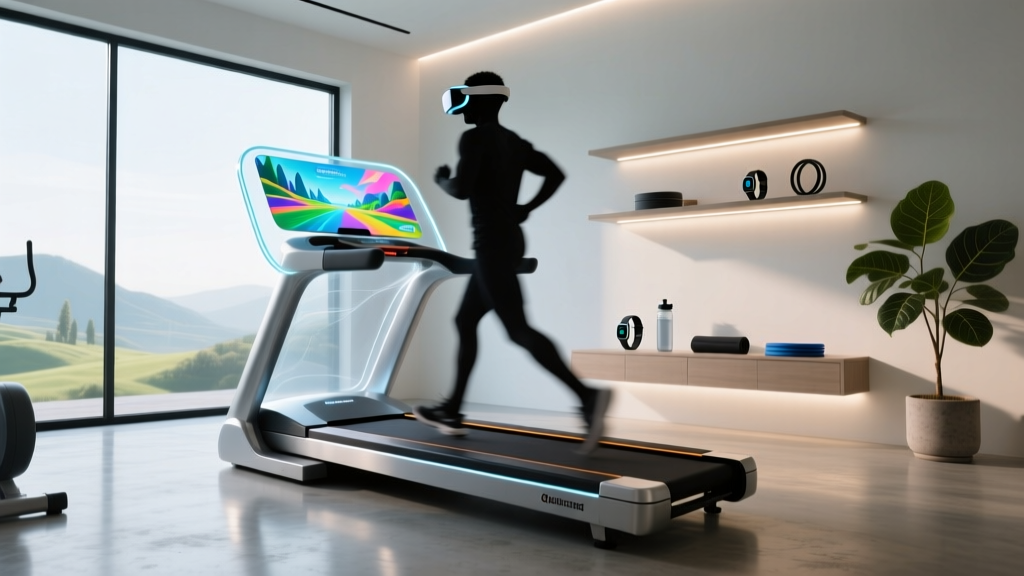
Virtual Reality Treadmill Buying Guide & Top Setups 2026
Explore our 2026 virtual reality treadmill buying guide. Compare omnidirectional vs standard setups, pricing, and top VR fitness compatibility.

The Reality of Virtual Reality Treadmills in 2026
The concept of a virtual reality treadmill has evolved drastically from the clunky, friction-heavy prototypes of the early 2010s. Today, VR fitness and spatial computing gaming demand seamless locomotion that bridges the gap between your physical living room and infinite digital landscapes. Whether you are looking to run through the virtual trails of Supernatural, explore the expansive worlds of Half-Life: Alyx*, or simply integrate immersive gamification into your daily cardio, choosing the right hardware is critical.
However, the term "virtual reality treadmill" is often misused. It generally refers to two entirely different categories: Omnidirectional Treadmills (ODTs), which are specialized hardware rigs designed explicitly for VR, and Sensor-Mapped Standard Treadmills, where traditional motorized cardio machines are retrofitted with tracking pucks. This in-depth buying guide breaks down the engineering, pricing, and real-world edge cases of both approaches to help you make an informed investment in 2026.
Expert Insight: Never use a standard motorized treadmill with a standalone VR headset (like the Meta Quest 3 or Apple Vision Pro) without a physical spotter or specialized safety tether. "Proprioceptive drift"—where your brain's spatial awareness misaligns with the moving belt—will cause you to drift to the edge of the belt and fall within 3 to 5 minutes.Omnidirectional Treadmills (ODTs) vs. Sensor-Mapped Setups
Before comparing specific models, you must understand the fundamental mechanical differences between the two primary ways to walk in VR. According to hardware specifications published by Virtuix, true immersion requires 360-degree movement tracking that standard treadmills simply cannot provide.
| Feature | Omnidirectional Treadmill (ODT) | Standard Treadmill + VR Sensors |
|---|---|---|
| Movement Axis | 360-degree (walk, strafe, backpedal) | 1-axis (forward only) |
| Centering Mechanism | Physical harness / sliding ring | None (high drift risk) |
| Footwear | Specialized low-friction shoes or sliders | Standard athletic sneakers |
| Primary Use Case | VR gaming, spatial exploration, 3D fitness | 2D gamified cardio (e.g., Zwift Run) |
| Average Cost (2026) | $1,800 - $3,500+ | $800 - $2,500 (plus treadmill cost) |
2026 Virtual Reality Treadmill Comparison Matrix
If your goal is true spatial immersion, an Omnidirectional Treadmill is mandatory. Below is a comparison of the top consumer and prosumer ODTs available on the market today. Industry analysis from Road to VR highlights that the market has consolidated around three major hardware architectures: the concave bowl, the flat slip-ring, and the tethered slider.
| Model | Architecture | Price (Hardware) | Footprint | Harness Type | Software Ecosystem |
|---|---|---|---|---|---|
| Virtuix Omni One | Concave Bowl + Specialized Shoes | $2,995 | 35 sq ft (42" dia) | Enclosed Waist Ring | Closed (Omni Store, $30/mo) |
| KAT Walk C2+ | Flat Slip-Ring + Shoe Sliders | $1,799 | 28 sq ft (Open Top) | Open-Top Sliding Arm | Open (SteamVR, Quest Link) |
| Cyberith Virtualizer Elite | Tethered Sliding Plate | $4,500+ | 45 sq ft (60" dia) | 5-Point Suspension | Open / Enterprise SDK |
Critical Hardware Features and Edge Cases
Buying a virtual reality treadmill is not like buying a standard motorized cardio machine. The mechanical tolerances required to prevent motion sickness are incredibly tight. Here are the deep-dive engineering details you must evaluate before purchasing.
1. Harness Mechanics and Crouching Support
The harness is the most vital safety and comfort component of an ODT. The Virtuix Omni One utilizes a fully enclosed waist ring. While this provides excellent lateral stability, it physically prevents you from crouching, prone-crawling, or leaning extensively—severely limiting your ability to play tactical VR shooters or stealth games. Conversely, as noted in the engineering docs at KAT VR, the KAT Walk C2+ uses an open-top sliding arm connected to a waist belt. This design allows for vertical movement (crouching/jumping) and natural arm swinging, making it the superior choice for hardcore VR gamers, though it requires more core strength to maintain balance.
2. Friction, PTFE Pads, and Maintenance
ODTs rely on reducing friction to near-zero so your brain registers the sliding motion as walking.
- Bowl Systems (Virtuix): You must wear specialized overshoe with a low-friction base. The bowl shape naturally returns your foot to the center, but the shoes wear down. Expect to replace the PTFE (Teflon) shoe pads every 6 to 9 months ($40 per set).
- Slider Systems (KAT/Cyberith): These use physical slider blocks that strap to your shoes and glide on a metal ring or base plate. Over time, micro-scratches on the metal base can increase friction, leading to "sticky" steps that break immersion and cause knee strain. You must clean the base plate with isopropyl alcohol weekly and apply specialized silicone lubricants monthly.
3. Motion-to-Photon Latency Requirements
To avoid severe vestibular mismatch (VR motion sickness), the total system latency must remain under 20 milliseconds. When you physically push your foot backward on an ODT, the sensor must detect the movement, transmit it to the PC or headset, and update the display. Cheaper, off-brand ODTs often use optical sensors with high polling latencies or mechanical slip-rings with physical drag. This creates a micro-delay where your avatar moves a fraction of a second after your physical body does. Stick to the established brands listed in our matrix to ensure sub-10ms hardware polling rates.
The "Treadmill Drift" Edge Case: If you attempt to map a standard motorized treadmill to VR using a hip-mounted tracker (like the Vive Tracker 3.0), you will experience proprioceptive drift. Because your vestibular system lacks the visual horizon of the real world, a 1% asymmetry in your stride will cause you to drift laterally. Within 4 minutes, you will step off the side of the moving belt. Always use an ODT for untethered 3D VR environments.
Real-World Costs: Subscriptions, Space, and Ceilings
The sticker price of the hardware is only the beginning of your investment. Here is a practical decision framework for the hidden costs of owning a virtual reality treadmill in 2026.
Total Cost of Ownership (Year 1)
- Hardware Footprint: You need a minimum of an 8x8 foot dedicated space. ODTs cannot be easily folded and shoved into a closet. The Virtuix Omni One weighs roughly 130 lbs and requires two people to move.
- Ceiling Height Clearance: The KAT Walk C2+ requires a minimum ceiling height of 7'2" to accommodate the overhead sensor array and arm swing. Measure your room before ordering.
- Software Subscriptions: Virtuix operates on a closed ecosystem model. While the hardware is $2,995, you must also pay a $30/month subscription to access their curated VR fitness and gaming library. KAT VR, however, operates as an open peripheral, allowing you to connect via USB to any SteamVR-compatible game you already own with no monthly fees.
- PC Requirements: Unless you are buying a standalone bundle, running high-fidelity VR games while processing ODT telemetry requires a high-end gaming PC (minimum NVIDIA RTX 4070 or equivalent in 2026) to maintain the required 90Hz+ refresh rate.
Frequently Asked Questions
Can I use a virtual reality treadmill for weight loss?
Yes. Studies show that VR locomotion on an ODT burns calories at a rate comparable to brisk walking or light jogging (approx. 300-450 kcal per hour depending on user weight). Because the gamification distracts from the perception of effort, users typically exercise 20-30% longer than they would on a standard treadmill.
Are ODTs compatible with the Meta Quest 3 and Apple Vision Pro?
Yes, but with caveats. The KAT Walk C2+ connects via USB to a PC, which then streams to the Quest 3 via AirLink or a DisplayPort cable. Standalone, wireless ODT integration is still developing, as the headset must process both the inside-out room tracking and the treadmill's telemetry simultaneously. Always check the manufacturer's latest firmware compatibility list before purchase.
Final Verdict: Which Setup is Right for You?
If your primary goal is immersive VR gaming, spatial exploration, and unrestricted movement, the KAT Walk C2+ is the best overall virtual reality treadmill for 2026. Its open-top design, lack of mandatory software subscriptions, and aggressive $1,799 price point make it the most versatile choice for home users. However, if you want a turnkey, plug-and-play VR fitness appliance and do not care about playing third-party SteamVR shooters, the Virtuix Omni One offers a highly polished, albeit locked-down, ecosystem with excellent customer support. Avoid attempting to retrofit a standard motorized treadmill for 3D VR use; the safety risks and proprioceptive drift make it an unviable solution for true spatial computing.
More gear to consider
All reviews
Cardio Noise Comparison: Horizon Fitness Silicone Treadmill Belt Lubricant Fixes

LifeSpan TR 4000 Treadmill vs Curved Manual: Head-to-Head Test

Curved vs Motorized Treadmill: Lost Remote for Treadmill Guide
Tru Grit Treadmill Review: Motor HP Guide & Troubleshooting Mistakes
Bike vs Treadmill: Step-by-Step Feature Buying Guide
