
Treadmill Victorian Times to Walking Pads: Portable Cardio Care
Discover how to maintain compact portable cardio equipment, from walking pads to mini steppers, ensuring longevity and peak performance in 2026.

When examining the brutal treadmill Victorian times engineers designed for penal labor, the contrast with today’s home fitness landscape is staggering. The original 1818 penal treadwheel was a massive, cast-iron behemoth built to withstand continuous, heavy-impact human labor, requiring only basic axle grease and sheer mechanical inertia to operate. Fast forward to 2026, and the modern cardio treadmill has evolved into ultra-compact, foldable walking pads and portable under-desk machines. While these modern marvels save space and integrate seamlessly into home offices, their lightweight engineering introduces unique vulnerabilities.
Compact portable cardio equipment—such as the KingSmith WalkingPad X21, UREVO Strol 2E, and various mini hydraulic steppers—prioritizes spatial efficiency over heavy-duty durability. According to Consumer Reports, the downsizing of motors, decks, and rollers in portable fitness equipment significantly alters maintenance requirements. Neglecting these specific needs leads to premature motor burnout, belt fraying, and joint failure. This comprehensive guide details the exact maintenance protocols required to maximize the lifespan of your compact cardio gear.
The Engineering Trade-Off: Portability vs. Longevity
To understand why portable cardio machines require meticulous care, you must understand their mechanical compromises. A standard commercial treadmill utilizes 2.5-inch to 3-inch diameter rollers and a 4.0 HP continuous duty motor. In contrast, most 2026 portable walking pads utilize 1.5-inch diameter rollers and peak-rated motors ranging from 1.5 HP to 2.5 HP.
Expert Insight: Smaller rollers rotate at a higher RPM to match the belt speed of larger rollers. This increased rotational speed generates significantly more friction and heat at the roller bearings. Without rigorous lubrication and tension management, the bearings in compact walking pads will seize, causing the control board to overload and fail.Walking Pad & Under-Desk Treadmill Maintenance Protocol
Walking pads are the undisputed kings of compact cardio, but their low-profile decks trap heat and dust. Implementing a strict maintenance schedule is non-negotiable for longevity.
1. Belt Lubrication and Friction Management
Unlike thick commercial decks, portable walking pads often use high-density MDF or thin composite decks with minimal shock absorption. This places the entire burden of friction reduction on the belt lubricant.
- The Right Lubricant: Use only 100% pure silicone liquid spray or gel. Avoid petroleum-based products or WD-40, which will dissolve the belt backing and ruin the deck.
- Application Volume: Apply exactly 10ml to 15ml of silicone oil under the belt every 40 hours of use. Over-lubricating will cause the silicone to leak out the sides, degrading the internal electronics and creating a slipping hazard.
- Distribution Method: Use the included wand to apply the oil in a zig-zag pattern across the center third of the deck. Run the machine at 2.0 MPH for 3 minutes to distribute the oil evenly.
2. Belt Tension and Tracking Calibration
Portable treadmill belts are prone to stretching during the first 50 hours of use. If the belt slips when you step on it, the motor draws excess amperage, which can fry the lower control board—a replacement part that typically costs between $65 and $110.
- Locate the left and right rear roller adjustment bolts at the back of the machine.
- Using the provided hex key, turn both bolts exactly one-quarter (1/4) turn clockwise.
- Test the belt at 3.0 MPH. If it still slips, repeat the 1/4 turn adjustment.
- Warning: Never over-tighten. Excessive tension will bow the front roller and destroy the motor bearings.
Mini Steppers & Portable Ellipticals: Joint & Cylinder Care
For those who prefer vertical motion, mini hydraulic steppers (like the Sunny Health & Fitness SF-S7805) and under-desk ellipticals (like the Cubii JR2) offer excellent low-impact alternatives. The Mayo Clinic notes that low-impact aerobic exercises are vital for joint health, but the machines themselves require specific joint care to remain quiet and functional.
Hydraulic Cylinder Preservation
Mini steppers rely on dual hydraulic resistance cylinders. These cylinders are generally rated for 220 lbs, but lateral sway during use can cause the internal seals to blow out prematurely.
- Lubrication: Apply a small dab of white lithium grease to the pivot joints where the pedal arms meet the main frame every 3 months. This eliminates the notorious "squeak" that develops as factory grease dries out.
- Usage Form: Step straight up and down. Lateral (side-to-side) swaying puts uneven pressure on the cylinder seals, leading to hydraulic fluid leaks that are impossible to repair.
Optical Sensor Cleaning for Under-Desk Ellipticals
Under-desk ellipticals track strides using optical sensors located near the flywheel. Because these machines sit directly on the floor, they act as dust magnets. If your stride counter stops registering or displays erratic numbers, use a can of compressed air to blow out the sensor housing. Do not use liquid cleaners, which can fog the optical lens.
Compact Cardio Maintenance Matrix
Use the following matrix to establish a preventative maintenance calendar for your home office equipment.
| Equipment Type | Weakest Component | Maintenance Action | Interval |
|---|---|---|---|
| Foldable Walking Pad | Running Belt / Deck | Apply 10ml 100% Silicone Oil | Every 40 Hours |
| Mini Hydraulic Stepper | Pivot Joints / Cylinders | White Lithium Grease on pivots | Every 90 Days |
| Under-Desk Elliptical | Optical Stride Sensor | Compressed Air Dusting | Monthly |
| Portable Rowing Machine | Bungee Return Cord / Rail | Wipe rail with silicone cloth | Every 20 Hours |
Environmental Factors: Power Delivery and Storage
The American Heart Association emphasizes the importance of consistent daily movement, which means portable machines are often kept in living rooms or home offices rather than climate-controlled gyms. This environmental exposure introduces two major failure vectors: power surges and folding hinge degradation.
Surge Protection for Micro-Control Boards
Compact walking pads utilize miniaturized lower control boards that are highly sensitive to voltage fluctuations. Plugging a $400 walking pad directly into a wall outlet shared with a laser printer or space heater is a recipe for a blown capacitor.
Critical Rule: Always plug portable cardio equipment into a dedicated 15-Amp surge protector with a minimum 1000-joule rating. Never use an extension cord, as the voltage drop over long, thin extension wires can cause the treadmill motor to overheat and trigger an E01 (Motor Overload) error code.
Folding Mechanism and Hinge Care
The primary selling point of portable cardio is the ability to fold and store it under a bed or behind a door. However, the folding hinges are notorious pinch points for dust and pet hair. Every six months, vacuum the hinge crevices and apply a dry PTFE (Teflon) lubricant. Avoid wet oils, which will attract grit and turn into an abrasive paste that wears down the locking pins.
Expert Troubleshooting: When Portable Cardio Acts Up
Even with meticulous care, compact machines can develop quirks. Here is how to diagnose and resolve the most common issues without voiding your warranty.
- Error Code E01 (Motor Communication / Overload): This usually indicates the belt is too tight, or the deck lacks lubrication, forcing the motor to draw excessive amps. First, loosen the rear roller bolts by 1/4 turn and apply silicone oil. If the error persists, the lower control board MOSFET has likely failed.
- Error Code E02 (Speed Sensor Failure): The magnetic sensor near the front roller motor has lost alignment or accumulated metallic dust. Unplug the machine, remove the front motor hood (usually 4 Phillips screws), and wipe the magnet and sensor with a microfiber cloth. Ensure the gap between the magnet and sensor is exactly 3mm to 5mm.
- Belt Drifting to One Side: If the belt constantly rubs against the left or right plastic side rail, do not adjust the rear bolts blindly. Instead, stand on the machine and walk normally. If your natural gait favors one side, you may be pushing the belt off track. If the belt drifts while the machine is empty, adjust the rear bolt on the side the belt is drifting toward by 1/4 turn clockwise.
Conclusion: Respecting the Micro-Mechanics
The evolution from the indestructible, human-powered treadmill Victorian times wardens relied upon to today's micro-motorized walking pads represents a triumph of convenience over brute-force engineering. However, this convenience demands a proactive approach to maintenance. By adhering to strict lubrication schedules, managing belt tension with precision, and protecting sensitive micro-electronics from environmental hazards, you can easily double the operational lifespan of your compact portable cardio equipment. Treat your walking pad with the same mechanical respect you would a full-sized commercial machine, and it will reliably support your daily step goals for years to come.
More gear to consider
All reviews
Livestrong Treadmill LS10 0T Value Analysis & Compact Alternatives
Rowing Buying Guide & Technique: ProForm Carbon T7 Treadmill Reviews

Curved vs Motorized: Average Treadmill Weight and Troubleshooting

Top Under Desk Treadmills With a Treadmill Handle (2026 Review)
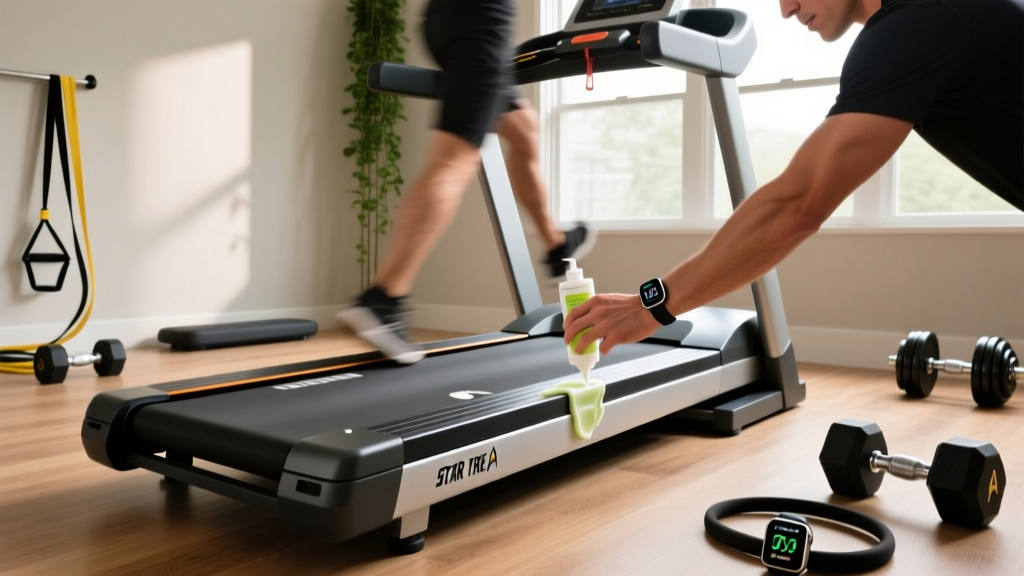
Star Trek Treadmill Belt Maintenance & Lubrication Guide
