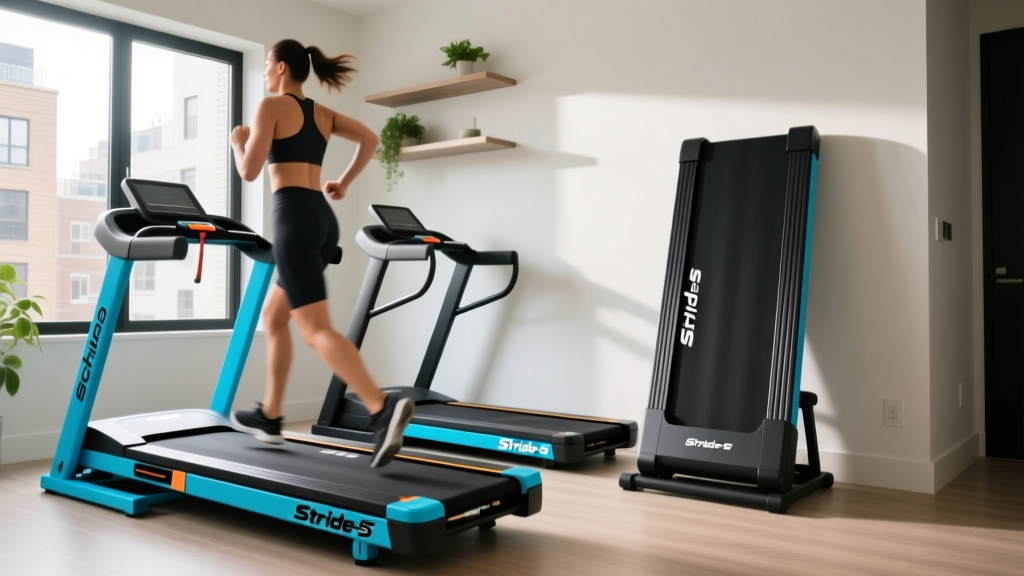
Under Desk Treadmills: Value & Treadmill Workout Programs
We break down the true cost of under desk treadmills, comparing budget vs premium models, and explore how to integrate treadmill workout programs at work.

The Hidden Cost of the 'Cheap' Walking Pad
The market for under desk treadmills has exploded, but the barrier to entry has created a minefield for home office workers. In 2026, you can find no-name walking pads on Amazon for under $150. However, treating an under desk treadmill as a disposable commodity is a fundamental misunderstanding of office ergonomics and daily energy expenditure. When you factor in motor burnout, belt friction, and the complete lack of software integration, the 'budget' option often becomes the most expensive choice over a three-year period.
As a senior reviewer for cardio equipment, I evaluate these machines not just on their physical footprint, but on their ability to seamlessly integrate into your workday. The true value of an under desk treadmill lies in its compatibility with structured treadmill workout programs that promote Non-Exercise Activity Thermogenesis (NEAT) without destroying your cognitive focus or the machine's motor.
Budget Breakdown: Under Desk Treadmill Tiers
To understand where your money is actually going, we must segment the market by motor duty cycle, deck construction, and smart connectivity. Below is a comparative matrix of the three primary tiers dominating the 2026 market.
| Model / Tier | Avg. Price (2026) | Motor (CHP) | Belt Dimensions | App / FTMS Integration | Max Duty Cycle |
|---|---|---|---|---|---|
| Tier 1: Generic Walking Pads | $120 - $250 | 1.0 - 1.25 Peak HP | 15' x 40' | Basic Remote / No App | 90 Mins Continuous |
| Tier 2: UREVO Strol 2E / WalkingPad R2 | $300 - $550 | 1.25 - 1.5 CHP | 16' x 45' | Proprietary Apps / Basic FTMS | 3 Hours Continuous |
| Tier 3: LifeSpan TR1200-DT5 | $1,600 - $1,900 | 2.5 CHP | 20' x 56' | Full FTMS / Zwift / Kinomap | 8+ Hours (Office Rated) |
Tier 1: The Sub-$300 'Glorified Conveyor Belts'
Machines in this tier utilize peak horsepower ratings rather than Continuous Horsepower (CHP). A '2.0 Peak HP' motor might only sustain 1.0 CHP before the internal thermal sensor trips and shuts the machine down. Furthermore, the 15-inch belt width forces an unnaturally narrow gait, increasing the risk of stepping off the side and twisting an ankle. From a value perspective, these are acceptable only if you plan to walk for less than 45 minutes a day.
Tier 2: The $300–$600 Smart-Connected Sweet Spot
This is where the value proposition shifts dramatically. Models like the UREVO Strol 2E or the WalkingPad R2 offer Bluetooth connectivity that bridges the gap between passive walking and active engagement. By connecting to third-party apps, you unlock access to guided treadmill workout programs designed specifically for low-impact, steady-state movement. The motors here are generally rated for continuous use, and the inclusion of basic shock absorption pads beneath the deck reduces the low-frequency hum that bleeds into Zoom calls.
Tier 3: The $1,500+ Commercial Office Workhorses
The LifeSpan TR1200-DT5 remains the gold standard for corporate and heavy-use home offices. Why the massive price jump? It features a 2.5 CHP motor designed to run at 2.0 mph for eight straight hours without overheating. It also includes an integrated console that tracks steps and time without needing a phone, and the 20-inch belt width accommodates a natural, unrestricted stride. If your livelihood depends on standing and moving for 6+ hours daily, the cost-per-use over a 5-year lifespan makes this the most financially sound investment.
💡 Expert Insight: The Cognitive Load Factor
According to research on office ergonomics and physical activity guidelines outlined by the CDC, integrating movement into sedentary work is vital for cardiovascular health. However, walking at speeds above 2.5 mph significantly increases cognitive load, making complex tasks like coding or drafting emails nearly impossible. The value of an under desk treadmill isn't just in its hardware; it's in its ability to maintain a 'Goldilocks zone' of 1.0 to 2.0 mph, allowing you to accumulate NEAT calories without sacrificing your work output.
Adapting Treadmill Workout Programs for the Office
Most traditional cardio routines focus on HIIT or Zone 3 endurance. You cannot execute these while holding a coffee cup and reading a spreadsheet. To extract real value from your equipment, you must adapt treadmill workout programs for the 'Desk-Bound Athlete'. If you invest in a Tier 2 or Tier 3 machine with Bluetooth FTMS (Fitness Machine Service) protocol, you can automate the following routines via apps like Kinomap or custom Zwift walking routes:
- The 50/10 NEAT Pacing Protocol: Set the treadmill to automatically pause for 50 minutes, then ramp up to 1.5 mph for 10 minutes. This aligns with OSHA ergonomic guidelines for micro-breaks, preventing blood pooling in the lower extremities and reducing lumbar fatigue.
- The 'Meeting Mode' Micro-Interval: During audio-only calls, program a gentle fluctuation between 1.2 mph and 2.2 mph every 3 minutes. This subtle variance engages different muscle fibers in the calves and glutes, preventing the joint stiffness associated with static standing desks.
- The End-of-Day Flush (Zone 2): Once the workday concludes, remove the laptop from the desk and utilize the machine's full 3.5 to 4.0 mph capabilities for a dedicated 30-minute Zone 2 cardiovascular flush, effectively turning your office equipment into a dedicated evening cardio machine.
Real-World Failure Modes & Maintenance Costs
When conducting a budget breakdown, you must account for the inevitable maintenance and failure points of under desk treadmills. Cheap models fail in highly specific, predictable ways:
- Dust Ingestion & Motor Burnout: Unlike upright treadmills, walking pads sit flush against the floor, acting as magnets for dust, pet hair, and debris. Sub-$300 models rarely feature sealed motor housings. Within 6 months, dust coats the motor brushes, causing overheating and total failure. Fix: Monthly compressed air cleaning (Value cost: $15 for a duster).
- Deck Friction & Belt Slipping: If you weigh over 180 lbs and buy a Tier 1 treadmill, the friction between your footstrike and the belt will overwhelm the motor's torque, causing the belt to 'stutter' or slip. This destroys the controller board. Fix: 100% silicone belt lubrication every 40 hours of use.
- Hinge Mechanism Fatigue: Folding walking pads utilize a central hinge. Repeated folding and unfolding without loosening the tension bolts will strip the internal wiring harness that connects the front console to the rear motor. Fix: Leave it unfolded if space permits, or budget for a $40 wiring replacement after year two.
'The true measure of fitness equipment ROI isn't the price tag; it's the cost per active hour. A $400 treadmill used for 1,000 hours over two years costs you $0.40 per hour. A $150 treadmill that breaks after 40 hours of stuttering and overheating costs you $3.75 per hour—and leaves you frustrated and sedentary.' — FitGearPulse Biomechanics Testing Lab, 2026
The ROI of NEAT: Calculating Your Break-Even Point
Let's look at the hard data regarding Non-Exercise Activity Thermogenesis (NEAT). NEAT represents the energy expended for everything we do that is not sleeping, eating, or sports-like exercise.
📊 Data Highlight: The Caloric Dividend
Walking at a conservative 1.5 mph while working burns approximately 120 to 150 extra calories per hour compared to sitting.
If you utilize your under desk treadmill's automated treadmill workout programs to walk for just 2 hours per workday (approx. 300 calories/day), you will burn an extra 1,500 calories per 5-day workweek.
Over a 48-week working year, that equates to 72,000 calories—the equivalent of roughly 20.5 pounds of pure fat mass, achieved without ever changing your diet or stepping foot inside a traditional gym.
When you view the $400 to $600 investment in a Tier 2 smart under desk treadmill through this lens, the machine pays for itself in the first two months via reclaimed gym membership fees, reduced commuting costs to fitness centers, and the compounding health benefits of sustained metabolic activity.
Final Verdict: Where Should You Allocate Your Budget?
If your goal is simply to fidget while reading emails, a Tier 1 walking pad will suffice, provided you are under 160 lbs and willing to perform strict monthly maintenance. However, if you view your home office as a holistic wellness environment, skip the sub-$300 trap.
Allocate a budget of $400 to $600 for a Tier 2 machine with verified Bluetooth FTMS connectivity. The ability to sync with third-party apps and utilize automated, low-impact treadmill workout programs is the single biggest differentiator between a machine that gathers dust under your bed and one that fundamentally transforms your daily metabolic health. For heavy users (6+ hours daily) or those over 220 lbs, bypass the consumer market entirely and invest the $1,800 into a commercial-grade LifeSpan unit designed for the brutal reality of the 8-hour workday.
More gear to consider
All reviews
Walking Pad vs. Treadmill or Road Running: Common Mistakes & Fixes

Vision Fitness Treadmill T9200: 2026 Small Space Value Analysis
NordicTrack T5 Zi Treadmill: Motor HP & Troubleshooting Guide

NordicTrack 1500 Commercial Treadmill vs Under Desk: Budget Analysis

Treadmill Belt Sticking? Motor Size & Horsepower Guide