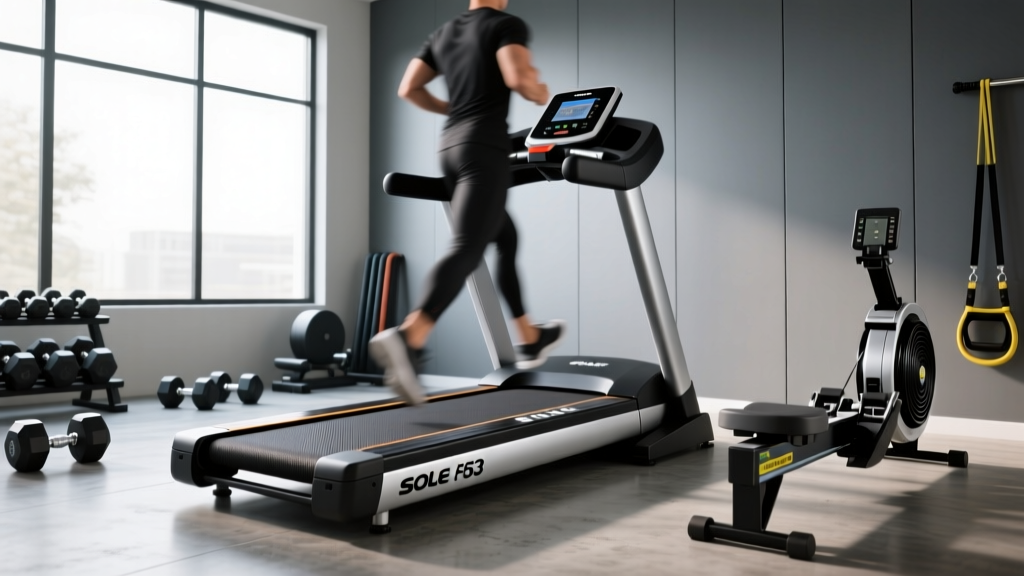
Under Desk Treadmill Review: Does Holding On Make a Difference?
Discover if holding your desk changes your workout. Read our 2026 under desk treadmill review focusing on space optimization, layout, and ergonomics.

The Biomechanics of Desk Walking: Posture and Support
As hybrid work models solidify in 2026, the under-desk treadmill has evolved from a niche executive toy to a staple of space-optimized home offices. However, integrating a cardio machine into a sedentary workspace introduces unique biomechanical challenges. When transitioning to a walking desk, a common question arises: does holding on to the treadmill make a difference? In a traditional gym setting, gripping the handrails reduces caloric expenditure by up to 20% and disrupts natural gait mechanics. But under-desk treadmills lack handrails, meaning users naturally anchor themselves by holding onto the desk surface.
According to biomechanical analyses referenced by Harvard Health Publishing, free-arm swinging is crucial for counterbalancing pelvic rotation and engaging the core. When you hold onto your desk while walking, you create a closed kinetic chain. This stabilizes your upper body for typing or mouse work, but it shifts the rotational load to your lower back and hips. Over a 4-hour walking session, this can lead to lumbar fatigue if your desk height and monitor placement are not perfectly calibrated to your new, elevated vantage point.
Space Optimization: Sizing Your Under-Desk Treadmill
Designing an active workspace requires more than just sliding a belt under your existing furniture. True space optimization demands a thorough audit of your room's layout, desk clearance, and acoustic footprint. Standard office desks sit at 29 to 30 inches high. However, an under-desk treadmill deck adds anywhere from 4 to 6 inches of elevation. If you are 5'9', your elbow height while standing on the floor might perfectly match a 30-inch desk. Step onto a 5-inch treadmill deck, and your desk is now effectively 5 inches too low, forcing you to hunch over your keyboard.
The Ergonomic Height Formula
To achieve proper ergonomics, the Cornell University Ergonomics Web recommends that your desk surface should align with your elbow height when your shoulders are relaxed and arms are bent at a 90-degree angle.
Formula: [User Height] + [Shoe/Deck Elevation] + [Elbow Offset] = Required Desk Height. For most users, a motorized sit-stand desk with a minimum height of 46 inches is mandatory to accommodate the treadmill deck.
Top Under-Desk Treadmills for Office Layouts (2026 Review)
Not all treadmills are created equal when it comes to spatial efficiency. Below, we review three top-tier models based on their footprint, motor acoustics, and layout versatility.
1. WalkingPad R2: The Foldable Space-Saver
The WalkingPad R2 remains a dominant force in compact office layouts. Its patented 180-degree folding mechanism allows it to slide under a bed or stand vertically in a closet, measuring just 10 inches thick when folded. When deployed, it requires a footprint of roughly 20 by 57 inches.
- Motor: 2.5 HP Peak (1.25 CHP) Brushless DC Motor
- Max Speed: 6.2 mph (Handrail raised) / 3.7 mph (Flat under-desk)
- Acoustics: ~55 dB at 3.0 mph (Quiet enough for phone calls)
- Price: $499
Layout Verdict: Ideal for multi-purpose rooms or small apartments where the office space must be reclaimed for living activities after 5 PM. The lack of a fixed console means you must rely on the app or a remote, keeping the desk surface entirely clear of clutter.
2. LifeSpan TR1200-DT5: The Heavy-Duty Anchor
If your office layout is permanent and you prioritize durability over portability, the LifeSpan TR1200-DT5 is the gold standard. It is significantly heavier (114 lbs) and features a wider 20-inch belt, accommodating broader stances and reducing the risk of stepping off the edge during deep-focus work.
- Motor: 2.0 HP Continuous Duty DC Motor
- Max Speed: 4.0 mph (Intentionally capped for desk safety)
- Acoustics: ~52 dB (Superior shock absorption and belt dampening)
- Price: $1,299
Layout Verdict: Best for dedicated, spacious home offices. It requires a permanent footprint of 28.5 by 63 inches. You must leave at least 18 inches of clearance behind the rear roller for motor heat exhaust and belt tension adjustments.
3. UREVO Strol 2E: The Budget-Friendly Hybrid
The UREVO Strol 2E bridges the gap between budget pricing and functional design. It features a built-in desk attachment option and dual shock absorption pads, making it a versatile choice for users who do not own a sit-stand desk and need an all-in-one solution.
- Motor: 2.25 HP Peak Motor
- Max Speed: 4.0 mph
- Acoustics: ~58 dB (Slightly louder belt slap at higher speeds)
- Price: $259
Layout Verdict: Excellent for dorm rooms or secondary workspaces. The integrated handlebar/desk frame takes up vertical space, which can interfere with low-hanging shelves or wall-mounted monitors.
Spatial & Biomechanical Comparison Matrix
| Model | Footprint (Deployed) | Deck Height | Weight Capacity | Ideal Layout |
|---|---|---|---|---|
| WalkingPad R2 | 20" x 57" | 4.5" | 240 lbs | Flexible / Multi-use |
| LifeSpan TR1200 | 28.5" x 63" | 5.5" | 350 lbs | Dedicated Executive |
| UREVO Strol 2E | 20.5" x 49" | 4.2" | 265 lbs | Compact / Budget |
Layout Design: Integrating the Treadmill into Your Office Flow
Achieving a seamless active workspace goes beyond the dimensions of the machine. You must account for cable management, acoustic dampening, and floor protection to ensure the space remains functional and professional.
Cable Management & Power Routing
The most common failure mode in home office treadmill layouts is tripping over the power cord or having the cable snag on the belt mechanism. Because the treadmill moves slightly during use (due to user stride impact), the power cable must have at least 3 feet of slack. Use a neoprene cable sleeve and route the cord through an under-desk cable tray (such as the IKEA SIGNUM or a generic J-channel raceway) to keep the floor entirely clear. This not only optimizes visual space but prevents catastrophic motor shorts caused by frayed wires.
Acoustic Dampening and Floor Protection
Even the quietest brushless motors transmit low-frequency vibrations through the deck into your floor joists, which can be highly disruptive to household members or downstairs neighbors. To mitigate this, place a high-density EVA foam equipment mat (at least 3/8-inch thick) beneath the treadmill. This serves a dual purpose: it dampens acoustic resonance by up to 40% and protects hardwood floors from the concentrated weight of the machine's rear motor housing.
"The goal of an active workspace is Non-Exercise Activity Thermogenesis (NEAT), not high-intensity cardio. The Centers for Disease Control and Prevention (CDC) emphasizes consistent, moderate movement for metabolic health. If your treadmill layout forces you to compromise your monitor height or desk ergonomics just to fit the machine, the resulting musculoskeletal strain will negate the cardiovascular benefits."
Troubleshooting Common Spatial & Postural Failures
- The Desk Wobble Effect: If you are using a motorized standing desk at its maximum height to accommodate the treadmill, the desk will inevitably wobble when you type. Solution: Lower your monitor on a VESA arm to reduce the lever effect, and ensure your desk frame features cross-support stabilizers.
- Shin Splints from Leaning: Because holding onto the desk alters your center of gravity, users tend to lean backward slightly to counterbalance their extended arms. This forces the tibialis anterior (shin muscle) to overwork. Solution: Position your keyboard tray 2 to 3 inches closer to your body than you would in a seated position to encourage an upright, neutral spine.
- Rear Exhaust Blockage: Placing the treadmill flush against a wall or baseboard heater restricts the DC motor's cooling fan. Over time, this triggers thermal shutdowns. Solution: Maintain a strict 18-inch clearance zone behind the rear roller.
Final Verdict: Optimizing Your Active Workspace
Integrating an under-desk treadmill into your office layout is a highly effective way to combat sedentary behavior, provided you respect the spatial and biomechanical realities of the setup. Addressing the question of whether holding onto the desk changes your workout is crucial: it does, and it requires you to be hyper-vigilant about your posture and desk height. For multi-use spaces, the WalkingPad R2 offers unmatched spatial flexibility. For dedicated, heavy-use executive offices, the LifeSpan TR1200-DT5 provides the stability and acoustic dampening required for all-day use. By meticulously planning your desk height, cable routing, and acoustic matting, you can create a 2026-ready workspace that seamlessly blends productivity with continuous, low-impact cardiovascular health.
More gear to consider
All reviews
NordicTrack T Series 5 Starter Treadmill: Setup & Features Comparison

3.5 Horsepower Treadmill Belt Maintenance: 2026 Cost & Value Guide

AFG Sport Treadmill & Stationary Bike Maintenance Guide

ProForm 590T Treadmill vs Under Desk Models: Office Space Review

Under Desk Treadmill Review vs NordicTrack T 6.5 S Treadmill NTL17915