Troubleshooting True Treadmill PS800 Noise & Cardio Comparisons
Learn how to troubleshoot True Treadmill PS800 noise issues and compare decibel levels across top cardio machines for a quieter home gym setup.

The Acoustic Baseline: Cardio Machine Noise Levels Compared
Building a home gym in 2026 requires more than just measuring floor space; it demands a strict evaluation of acoustic impact. Whether you live in a multi-story home or an apartment, the noise footprint of your cardio equipment can dictate your workout schedule and your relationship with your neighbors. While magnetic resistance bikes and ellipticals are generally whisper-quiet, treadmills present unique acoustic challenges due to the combination of a high-torque motor, moving belt, and repetitive foot-strike impact.
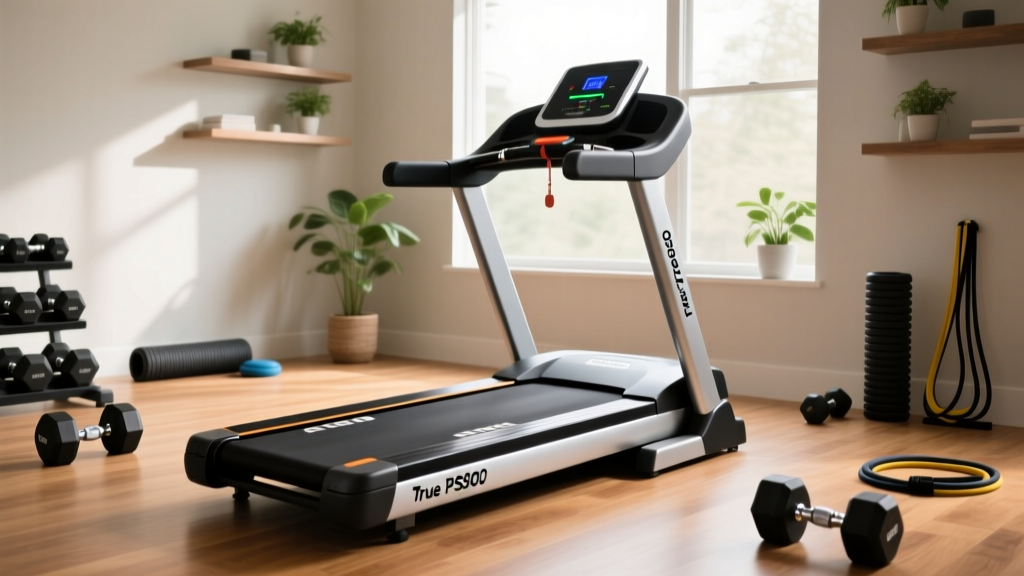
To understand where the True Treadmill PS800 fits into the acoustic landscape, we must establish a baseline. The PS800, a premium light-commercial unit retailing between $4,999 and $5,499, features a robust 4.0 HP DC motor and a 22-inch by 60-inch running surface. When properly maintained, it is remarkably quiet for its class. However, user error and deferred maintenance can rapidly degrade its acoustic profile.
Below is a comparative decibel (dB) matrix of popular home cardio machines, measured at a standard 6.0 mph pace or equivalent moderate resistance, recorded from a distance of three feet.
| Equipment Model | Machine Type | Avg dB (Use) | Peak dB | Primary Noise Source |
|---|---|---|---|---|
| True Treadmill PS800 | Treadmill | 72 dB | 85 dB | Foot-strike impact / Motor hum |
| NordicTrack Commercial 1750 | Treadmill | 76 dB | 88 dB | Deck slap / Cooling fan |
| Sole E95 Elliptical | Elliptical | 58 dB | 65 dB | Drive chain / Pivot joints |
| Concept2 RowErg | Rower | 68 dB | 78 dB | Air flywheel whoosh |
| Peloton Bike+ | Stationary Bike | 45 dB | 52 dB | Magnetic resistance hum |
Note: According to the CDC National Institute for Occupational Safety and Health (NIOSH), prolonged exposure to noise levels above 85 dB can cause hearing damage. While cardio machines rarely sustain these peaks, keeping your equipment below 75 dB is ideal for a comfortable, fatigue-free workout environment.
Common Mistakes That Ruin the True Treadmill PS800 Acoustics
The True PS800 is engineered with premium sound-dampening materials and a heavy-duty steel frame weighing over 350 lbs. Yet, service technicians frequently encounter units that sound like grinding metal. In 90% of cases, the noise is not a manufacturing defect, but the result of three critical user mistakes.
Mistake 1: The Lubrication Fallacy (Silicone on Wax)
The most catastrophic mistake owners make with the True PS800 is attempting to lubricate the running belt with aftermarket silicone sprays. True Fitness utilizes a proprietary wax-infused running belt paired with a wax-impregnated deck. This system is designed to be maintenance-free regarding liquid lubrication. When users apply silicone oil, it mixes with the embedded wax, creating a gummy, abrasive paste. This paste increases friction, forces the 4.0 HP motor to draw excess amperage, and generates a high-pitched squealing noise accompanied by a distinct burning odor.
Mistake 2: Ignoring Subfloor Resonance
Placing a 350-lb treadmill directly onto hardwood floors or standard carpet pads guarantees low-frequency vibration transfer. The PS800's motor generates a low-end hum (around 60-80 Hz). Without proper isolation, this frequency resonates through floor joists, amplifying the perceived noise in rooms directly below the gym. Failing to use a minimum 3/8-inch thick vulcanized rubber anti-vibration mat is a structural oversight that no machine tuning can fix.
Mistake 3: Over-Tensioning the Drive Belt
Inside the motor hood, a ribbed drive belt connects the motor pulley to the front roller. If a user experiences slight belt slippage during heavy sprinting, the instinct is to tighten the rear roller bolts to increase tension on the walking belt. However, over-tensioning the walking belt places massive lateral stress on the front roller bearings and the motor drive belt, resulting in a rhythmic, grinding clicking sound that worsens with speed.
'The leading cause of premature motor failure in high-end treadmills is not the electronics, but mechanical bind caused by users over-tightening the walking belt in a misguided attempt to stop slippage. Proper belt tension should allow you to lift the center of the belt roughly 2 to 3 inches off the deck.'
— Senior Fitness Equipment Technician, Commercial Gym Maintenance Report
Step-by-Step Troubleshooting Guide for PS800 Motor and Deck Noise
If your True Treadmill PS800 has developed an unusual acoustic profile, follow this systematic diagnostic flow to isolate and resolve the issue.
Step 1: Isolate the Frequency and Location
- Low-Frequency Hum (Motor Hood): Usually indicates motor brush wear, cooling fan obstruction, or a failing motor control board capacitor.
- Rhythmic Thumping (Deck Area): Points to a warped walking belt seam, a dented front roller, or debris trapped under the deck.
- High-Pitched Squeal (Rear of Machine): Almost always caused by dry roller bearings, belt misalignment, or the aforementioned silicone-wax contamination.
Step 2: Inspect the 4.0 HP DC Motor Brushes
Unplug the machine and remove the motor hood cover (typically secured by six Phillips-head screws). Locate the DC motor and inspect the carbon brushes. If the carbon blocks are worn down to less than 3/8 of an inch, they will spark and create a crackling electrical noise. Replacement brushes for the PS800 cost approximately $35 to $50 and can be swapped in under 20 minutes using a standard socket set.
Step 3: Check the Front and Rear Roller Bearings
Remove the walking belt entirely. Spin the front and rear rollers by hand. A healthy roller should spin freely for several seconds and come to a gradual, silent halt. If the roller stops abruptly or emits a gritty, metallic scraping sound, the sealed bearings have failed. True PS800 replacement rollers retail for $120 to $180 each. Always replace the walking belt when replacing rollers, as a worn belt will rapidly destroy new roller bearings.
Expert Tip: The 'Walk-Off' Test
To determine if a noise is motor-related or impact-related, perform the walk-off test. Run the treadmill at 3.0 mph and walk on the side rails (do not step on the belt). If the noise persists, the issue is internal (motor, drive belt, or rollers). If the noise disappears, the issue is related to foot-strike impact, deck wear, or subfloor resonance. For more on ergonomic home gym setups, refer to guidelines from the American Council on Exercise (ACE).
How Treadmill Troubleshooting Differs From Ellipticals and Bikes
While the True PS800 requires mechanical belt and motor maintenance, troubleshooting noise on other cardio modalities requires an entirely different framework.
Magnetic Resistance Bikes (e.g., Peloton, Keiser)
Indoor cycling bikes utilize magnetic resistance, meaning there is zero physical friction between the resistance mechanism and the flywheel. If a magnetic bike develops a clicking noise, it is never the resistance system. Instead, troubleshoot the bottom bracket bearings, the pedal threads, or the drive belt tension. A worn Poly-V drive belt will produce a slipping sound under heavy standing climbs, which is resolved by adjusting the tensioner bolt, not by applying lubricants.
Front-Drive Ellipticals (e.g., Sole, Precor)
Ellipticals generate noise primarily at the pivot points and the drive chain. Unlike treadmill belts, elliptical rails and wheel tracks require regular cleaning and specific PTFE-based dry lubricants. A common mistake is using wet lubricants (like WD-40 or standard silicone), which attract dust and pet hair, eventually turning the wheel tracks into a grinding paste that destroys the polyurethane wheels.
Frequently Asked Questions (FAQ)
Does the True Treadmill PS800 require a dedicated electrical circuit?
Yes. Because the PS800 utilizes a 4.0 HP continuous duty motor, it can draw up to 15 amps under peak load (such as heavy incline sprinting). Sharing a 15-amp household circuit with other appliances can cause voltage drops, leading to motor hesitation, erratic speed changes, and a distinct electrical buzzing noise from the lower control board. Always plug the PS800 into a dedicated 20-amp circuit.
How often should I check the belt alignment on the PS800?
You should visually inspect the belt alignment every 90 days. If the belt drifts to the left or right, it will rub against the side trim caps, creating a loud, continuous friction noise. Adjust the rear roller bolts in quarter-turn increments to re-center the belt. For official maintenance schedules, always consult the True Fitness official support documentation.
Can I use a standard yoga mat under the PS800 to reduce noise?
No. Standard PVC or TPE yoga mats are too thin (usually 1/8 to 1/4 inch) and lack the density required to absorb the low-frequency kinetic energy of a 350-lb machine in motion. The mat will compress to zero thickness under the treadmill feet. You must use a high-density, vulcanized rubber mat specifically rated for heavy commercial fitness equipment to achieve meaningful acoustic dampening.
More gear to consider
All reviews
Buying a Treadmill for Backward Treadmill Walking: Step-by-Step

Upgrading From an Older Treadmill? Home Stair Climber Guide

Orangetheory Treadmills Motor Guide: Step-by-Step Horsepower Sizing
Why Does Getting Off a Treadmill Feel Weird? Air vs Assault Bike Layouts

Office Under Desk Treadmill Review: Care & Curved Treadmill Benefits