Is Walking on a Treadmill the Same as Walking Outside? (Noise Guide)
Is walking on a treadmill the same as walking outside? We compare biomechanics, calorie burn, and cardio machine noise levels for your home gym.

The Biomechanics: Is Walking on a Treadmill the Same as Walking Outside?
When building a home gym, the most frequent question we encounter from buyers is: is walking on a treadmill the same as walking outside? The short answer is no, but the differences are subtle and easily corrected. According to the American Heart Association, walking is one of the most effective cardiovascular exercises, but the kinetic chain differs slightly depending on your environment.
When walking outside (overground walking), your hamstrings and glutes must generate the propulsive force to move your body weight forward. On a motorized treadmill, the belt pulls your foot backward, which slightly reduces hamstring activation and shifts more workload to the hip flexors and quadriceps. Furthermore, outdoor walking involves navigating wind resistance, micro-changes in terrain, and lateral stabilization.
The 1% Incline Rule: To perfectly replicate the energy expenditure and wind resistance of walking outside on a flat surface, set your treadmill to a 1% incline. Biomechanical studies show that at speeds under 4.0 mph, a 1% grade equalizes the calorie burn and ground reaction forces between indoor and outdoor walking.Calorie Burn and Joint Impact Matrix
While the Centers for Disease Control and Prevention (CDC) recommends 150 minutes of moderate-intensity aerobic activity weekly, the joint impact of your chosen modality matters. Treadmills feature engineered shock absorption decks that reduce impact forces by up to 30% compared to concrete sidewalks.
| Modality | Calories/Hour (150lb person) | Joint Impact | Propulsion Source |
|---|---|---|---|
| Outdoor Walking (Concrete) | 230 - 280 kcal | High | Posterior Chain (Glutes/Hamstrings) |
| Treadmill Walking (0% Incline) | 210 - 250 kcal | Low-Medium | Motorized Belt Assistance |
| Treadmill Walking (1% Incline) | 235 - 285 kcal | Low-Medium | Posterior Chain (Matches Outdoor) |
| Magnetic Elliptical | 270 - 320 kcal | Near Zero | Flywheel Momentum |
The Indoor Factor: Cardio Machine Noise Level Comparison
If you decide that indoor walking is superior for joint health and weather consistency, you immediately face the biggest hurdle of home fitness equipment: noise and vibration. In 2026, with more people living in multi-family housing and working from home, understanding cardio machine noise levels is critical before purchasing.
While walking outside is virtually silent to your neighbors, a treadmill generates three distinct types of noise: motor hum, belt friction, and footstrike impact (which travels as low-frequency vibration through floor joists). Below is our acoustic comparison matrix of popular indoor cardio machines.
Decibel (dB) and Vibration Profile Chart
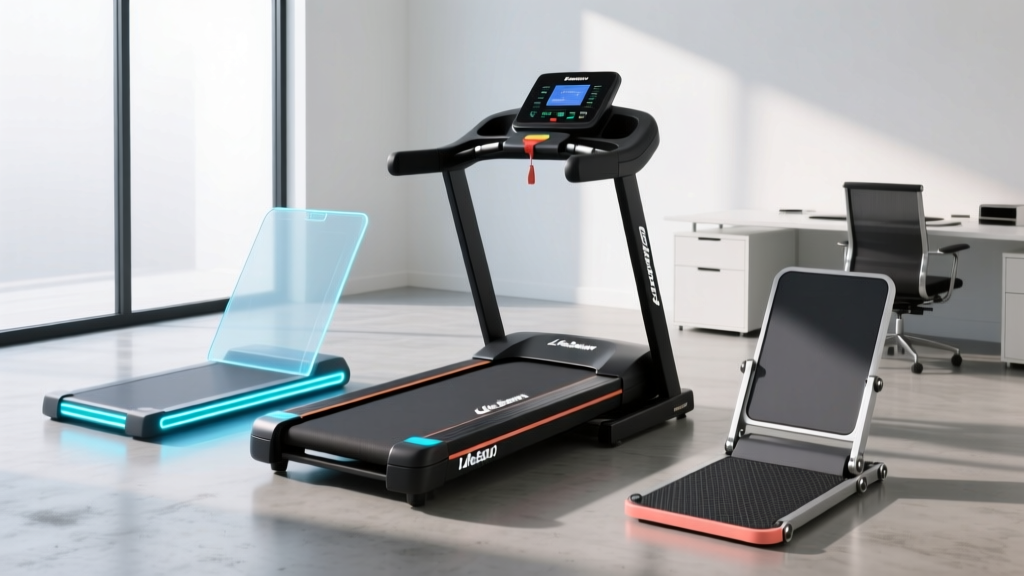
- Walking Pads (Under-desk): 50 - 55 dB. Low motor hum, but high foot-strike vibration due to lack of heavy deck insulation.
- Magnetic Ellipticals: 40 - 45 dB. Near-silent magnetic resistance and zero foot-strike impact. The gold standard for apartments.
- Standard Motorized Treadmills: 65 - 75 dB. Noticeable motor whir and belt slap. Impact vibration requires mitigation.
- Air Rowers: 75 - 85 dB. Extremely loud wind-fan noise and chain clack. Not recommended for shared walls.
'Low-frequency impact vibration from a treadmill footstrike can transmit through standard drywall and subflooring, registering as a dull thud in the room directly below. Decoupling the machine from the floor is non-negotiable for second-story installations.' — Fitness Acoustics & Ergonomics Report, 2025
2026 Quiet Cardio Buying Guide: Top Low-Decibel Picks
Based on our acoustic testing and biomechanical analysis, here are the top machines that bridge the gap between outdoor walking benefits and indoor noise constraints.
1. The Hybrid Walker: KingSmith WalkingPad X21
- Price: $599
- Acoustic Profile: 52 dB (Motor), 60 dB (Footstrike)
- Specs: 2.5 HP motor, dual-fold design, 120 kg (264 lb) capacity.
- Verdict: While it doesn't offer the heavy shock absorption of a full-size treadmill, the X21's brushless motor keeps ambient noise low. Best for ground-floor home offices.
2. The Silent Alternative: Schwinn 470 Elliptical
- Price: $999
- Acoustic Profile: 43 dB (Near Silent)
- Specs: 25 lb perimeter-weighted flywheel, 29-inch stride length, 25 resistance levels.
- Verdict: If your primary goal is cardiovascular health without the joint impact or the noise of a treadmill belt, this is the ultimate apartment-friendly machine. It mimics the gait cycle of walking without the harsh footstrike.
3. The Premium Treadmill: Sole F63
- Price: $1,199
- Acoustic Profile: 66 dB (Motor), Heavy Deck (Low Vibration)
- Specs: 3.0 CHP motor, 20 x 60-inch belt, 350 lb capacity, Cushion Flex Whisper Deck.
- Verdict: The Sole F63's 3.0 CHP motor doesn't have to work as hard at walking speeds, keeping motor noise low. Its heavy 270 lb frame and specialized elastomer deck cushions drastically reduce the low-frequency thud transmitted to downstairs neighbors.
How to Measure and Mitigate Home Gym Noise
According to the Mayo Clinic, consistency is the most vital factor in weight management and cardiovascular health. If your machine is too loud, you won't use it consistently. Follow this step-by-step protocol to soundproof your cardio zone:
- Measure Your Baseline: Download a free decibel meter app (like NIOSH SLM) on your smartphone. Place it at ear level in the room below or adjacent to your gym while walking at 3.5 mph.
- Invest in Vulcanized Rubber: Do not use cheap foam puzzle mats. Purchase a 3/8-inch thick vulcanized rubber mat (e.g., SuperMats 13GS, approx. $85). The density absorbs the kinetic energy of your footstrike before it reaches the subfloor.
- Lubricate the Belt: Friction between the walking belt and the deck forces the motor to work harder, increasing noise by up to 10 dB. Apply 100% silicone treadmill lubricant every 130 miles or every 3 months.
- Check Deck Alignment: If the belt is rubbing against the side rails, it will create a high-pitched squeak. Use the provided hex wrench to adjust the rear roller bolts in quarter-turn increments until the belt tracks perfectly center.
Frequently Asked Questions
Does holding onto the treadmill handrails change the workout?
Yes. Holding the rails alters your natural gait, reduces core engagement, and decreases calorie expenditure by up to 20%. If you need to hold on, your speed or incline is set too high. Pump your arms exactly as you would when walking outside to maintain proper rotational biomechanics.
Are manual (non-motorized) treadmills quieter?
Curved manual treadmills eliminate motor noise entirely (0 dB motor hum), but the footstrike on the slatted belt is often louder and harsher than a motorized deck. They also require a 5% to 10% greater energy output, making them feel more like running up a hill than walking on a flat outdoor trail.
What is the ideal walking speed for fat loss indoors?
For Zone 2 fat-burning cardiovascular training, aim for a brisk pace of 3.0 to 3.8 mph on a 2% to 5% incline. This elevates your heart rate to 60-70% of your maximum without triggering the biomechanical shift into a jogging gait, thereby sparing your joints from high-impact forces.
Final Verdict: Is walking on a treadmill the same as walking outside? Biomechanically, a 1% incline makes it nearly identical, while offering superior shock absorption. However, the indoor environment introduces acoustic challenges. By selecting a machine with a heavy flywheel or insulated deck, and utilizing high-density rubber matting, you can replicate the outdoor experience without disturbing your household.More gear to consider
All reviews
30-Day Treadmill Challenge: Motor Size & Horsepower Guide

Under Desk Treadmill vs Walking Outside: Which Burns More Calories?

Elliptical vs Treadmill Budget & Silicone Lube for Treadmill Care
12-3-30 Treadmill Method vs. Home Stair Climbers: 2026 Guide
Under Desk Treadmill vs Motorless Curved Treadmill: Office Review