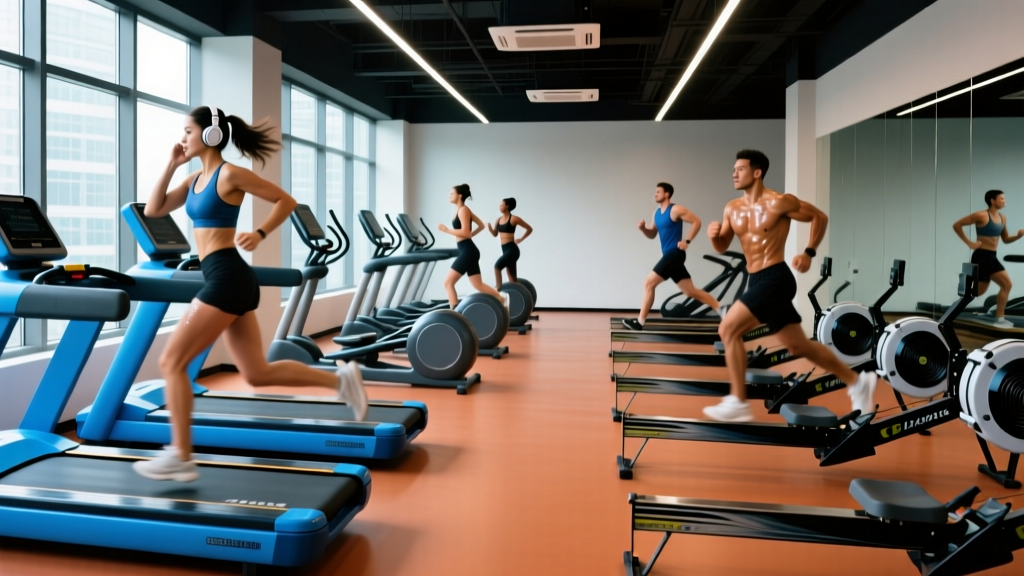
Treadmill Running vs Road: Walking Pad vs Treadmill
We settle the treadmill running vs road debate by comparing standard treadmills and walking pads to find the best indoor alternative for 2026.

The Biomechanics: Treadmill Running vs Road Reality
The debate over treadmill running vs road running has persisted for decades. Outdoor running demands that your hamstrings and glutes actively pull your body mass forward over uneven terrain while battling wind resistance. Conversely, traditional treadmills assist with leg turnover via a motorized belt, altering your kinetic chain. However, as we move through 2026, the explosion of compact walking pads has introduced a third variable to the home cardio market.
Can a sub-$500 folding walking pad actually replicate the physiological benefits of road running? Or do you need a full-sized, deck-cushioned standard treadmill to bridge the gap? In this head-to-head review, we dissect the biomechanics, hardware limitations, and real-world failure modes of standard treadmills versus walking pads to determine which machine truly serves as the ultimate indoor substitute for the open road.
Expert Insight: The 1% Incline RuleAccording to foundational sports science research, setting a standard treadmill to a 1% incline accurately offsets the lack of air resistance, making the energy cost identical to outdoor road running at speeds up to 10 mph. Because 95% of walking pads on the market lack any incline mechanism, they inherently under-replicate the caloric and muscular demand of flat road running.
Head-to-Head: Standard Treadmill vs. Walking Pad Contenders
To ground this comparison in reality, we are evaluating the hardware specifications of the most popular indoor setups against the baseline of outdoor asphalt.
Contender 1: Horizon Fitness T101 (Standard Treadmill)
Price: $699 | Motor: 2.5 CHP | Belt: 20" x 55" | Top Speed: 10 mph
The Horizon T101 represents the entry-level standard for dedicated indoor runners. It features a 3-zone variable durometer cushioning system. The deck is softer at the strike zone to mimic the give of a rubberized outdoor track, but firmer at the toe-off zone to provide energy return. This specific shock absorption profile is critical; as noted by the Cleveland Clinic, proper deck cushioning reduces joint impact forces by up to 30% compared to concrete sidewalks.
Contender 2: KingSmith WalkingPad R2 (Folding Pad)
Price: $499 | Motor: 2.5 HP (Peak) | Belt: 17.3" x 47.2" | Top Speed: 7.5 mph
The WalkingPad R2 is a marvel of spatial engineering, folding to a mere 10 inches thick. However, its 47-inch belt length introduces a severe biomechanical constraint. A standard road running stride for an adult male at a 9:00/mile pace requires roughly 50 to 54 inches of clearance. On the R2, users are forced to artificially shorten their stride or risk stepping on the rear motor housing, leading to altered hip flexor engagement and potential IT band friction.
Contender 3: UREVO Strol 2E (2-in-1 Under-Desk)
Price: $279 | Motor: 2.25 HP (Peak) | Belt: 16.5" x 41.3" | Top Speed: 7.6 mph
Marketed heavily for the work-from-home demographic, the Strol 2E includes a removable handrail. While excellent for accumulating Non-Exercise Activity Thermogenesis (NEAT) steps during the workday, its 41-inch belt and lack of heavy-duty elastomers make it strictly a walking machine. Attempting to run on this unit at 6 mph results in a jarring heel-strike that transfers kinetic shock directly to the lumbar spine.
Spec & Biomechanics Comparison Matrix
| Feature | Road Running (Baseline) | Horizon T101 (Standard) | WalkingPad R2 (Pad) |
|---|---|---|---|
| Stride Accommodation | Unlimited | Up to 55" (Excellent) | Max 47" (Restrictive) |
| Impact Absorption | Variable (Asphalt/Dirt) | 3-Zone Elastomer Cushions | Minimal (Thin MDF Deck) |
| Propulsion Mechanics | Active (Hamstring/Glute) | Passive (Belt-assisted) | Passive (Belt-assisted) |
| Incline Capability | Natural Terrain Variances | 0% to 10% Motorized | 0% (Fixed Flat) |
Failure Modes & Edge Cases: What Breaks First?
When comparing standard treadmills to walking pads, understanding motor duty cycles is where the true value of your investment is determined. The fitness industry is notoriously opaque regarding motor specifications.
The CHP vs. Peak HP Trap
Standard treadmills like the Horizon T101 advertise Continuous Horsepower (CHP). A 2.5 CHP motor can sustain a 180 lb runner at 7 mph for two hours without thermal throttling. Walking pads, however, almost exclusively advertise Peak Horsepower. A walking pad claiming a "2.5 HP motor" often houses a 1.0 CHP motor.
Warning: If a user weighing over 160 lbs attempts to jog at 6.0 mph on a standard walking pad for more than 35 continuous minutes, the internal thermal sensor will trigger a safety shutoff to prevent the logic board from melting. Walking pads are engineered for 4,000 steps of intermittent walking, not sustained Zone 2 cardio sessions.
Belt Tension and Slippage
On the road, your foot grips the pavement. On a treadmill, belt tension is everything. Standard treadmills use heavy-duty rear roller adjustment bolts to keep the belt tracking perfectly. Walking pads utilize low-profile, enclosed rollers that are incredibly difficult to access. By month six of daily use, walking pad belts frequently drift to the left or right, causing the seam to catch on the side rails—a failure mode that requires complete belt replacement and voids most manufacturer warranties.
Decision Framework: Which Indoor Setup Replaces the Road?
The American Heart Association recommends at least 150 minutes of moderate-intensity or 75 minutes of vigorous aerobic activity per week. How you achieve this indoors depends entirely on your physiological goals.
- Choose the Standard Treadmill (Horizon T101) if: You are training for a 10K, half-marathon, or marathon. You need to sustain heart rates above 140 BPM, utilize incline intervals to mimic road hills, and require a 55-inch belt to maintain your natural road-running cadence without altering your biomechanics.
- Choose the Walking Pad (KingSmith R2 / UREVO) if: Your primary goal is combating sedentary office work. Walking pads are unparalleled for NEAT (Non-Exercise Activity Thermogenesis). They will not replace a 5-mile road run, but they will easily help you achieve 10,000 daily steps while answering emails, burning an extra 300-400 calories daily without the joint degradation of high-impact running.
Frequently Asked Questions
Does running on a walking pad burn the same calories as the road?
No. As detailed in comprehensive analyses by Runner's World, outdoor running engages more stabilizing muscles and faces wind resistance. Furthermore, because walking pads lack incline and restrict stride length, your caloric expenditure at a 6 mph pace on a walking pad will be roughly 8-12% lower than running at the same speed on an outdoor road.
Can I safely run in bare feet on a walking pad?
It is highly discouraged. Walking pad decks consist of thin MDF wood covered by a low-density PVC belt. Without the thick rubber shock-absorbing layers found on standard treadmills, the repetitive impact of a barefoot heel strike on a walking pad can quickly lead to plantar fasciitis or calcaneal stress fractures.
How do I maintain a walking pad belt to prevent edge-fraying?
You must apply 100% silicone treadmill lubricant every 40 to 60 miles of use. Because walking pad belts are narrower (usually 16-17 inches), foot placement is less forgiving, creating concentrated friction zones in the exact center of the deck. Lift the belt, apply the lubricant in a zigzag pattern down the center, and run the machine at 2 mph for 3 minutes to distribute the oil evenly.
More gear to consider
All reviews
Elliptical vs Treadmill: Adapting the 10 3 30 Treadmill Routine
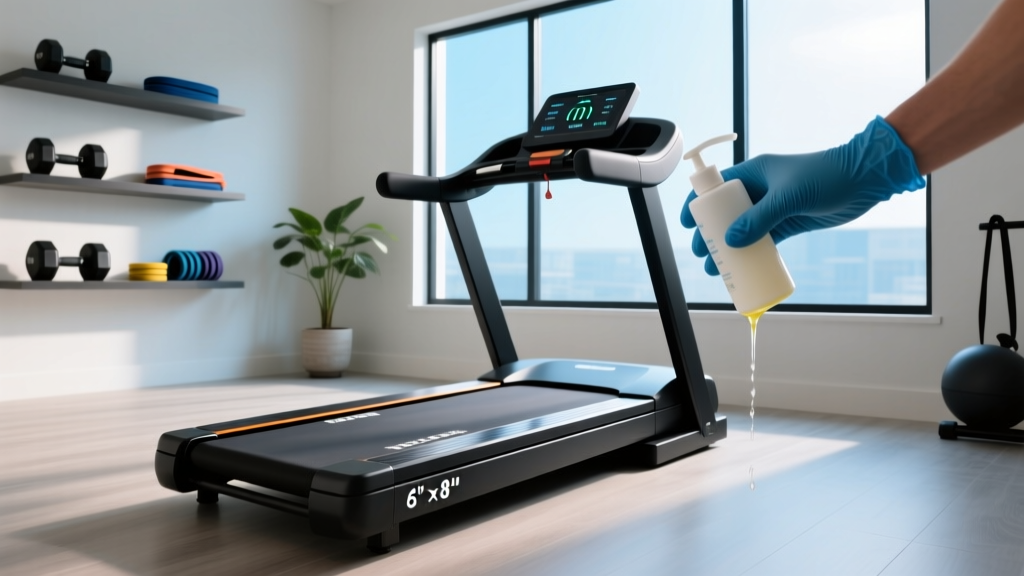
What Size Treadmill Do I Need? Space Layout and Belt Care

Horizon T81 Treadmill vs Under Desk Walkers: Office Use & Care

2026 Trends: Maintaining a Treadmill with 400 lb Capacity Belt
Bike vs Treadmill: Step-by-Step Feature Buying Guide