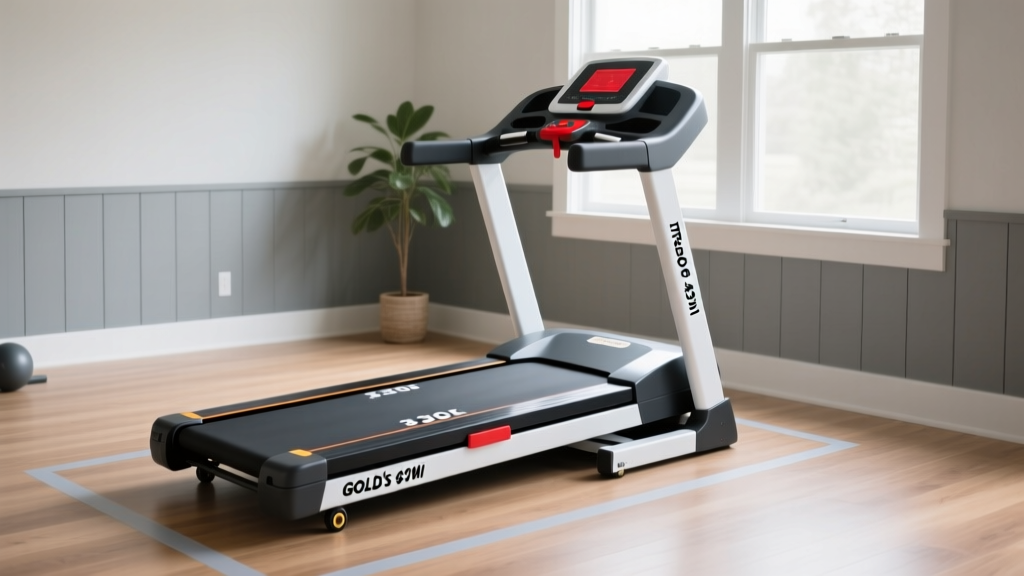
Maximize Treadmill Profit: Motor Size & Horsepower Troubleshooting
Protect your treadmill profit and ROI. Learn how to size motors correctly, troubleshoot stalling, and avoid the Peak HP trap with our expert guide.

When calculating your treadmill profit—whether that means the resale margin on a refurbished unit, the long-term ROI of a commercial gym fleet, or simply the cost-per-use longevity of a $3,000 home gym investment—the drive motor is the single most critical variable. In 2026, with replacement part costs rising and supply chains for OEM control boards remaining volatile, a mismanaged or undersized motor can instantly erase your equipment's financial value. A blown motor doesn't just mean a broken machine; it means a total loss of treadmill profit.
This guide bypasses the marketing fluff to deliver a hard-nosed, expert-level troubleshooting and sizing framework. We will decode continuous versus peak horsepower, diagnose stalling issues with a multimeter, and outline the exact maintenance protocols required to extend motor life and protect your bottom line.
The 'Peak HP' Trap: Mistakes That Destroy Treadmill Profit
The most common mistake buyers and refurbishers make is conflating Peak Horsepower (HP) with Continuous Duty Horsepower (CHP). Manufacturers often use Peak HP in bold print to make entry-level treadmills appear more powerful than they are. Peak HP measures the absolute maximum output the motor can hit for a fraction of a second before the thermal cutoff switch trips. Continuous Duty Horsepower (CHP), however, measures the power the motor can sustain indefinitely during a standard workout.
Warning: A treadmill advertised as '4.0 Peak HP' often houses a 2.0 CHP or 2.25 CHP motor. If a 220-pound user runs on this machine, the motor will overwork, draw excessive amperage, overheat the lower control board, and eventually fry the windings. This catastrophic failure is the number one killer of resale treadmill profit.According to Consumer Reports, buyers should entirely ignore Peak HP and base their purchasing and refurbishing decisions strictly on the CHP rating, matched against the user's weight and intended activity level.
Sizing the Motor: User Weight and Activity Matrix
To protect your investment, you must match the CHP to the biomechanical load. Running generates a ground reaction force of 2.5 to 3 times the user's body weight. The motor must overcome this downward force to keep the belt moving at a consistent speed. Below is the 2026 industry-standard sizing matrix used by commercial fitness equipment technicians.
| User Weight | Walking (Min CHP) | Jogging (Min CHP) | Running (Min CHP) |
|---|---|---|---|
| Under 150 lbs | 2.0 CHP | 2.5 CHP | 2.75 CHP |
| 150 - 200 lbs | 2.5 CHP | 2.75 CHP | 3.0 CHP |
| 200 - 250 lbs | 3.0 CHP | 3.25 CHP | 3.5 CHP |
| 250+ lbs | 3.5 CHP | 4.0 CHP | 4.0+ CHP (or AC) |
For context, premium home models like the Sole F80 and NordicTrack Commercial 1750 utilize 3.5 CHP motors, making them safe for runners up to 300+ lbs. Entry-level models like the Horizon T101 feature a 2.5 CHP motor, which is strictly for walking and light jogging.
Troubleshooting Motor Stalling and Thermal Shutoffs
If a treadmill belt hesitates, stutters underfoot, or throws an E1/E2 error code, the motor is either failing or being starved of current due to excessive friction. Do not immediately replace the motor. Follow this diagnostic sequence to isolate the failure point and save your treadmill profit margin from unnecessary parts costs.
Step 1: The Belt Tension and Friction Test
Over-tightened belts and dry decks force the motor to draw excess amperage, triggering the thermal overload switch.
- Tension Check: Turn off and unplug the machine. Lift the running belt in the exact center of the deck. It should raise exactly 2 to 3 inches. If it lifts higher, it is too loose (causing slippage); if lower, it is too tight (straining the motor bearings).
- Deck Friction Check: Remove the motor hood. Manually push the belt by hand. If it requires significant force to move, the deck lacks lubrication. Apply 100% pure silicone treadmill lubricant (never use WD-40 or petroleum-based sprays, which destroy the PVC belt backing).
Step 2: Multimeter Motor Windings Test
If the belt moves freely by hand but the motor hums and stalls under power, the internal windings may be shorted or open. According to repair experts at Treadmill Doctor, you can verify this with a standard digital multimeter.
- Disconnect the motor from the lower control board.
- Set your multimeter to measure Ohms (Resistance).
- Place the probes on the motor's positive and negative terminals (usually red and black wires on a DC motor).
- Interpretation: A healthy 90V-130V DC treadmill motor will typically read between 1.0 and 5.0 Ohms. If the meter reads 'OL' (Open Loop) or infinite resistance, the internal winding is broken. If it reads near 0.0 Ohms, the winding is shorted. In either case, the motor is dead and must be replaced.
Step 3: Inspect the Carbon Brushes
DC treadmill motors use carbon brushes to conduct electricity to the commutator. Over 5 to 7 years of heavy use, these brushes wear down. If they become shorter than 3/8 of an inch, they will lose contact, causing intermittent stalling and a distinct 'ozone' or burning electrical smell. Replacing carbon brushes costs about $25, whereas a new motor costs $300 to $600. Checking the brushes is a mandatory step to protect your refurbishment profit.
AC vs. DC Motors: The Commercial Profit Margin
If you are outfitting a commercial facility or dealing in high-end equipment flipping, understanding the difference between Alternating Current (AC) and Direct Current (DC) motors is vital for forecasting long-term treadmill profit.
DC Motors (Home/Light Commercial)
- Voltage: 90V - 130V DC
- Lifespan: 3,000 - 5,000 hours
- Replacement Cost: $300 - $600
- Common Models: Sole, NordicTrack, ProForm, Horizon
- Verdict: Cost-effective upfront, but requires periodic brush replacement and belt maintenance to avoid premature death.
AC Motors (Heavy Commercial)
- Voltage: 220V AC
- Lifespan: 20,000 - 30,000+ hours
- Replacement Cost: $1,200 - $2,500+
- Common Models: Life Fitness Club Series, Precor TRM 731, Matrix
- Verdict: Brushless and virtually maintenance-free. The high initial cost is offset by a decade of zero motor downtime, maximizing commercial profit.
When to Replace vs. Repair: The Refurbisher's Framework
For those buying broken treadmills to flip for a treadmill profit, knowing when to abandon a motor repair is crucial. Use this decision matrix:
"Never pair a brand-new motor with a scored or pitted commutator flywheel, and never install a used motor without testing the amp draw under a physical load. A motor that spins freely off the belt but draws over 15 amps under a 150-pound load is a ticking time bomb for your lower control board." — Senior Fitness Equipment Technician
- Repair: If the motor windings test fine (1-5 Ohms) but the machine stalls, replace the carbon brushes ($25) and the lower control board MOSFETs ($80). Total cost: $105. High profit margin.
- Replace: If the motor smells burnt, reads 'OL' on the multimeter, or the internal permanent magnets have cracked (indicated by a loud grinding noise even when spun by hand). Source a refurbished OEM motor for $150-$200 or a new aftermarket equivalent for $300.
- Scrap: If the treadmill requires a proprietary AC motor (e.g., specific Life Fitness or Technogym models) and the OEM replacement quote exceeds $1,800, the unit is generally unprofitable to refurbish unless you are parting it out for consoles and uprights.
Preventative Maintenance to Secure Long-Term ROI
The cheapest way to maximize treadmill profit is to prevent motor failure in the first place. Implement these three non-negotiable maintenance protocols:
- Vacuum the Motor Compartment Quarterly: Treadmill motors generate carbon dust from the brushes. This dust is conductive. If it accumulates on the lower control board or inside the motor housing, it will cause a short circuit. Use a shop-vac with a brush attachment to clean the motor bay every 90 days.
- Verify Amp Draw Annually: Use a clamp meter on the main power cord. A healthy treadmill walking at 3 MPH should draw between 2 to 4 amps. If it consistently draws 8+ amps, the deck is dry, the belt is over-tightened, or the motor bearings are seizing. Address the friction immediately before the motor burns out.
- Surge Protection: Never plug a high-end treadmill directly into a wall outlet shared with heavy appliances. Use a commercial-grade surge protector (rated for at least 4000 Joules) to protect the motor's control board from voltage spikes, which are a leading cause of warranty voids.
By respecting the physics of Continuous Duty Horsepower, rigorously testing components before replacing them, and adhering to strict friction-management protocols, you ensure that your cardio equipment remains an asset rather than a liability. Whether you are managing a fleet of commercial runners or flipping a Sole F63 on the secondary market, mastering motor troubleshooting is the ultimate key to securing your treadmill profit.
More gear to consider
All reviews
Treadmill Slope Trends vs Stationary Bike Types: 2026 Market Data

Elliptical vs Treadmill: 2026 Trends & Treadmill Static Electricity
Running on Treadmill Hurts Knees? Home Stair Climber Guide & Fixes
The Patricia Tarka Treadmill Effect: 2026 Under-Desk Office Trends
Top Folding Treadmills for a 20-Minute Treadmill Workout in 2026