Elliptical vs Treadmill: Maintenance for a 7 Min Mile Pace
Compare elliptical vs treadmill maintenance for home cardio. Learn how sustaining a 7 min mile pace on a treadmill impacts motor longevity and deck care.

The Biomechanical Toll: High-Speed Running vs. Low-Impact Gliding
Choosing between an elliptical and a treadmill for your home gym is rarely just a matter of joint comfort or calorie burn; it is fundamentally a decision about long-term mechanical upkeep. While both machines deliver exceptional cardiovascular benefits—aligning with the American Heart Association's guidelines for vigorous aerobic activity—their internal engineering dictates vastly different maintenance lifecycles.
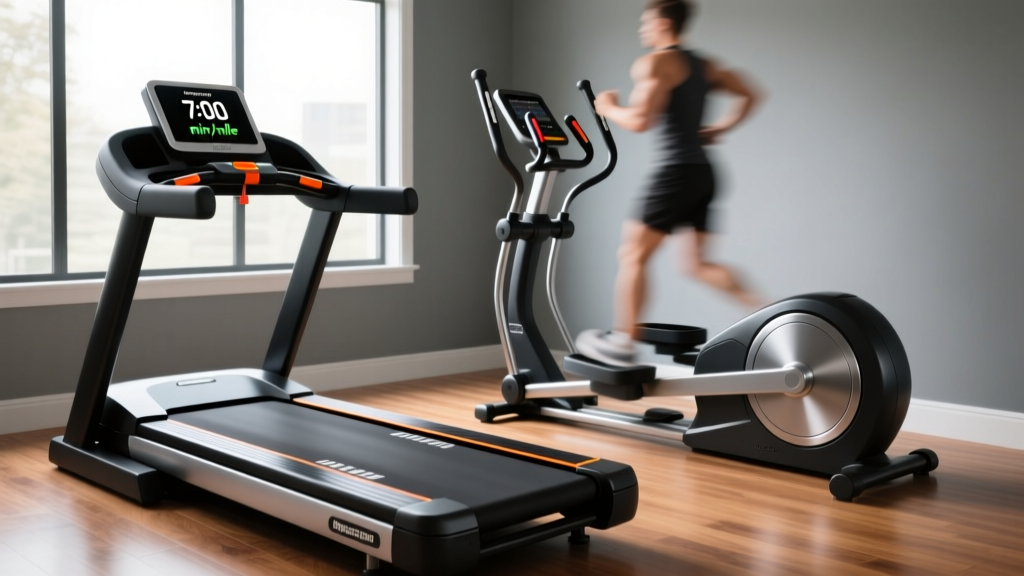
The divergence in wear-and-tear becomes glaringly obvious when you introduce high-intensity variables. Sustaining a 7 min mile pace on treadmill equipment (roughly 8.5 mph) generates immense kinetic friction and thermal stress on the drive system. Conversely, an elliptical relies on cyclical crank loading and magnetic resistance, which bypasses belt friction entirely but introduces severe shear stress on pivot joints. This guide breaks down the exact maintenance protocols, failure modes, and 5-year cost of ownership for both machines when subjected to rigorous home use.
Quick Summary: The Wear & Tear Divide
- Treadmills: High friction. Requires strict belt lubrication, deck inspection, and motor cooling management, especially at speeds exceeding 7.0 mph.
- Ellipticals: High cyclical load. Requires pivot joint greasing, drive belt tensioning, and dust mitigation around the magnetic flywheel.
Treadmill Maintenance: Surviving the 8.5 MPH Threshold
Running at a 7-minute mile pace demands a continuous speed of 8.5 mph. At this velocity, a runner's foot strikes the deck approximately 170 times per minute. If you are using a treadmill with a sub-3.0 Continuous Horsepower (CHP) motor, the Pulse Width Modulation (PWM) controller must work overtime to maintain belt speed against the sudden deceleration of each footstrike. This is where catastrophic failure modes begin.
Motor and Drive System Stress
When sustaining a 7 min mile pace on treadmill models with inadequate continuous horsepower, the motor draws excessive amperage. This heat buildup degrades the internal copper windings and can melt the solder joints on the motor control board. To prevent this, high-speed runners must invest in a treadmill with a minimum 4.0 CHP motor (such as the Precor TRM 731 or high-end NordicTrack Commercial series) and ensure the machine is plugged directly into a dedicated 15-amp or 20-amp wall outlet, never a surge protector or extension cord, to prevent voltage drops.
Belt, Deck, and Lubrication Protocols
Friction is the enemy of the treadmill deck. A dry belt rubbing against a phenolic-coated deck at 8.5 mph generates enough heat to delaminate the deck's top layer within months.
- Inspection: Slide your hand under the belt in the primary footstrike zone. It should feel slick. If it feels dry or gritty, immediate lubrication is required.
- Lubrication: Apply exactly 0.5 oz of 100% pure silicone treadmill lubricant per side. Never use WD-40 or petroleum-based oils, which will destroy the rubber belt backing.
- Tensioning: The belt should lift exactly 2 to 3 inches off the deck in the center. If it slips during a sprint, use an Allen wrench to turn both rear roller adjustment bolts exactly one-quarter (1/4) turn clockwise. Overtightening will instantly destroy the roller bearings.
Elliptical Maintenance: Joint Care and Drive Alignment
Ellipticals eliminate the harsh impact of running, a benefit heavily documented in sports medicine literature regarding joint preservation. However, the mechanical complexity of an elliptical's linkage system requires a different breed of maintenance. The machine features dozens of moving parts connected by pivot points that endure continuous lateral and vertical shear forces.
Pivot Points and Bushing Degradation
Budget ellipticals (under $800) utilize nylon bushings at the pedal arm joints. Under heavy, high-cadence use, these bushings compress and deform, resulting in the dreaded "elliptical click" and a wobbly pedal feel. Premium machines (like the Sole E95 or Bowflex Max Trainer series) use sealed steel ball bearings.
- For Nylon Bushings: Disassemble the pivot joint every 6 months and apply a generous layer of PTFE (Teflon) grease. Avoid standard greases that attract dust and form an abrasive paste.
- For Sealed Bearings: Listen for grinding. Sealed bearings cannot be regreased; if they fail (usually around year 4 or 5 of heavy use), the entire pedal arm assembly must be replaced (typically $85–$140 per side).
Magnetic Resistance and Flywheel Upkeep
Most modern ellipticals use eddy-current magnetic resistance. The magnet moves closer to or further from the metal flywheel to change the load. The gap between the magnet and the flywheel is highly susceptible to household dust and pet hair. If debris builds up in this gap, it causes micro-stutters in the resistance, leading to a jerky stride. Use a can of compressed air to blow out the flywheel housing every 90 days.
Cost of Ownership: 5-Year Maintenance Matrix
To understand the true financial commitment of home cardio, we must look beyond the initial purchase price. Below is a projected 5-year maintenance matrix for a high-quality home treadmill versus a premium elliptical, assuming 5 hours of vigorous use per week.
| Maintenance Task | Treadmill Frequency | Elliptical Frequency | Est. 5-Year Cost |
|---|---|---|---|
| Belt Lubrication / Pivot Greasing | Every 3 months | Every 6 months | Tread: $45 / Ellip: $20 |
| Belt / Drive Belt Replacement | Year 3 or 4 | Year 4 or 5 | Tread: $150 / Ellip: $60 |
| Deck Replacement | Year 4 (if unlubricated) | N/A | Tread: $250+ / Ellip: $0 |
| Motor / Control Board Failure | Risk increases at >8mph | Rare (Magnetic) | Tread: $400 / Ellip: $0 |
| Total Estimated Out-of-Pocket Maintenance (5 Years) | Tread: $195 - $845 / Ellip: $80 | ||
Troubleshooting Common High-Intensity Failure Modes
Even with meticulous care, high-intensity home cardio sessions will eventually expose mechanical weaknesses. Here is how to diagnose and resolve the most common issues specific to each machine type.
Treadmill: The Mid-Run Belt Hesitation
Symptom: When pushing for a 7 min mile pace, the belt momentarily stutters or slows down upon footstrike, then surges forward.
Diagnosis: This is rarely a belt tension issue. It is almost always a sign of a failing motor control board or excessive deck friction causing the motor to pull too many amps, triggering the PWM board's thermal protection micro-throttle.
Fix: First, perform the "tug test" on the belt with the machine off. If it is incredibly difficult to move by hand, the deck is dry or worn through the phenolic coating. Flip the deck (most are double-sided) or replace it. If the deck is slick but the hesitation persists, the control board capacitors are failing and the board must be replaced.
Elliptical: The Lateral Pedal Sway
Symptom: During high-resistance climbing intervals, the pedals wobble side-to-side, creating a clicking noise near the base of the upright mast.
Diagnosis: The main crank axle bearings or the stabilizer bar bushings have worn out due to uneven weight distribution during heavy pedaling.
Fix: Remove the plastic side shrouds. Inspect the crank axle for lateral play. If the axle wiggles, the internal bearings must be pressed out and replaced. Concurrently, check the stabilizer bar at the bottom of the mast; tightening the tension bolts by 1/2 turn usually eliminates the base click.
"The longevity of your cardio equipment is directly tied to the environment it lives in. A treadmill placed in a humid garage will suffer from deck warping and motor rust, while an elliptical kept in a carpeted bedroom will ingest microscopic fibers into its flywheel, eventually choking the magnetic resistance mechanism."
Final Verdict: Which Machine Lasts Longer?
When evaluating the CDC's physical activity recommendations against the mechanical reality of home gym equipment, the elliptical is the undisputed champion of low-maintenance longevity. Because it lacks a high-friction belt, a wearable deck, and a high-amp draw motor, a premium elliptical can easily endure a decade of heavy use with nothing more than occasional joint greasing and dusting.
However, if your training goals require you to sustain a 7 min mile pace on treadmill hardware for interval training or marathon prep, the treadmill is non-negotiable. To ensure it survives the rigors of high-speed running, you must treat it as a high-performance machine: invest in a 4.0 CHP motor, adhere to a strict 90-day silicone lubrication schedule, and keep the deck immaculately clean. By respecting the mechanical limits of your equipment, you protect both your investment and your training consistency.
More gear to consider
All reviews
Cardio Noise Comparison: Setup & Horizon Fitness Treadmill Lube Belt

Best Under Desk Treadmills & Treadmill Dolly Setups for 2026

Elliptical vs Treadmill: MaxKare Treadmill Review & 2026 Picks
Echelon Stride-6 Treadmill vs High-HP Motors: Sizing Guide
Rowing Machine Guide & Technique: Surge Protector for Treadmill Tips