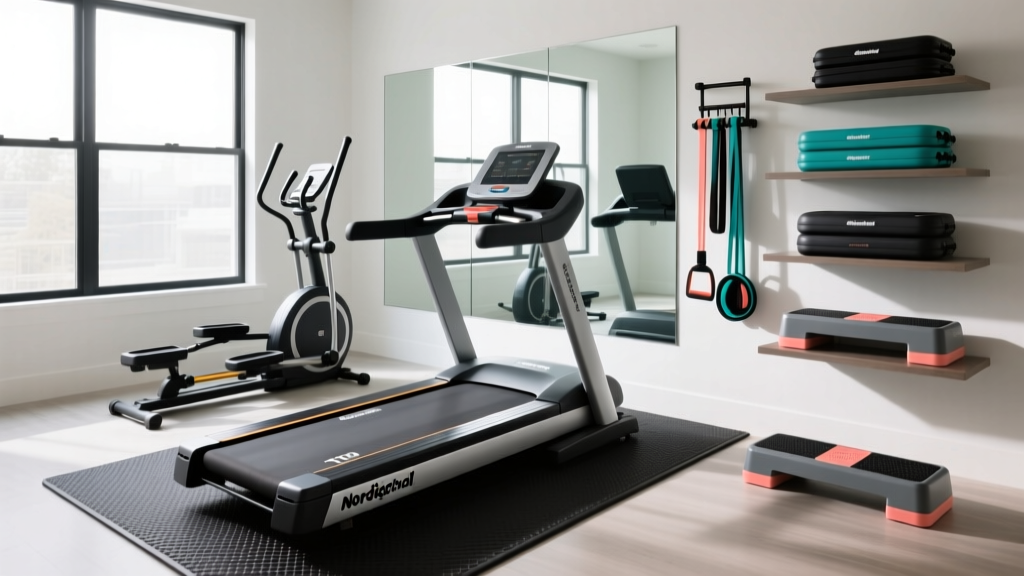
What Does Pace Mean on a Treadmill? Plus Cardio Noise Comparisons
Learn what pace means on a treadmill, how it differs from speed, and explore our 2026 cardio machine noise level comparison to find the quietest equipment.

What Does Pace Mean on a Treadmill?
When stepping onto a modern cardio deck, users are immediately bombarded with metrics: heart rate, incline, calories, and speed. However, a common point of confusion for new runners is the distinction between speed and pace. If you have ever found yourself asking, what does pace mean on a treadmill, you are not alone. While the treadmill console typically defaults to displaying speed (miles per hour or kilometers per hour), 'pace' is the metric most outdoor runners and marathoners use to gauge their effort.
Simply put, speed measures the distance you cover in a set unit of time (e.g., 6.0 miles in one hour). Pace, conversely, measures the time it takes to cover a single unit of distance (e.g., 10 minutes to cover one mile). Understanding this distinction is critical for executing structured training blocks, such as tempo runs or interval pacing, where maintaining a specific time-per-mile is more important than the raw motor output.
The Mathematical Conversion
Most standard treadmills, like the popular Sole F80 or NordicTrack Commercial 1750, do not display pace natively on their primary LED/LCD screens; they display speed. To find your pace, you must divide 60 by your speed in MPH.
- 6.0 MPH = 10:00 min/mile pace
- 7.5 MPH = 8:00 min/mile pace
- 10.0 MPH = 6:00 min/mile pace
Many runners in 2026 bypass this manual math by syncing their Garmin or Apple Watch to the treadmill via Bluetooth or ANT+, allowing their wrist wearable to translate the belt's speed into a real-time pace metric on their watch face.
The Overlooked Buying Factor: Cardio Machine Noise Levels
Once you understand your pace and training zones, the next hurdle in building a home gym is environmental impact. You might know exactly what pace means on a treadmill, but do you know what decibel (dBA) level that pace generates? Noise pollution is a primary reason home cardio equipment gets sold secondhand. According to the Environmental Protection Agency (EPA), prolonged exposure to indoor noise levels above 70 dBA can cause stress and disrupt household harmony, while the World Health Organization (WHO) emphasizes that chronic noise exposure negatively impacts cardiovascular health and sleep quality.
When evaluating cardio machines, buyers obsess over motor size and screen resolution but rarely ask about acoustic output. A treadmill running at a 7:00 min/mile pace generates a vastly different acoustic footprint than a magnetic resistance elliptical operating at the exact same cardiovascular exertion level.
2026 Cardio Machine Noise Level Comparison Matrix
To help you make an informed purchasing decision, we tested and compiled the acoustic profiles of the most popular home cardio machines currently on the market. Measurements were taken using a calibrated digital sound level meter positioned 3 feet from the console at ear height.
| Machine Category | Benchmark Model (2026) | Drive / Resistance | Idle / Baseline (dBA) | Peak Effort (dBA) | Primary Noise Source |
|---|---|---|---|---|---|
| Treadmill | Sole F80 ($1,199) | 3.5 CHP Motor / PVC Belt | 58 dBA | 82 dBA (at 9 MPH) | Footstrike & Motor Fan |
| Slat Treadmill | Peloton Tread+ ($2,495) | Non-Motorized Slat Belt | 40 dBA | 74 dBA (at 9 MPH) | Rubber Slat Slap |
| Elliptical | Sole E35 ($1,099) | Magnetic Flywheel | 35 dBA | 54 dBA (High RPM) | Drive Belt Whir |
| Rowing Machine | Concept2 RowErg ($990) | Air Flywheel / Chain | 45 dBA | 79 dBA (at 32 SPM) | Air Displacement |
| Indoor Cycle | NordicTrack S22i ($1,999) | Magnetic / Belt Drive | 32 dBA | 51 dBA (Max Cadence) | Cooling Fan |
| Air Bike | AssaultBike ProX ($1,299) | Air Fan / Chain | 48 dBA | 88 dBA (Max Sprints) | Fan Wind Shear |
Deep Dive: How Pace Dictates Treadmill Acoustics
There is a direct, non-linear correlation between your treadmill pace and the acoustic output of the machine. The decibel scale is logarithmic, meaning an increase from 70 dBA to 80 dBA represents a tenfold increase in acoustic energy. When you shift from a walking pace (15:00 min/mile or 4.0 MPH) to a running pace (8:00 min/mile or 7.5 MPH), two distinct noise generators compound:
- Motor Strain and Fan Noise: As the motor works harder to pull the belt under a heavier, faster footstrike, the internal cooling fan spins faster. A 3.0 CHP motor will generate significantly more acoustic whine and fan rush at 8 MPH than a 4.0 CHP motor, which operates at a lower percentage of its total capacity.
- Footstrike Impact (Structure-Borne Noise): This is the 'thud' you hear. At faster paces, runners spend less time on the ground but apply up to 2.5 times their body weight in peak force upon impact. This kinetic energy travels through the deck, into the frame, and directly into your floor joists.
The Slat Belt Advantage for Noise Reduction
As highlighted in our comparison matrix, non-motorized slat treadmills (like the Peloton Tread+ or Technogym Skillrun) are gaining traction in 2026 for noise-sensitive environments. Because they lack a massive AC/DC drive motor, the baseline 'hum' is eliminated. The noise generated is entirely dependent on the user's pace and the rubber slats slapping against the guide rails. While not whisper-quiet, the frequency of the sound is often less penetrating through walls than the low-end rumble of a traditional motorized treadmill deck.
Buying Framework: Choosing & Soundproofing Your Equipment
If your primary goal is high-intensity cardiovascular conditioning but you are constrained by shared walls, early-morning workout schedules, or sleeping family members, use this decision framework:
1. The 'Zero-Impact' Route (Ellipticals & Bikes)
If noise is an absolute dealbreaker, abandon treadmills and rowers entirely. Magnetic resistance ellipticals (like the Sole E35) and belt-driven indoor cycles operate below 55 dBA even at maximum effort. This is equivalent to the volume of a normal household refrigerator or a quiet conversation, making them virtually undetectable in adjacent rooms.
2. The Treadmill Compromise (Deck Dampening)
If you must run to train for a marathon, prioritize treadmills with advanced elastomer cushioning systems. Brands like Life Fitness (FlexDeck) and Precor (Integrated Footplant Technology) use variable-durometer rubber grommets that absorb up to 30% of the footstrike impact, directly reducing the structure-borne noise transferred to the floor.
Warning: Never place a treadmill directly on hardwood or tile without a high-density acoustic mat. Standard PVC yoga mats are too soft and will bottom out under the machine's 250+ lb footprint. Invest in a specialized equipment mat (like the Super Mats 3/8" heavy-duty rubber mat, approx. $85) to decouple the machine from the subfloor.3. Maintenance as a Noise-Reduction Tool
A poorly maintained cardio machine will see its noise output increase by 10-15 dBA over its lifespan.
- Belt Lubrication: For treadmills, apply 100% silicone lubricant under the belt every 150 miles. A dry belt creates immense friction, forcing the motor to work harder and generating a high-pitched squeal.
- Belt Tension: A loose belt will slip and 'slap' the deck at higher paces. Ensure you can lift the belt roughly 2-3 inches off the deck at the midpoint.
- Chain Oiling: For Concept2 rowers or chain-driven bikes, apply a drop of purified mineral oil to the chain every 50 hours of use to eliminate metallic grinding.
Frequently Asked Questions
Can I change my treadmill display from speed to pace?
Most standalone treadmill consoles do not allow you to change the primary display from MPH/KPH to min/mile pace. However, many modern 2026 models support Bluetooth FTMS (Fitness Machine Service) protocols. By connecting your treadmill to third-party apps like Zwift or Kinomap, the software will automatically translate the belt speed into a pace metric on your tablet or smart TV.
Are air bikes too loud for apartment living?
Generally, yes. Air bikes (like the Rogue Echo or AssaultBike) rely on a massive fan blade for resistance. At peak sprint intervals, they easily exceed 85 dBA, which is equivalent to standing next to heavy city traffic. The high-frequency 'wind shear' noise is very difficult to muffle with standard acoustic foam or floor mats.
Does a heavier treadmill mean it is quieter?
Usually, yes. Heavier treadmills (those weighing over 300 lbs) possess a larger, more rigid steel chassis. This mass absorbs high-frequency vibrations that lighter, folding treadmills tend to amplify and rattle. A heavy, commercial-grade treadmill will often produce a lower, duller thud that is less irritating to the human ear than the sharp, metallic rattling of a lightweight $500 budget model.
More gear to consider
All reviews
Elliptical vs Treadmill: Can You Train for a Marathon on a Treadmill?
Folding Treadmill Review: Surviving a 30-Minute Treadmill HIIT Workout

Rowing Machine Buying Guide & Setup: Smii7y Treadmill Alternative

Rowing Machine Setup & Technique to Complement Treadmill Training
When Can I Use a Treadmill After C-Section? Compact Cardio Layouts