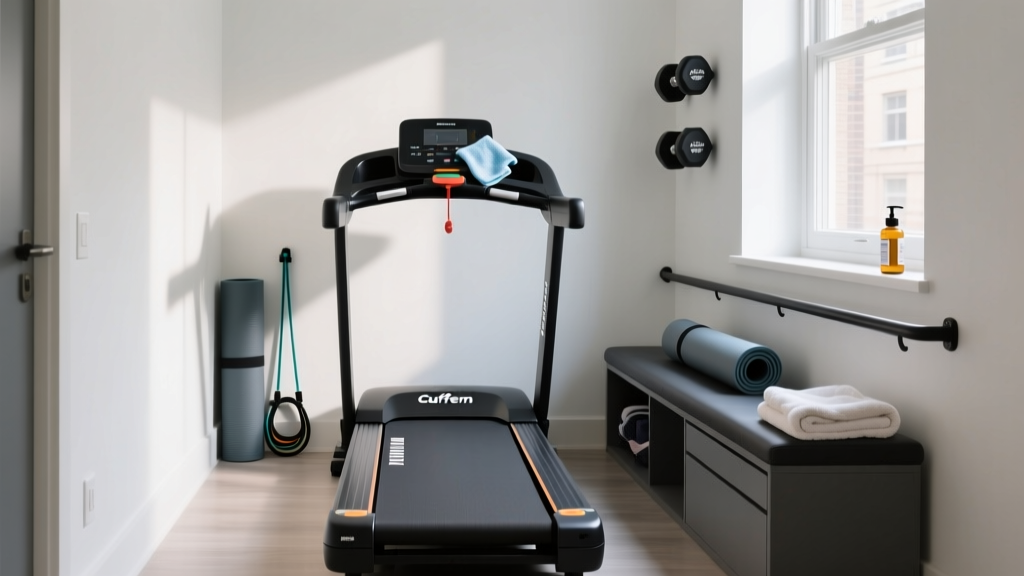
Motor Size Guide: Horizon Fitness T202 Studio Series Treadmill
Learn how to choose the right treadmill motor size. We break down CHP vs HP using the Horizon Fitness T202 Studio Series treadmill as our guide.

The Beginner's Step-by-Step Guide to Treadmill Motor Sizes
Walking into the world of home fitness equipment can feel like learning a new language. When you start researching cardio machines, you are immediately bombarded with acronyms like HP, CHP, and Peak HP. Choosing the wrong motor size is one of the most common—and expensive—mistakes beginners make. A motor that is too small will overheat, stutter, and eventually fail, while an oversized motor might cost you hundreds of dollars for power you will never use.
To make this technical topic accessible, we are going to walk through a step-by-step guide on how to size a treadmill motor correctly. As our real-world benchmark for this guide, we will use the Horizon Fitness T202 Studio Series treadmill, a machine widely regarded in 2026 as a masterclass in balancing motor power, belt size, and home-gym affordability (typically retailing between $799 and $999).
Step 1: Decode the Horsepower Acronyms
Before you can calculate your needs, you must understand how manufacturers measure power. Not all horsepower is created equal. Here is the hierarchy of treadmill motor ratings:
- Peak HP: This is a marketing gimmick. It represents the absolute maximum power the motor can hit for a fraction of a second before tripping a breaker. Ignore this number entirely.
- HP (Horsepower): This measures the motor's output, but it doesn't account for continuous load over time. It is a step up from Peak HP but still unreliable for daily training.
- CHP (Continuous Horsepower): This is the gold standard. CHP measures the power the motor can sustain continuously during a heavy workout without overheating. Always base your purchasing decisions on CHP.
Expert Insight: 1 CHP is equivalent to roughly 745.7 Watts of mechanical output. When you see a 2.75 CHP motor, you are looking at a drive system capable of sustaining over 2,000 Watts of continuous rotational force, which is more than enough to move a human body at running speeds.
Step 2: Calculate Your Required Motor Size
Your body weight and your intended pace dictate how hard the motor has to work. A 150 lb user walking at 3 mph puts a fraction of the strain on a motor compared to a 220 lb user running at 6 mph. According to biomechanical data on energy expenditure and treadmill kinetics, the motor must overcome both the friction of the deck and the kinetic energy of your body weight.
Use the chart below to find your baseline Continuous Horsepower (CHP) requirement:
| Activity Level | Speed Range | Base CHP Needed (Under 200 lbs) | Required CHP (200+ lbs) |
|---|---|---|---|
| Walking | 2.0 - 4.0 mph | 2.0 CHP | 2.5 CHP |
| Jogging | 4.0 - 6.0 mph | 2.5 CHP | 3.0 CHP |
| Running | 6.0+ mph | 3.0 CHP | 3.5+ CHP |
Note: If you plan to use the treadmill for high-incline walking (10%+ grades), add 0.5 CHP to your baseline requirement, as the motor must fight gravity continuously.
Step 3: Analyze a Real-World Benchmark (The Horizon T202 it is a 2.75 CHP motor.
The 'Goldilocks' Zone for Home Gyms
The Horizon Fitness T202 Studio Series treadmill features a 2.75 CHP motor. Why is this specific number so important for the average home user? It sits perfectly in the 'Goldilocks' zone. It provides enough continuous torque to handle jogging and light running for users up to its 300 lb weight capacity, but it doesn't draw the massive electrical current of a 4.0 CHP commercial motor, the motor's internal windings. This heat degrades the copper insulation and eventually trips the internal thermal breaker.
Horizon mitigates this in the T202 by pairing the 2.75 CHP motor with a heavy-duty flywheel. The flywheel stores rotational kinetic energy, which helps carry the belt through the 'dead spots' of the motor's rotation. This means the motor doesn't have to work as hard to maintain momentum, keeping the internal temperature well below the 105°F (40°C) threshold where thermal degradation begins.
Step 4: Evaluate Belt Size and Deck Friction
A motor does not operate in a vacuum; it is directly tethered to the belt and deck. If you pair a small motor with a massive belt, the surface area friction will suffocate the drive system. Conversely, a massive motor on a tiny belt will cause premature wear on the rollers.
The Horizon Fitness T202 Studio Series treadmill pairs its 2.75 CHP motor with a 20-inch by 55-inch belt. This is a critical pairing for two reasons:
- Friction Management: A 20-inch width provides ample running space without creating excessive lateral drag on the deck. The T202 uses a phenolic-coated deck, which drastically reduces the coefficient of friction. Lower friction means the 2.75 CHP motor draws fewer amps, running cooler and quieter.
- Stride Biomechanics: According to research published in the National Center for Biotechnology Information (NCBI), treadmill belt length directly alters a runner's stride mechanics and energy cost. A 55-inch belt allows for a natural stride for users under 6'0", preventing the 'chopping' of steps that occurs on cheaper 48-inch belts, which in turn causes erratic, jerky loads on the motor.
Step 5: Understand Failure Modes and Maintenance
Even a perfectly sized motor will fail if neglected. As fitness equipment repair technicians, we see the same three failure modes repeatedly. Understanding them will save you from a costly repair bill.
1. The PWM Controller Burnout
The motor is controlled by a Lower Control Board using Pulse Width Modulation (PWM). If your treadmill belt is dry and lacks silicone lubrication, friction spikes. The motor demands more current to keep the belt moving. This excess amperage travels back through the PWM board, overheating. If you cannot slide your hand easily between the belt and deck, or if the belt feels gritty, it is time to apply 100% silicone treadmill lubricant.
3. Dust and Debris Ingestion
Treadmills act as vacuums, pulling dust, pet hair, and lint into the motor compartment. This debris coats the motor windings and the cooling fan, acting as an insulating blanket that traps heat. Vacuum the motor hood every three months to ensure the internal fan can properly cool the 2.75 CHP drive system.
Frequently Asked Questions
Is a 2.75 CHP motor good for running?
Yes, for most home users. A 2.75 CHP motor, like the one found in the Horizon Fitness T202 Studio Series treadmill, is perfectly adequate for users under 220 lbs who run at speeds up to 8 mph. If you are a heavier runner or plan to sprint at 10+ mph daily, you should look for a 3.0 to 3.5 CHP motor.
Does a larger motor use more electricity?
Not necessarily. A larger motor (e.g., 3.5 CHP) running at 50% capacity to move a 180 lb jogger will often draw roughly the same wattage as a 2.5 CHP motor running at 80% capacity to do the exact same task. The larger motor will simply run cooler and quieter, potentially extending its lifespan.
How long should a treadmill motor last?
A properly maintained, correctly sized CHP motor should last between 7,000 and 12,000 hours of use. For a home user exercising 4 hours a week, that translates to roughly 25 to 50 years of mechanical life. Most premature failures are due to deck friction or dust ingestion, not the motor itself wearing out.
Final Thoughts
Sizing a treadmill motor doesn't have to be a guessing game. By understanding the difference between Peak HP and CHP, calculating your weight-to-speed ratio, e-commerce platform. Always prioritize Continuous Horsepower, ensure the belt size matches the motor's torque capabilities, and never skip your bi-annual silicone lubrication.
More gear to consider
All reviews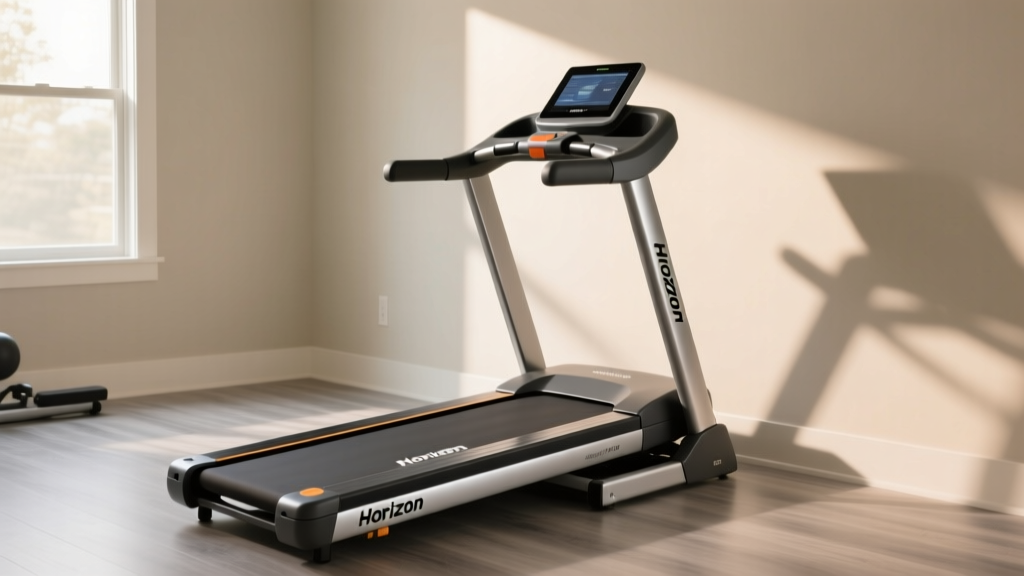
Horizon Fitness T101 Treadmill Review: 2026 Small Space Market Trend
Walking Pad vs Treadmill: Fixing Treadmill Running Pace Mistakes

YMCA Treadmills vs Rowers: 2026 Buying & Technique Guide

Buying a Used Treadmill? Belt Maintenance & Lubrication Guide
Curved vs Motorized Setup: How to Turn On a NordicTrack Treadmill