Choosing a Motor for HIIT Cardio Training on Treadmill
Discover the exact treadmill motor size and CHP you need for HIIT cardio training on treadmill. A step-by-step beginner's buying guide.

Why Your Treadmill Motor Matters for High-Intensity Sprints
When beginners decide to start hiit cardio training on treadmill equipment, they usually focus on screen size, incline capabilities, or built-in workout programs. However, the single most critical component for surviving High-Intensity Interval Training (HIIT) is hidden beneath the plastic motor hood. HIIT demands rapid acceleration, sudden deceleration, and massive torque outputs. According to the Mayo Clinic, interval training fundamentally relies on alternating short bursts of near-maximum effort with recovery periods. On a treadmill, this means the motor must instantly spin the belt from 3.0 mph to 10.0+ mph while supporting your full body weight.
If you attempt this on an underpowered machine, the motor will draw excessive amperage to overcome inertia. This leads to thermal shutoffs, slipped drive belts, and eventually, a fried control board. This step-by-step guide will teach you how to evaluate treadmill motor size and horsepower to ensure your machine can handle the brutal demands of HIIT.
⚠️ Beginner Warning: The 'Peak HP' Marketing TrapNever buy a treadmill for HIIT based on 'Peak Horsepower.' Peak HP only measures the absolute maximum output the motor can sustain for a fraction of a second before failing. For HIIT, you must exclusively look at Continuous Horsepower (CHP), which measures the motor's sustained output during an entire 45-minute workout.
Step 1: Decoding the Horsepower Illusion (HP vs. CHP)
To succeed with hiit cardio training on treadmill machines, you need to understand the baseline metrics of motor engineering. Treadmill motors are rated in three ways, but only one matters for high-intensity intervals.
- Peak HP: A marketing gimmick. A '4.0 Peak HP' motor might only have a 2.0 CHP rating. It will overheat during your second sprint interval.
- Treadmill HP (THP): An outdated, ambiguous term that measures the motor and drive system combined. Avoid this metric entirely.
- Continuous Horsepower (CHP): The gold standard. This is the actual power the motor can deliver continuously without overheating. For walking, 2.0 CHP is sufficient. For jogging, 2.5 CHP. But for the explosive starts and stops of HIIT, 3.5 CHP is the absolute minimum.
When you sprint, the motor controller uses Pulse Width Modulation (PWM) to deliver rapid bursts of electricity. A higher CHP rating means the motor has thicker copper windings and a heavier flywheel, allowing it to absorb these electrical spikes without melting the insulation.
Step 2: Matching Motor Size to Your Body Weight and Torque Needs
Motor size requirements scale directly with user weight. A 3.0 CHP motor might handle a 140 lb runner doing intervals, but it will bog down and stutter if a 210 lb runner attempts the exact same HIIT protocol. When the belt slows down under your foot during a sprint, it is a massive safety hazard.
| User Weight | Minimum CHP for Walking | Minimum CHP for Jogging | Minimum CHP for HIIT Sprints |
|---|---|---|---|
| Under 150 lbs | 2.0 CHP | 2.5 CHP | 3.25 CHP |
| 150 - 200 lbs | 2.5 CHP | 3.0 CHP | 3.5 CHP |
| 200 - 250 lbs | 3.0 CHP | 3.5 CHP | 4.0 CHP |
| Over 250 lbs | 3.5 CHP | 4.0 CHP | 4.25+ CHP |
Step 3: Analyzing Real-World Failure Modes During HIIT
As noted in Consumer Reports' treadmill buying guide, motor failure is the leading cause of expensive repairs on budget cardio equipment. When you subject a weak motor to HIIT, three specific failure modes occur:
- Thermal Overload Tripping: The internal temperature sensor detects excessive heat from amperage spikes and shuts the machine off mid-sprint to prevent a fire. You will have to wait 15-30 minutes for the thermal breaker to reset.
- Drive Belt Slippage: The motor pulley spins, but the torque required to move your body weight exceeds the friction of the drive belt. You will hear a loud squealing noise, and the belt will hesitate underfoot.
- Capacitor and Board Frying: The repeated electrical surges required to accelerate the belt from 3 mph to 10 mph in under 4 seconds will eventually blow the capacitors on the lower control board, requiring a $200-$400 replacement part.
Step 4: 2026 Market Leaders Built for HIIT Cardio Training on Treadmill
To save you from sifting through spec sheets, here are three highly rated treadmills currently on the market that feature the robust motors necessary for interval training.
1. Horizon Fitness 7.8 (Best Value for HIIT)
Motor: 4.0 CHP | Price: ~$1,399 | Top Speed: 12 mph
The Horizon 7.8 utilizes a heavy-duty 4.0 CHP motor paired with a 20-inch by 60-inch belt. The standout feature for HIIT is its rapid-response motor controller, which minimizes the 'lag' time when you hit the quick-speed buttons on the handgrips. It also features a 350 lb weight capacity, meaning the motor maintains high torque even for heavier users.
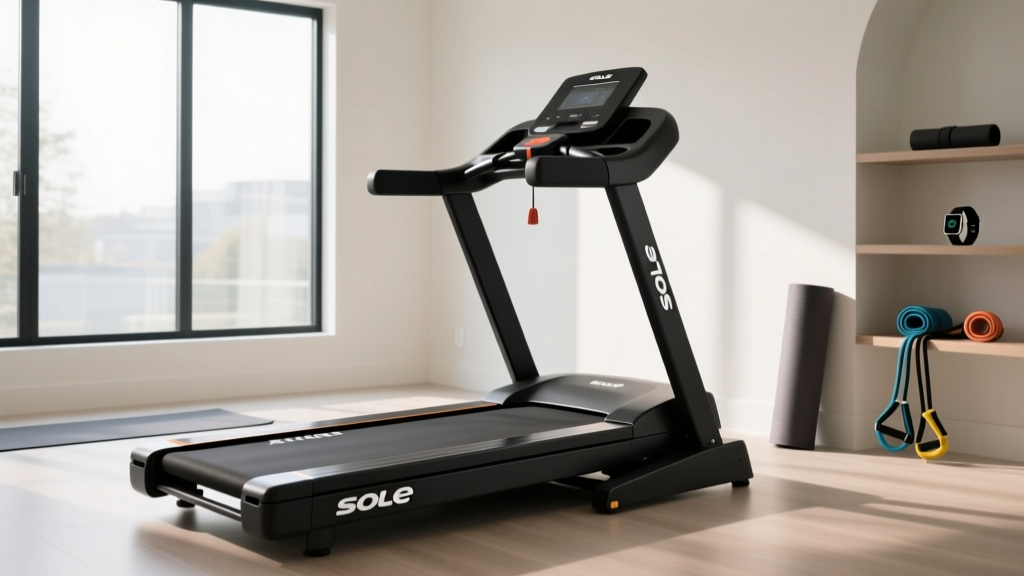
2. Sole Fitness F80 (The Durability Workhorse)
Motor: 3.5 CHP | Price: ~$1,299 | Top Speed: 12 mph
Sole is famous for using oversized flywheels on their motors. A heavier flywheel maintains rotational momentum, meaning the motor doesn't have to work as hard to keep the belt moving between foot strikes. The 3.5 CHP motor is slightly smaller than the Horizon, but the superior cooling fan and massive roller diameter (2.75 inches) reduce belt friction, effectively mimicking a larger motor.
3. NordicTrack Commercial 2450 (Premium Tech & Power)
Motor: 4.25 CHP | Price: ~$2,799 | Top Speed: 12 mph
If your HIIT routines involve steep incline sprints (up to 15%) or decline running (down to -3%), you need maximum torque. The 4.25 CHP motor on the Commercial 2450 is a self-cooling unit designed specifically to handle the immense gravitational resistance of incline intervals without dropping belt speed.
Step 5: The Hidden Variable — Belt Lubrication and Motor Drag
Even a 4.5 CHP motor will fail at HIIT if the treadmill deck is dry. Friction between the belt and the deck forces the motor to draw extra amperage just to maintain baseline speed. When you add the explosive force of a sprint, the motor maxes out.
Pro-Tip: Check your belt lubrication every 3 months or every 150 miles. Lift the edge of the belt; if the deck feels dry to the touch, apply 100% pure silicone treadmill lubricant. Never use WD-40 or petroleum-based products, as they will destroy the PVC belt backing and cause immediate motor strain.
Furthermore, check the roller diameter. Budget treadmills use 1.5-inch rollers. For HIIT, demand a treadmill with at least 2.5-inch rollers. Larger rollers reduce the pivot angle of the belt, drastically decreasing the mechanical drag on the motor.
Beginner’s Quick-Reference Buying Checklist
Before you check out with your new treadmill, verify these five specifications to guarantee it can handle your HIIT protocols:
- [ ] Continuous Horsepower (CHP): Is it 3.5 CHP or higher? (Ignore 'Peak HP').
- [ ] Weight Capacity: Is the max user weight rating at least 50 lbs heavier than your actual body weight? (This ensures the motor is over-engineered for your frame).
- [ ] Roller Size: Are the front and rear rollers at least 2.5 inches in diameter?
- [ ] Quick-Change Buttons: Does the console or handrail feature one-touch speed buttons (e.g., jumping instantly to 8 mph or 10 mph)? Fumbling with up-arrows ruins HIIT timing.
- [ ] Warranty: Does the motor carry a minimum 10-year warranty? (Manufacturers only offer this if they trust the motor's thermal limits).
By prioritizing continuous horsepower, heavy-duty flywheels, and low-friction mechanics, you will secure a machine capable of surviving the rigors of hiit cardio training on treadmill equipment for years to come. Invest in the motor first, and the touchscreens second.
More gear to consider
All reviews
Do You Burn More Calories on StairMaster or Treadmill? 2026 Guide

Treadmill Running and Knee Pain? Air Bike vs Assault Bike Guide

Elliptical vs Treadmill: MaxKare Treadmill Review & 2026 Picks

Elliptical vs Treadmill: How Long to Walk on Treadmill to Get 10k Steps

Small Space Folding Treadmills: SuperFit Treadmill App Review