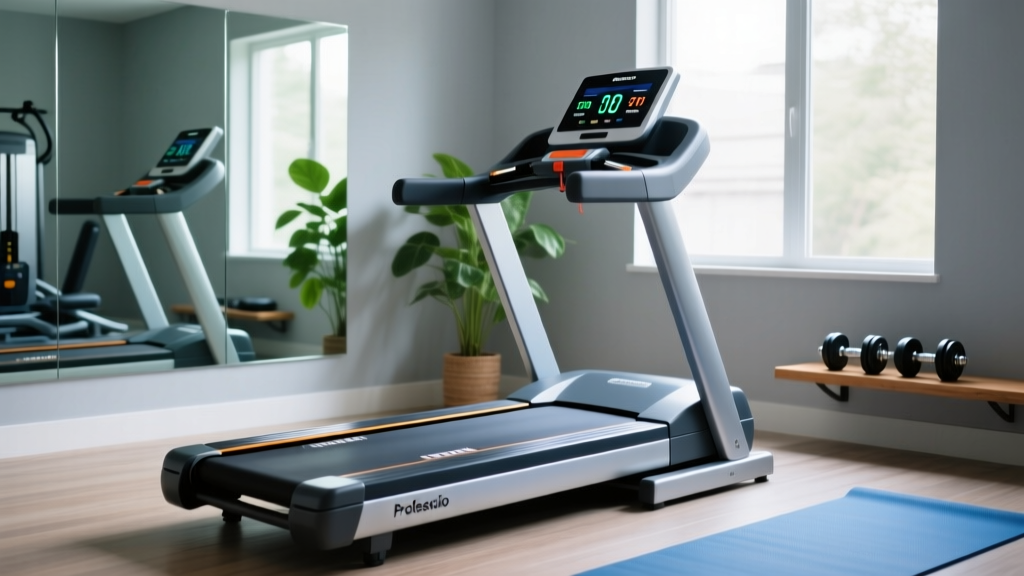
How Much is a Mile on a Treadmill? Motor HP & Wear Guide
Discover the true mechanical cost of a treadmill mile. Our 2026 motor size and CHP buying guide helps you match horsepower to your running style.

When fitness enthusiasts ask, "how much is a mile on a treadmill?" they are usually referring to caloric expenditure or joint impact. However, from an engineering and equipment longevity perspective, a mile represents a quantifiable mechanical tax on your machine's drivetrain. Every stride transfers kinetic energy, friction, and thermal load directly into the treadmill's motor. If your motor is undersized for your body weight and running pace, that single mile accelerates the degradation of the windings, the drive belt, and the lower control board.
In this comprehensive 2026 buying guide, we decode treadmill motor sizing, separate marketing myths from mechanical realities, and provide a precise framework to ensure your next cardio investment survives tens of thousands of miles. Whether you are eyeing a compact walking pad or a commercial-grade NordicTrack, understanding Continuous Horsepower (CHP) is non-negotiable.
The Mechanical Cost: How Much is a Mile on a Treadmill?
To understand motor sizing, we first must quantify the physical toll of a single mile. According to biomechanical data referenced by the American Council on Exercise (ACE), a runner takes approximately 1,500 foot strikes per mile. With each strike generating an impact force of 2.5 times the user's body weight, a 200-pound runner exerts roughly 500 pounds of downward force per step.
Data Highlight: The Anatomy of a Treadmill Mile
- Foot Strikes: ~1,500 per mile (varies by stride length)
- Belt Friction Heat: Generates up to 140°F at the deck interface if poorly lubricated
- Amp Draw Spike: An undersized motor (e.g., 2.0 CHP) used by a 220lb runner can spike to 16+ amps per mile, risking thermal shutdown
- Drive Belt Wear: Micro-slippage occurs on every footfall if the motor lacks sufficient starting torque
When you ask how much is a mile on a treadmill in terms of wear, the answer is dictated by amp draw. A properly sized motor cruises at 6 to 8 amps. An undersized motor working to pull a heavy user up a 10% incline will pull 14+ amps, generating excess heat that slowly melts the insulation off the internal copper windings.
Decoding Treadmill Motors: CHP vs. Peak HP
The most pervasive marketing gimmick in the fitness equipment industry is the "Peak HP" rating. Peak Horsepower measures the absolute maximum output the motor can achieve for a fraction of a second before the breaker trips or the windings fry. It is entirely irrelevant to your daily training.
As a domain expert, I only evaluate Continuous Duty Horsepower (CHP). CHP is the horsepower the motor can sustain indefinitely under load without overheating. According to Consumer Reports' treadmill buying guidelines, a motor must be matched not just to the activity, but to the heaviest user in the household. Below is the definitive 2026 CHP requirement matrix.
| Primary Activity | User Weight (Under 200 lbs) | User Weight (200 - 250 lbs) | User Weight (Over 250 lbs) |
|---|---|---|---|
| Walking (Under 4.0 mph) | 2.0 CHP | 2.5 CHP | 3.0 CHP |
| Jogging (4.0 - 6.0 mph) | 2.5 CHP | 3.0 CHP | 3.5 CHP |
| Running (6.0+ mph / HIIT) | 3.0 CHP | 3.5 - 4.0 CHP | 4.0+ CHP (Commercial) |
Expert Warning: If you plan to use the treadmill for High-Intensity Interval Training (HIIT) involving rapid speed changes and steep inclines, add an extra 0.5 CHP to your baseline requirement. Rapid acceleration requires massive starting torque, which is the primary cause of lower control board failure in undersized units.
2026 Motor Architecture: Brushless DC (BLDC) vs. AC Motors
When shopping for high-end home treadmills (such as the Sole F85 or Peloton Tread), you will encounter different motor architectures. The industry has largely standardized around Brushless DC (BLDC) motors for residential use, while Alternating Current (AC) motors remain the gold standard for commercial gym environments.
| Feature | Brushless DC (BLDC) | AC Motor (Commercial) |
|---|---|---|
| Typical Use Case | Premium Home Treadmills | Health Clubs, 24/7 Facilities |
| Maintenance | Low (No carbon brushes to replace) | Extremely Low (Self-cooling) |
| Noise Level | Quiet (Ideal for apartments) | Moderate Hum (Larger cooling fans) |
| Replacement Cost | $150 - $350 | $500 - $1,200+ |
| Duty Cycle | 2 - 4 hours continuous | 12 - 18 hours continuous |
For 95% of home users, a high-quality BLDC motor with a heavy flywheel (minimum 15 lbs) is the optimal choice. The heavy flywheel stores rotational kinetic energy, smoothing out the micro-decelerations caused by foot strikes and reducing the instantaneous amp draw on the motor.
Real-World Failure Modes: The Undersized Motor Cascade
What actually happens when you ignore CHP guidelines and buy a 2.0 CHP treadmill for a 240-pound runner? The failure rarely happens to the motor first. It follows a predictable, destructive cascade:
- Belt Friction & Amp Spike: The user's weight presses the belt into the deck. The 2.0 CHP motor struggles to maintain speed, pulling 15+ amps.
- MOSFET Blowout: The lower control board (the brain regulating power to the motor) utilizes MOSFET transistors to handle electrical load. Sustained high amp draw generates excessive heat, melting the solder joints or blowing the MOSFETs entirely.
- Drive Belt Slippage: To compensate for the lack of torque, the motor pulley slips against the drive belt, creating a distinct burning rubber smell and glazing the belt surface.
- Winding Burnout: If the control board's thermal protection fails to trip, the internal copper windings of the motor overheat, melt their enamel coating, and short out, killing the motor permanently.
Repairing this cascade typically costs between $300 and $600 in parts and labor—often exceeding the original cost of a budget treadmill. This is why investing in a 3.5+ CHP motor upfront is a vital financial safeguard.
The FitGearPulse Motor Sizing Framework
To ensure your equipment aligns with the CDC Physical Activity Guidelines—which recommend 150 minutes of moderate or 75 minutes of vigorous aerobic activity weekly—your treadmill must handle high cumulative mileage without thermal degradation. Use this 3-step framework before checkout:
- Step 1: Identify the Heaviest User. Always size the motor for the heaviest person in the household, plus a 10% buffer for winter clothing or weighted vests.
- Step 2: Define the Peak Intensity. If you run 8-minute miles at a 5% incline, you are in the "Running" tier. Never size for walking if you plan to run.
- Step 3: Check the Flywheel and Cooling. Verify the spec sheet. A 3.0 CHP motor with a 10 lb flywheel and a 2-inch cooling fan will run hotter and die faster than a 3.0 CHP motor with a 18 lb flywheel and a 4-inch dual-cooling fan setup.
Frequently Asked Questions
Does a higher CHP motor consume more electricity?
No. A larger motor actually operates more efficiently under load. A 4.0 CHP motor pulling a 200lb runner will draw fewer amps and consume less electricity than a 2.5 CHP motor maxing out its capacity to pull the same weight.
How often should I lubricate the belt to protect the motor?
Every 150 miles or 3 months, whichever comes first. Use only 100% silicone treadmill lubricant. Applying petroleum-based products will destroy the belt and exponentially increase the friction load on your motor.
Are walking pad motors rated the same as full-size treadmills?
Walking pads typically feature 1.5 to 2.25 HP motors. Because they lack incline capabilities and are restricted to walking speeds (under 4.0 mph), the mechanical cost per mile is significantly lower, making smaller motors acceptable for users under 200 lbs.
More gear to consider
All reviews
Flylinktech Treadmill Review: 2026 Walking Pad Comparison

NordicTrack C 1800s Treadmill: Step-by-Step Feature Comparison Guide

Portable Cardio vs. The VO2 Max Treadmill Test: 2026 Market Trends
Is Your Treadmill Working for You? Walking Pad vs. Standard

Stair Climber Home Guide: ProForm City L6 Treadmill Comparison
