How Long Is a Treadmill? Stationary Bike Space & Budget Analysis
Learn how long a treadmill is compared to stationary bikes. We analyze the 2026 budget, space footprint, and ROI of upright, recumbent, and spin bikes.

The Space Dilemma: Answering the Footprint Question
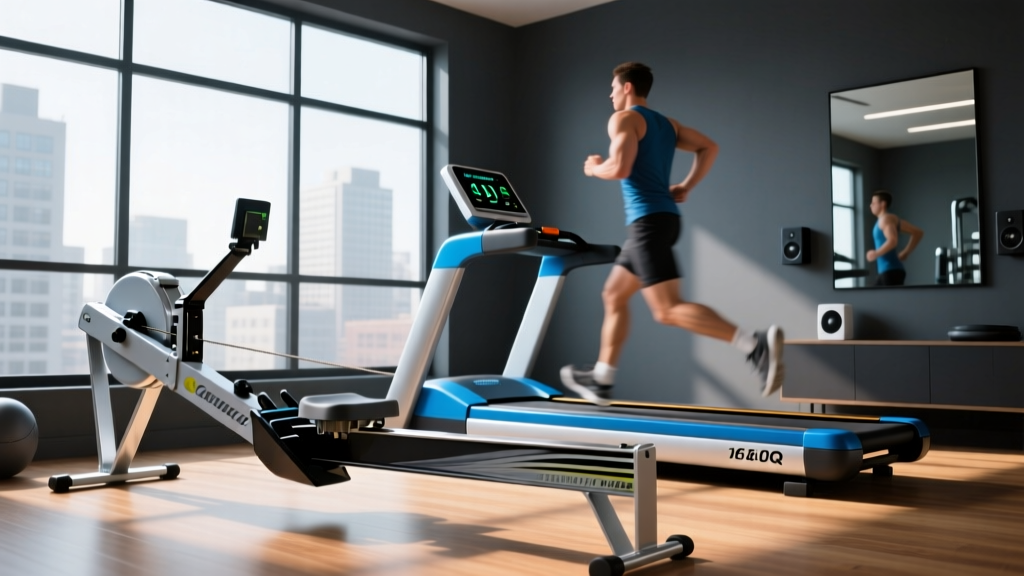
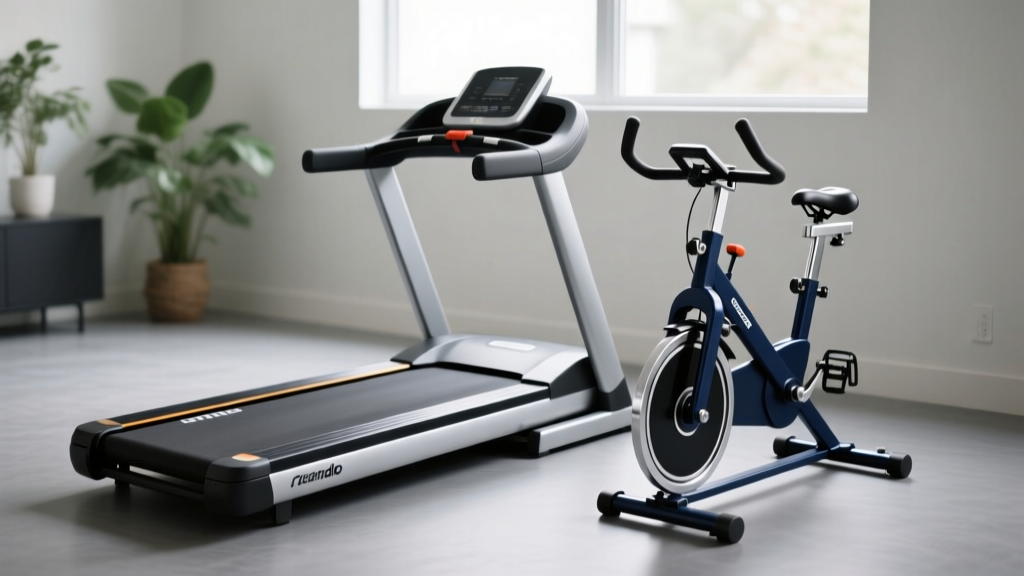
When planning a dedicated home gym, spatial constraints often dictate your equipment choices. One of the most frequent spatial questions we receive from readers is: exactly how long is a treadmill? The answer is critical for floor planning. A standard motorized treadmill, such as the Sole F63 or NordicTrack Series, typically measures between 78 and 85 inches in length and 30 to 35 inches in width. However, the physical footprint is only half the equation. Safety guidelines dictate adding at least 20 inches of clearance behind the belt and 16 inches on each side, meaning a single treadmill commands roughly 25 to 30 square feet of dedicated floor space.
If your square footage or budget is constrained, stationary bikes offer a compelling, high-ROI alternative. In this 2026 budget breakdown, we analyze the three primary stationary bike types—upright, recumbent, and spin—to help you determine which delivers the best long-term value for your home cardio setup.
The Total Cost of Ownership (TCO) Formula
Upfront price is a trap. To calculate true value, use this formula:
TCO = Upfront Cost + (Monthly Subscription x 60 months) + Estimated Maintenance - Resale Value.
We apply this 5-year framework to every bike category below.
Stationary Bike Types: A 2026 Budget & Value Breakdown
1. Upright Bikes: The Traditional Middle-Ground
Upright bikes mimic the geometry of a traditional road bike but feature a heavier flywheel and a fixed base. They engage the core and upper body slightly more than recumbent models due to the lack of a backrest.
- Top 2026 Models: Schwinn IC4 ($899), Bowflex C6 ($999), NordicTrack S15i ($1,599).
- Average Footprint: 48" L x 24" W (Approx. 8 sq. ft.).
- Budget Profile: Mid-tier. You can find excellent magnetic resistance models under $1,000 that do not require mandatory subscriptions to function fully.
Value Verdict: Upright bikes offer the highest baseline ROI for general fitness. Models like the Schwinn IC4 allow you to use third-party apps like Zwift or Peloton Digital via Bluetooth for a fraction of the cost of proprietary ecosystems. Maintenance is minimal, usually limited to wiping down sweat to prevent corrosion on the handlebars and replacing the drive belt every 3 to 5 years.
2. Recumbent Bikes: Premium Comfort and Rehab Value
Recumbent bikes feature a bucket seat with a full backrest and front-mounted pedals. This design drastically reduces lumbar strain and shifts the workload almost entirely to the glutes, hamstrings, and quads. According to the Centers for Disease Control and Prevention (CDC), low-impact aerobic activities are crucial for older adults or those recovering from joint injuries, as they elevate heart rates without the compressive forces of weight-bearing exercises.
- Top 2026 Models: Schwinn 270 ($799), Sole R92 ($2,299), Life Fitness Club Series ($3,499).
- Average Footprint: 65" L x 28" W (Approx. 12.5 sq. ft.).
- Budget Profile: Wide variance. Budget models lack ergonomic lumbar support, while commercial-grade units require a premium investment.
Value Verdict: If you require physical rehabilitation or suffer from sciatica, a recumbent bike is not a luxury; it is a medical necessity. However, from a pure cost-per-use perspective, budget recumbents (under $600) often feature uncomfortable seats and jerky resistance transitions. To get true value, expect to spend at least $1,200 on a model with a magnetic eddy current brake system and a high-density molded seat.
3. Spin Bikes (Indoor Cycles): High-Performance & High Subscription Costs
Spin bikes are designed for high-intensity interval training (HIIT), out-of-the-saddle climbing, and aggressive riding postures. They feature a heavy perimeter-weighted flywheel (or advanced electromagnetic resistance) and minimalistic consoles.
- Top 2026 Models: Peloton Bike+ ($2,495), Keiser M3i ($2,395), Echelon EX-8s ($1,899).
- Average Footprint: 48" L x 24" W (Approx. 8 sq. ft.).
- Budget Profile: High upfront, high ongoing. The hardware is expensive, but the real cost lies in the ecosystem lock-in.
Value Verdict: Spin bikes yield incredible cardiovascular results. The American Heart Association (AHA) recommends at least 150 minutes of moderate-to-vigorous aerobic activity per week, and a 45-minute spin class easily fulfills the vigorous requirement. However, the financial value plummets if you refuse to pay for the subscription. A $2,500 Peloton Bike+ without a $44/month All-Access membership becomes a very expensive, dumb piece of metal. If you want a premium spin experience without the subscription trap, the Keiser M3i remains the gold standard for commercial-grade durability and open Bluetooth connectivity.
5-Year Value Matrix: Upfront Cost vs. Hidden Fees
To visualize the true financial commitment of your home cardio equipment, we have mapped out the 5-year Total Cost of Ownership (TCO) for the most popular models in each category, factoring in average 2026 subscription rates and estimated resale depreciation.
| Bike Type & Model | Upfront Cost | Monthly Sub Fee | 5-Year TCO | Footprint (L x W) |
|---|---|---|---|---|
| Upright: Schwinn IC4 | $899 | $15 (Optional) | $1,799 | 48" x 24" |
| Recumbent: Sole R92 | $2,299 | $0 | $2,299 | 65" x 28" |
| Spin: Peloton Bike+ | $2,495 | $44 (Required) | $5,135 | 48" x 24" |
| Treadmill: Sole F63 | $1,199 | $0 | $1,399* | 82" x 28" |
*Treadmill TCO includes an estimated $200 for belt lubrication, deck waxing, and eventual drive belt replacement over 5 years. Bikes require significantly less mechanical maintenance.
Which Bike Type Yields the Highest ROI for Your Home Gym?
Determining the best value requires aligning the equipment with your specific physiological needs and financial boundaries. Here is our actionable buying framework for 2026:
Tier 1: The Budget-Conscious Multitasker (Under $1,000)
Buy an Upright Bike. If you want to burn calories efficiently without committing to a multi-year software contract, an upright bike like the Schwinn IC4 is unmatched. You get dual-sided pedals (SPD clips and toe cages), a quiet magnetic drive, and the freedom to cast YouTube cycling tours to your TV for free. The spatial savings compared to a treadmill are massive, freeing up nearly 17 square feet of floor space for a weight bench or yoga mat.
Tier 2: The Longevity & Rehab Investor ($1,500 - $2,500)
Buy a Recumbent Bike. Value is not just about sweat; it is about consistency. If lower back pain prevents you from using an upright bike or treadmill three days a week, that equipment has a negative ROI. Investing $2,000+ in a premium recumbent with a mesh lumbar-support seat and a low step-through threshold ensures daily usability. Look for models with self-generating power supplies to eliminate the need for proximity to wall outlets.
Tier 3: The Motivation-Dependent Athlete ($2,500+)
Buy a Connected Spin Bike. If you know from experience that you will not exercise unless an instructor is yelling at you through a 24-inch HD touchscreen, the high TCO of a Peloton or NordicTrack S22i is justified. The financial value here is derived from adherence. A $5,000 5-year TCO equates to roughly $2.70 per day. If that ecosystem guarantees you hit the AHA's 150-minute weekly cardio threshold, the health ROI vastly outweighs the financial cost.
Final Spatial Considerations
Returning to the original spatial dilemma: understanding how long a treadmill is (often exceeding 80 inches) forces many home gym owners to compromise on traffic flow and safety clearances. Stationary bikes, regardless of whether you choose an upright, recumbent, or spin model, inherently solve the spatial crisis. By reallocating the 20+ square feet saved by ditching the treadmill, you can build a more versatile, multi-discipline home gym that supports both cardiovascular health and functional strength training without breaking the bank.
More gear to consider
All reviews
Compact Cardio Layouts: Skip Replacing Treadmill Motor Parts

Walking Pad vs Treadmill Review: Safety Magnet Guide
Air Bike vs Assault Bike Maintenance: Longevity Tips & HiFast Treadmill Care

NordicTrack T Series 10 Treadmill Reviews: Fixes & Walking Pads
Curved vs Motorized Treadmill: Escaping the Rodent Treadmill Trap