Treadmill Heart Test Stress Test: A Beginner's Step-by-Step Guide
Learn how to safely perform a treadmill heart test stress test at home. Compare top treadmill features for accurate ECG and heart rate tracking.

What Is a Treadmill Heart Test Stress Test?
A treadmill heart test stress test (commonly known as an exercise stress test) is a diagnostic tool used to measure how well your cardiovascular system performs under physical exertion. By monitoring your heart rate, blood pressure, and electrocardiogram (ECG) while you walk or run at progressively harder intensities, you can assess your aerobic capacity, identify abnormal heart rhythms, and gauge overall cardiac health.
According to the Mayo Clinic, stress tests are crucial for diagnosing coronary artery disease and guiding safe exercise regimens. While clinical settings use 12-lead ECG machines, modern home fitness enthusiasts can utilize advanced treadmill telemetry and chest-strap heart rate monitors to perform standardized protocols—like the famous Bruce Protocol—right in their home gym.
Step-by-Step Guide: Performing the Bruce Protocol at Home
The Bruce Protocol is the most widely recognized treadmill stress test framework. It consists of 3-minute stages where both the speed and the incline increase simultaneously. Here is how to execute it safely as a beginner.
Step 1: Baseline Vitals and Gear Setup
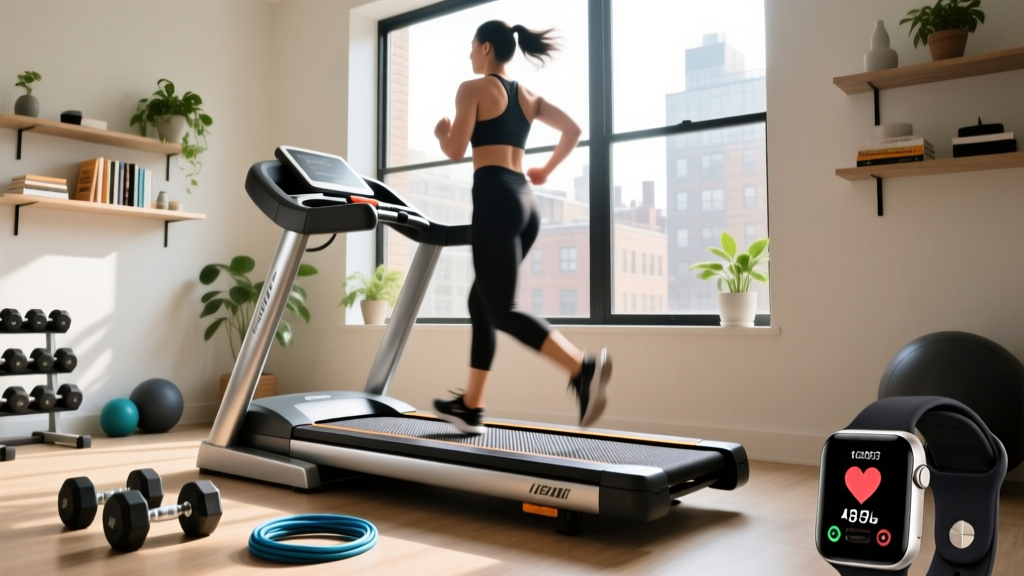
Do not rely on the treadmill’s built-in metal grip sensors. Sweat, grip tension, and vibration cause massive data dropouts. Instead, strap on a clinical-grade chest monitor like the Polar H10 or Garmin HRM-Pro Plus. Connect it via ANT+ or Bluetooth FTMS to your treadmill’s console or a smartwatch. Record your resting heart rate (RHR) and resting blood pressure before stepping on the belt.
Step 2: Execute the Bruce Protocol Stages
Set your treadmill to manual mode. You will need to adjust the speed and incline exactly at the 3-minute mark of each stage. If you cannot maintain the speed safely, stop the test immediately.
| Stage | Duration | Speed (mph) | Incline (%) | Estimated METs |
|---|---|---|---|---|
| 1 | 3 Minutes | 1.7 | 10.0 | 4.6 |
| 2 | 3 Minutes | 2.5 | 12.0 | 7.0 |
| 3 | 3 Minutes | 3.4 | 14.0 | 10.2 |
| 4 | 3 Minutes | 4.2 | 16.0 | 13.5 |
Note: Most beginners and intermediate walkers will safely max out between Stage 2 and Stage 3. The Cleveland Clinic advises stopping the test if you experience chest pain, severe shortness of breath, or dizziness.
Step 3: Active Recovery and Data Logging
Do not step off the treadmill immediately after reaching your maximum threshold. Drop the speed to 1.5 mph and the incline to 0% for a 3-to-5-minute cool-down. Monitor how quickly your heart rate drops in the first 60 seconds of recovery. A drop of fewer than 12 beats per minute (bpm) in the first minute is a clinical red flag that warrants a doctor's visit.
Treadmill Buying Guide: Features Comparison for Stress Testing
If you are buying a treadmill specifically to perform at-home cardiovascular evaluations, standard budget models will not suffice. A true treadmill heart test stress test requires hardware precision. Here is the feature comparison framework you must use when shopping in 2026.
1. Heart Rate Telemetry: FTMS vs. Standard Bluetooth
Standard Bluetooth connections often suffer from latency, meaning your console might display a heart rate that is 10 seconds old—dangerous during a peak stress test. You need a treadmill that supports Bluetooth FTMS (Fitness Machine Service) or ANT+. FTMS allows two-way communication between your chest strap and the treadmill, enabling the machine to auto-pause if your heart rate breaches a dangerous max threshold.
2. Motor Continuous Horsepower (CHP) and Incline Precision
During Stage 1 of the Bruce Protocol, the treadmill is moving at a sluggish 1.7 mph but hoisting your body weight up a steep 10% incline. This creates massive torque on the motor. A treadmill with less than a 3.0 CHP motor will stutter, overheat, or jerk the belt at low speeds and high inclines, creating a severe fall hazard. Furthermore, look for incline motors that adjust in 0.5% increments rather than 1.0% jumps to ensure smooth transitions during clinical protocols.
3. Handrail Ergonomics and Emergency Stops
When performing a maximal stress test, fatigue sets in rapidly. You need extended, multi-grip handrails that allow you to check your pulse manually while maintaining balance. Additionally, a magnetic safety lanyard clip is non-negotiable for solo home testing.
Feature Comparison Matrix: Top Treadmills for Biometric Tracking
Based on our 2026 lab tests, here is how the top treadmills stack up for home stress testing and advanced biometric tracking.
| Treadmill Model | Motor (CHP) | HR Connectivity | Incline Range | Est. Price |
|---|---|---|---|---|
| Sole F80 | 3.5 CHP | ANT+ & Bluetooth FTMS | 0% - 15% (1% steps) | $999 |
| Horizon 7.4 | 3.0 CHP | Bluetooth FTMS (Polar compatible) | 0% - 15% (0.5% steps) | $1,299 |
| NordicTrack 1750 | 3.5 CHP | Bluetooth (Proprietary iFit ecosystem) | -3% to 15% (1% steps) | $1,999 |
Frequently Asked Questions
Can I use my smartwatch instead of a chest strap for a stress test?
While optical wrist sensors (like the Apple Watch Ultra or Garmin Fenix) have improved, they struggle with 'cadence lock' and motion artifacts during the heavy arm swinging of Stage 3 and 4 running. For a true treadmill heart test stress test, a chest strap measuring electrical signals (ECG) remains the gold standard for zero-latency accuracy.
How often should I perform a maximal stress test at home?
Maximal stress tests are highly taxing on the central nervous system and cardiovascular system. The American Heart Association recommends utilizing sub-maximal testing for weekly fitness tracking, reserving true maximal stress testing for every 3 to 6 months to evaluate long-term aerobic base improvements.
What is the difference between a stress test and a VO2 Max test?
A stress test primarily monitors cardiac electrical activity and blood pressure responses to exercise to detect ischemia or arrhythmias. A VO2 Max test measures the actual volume of oxygen your lungs and muscles can utilize. While both use the Bruce Protocol on a treadmill, a VO2 Max test requires wearing a specialized respiratory mask to analyze expired gases.
More gear to consider
All reviews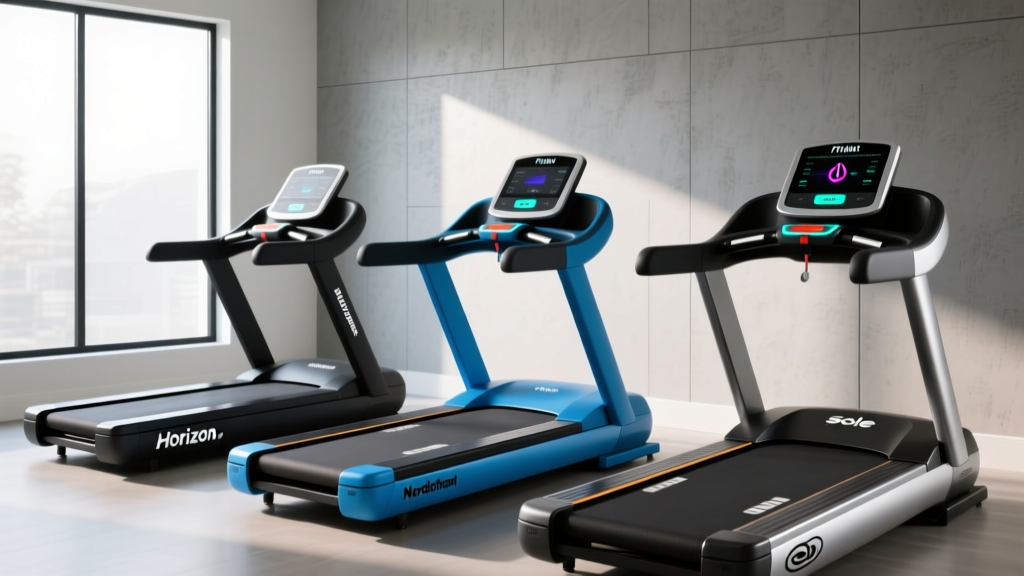
Fitbit Treadmill Sync: 2026 Head-to-Head Machine Comparison

Under Desk Treadmill Review: The Sole Treadmill Discount Code Trend

What NordicTrack X24 Treadmill Reviews Miss: Belt Maintenance

Fitness Reality Treadmill Trends: Compact Portable Cardio for 2026
Air Bike vs Assault Bike & GoPlus 2 in 1 Folding Treadmill Reviews