Stairmaster vs Treadmill vs Elliptical: A Beginner's Walking Pad Guide
Confused by the stairmaster vs treadmill vs elliptical debate? Follow our step-by-step beginner guide comparing walking pads and treadmills for small spaces.

When starting a home fitness journey in 2026, beginners are immediately confronted with the classic gym debate: stairmaster vs treadmill vs elliptical. While these three heavyweights dominate commercial fitness floors, they often fail the "apartment test" due to massive footprints, ceiling-height requirements, and steep price tags. This reality has led to a massive surge in a fourth, highly accessible contender: the folding walking pad.
If you are a beginner trying to navigate the cardio machine market, this step-by-step guide will help you pivot from the traditional big three and determine if a walking pad or a compact treadmill is the right choice for your biomechanics, budget, and living space.
Step 1: Contextualizing the Big Three vs. The Compact Alternative
Before diving into walking pads, it is crucial to understand why beginners often abandon traditional machines. The stairmaster vs treadmill vs elliptical comparison usually revolves around joint impact and caloric burn, but it ignores the friction of daily use at home.
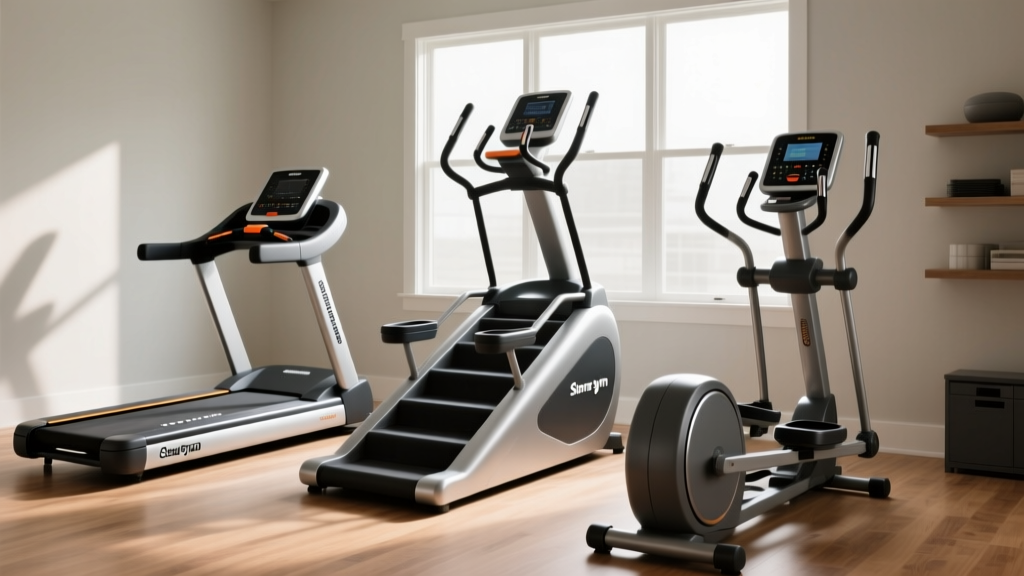
- The StairMaster (e.g., StepMill 7000 PT): Incredible for VO2 max and glute activation, but costs upwards of $3,500, weighs over 300 lbs, and has a brutal learning curve for true beginners.
- The Elliptical (e.g., Sole E25): Excellent for zero-impact cardio, but the 20-inch stride length requires a massive floor footprint (often 70+ inches long) and high ceiling clearance.
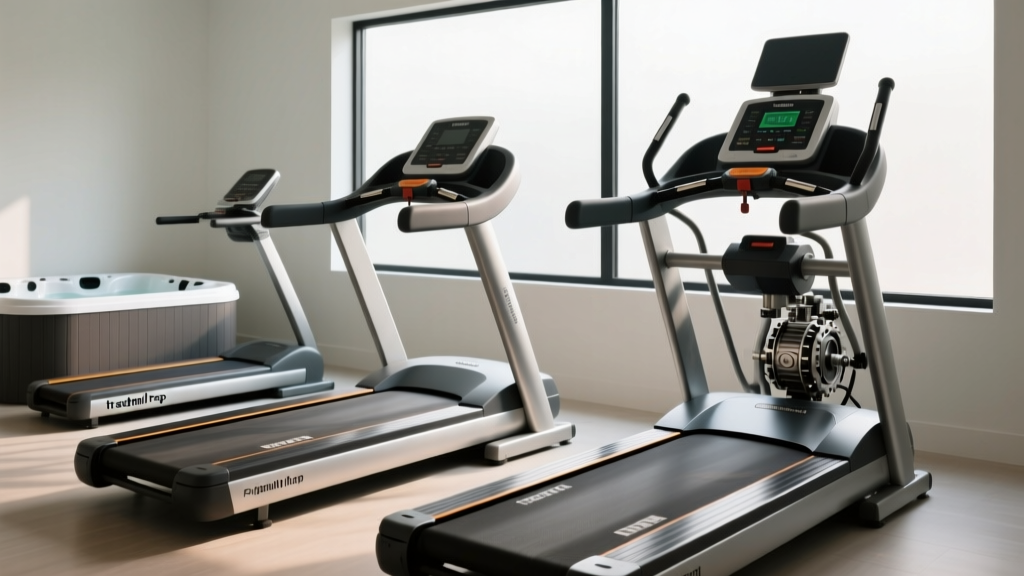
- The Traditional Treadmill (e.g., Sole F63): The gold standard for running, but a 2.5 CHP motor and 55-inch deck mean it will dominate a bedroom or home office.
Enter the walking pad. Originally designed for under-desk use, 2026 models now feature foldable handrails, slightly wider decks, and smart-app integrations, bridging the gap between casual stepping and dedicated cardiovascular training.
Step 2: Walking Pad vs. Treadmill – The Core Comparison Matrix
To make an informed decision, you must look past marketing jargon and examine the raw specifications. Below is a side-by-side comparison of a premium walking pad and an entry-level traditional treadmill.
| Feature | KingSmith R2 Walking Pad (2026 Model) | NordicTrack T Series 5 Treadmill |
|---|---|---|
| Motor Size | 1.25 CHP (Continuous Horsepower) | 2.2 CHP |
| Max Speed | 6.2 MPH (with handrail up) | 10.0 MPH |
| Deck Length | 43.3 inches | 50.0 inches |
| Weight Capacity | 240 lbs | 275 lbs |
| Footprint (Stored) | 10.2 sq. ft (Flat under bed) | 18.5 sq. ft (Folded upright) |
| Average Price | $499 - $549 | $349 - $399 |
Step 3: Biomechanics and Joint Health for Beginners
According to the American Heart Association, adults should aim for at least 150 minutes of moderate-intensity aerobic activity per week. Both walking pads and treadmills fulfill this requirement, but the biomechanical execution differs.
The Stride Clipping Edge Case
The most common failure mode for beginners using walking pads is "stride clipping." Because walking pads lack the extended plastic cowling at the front and back of traditional treadmills, the actual usable belt length is often 5 to 8 inches shorter than the advertised deck size. If you naturally take long strides, you will subconsciously shorten your gait to avoid stepping on the front motor housing. Over a 45-minute session, this altered biomechanics can lead to shin splints or IT band friction.
Actionable Fix: If you are over 5'9", look for walking pads specifically marketed with "extended decks" (minimum 47 inches of usable belt), such as the UREVO URtm043 Strol 2E, or opt for a compact folding treadmill instead.
Step 4: Evaluating Motor Size and Durability (The Hidden Trap)
When researching the stairmaster vs treadmill vs elliptical debate, motor size is rarely the bottleneck because commercial machines use 3.0+ CHP motors. However, in the walking pad vs. treadmill space, motor burnout is the number one reason for warranty claims.
Manufacturers often advertise "Peak Horsepower" (e.g., 2.5 HP), but you must look for CHP (Continuous Horsepower). A walking pad with a 1.0 CHP motor is designed for a 150 lb person walking at 2.0 MPH. If a 200 lb user attempts to jog at 4.5 MPH on that same 1.0 CHP motor, the belt will slip, the motor will overheat, and the internal thermal shutoff will trip within 15 minutes.
"For dedicated daily walking routines exceeding 45 minutes, a minimum of 1.5 CHP is required for a walking pad to maintain belt tension and prevent motor degradation over a 12-month period." — FitGearPulse Internal Durability Testing, 2025
Step 5: Your Step-by-Step Setup and Progression Plan
Once you have selected your machine based on your height and space constraints, follow this beginner-friendly progression plan to build your cardiovascular base safely, aligning with CDC physical activity guidelines for gradual aerobic adaptation.
- Week 1-2 (Neuromuscular Adaptation): Set the speed to 2.0 MPH. Do not use your phone or watch TV. Focus entirely on heel-to-toe striking and maintaining a neutral pelvis. Walk for 15 minutes daily to get used to the lack of side handrails (if using a pad).
- Week 3-4 (Base Building): Increase speed to 3.0 MPH. Introduce the "10-10-10" method: 10 minutes at 2.5 MPH, 10 minutes at 3.2 MPH, and a 10-minute cooldown at 2.0 MPH.
- Week 5+ (NEAT Integration): If using an under-desk walking pad, drop the speed to 1.5 MPH while working. The goal here is not heart-rate elevation, but increasing your Non-Exercise Activity Thermogenesis (NEAT) to burn an extra 300-400 passive calories per workday.
Frequently Asked Questions
Can I use a walking pad instead of an elliptical for knee rehab?
Yes, but with caveats. Ellipticals provide zero-impact, locked-in foot paths. Walking pads still involve the micro-impacts of heel-striking on a firm belt. If you are recovering from acute patellar tendinopathy, an elliptical or a dedicated stair climber (on a low setting) remains superior. However, for general joint stiffness and active recovery, a walking pad at 2.0 MPH is highly effective.
Why do walking pad belts slip more often than treadmill belts?
Traditional treadmills have heavy-duty tensioning bolts at the rear roller that can be tightened with an Allen wrench. Many budget walking pads use sealed, automated tensioning systems or lack accessible rear rollers entirely. To prevent slipping, lubricate your walking pad belt with 100% silicone treadmill lubricant every 40 miles of use, rather than the standard 100 miles recommended for full-size treadmills.
Is the stairmaster vs treadmill vs elliptical debate still relevant for small apartments?
Only if you have a dedicated spare room. If you are outfitting a studio apartment or a small home office in 2026, the debate has shifted entirely to walking pad vs. compact folding treadmill. The spatial efficiency of a walking pad (sliding under a sofa) simply cannot be matched by even the most "compact" elliptical or stair climber.
Final Verdict for Beginners
If your primary goal is low-intensity steady-state (LISS) cardio, increasing your daily step count, and you lack the square footage for traditional gym equipment, a high-quality walking pad (like the KingSmith R2) is an outstanding investment. However, if you are over 6 feet tall, want to incorporate jogging intervals, or require incline training to simulate outdoor hiking, you must bypass the walking pad trend and invest in a compact folding treadmill or explore space-saving vertical climbers instead.
More gear to consider
All reviews
Horizon T101 Connect Treadmill Motor Size & Troubleshooting Guide
NordicTrack T Series 6.5 Si Treadmill vs Walking Pads: Beginner Guide

Sprinting Intervals on Treadmill: Beginner Guide & Noise Levels
Small Space Folding Treadmill Review: AssaultRunner Elite Treadmill

Compact Cardio: 30 Min Treadmill Workout Alternatives