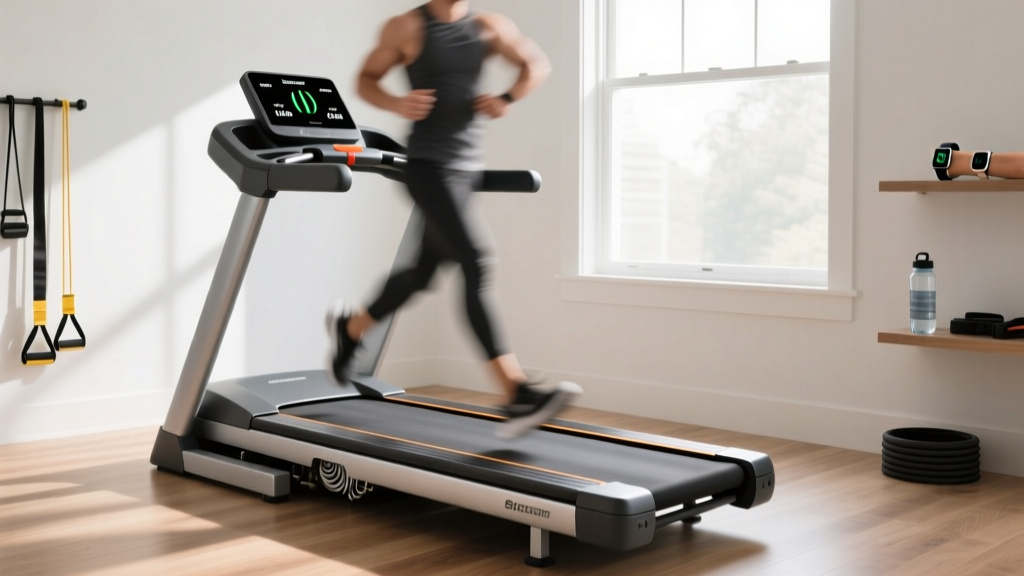
Treadmill Calc: How to Size Motors and Horsepower
Master the treadmill calc to choose the right motor size. Compare CHP ratings, analyze failure modes, and find the perfect cardio machine.

The Marketing Mirage: Peak HP vs. Continuous Duty (CHP)
When shopping for a home cardio machine in 2026, the motor is the undisputed heart of the system. Yet, the fitness equipment industry remains plagued by deceptive marketing metrics. The most common trap for consumers is the distinction between Peak Horsepower (HP) and Continuous Duty Horsepower (CHP). According to testing standards highlighted by Consumer Reports, a treadmill advertised with a '4.0 HP' motor might only sustain 2.0 CHP during an actual workout.
Peak HP measures the absolute maximum output the motor can achieve for a fraction of a second before the thermal cutoff switch trips. It is a useless metric for endurance training. Continuous Duty Horsepower (CHP), on the other hand, measures the power the motor can deliver indefinitely without overheating. When utilizing a treadmill calc to determine your required motor size, you must exclusively use CHP as your baseline metric. Ignoring this distinction is the primary reason budget treadmills suffer from belt stuttering, sudden shutdowns, and premature lower control board failures.
⚠️ Buyer Beware: If a manufacturer lists 'HP' without the 'C' (Continuous), assume it is a Peak HP rating. In the current market, a legitimate 3.0 CHP motor requires significant copper windings and a heavy-duty flywheel, making it physically impossible to package in a sub-$500 foldable walking pad.The Treadmill Calc Formula: Sizing for Your Biomechanics
Sizing a treadmill motor is not a one-size-fits-all endeavor. The biomechanical forces exerted on the deck and belt translate directly into electrical amp draw on the motor. The American Council on Exercise (ACE) notes that ground reaction forces during running can exceed 2.5 times a user's body weight. This kinetic impact, combined with belt friction, dictates the torque required from the motor. To find your ideal machine, use this proprietary treadmill calc formula:
Required CHP = Base Activity CHP + Weight Modifier + Incline Modifier
Step 1: Base Activity CHP
- Walking (Under 4.0 mph): 2.0 CHP minimum.
- Jogging (4.0 - 6.0 mph): 2.5 CHP minimum.
- Running (6.0+ mph): 3.0 CHP minimum.
- Sprinting / HIIT (10.0+ mph): 3.5 to 4.0 CHP minimum.
Step 2: User Weight Multipliers
Motors work exponentially harder to move heavier loads, especially at the moment of foot strike. If the primary user weighs over 200 lbs, add 0.5 CHP to your base requirement. If the user exceeds 250 lbs, add 1.0 CHP to prevent the motor from operating at its maximum thermal threshold.
Step 3: Incline and Belt Friction Variables
Running at a 15% incline drastically alters the torque curve. If you plan to use inclines above 10% regularly, add 0.5 CHP. Furthermore, if you opt for a machine with a smaller roller diameter (under 2.0 inches), the belt wraps tighter, increasing friction and requiring an additional 0.25 CHP to compensate for the parasitic drag.
2026 Motor Size Comparison Matrix
Below is a comparison of top-tier 2026 treadmill models, analyzed through the lens of our treadmill calc methodology. Notice how premium brands align their motor sizes with heavy-duty frames and larger roller diameters to minimize amp draw.
| Model | Motor (CHP) | Roller Size | Max User Weight | 2026 Price Range |
|---|---|---|---|---|
| Sole F80 | 3.5 CHP | 2.5 inches | 375 lbs | $999 - $1,099 |
| NordicTrack Commercial 1750 | 3.5 CHP | 2.5 inches | 300 lbs | $1,899 - $1,999 |
| Horizon Fitness 7.4 | 3.0 CHP | 2.4 inches | 350 lbs | $1,199 - $1,299 |
| ProForm Pro 9000 | 3.0 CHP | 2.0 inches | 300 lbs | $1,099 - $1,199 |
Under the Hood: DC Motors, PWM Controllers, and Amp Draw
To truly master the treadmill calc, you must understand the electrical engineering governing home fitness equipment. Nearly all residential treadmills utilize Direct Current (DC) motors. DC motors are favored for their high starting torque and quiet operation, but they rely heavily on a component called a Pulse Width Modulation (PWM) motor controller.
The PWM controller regulates the voltage sent to the motor based on the speed dial and the resistance it senses from the belt. When you step onto the belt, the amp draw spikes. A properly sized 3.0 CHP motor operating under a 180 lb user at 6.0 mph should pull between 8 to 12 amps. However, if the belt is poorly lubricated, the coefficient of friction increases. This parasitic drag forces the PWM controller to send upwards of 18 to 22 amps to maintain speed. Over time, this excessive amp draw generates immense heat in the motor windings and the lower control board.
"The lifespan of a treadmill motor is inversely proportional to its operating temperature. Running a motor at 90% of its maximum thermal capacity for just 45 minutes a day will degrade the copper winding insulation and demagnetize the stator within 18 months."
Real-World Failure Modes of Undersized Motors
What actually happens when you ignore the treadmill calc and buy an undersized motor? The failure cascade is predictable and expensive. Here is the step-by-step anatomy of a motor burnout:
- Thermal Cutoff Tripping: The motor features an internal thermal switch. If the internal temperature exceeds 105°C (221°F), the switch breaks the circuit to prevent a fire. The treadmill will abruptly stop, throwing an 'E1' or 'LS' (Low Speed) error code. It will remain dead until it cools down.
- PWM Controller Fry: If the thermal switch fails or is bypassed, the excessive amp draw will melt the MOSFETs (transistors) on the lower control board. This is a catastrophic failure requiring a $150 to $250 board replacement.
- Stator Demagnetization: Prolonged exposure to high heat permanently weakens the permanent magnets inside the motor housing. The motor will lose its torque, resulting in a sluggish belt that stutters every time your foot strikes the deck, even at low speeds.
- Drive Belt Slippage: As the motor struggles to turn the front roller against high friction, the small ribbed drive belt connecting the motor to the roller will stretch, glaze, and eventually snap or slip, producing a loud burning rubber smell.
Expert Verdict: Applying the Calc to Your Purchase
The treadmill calc is not just a theoretical exercise; it is a financial shield against premature equipment failure. If you are a 220 lb runner planning to use 12% inclines, the math dictates a minimum of 4.0 CHP (3.0 Base + 0.5 Weight + 0.5 Incline). In the 2026 market, this means you must look at commercial-grade or premium light-commercial models like the Sole F85 or the Matrix T75, which feature 4.0 CHP motors and 3.0-inch rollers to mitigate friction.
Conversely, if you are a 150 lb user exclusively walking at 3.0 mph on a flat surface, a 2.0 CHP motor is perfectly adequate, and spending extra on a 4.0 CHP system yields diminishing returns. Always prioritize Continuous Duty Horsepower, verify the roller diameter, and maintain your belt with 100% silicone lubricant every 150 miles to keep your amp draw low and your motor running cool for the next decade.
More gear to consider
All reviews
Walking Pad Showdown 2026: Top Models Reviewed & Deer Run Treadmill Lubricant Tested

Air Bike vs Assault Bike Care & Treadmill Toning Workout Maintenance

Incline vs Speed Treadmill: A Beginner's Walking Pad Comparison

Treadmill Belt Care for Your Best Butt Workout on Treadmill

Office Under Desk Treadmill Review: Elliptical Workout vs Treadmill
