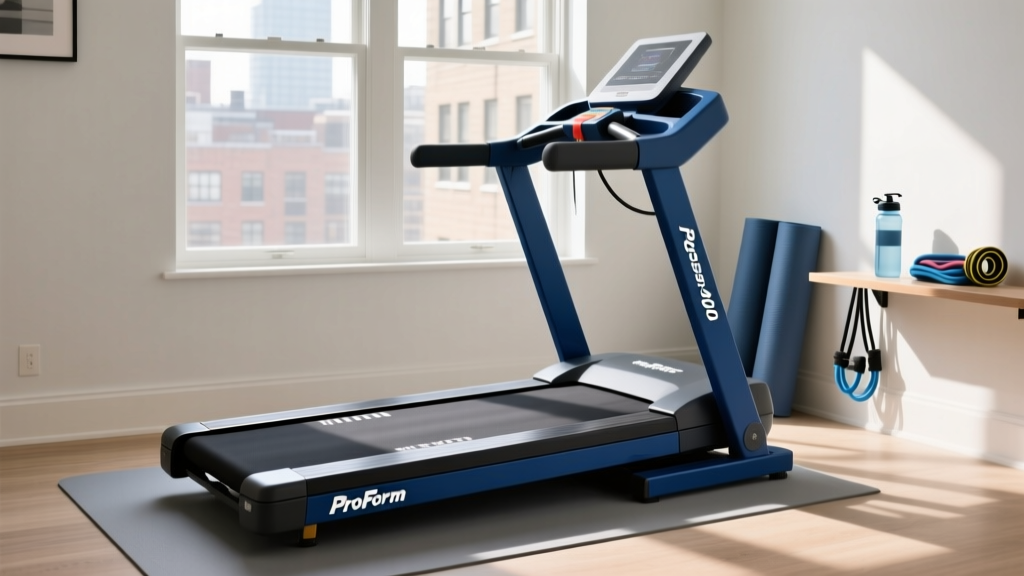
Treadmill Belt Maintenance & Best Mat for Treadmill on Carpet
Discover the true cost of treadmill belt maintenance and why choosing the best mat for treadmill on carpet saves you hundreds in motor and deck repairs.

The Hidden Friction Tax: Carpet, Belts, and Your Budget
When evaluating the total cost of ownership for home cardio equipment, most buyers focus strictly on the upfront retail price. However, as we move through 2026, the secondary costs of treadmill ownership—specifically belt maintenance, motor strain, and deck wear—have become critical factors in long-term value analysis. If your machine is situated in a carpeted room, this 'friction tax' is compounded exponentially.
Carpeted floors introduce a unique set of mechanical hazards. Without proper isolation, the static electricity generated by a moving walking belt attracts microscopic carpet fibers, pet dander, and dust directly into the motor housing and underneath the belt deck. This debris acts like abrasive sandpaper, accelerating the degradation of the belt backing and increasing the coefficient of friction. In this comprehensive budget breakdown, we will analyze the exact costs of treadmill belt maintenance and lubrication, and explain why investing in the best mat for treadmill on carpet is not just a cosmetic choice, but a vital mechanical maintenance strategy.
Budget Breakdown: Lubrication vs. Replacement vs. Prevention
To understand the value of proactive maintenance, we must look at the hard data regarding parts and labor. A neglected walking belt does not just wear out; it destroys the components it interacts with. Below is a comparative cost analysis of treadmill upkeep scenarios based on current 2026 OEM (Original Equipment Manufacturer) pricing and average technician rates.
| Maintenance Scenario | Estimated Cost (Parts + Labor) | Frequency / Trigger | Budget Impact |
|---|---|---|---|
| 100% Silicone Belt Lubricant (e.g., Impresa Products) | $12.00 - $18.00 | Every 3 to 6 months (or 130 miles) | Minimal / Essential |
| High-Density PVC Equipment Mat (3/8-inch) | $45.00 - $75.00 | One-time purchase | High ROI / Preventative |
| OEM Walking Belt Replacement (e.g., Sole F80 or NordicTrack 1750) | $140.00 - $250.00 + $150 Labor | Every 3-5 years (or prematurely if dry) | Moderate / Reactive |
| MDF Deck Board Replacement | $120.00 - $200.00 + $200 Labor | Triggered by severe belt friction | Severe / Reactive |
| Lower Control Board / Drive Motor Burnout | $350.00 - $700.00+ | Catastrophic failure from amp spikes | Catastrophic / Total Loss |
As the table illustrates, the cost of a catastrophic motor or control board failure dwarfs the price of preventative care. According to The Treadmill Doctor's OEM belt replacement resource, over 70% of premature walking belt failures are directly tied to inadequate lubrication and excessive debris ingestion, both of which are mitigated by proper matting and scheduled silicone application.
Why the Best Mat for Treadmill on Carpet is a Maintenance Tool
Many consumers view equipment mats solely as floor protectors to prevent indentations in carpet fibers. From a mechanical engineering perspective, however, a mat serves as an air-intake filter and a stabilization platform for your treadmill's drive system.
The Carpet Fiber Effect & Amp DrawA treadmill's cooling fan and motor intake are located near the base of the machine. On bare floors, they pull in relatively clean air. On carpet, the static charge from the belt pulls synthetic fibers directly into the motor housing. Furthermore, carpet padding allows the treadmill deck to flex downward under user weight, increasing the physical pressure between the belt and the deck. A well-lubricated belt on a hard surface draws roughly 2 to 4 amps at walking speed. The exact same machine, sinking into a plush carpet with a dry belt, can spike to 10 to 15 amps. This continuous over-amp draw degrades the MOSFETs on the lower control board, leading to a $400+ repair bill.
When searching for the best mat for treadmill on carpet, you must prioritize high-density PVC (Polyvinyl Chloride) over recycled rubber. Recycled rubber mats, while cheaper, tend to off-gas volatile organic compounds (VOCs) that can chemically degrade the plastic trim and motor shrouds of modern treadmills over time. A 3/8-inch (10mm) or 1/2-inch (12mm) PVC mat, such as the SuperMats 13MM Heavy Duty series, provides the necessary rigidity to prevent deck flex while completely blocking carpet fibers from entering the motor intake zone.
Step-by-Step Treadmill Belt Lubrication Guide (2026 Protocol)
Routine lubrication is non-negotiable for preserving the value of your machine. Modern walking belts feature a woven polyester core with a textured top and a smooth, low-friction urethane or PVC underside. You must only use 100% silicone lubricant, ideally with a viscosity of 1000 cSt (centistokes). Never use standard WD-40, lithium grease, or petroleum-based oils; petroleum distillates will dissolve the chemical backing of the belt, causing it to stretch, warp, and ultimately snap.
For a complete visual and technical walkthrough, you can also reference WikiHow's comprehensive treadmill lubrication guide. Below is the professional protocol for manual application:
- Power Down and Unplug: Always remove the physical power source. Never rely solely on the console power button, as the lower board remains energized.
- Mark the Belt Alignment: Use a piece of painter's tape to mark the current position of the belt on the rear roller. This ensures you can re-tension the belt to its exact factory specification after lubrication.
- Access the Deck: Reach under the walking belt on the left side, approximately halfway between the front motor shroud and the rear roller. Gently lift the belt away from the deck. You should be able to lift it about 2 to 3 inches without excessive force.
- Apply the Silicone: Using the extended wand applicator on your 100% silicone bottle, squeeze exactly 0.5 oz (roughly half a standard bottle) in a zig-zag pattern across the width of the deck. Repeat on the right side with the remaining 0.5 oz.
- Distribute the Lubricant: Plug the machine back in. Stand on the side rails (not the belt), start the treadmill at 1.0 MPH, and then carefully step onto the belt. Walk at a slow pace for 3 to 5 minutes. Intentionally walk in a zig-zag pattern, stepping heavily on the left and right edges to force the silicone outward toward the belt borders.
- Verify Tension and Alignment: Check your painter's tape marks. If the belt has shifted, adjust the rear roller bolts in quarter-turn increments until the belt tracks perfectly centered.
Edge Case: High-Pile vs. Low-Pile Carpet Considerations
If your home features high-pile or frieze carpet (fibers longer than 3/4 inch), standard 1/4-inch equipment mats are entirely insufficient. The heavy dynamic load of a user running at 7.0 MPH will compress the mat and the carpet pad beneath it, causing the treadmill's adjustable leveling feet to punch through the mat and sink into the floor. This creates an uneven deck plane, leading to premature wear on the left or right side of the belt. For high-pile environments, you must invest in a minimum 1/2-inch thick, high-durometer PVC mat and place a sheet of 3/4-inch plywood underneath it to distribute the dynamic load across a wider surface area.
Evaluating Mat Value: What to Spend and What to Skip
When performing a value analysis on treadmill accessories, it is easy to fall into the trap of buying 'universal' mats that are too thin or made of the wrong composite. Based on current market data and Consumer Reports' treadmill maintenance and buying data, here is how to allocate your budget:
- Worth the Investment ($50 - $80): High-density, 100% PVC mats with beveled edges (to prevent tripping) and a minimum thickness of 3/8-inch. Brands like SuperMats or BalanceFrom GoFit offer excellent structural integrity that prevents the machine from 'walking' across the room during high-incline sprints.
- Worth Skipping ($20 - $35): Thin, interlocking foam puzzle mats. These compress too easily under the concentrated weight of treadmill feet, offering zero stabilization and tearing apart within six months of heavy use.
- Worth Skipping ($15 - $25): 'Multi-purpose' rubber mats meant for free weights. The sulfur compounds used in vulcanized rubber can stain light-colored carpets and react poorly to the heat generated by the treadmill's motor exhaust.
Summary Matrix: Your Annual Treadmill Upkeep Budget
To maintain peak performance and protect your manufacturer warranty, structure your annual cardio equipment budget as follows:
Annual Maintenance Allocation: $45.00
- Q1 & Q3: Two bottles of 100% Silicone Lubricant ($15 x 2 = $30.00)
- Q2: Deep vacuuming of the motor shroud intake and belt deck edges (Requires a crevice tool attachment; $0.00)
- Amortized Mat Cost: Assuming a $60 PVC mat lasts 5 years, the annual cost is just $12.00.
By spending less than $50 a year on proper lubrication and utilizing the correct isolation mat, you effectively eliminate the risk of a $500+ motor or deck failure, ensuring your treadmill delivers its full 7-to-10-year expected lifespan.
Ultimately, treadmill belt maintenance is an exercise in friction management. By understanding the mechanical relationship between the walking belt, the deck, and the surface beneath your machine, you can make highly informed purchasing decisions. Securing the best mat for treadmill on carpet is the foundational first step in a value-driven maintenance protocol that keeps your workouts safe, your floors pristine, and your repair bills at absolute zero.
More gear to consider
All reviews
Does Treadmill Build Muscle? Space-Saving Bikes vs. Treadmills

Setup Guide: LifeSpan Treadmill TR4000i vs Curved Manual Installation
Horizon T101 Connect Treadmill vs Walking Pads: 2026 Review

Gold's Gym Treadmill Belt Maintenance & Lubrication Guide
NordicTrack T Series 8.5 S Treadmill Black: Feature Compare & Fixes